
What to send with your support request
The quickest way to get help is to give clear details upfront. Tell us where the system is installed, whether it is for a home or business, and what changed before the problem started. If the issue only happens during load-shedding or after a power return, mention that too.
Useful details include the inverter model type, battery type, how many batteries are connected, and whether the system is grid-tied or used as backup only. If there are warning lights, beeps, trips, or a display message, write that down exactly. A photo of the installation area or the fault message often helps save time.
- Property suburb and town
- System type and approximate age
- What is not working
- Any recent changes to wiring or loads
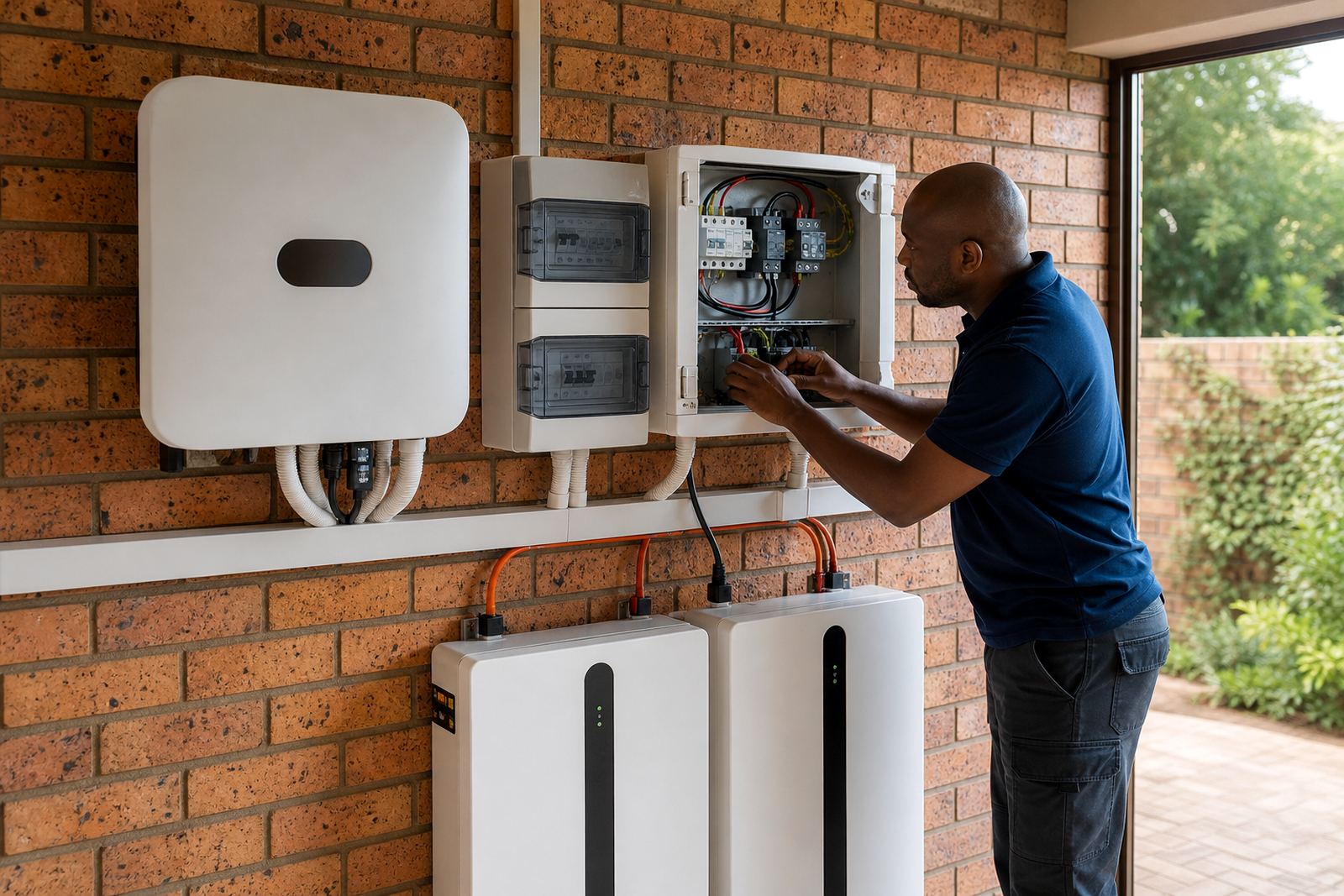
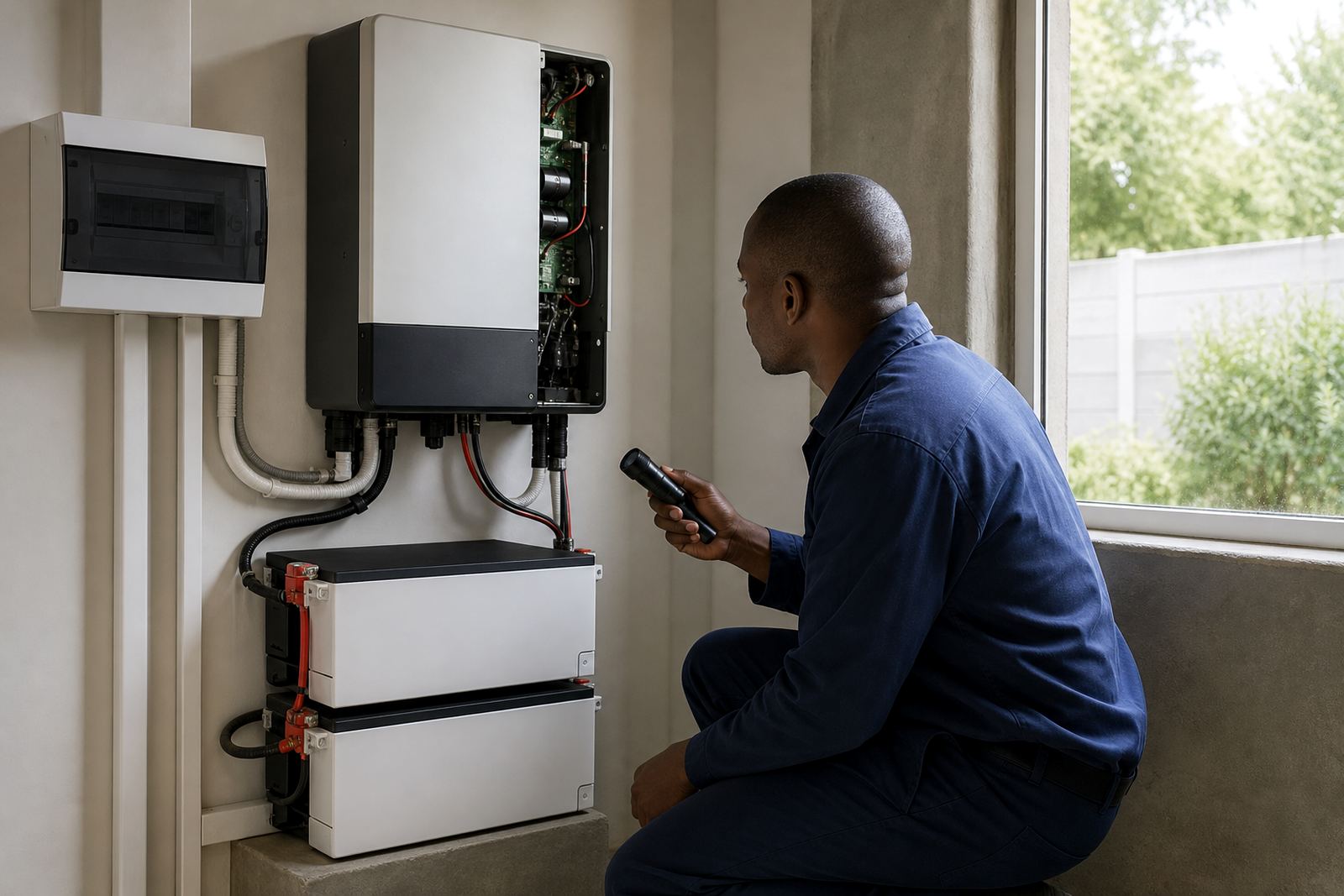
- Photos of the inverter, batteries and distribution board
Technical questions we can help with
Support requests are useful for more than faults. You can also ask about backup sizing, adding more battery capacity, essential circuit wiring, or whether your current setup is suitable for the loads you need during outages. For example, a small home backup setup will not be sized the same way as a shop, office or workshop that must keep routers, lights and selected plugs running.
We can also help you understand basic system behaviour, such as why the battery drains faster than expected, why certain appliances should stay off during backup use, or how a changeover arrangement should work. If you are unsure whether the issue is with the inverter, battery bank or wiring, send the details and we will advise on the next check.
Share what must stay on during an outage and the size of the property, and a backup planner will phone or message you.
Contact formHow we handle fault concerns
When a fault report comes in, the first step is to narrow down the cause. That may involve asking about the load on the system, recent outages, visible alarms, or whether the fault appears on inverter mode, grid mode or both. If the problem points to wiring or protection equipment, the system should be checked by a registered electrician.
For your safety, do not open enclosures or adjust live wiring yourself. Backup systems can carry dangerous voltages even when the main supply is off. If there is heat, smell, swelling batteries, repeated tripping or exposed cabling, switch the system off where safe to do so and log the fault straight away.
- Switch off loads that are not essential
- Note the exact fault message or alarm pattern
- Check whether the issue is constant or only during outages
- Keep the area around batteries clear and ventilated
Installation and compliance support
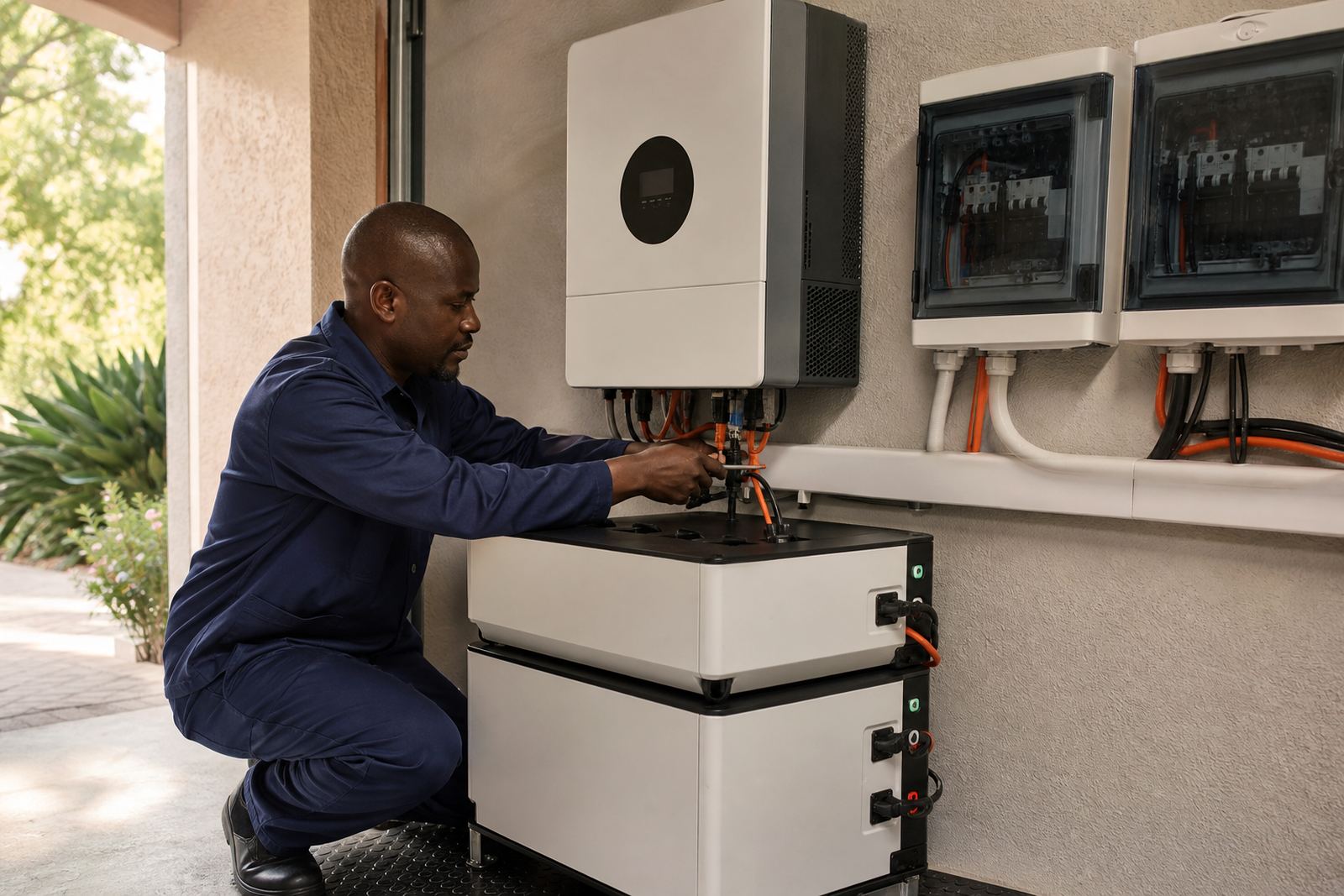
Any inverter or battery installation must be carried out by a registered electrician. The work also needs a Certificate of Compliance once completed, especially where new circuits, changeover gear or battery wiring has been added. If the system is grid-tied, municipal registration may also be required depending on the local rules in your area.
PowerCut can assist with compliance support by helping you prepare the job details, checking the system layout and making sure the installation information is ready for the electrician. This matters in Gauteng suburbs where home and business properties may have different supply arrangements and municipal processes. Good paperwork makes later servicing and inspections much easier.
Service requests for homes and businesses
We support both residential and commercial sites across Randburg, Johannesburg, Pretoria, Centurion, Midrand, Roodepoort, Sandton and Fourways. Homeowners often need help with backup sizing for lights, Wi-Fi, TV and selected plugs. Businesses often need support for essential circuits, point-of-sale systems, gate motors, security equipment and office connectivity.
For commercial properties, it helps to explain operating hours, critical loads and any noise or space limits in the plant room or storeroom. Coastal humidity is not the main concern in Gauteng, but dust, heat and tight cupboard space can still affect battery and inverter performance. If the site has repeated outages or load-shedding every week, say so in your request.
- Homes in estates and free-standing houses
- Retail spaces and offices
- Warehouses, workshops and shared buildings
- Body corporate and landlord-managed sites
What happens after you submit a request
After you send a support request through the contact page, the team reviews the details and decides what level of help is needed. Some cases can be handled through troubleshooting questions, while others may need a site visit, servicing appointment or electrician follow-up. If parts of the system need isolation, battery expansion, or monitoring setup, that will be explained clearly.
You may be asked to confirm your suburb, access details, and whether the system is still under active use. If the backup system was installed elsewhere and later moved, mention that. Accurate information helps avoid delays and unnecessary call-backs. We keep the process practical and direct so you know what to do next.