What to check before an installation visit
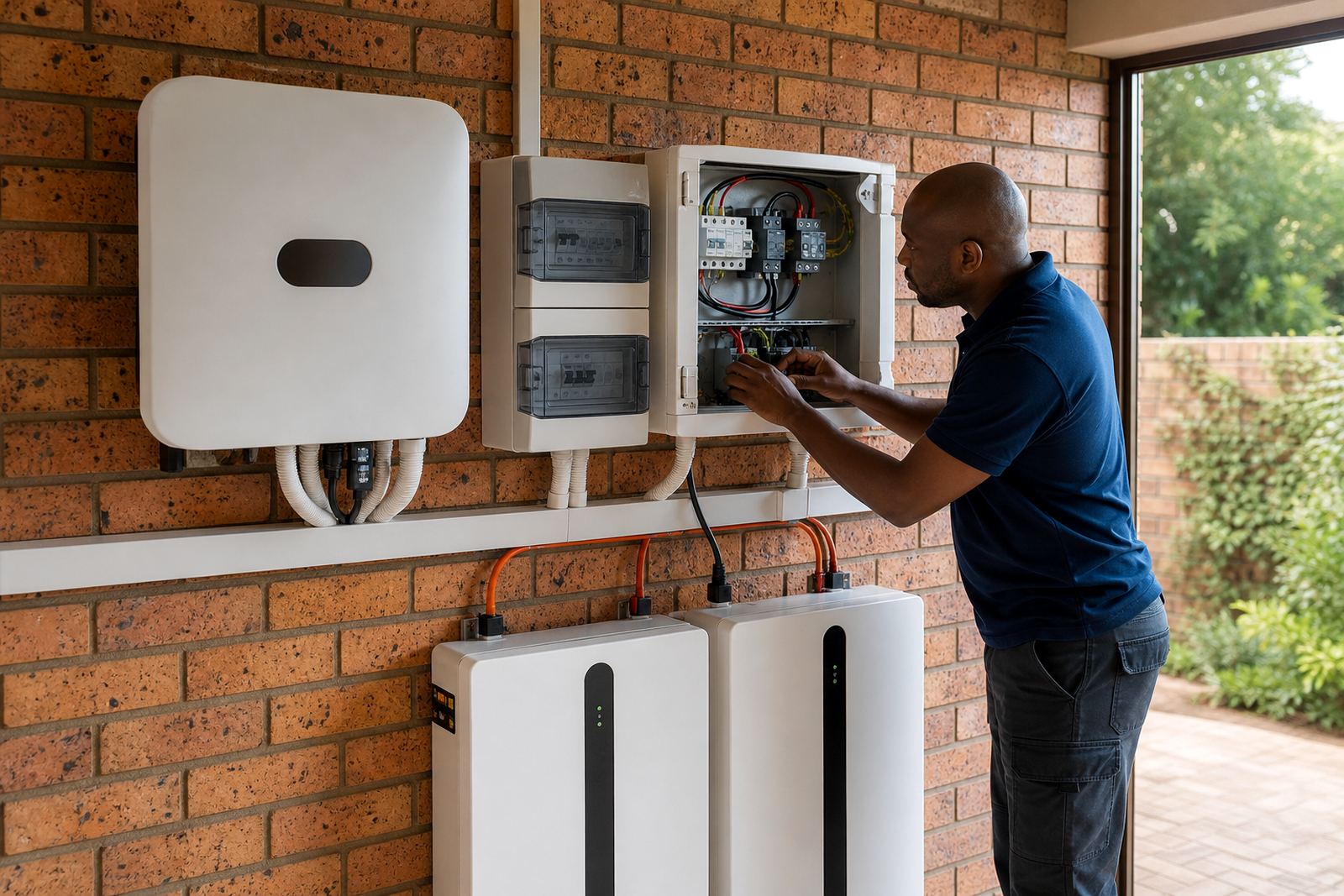
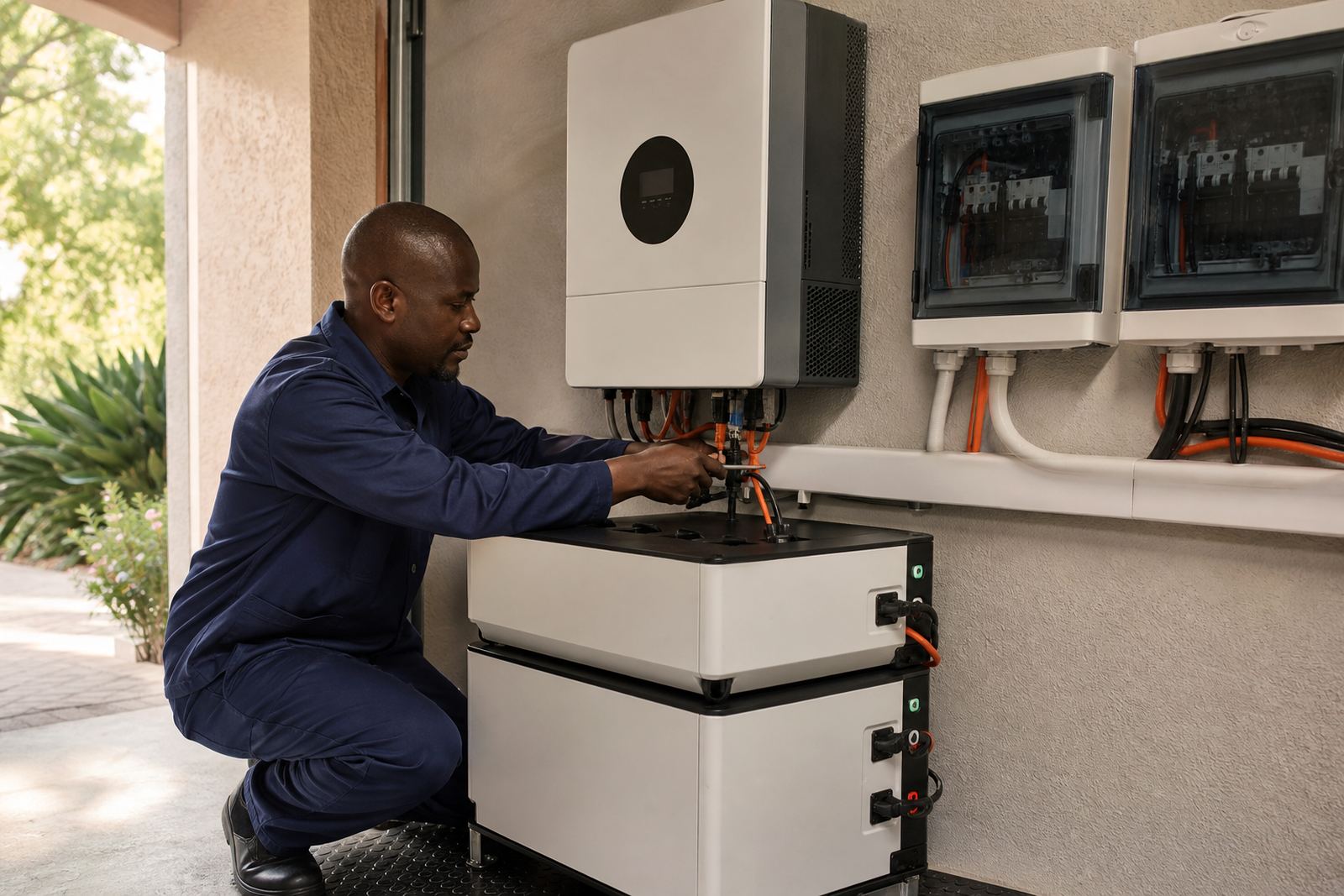
Before any equipment is brought in, the site should have a clear space for the inverter, batteries and protection gear. A dry indoor area is usually best, with enough wall space, ventilation and easy access for future servicing. In Randburg, Sandton and Fourways we often see plant rooms, garages or store rooms used for this purpose, while smaller homes in Midrand or Roodepoort may need a more compact setup.
It also helps to know which loads must stay on during an outage. Common choices are lights, Wi-Fi, TV, fridge, gate motor, small office equipment and a few plug points. If the property is a business, identify any computers, routers, tills or security systems that must keep running. The more accurate the load list, the better the backup sizing will be.
- Make space for the inverter and battery cabinet or rack.
- Check that the site has safe access for cabling and mounting.
- List the circuits that must stay live during load-shedding.
- Tell us if there are solar panels, a generator or existing backup gear already on site.
How backup sizing is worked out
Backup sizing is based on the amount of power you need and how long you want it to last. A small home setup may only need the essential circuits covered, while a larger house or office in Pretoria or Centurion might need a bigger inverter with more battery storage. The aim is not to oversize or undersize the system, because both can cause problems later.
We look at the total load in watts, the starting surge of appliances, and how long the batteries should carry the essentials. Fridges, pumps and some office devices draw extra power when they start, so they need to be considered carefully. Lithium batteries are often chosen because they handle regular cycling well and have good usable capacity, but the final setup still depends on the property and usage pattern.
- Short outages usually need less storage than long evening cuts.
- Motor loads and appliances with compressors need special attention.
- Commercial sites often need separate treatment for critical circuits.
- Future battery expansion can be planned from the start.
Share what must stay on during an outage and the size of the property, and a backup planner will phone or message you.
Contact formWhy a registered electrician must do the work
Any fixed electrical installation must be handled by a registered electrician. This includes inverter wiring, battery connections, changeover work and circuit changes. It is not enough to simply plug equipment in and hope for the best. The installation must meet local electrical safety rules and be suitable for the property’s supply type.
For homes and businesses, this matters because backup systems interact with the main supply. If the wiring is done badly, you can end up with nuisance trips, damaged equipment or unsafe backfeed. A qualified electrician will also check earthing, protection devices and cable sizing, which is especially important in older properties around Johannesburg where existing boards may already be crowded.
- Registered electrician installation is required for fixed wiring.
- Correct cable size and protection devices must be used.
- Changeover arrangements must prevent unsafe backfeed.
- Earthing and breaker protection should be checked before commissioning.
Certificate of compliance basics
A certificate of compliance, often called a CoC, is part of the handover for legal electrical work. It confirms that the installation has been inspected and found to meet the relevant safety requirements. For backup systems, the CoC should cover the new work done to integrate the inverter, batteries and any related circuits.
If the property already has an old installation, the electrician may find issues that need to be corrected before a certificate can be issued. That can include damaged cables, poor earthing, incorrect breakers or unsafe modifications from earlier work. It is better to sort those items out up front than to leave them for later, because they can affect both safety and approval.
For grid-tied systems, municipal registration may also be required. Different municipalities around Gauteng can ask for different documents or approval steps, so it is wise to check the local process before the system is switched on. This is especially important in areas like Johannesburg, Tshwane and some estate-managed properties.
What we can help with during the install
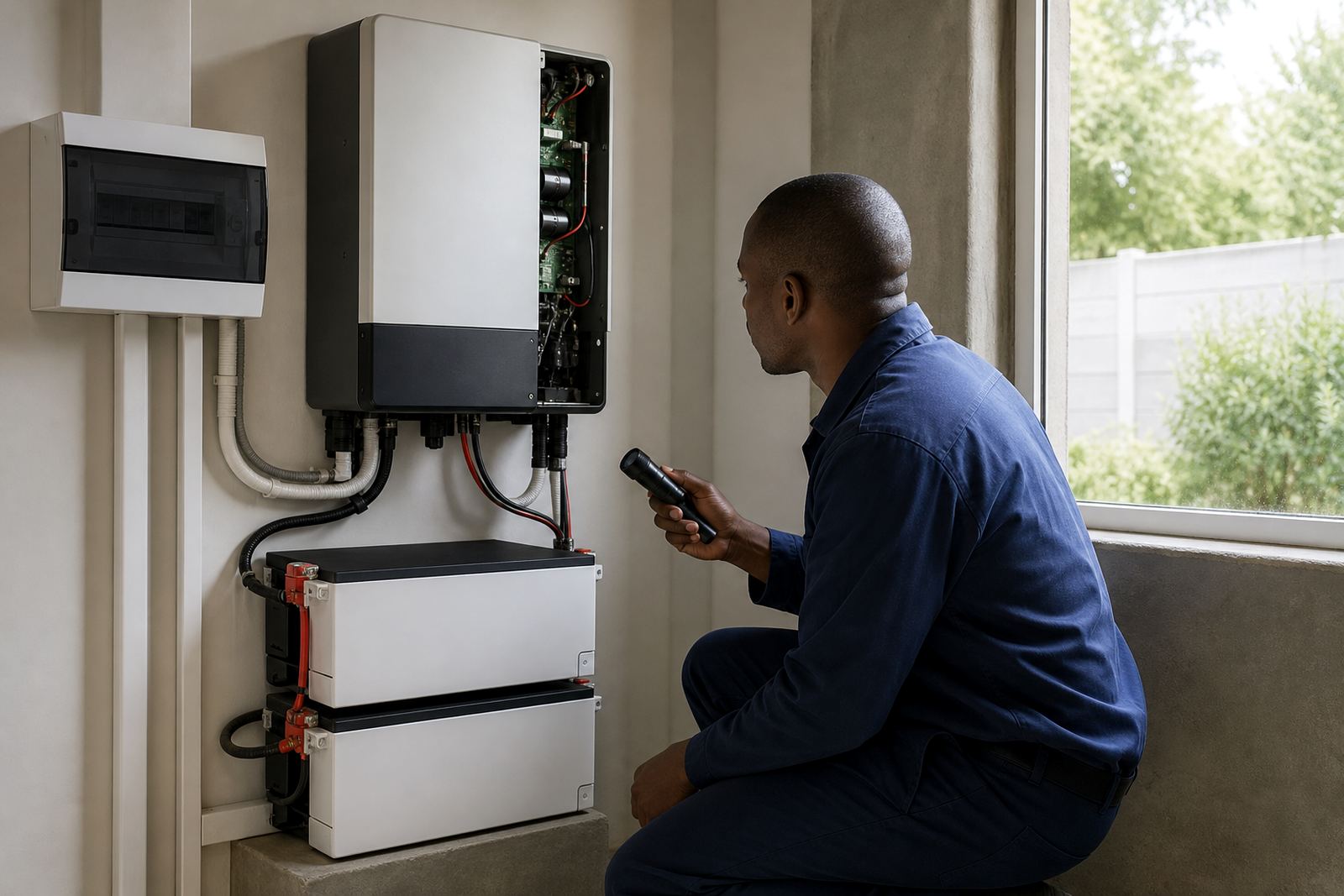
Our support covers the practical parts of getting a backup system ready and working properly. That includes site assessments, backup sizing, inverter installation, battery installation, essential circuit wiring, changeover solutions, system commissioning and monitoring setup. We also assist with battery expansions, fault checks and routine servicing after the system is in use.
For a typical home or office, the process starts with a visit or review of the site details. We then confirm the load list, check the board and decide how the essentials should be separated. If the site is in Randburg, Midrand, Roodepoort, Centurion or Pretoria, we also factor in the local supply arrangement and the way the client uses power through the day. Small changes at this stage can save time later.
- Site assessment and load review.
- Selection of inverter and lithium battery capacity.
- Essential circuit wiring and changeover setup.
- Commissioning, testing and monitoring setup.
After installation: what to expect and how to look after the system
Once the system is installed, tested and handed over, you should get clear guidance on how it works during outages and when grid power returns. Most clients want to know which circuits are on backup, how the battery state behaves, and whether any settings need to be adjusted after the first few days of use. That is normal, especially when the load pattern changes between weekdays and weekends.
Keep the area around the inverter and batteries clean and dry, and avoid stacking items against the equipment. In coastal humidity is not the issue in Gauteng, but dust, heat and poor airflow can still affect performance. If there are repeated trips, warning lights or unusual battery readings, it is best to book a fault check rather than keep resetting the system. A quick review now and then helps the setup stay dependable during load-shedding.