What should I keep on during load-shedding?
Start with the essentials only. For many homes that means lights, Wi-Fi, TV, gate motors, alarm panels and a few plug points. For businesses it may include computers, routers, point of sale equipment, security systems and selected office or shop circuits. Trying to back up every appliance usually pushes the cost up and can lead to a system that is too small for the real need.
A proper backup list should be based on what must stay running, not what would be nice to have. The difference matters when you are sizing an inverter and battery bank for longer outages or frequent stage changes.
- List each appliance or circuit you want backed up
- Check the wattage on the appliance label or data plate
- Separate high demand items like kettles, heaters and microwaves
- Keep the list practical for load-shedding hours, not full household use
How do I know what inverter size I need?
Inverter sizing starts with your total essential load and then looks at surge demand, battery voltage and how long you need backup for. A small home with lights, a router and a few sockets may only need a modest system, while a busy office or small retail space usually needs more capacity and careful circuit planning.
As a rule, appliances with motors, compressors or heating elements need special attention because they draw more power at start-up. That includes fridges, pumps, gate motors and some workshop tools. A good backup assessment should also consider whether your supply is single-phase or three-phase, and whether the property has any existing solar or generator integration.
- Check the size of the essential load in watts
- Allow for surge on motor driven equipment
- Work out how many hours of backup you need
- Confirm if the site needs room for future battery expansion
Share what must stay on during an outage and the size of the property, and a backup planner will phone or message you.
Contact formWhy lithium batteries are used for backup
Lithium batteries are widely used for backup because they charge quickly, handle repeated cycling well and take up less space than older battery types for similar usable capacity. They are often used in homes, offices and retail spaces where load-shedding can happen more than once a day.
Battery performance still depends on how the system is set up and used. Heat, poor ventilation, undersized cabling and dirty installation areas can shorten service life. In Randburg, Sandton and Fourways we often see battery rooms, garages or store areas that need better airflow and cleaner mounting positions, especially in summer and during humid coastal conditions if stock is going further afield.
- Keep batteries in a dry, ventilated area
- Do not stack equipment where heat can build up
- Use the correct cable size and protection devices
- Plan for the number of outage cycles, not just one long cut
What happens during installation and commissioning?
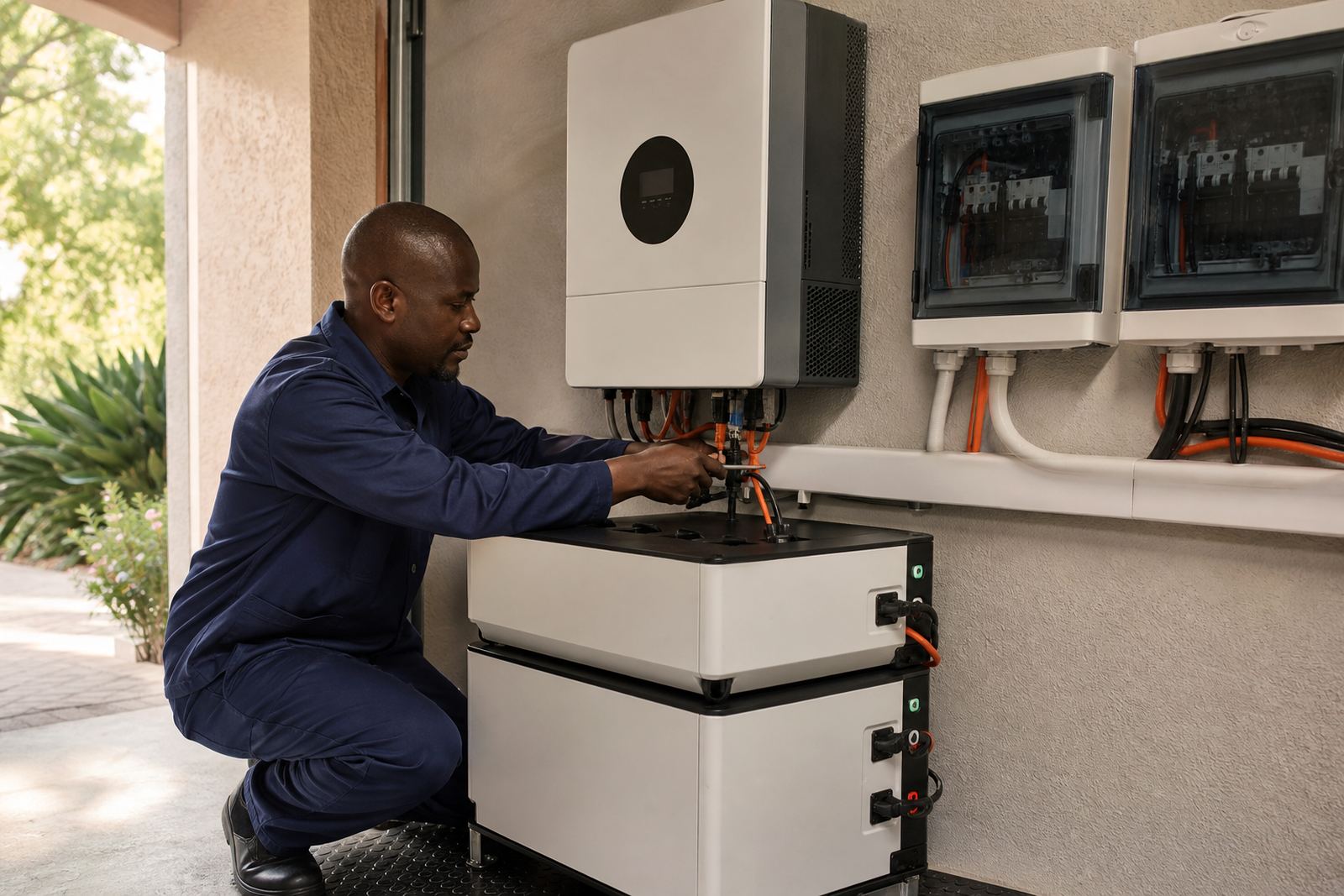
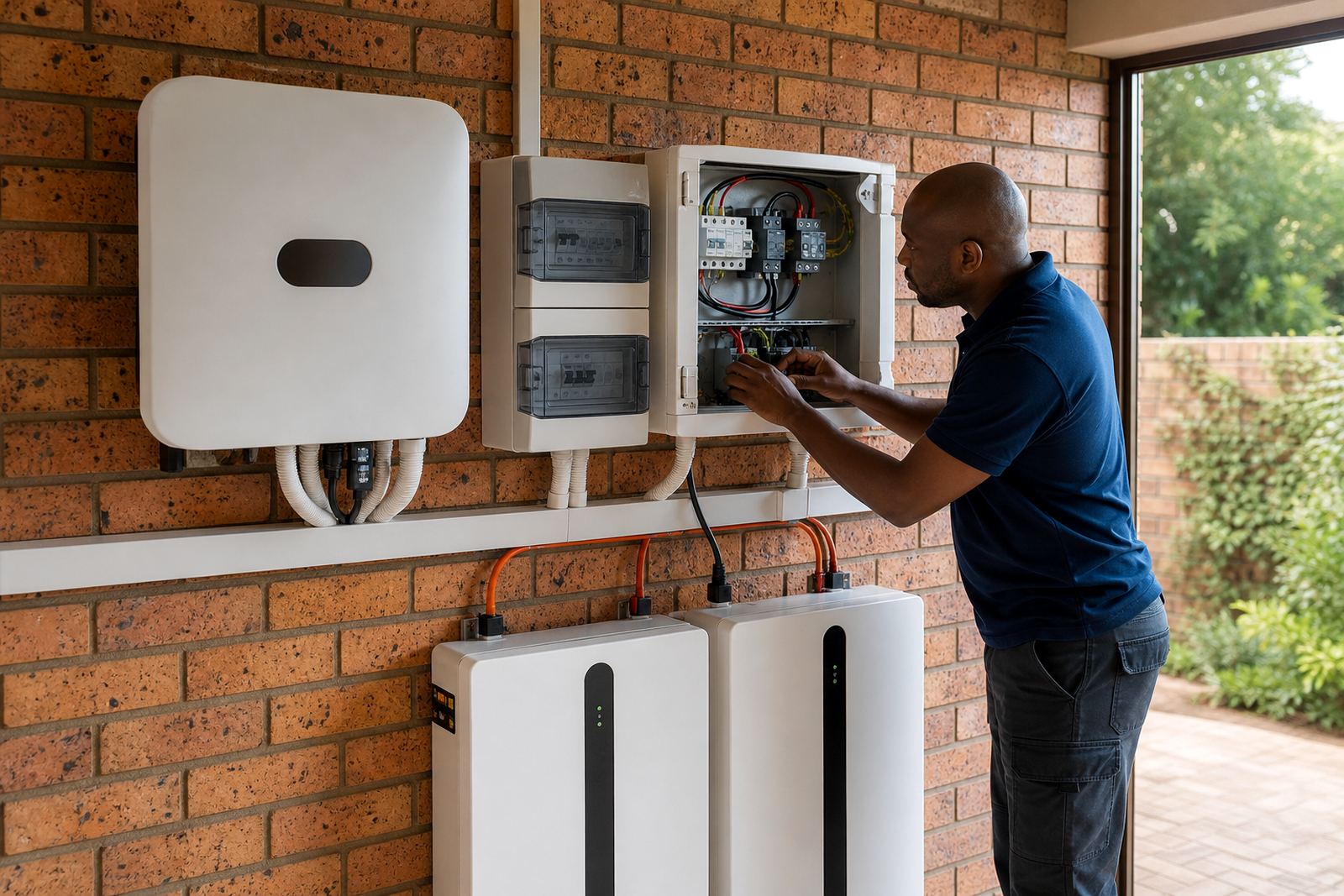
Once the backup size is confirmed, the next step is the installation of the inverter, batteries and any essential circuit wiring. A clean installation should include proper isolation, correct earthing, labelled circuits and a clear changeover arrangement so the important loads stay on when Eskom supply drops out.
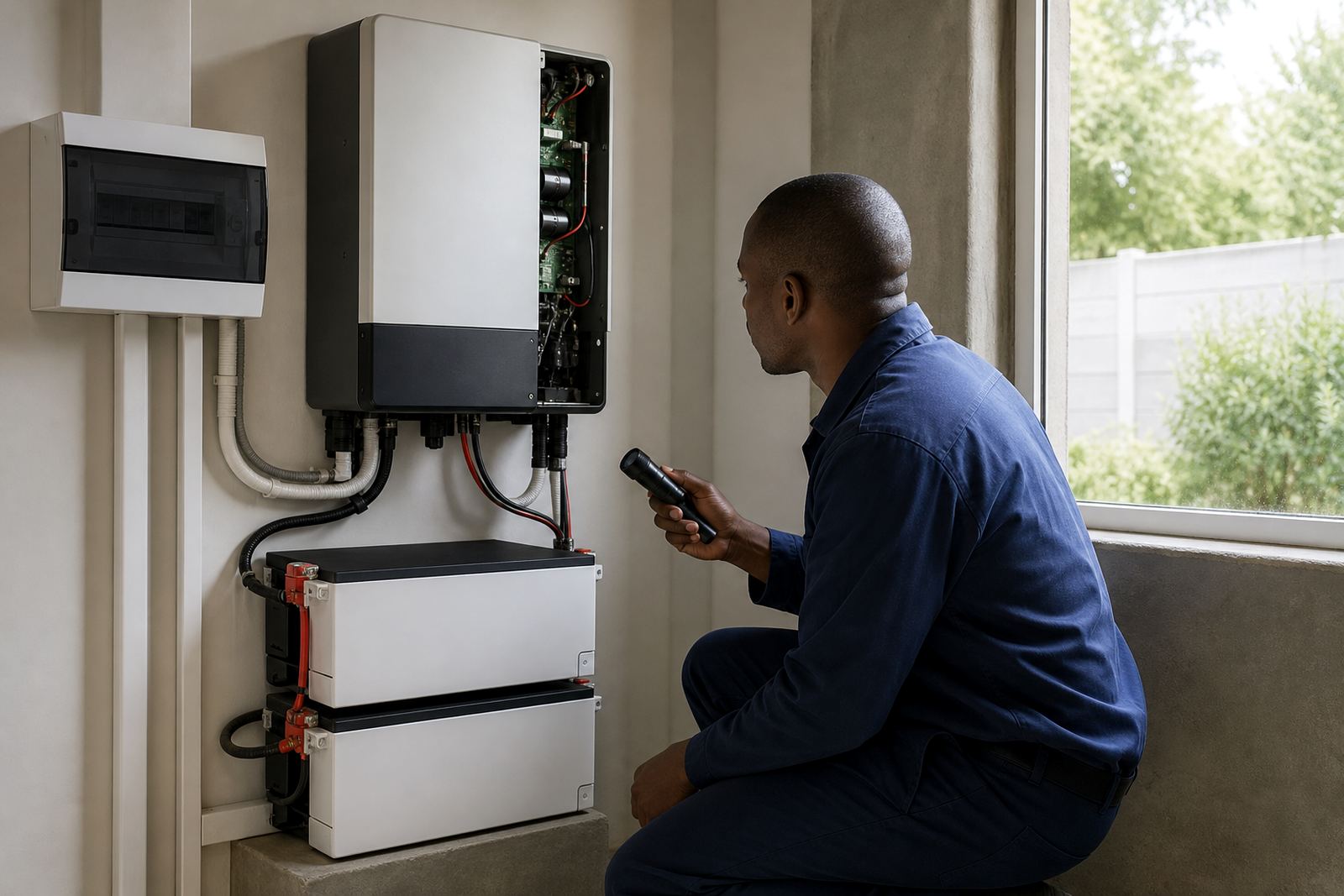
After that, the system is commissioned and tested under load. This is where settings are checked, battery charging is verified and the changeover sequence is confirmed. If monitoring is part of the setup, it should be paired and explained so you can see battery state, load and charging behaviour. Small mistakes at this stage can cause nuisance trips later, so the first test matters.
- Mount equipment in a suitable, accessible position
- Wire only the agreed essential circuits
- Test changeover during a real or simulated outage
- Confirm the display, alarms and monitoring setup
What compliance do I need in South Africa?
Backup systems must be installed by a registered electrician and you should receive a Certificate of Compliance for the work done. If the system is grid-tied, municipal registration is usually required as well. That applies whether the site is a home in Midrand or a business premises in Centurion.
Compliance is not just paperwork. It helps confirm that the wiring, protection and changeover arrangements meet local requirements and that the installation can be inspected if needed. For landlords, body corporates and business owners, this also makes maintenance and future upgrades easier to manage.
- Use a registered electrician for the installation
- Keep the Certificate of Compliance with your records
- Register grid-tied systems with the local municipality where required
- Make sure any later battery expansion is done to the same standard
How do I keep the system working well?
Backup systems need basic upkeep, especially where load-shedding happens often. Routine checks help pick up loose terminations, dust build-up, battery issues and settings that drift over time. If a site is using batteries daily, a scheduled service is worth keeping on the calendar.
Fault checks should be done quickly if the inverter starts beeping, the batteries are not holding charge or the changeover is slow. Many issues are minor when caught early, but can become expensive if left too long. For commercial sites in Johannesburg, Roodepoort and Pretoria, regular checks also help avoid downtime for staff and customers.
- Keep the area around the inverter clear and dry
- Watch for warning lights, alarms or unusual fan noise
- Arrange routine servicing before the system is under strain
- Ask for a check if load-shedding performance changes suddenly