Start with a quick visual check before load-shedding season
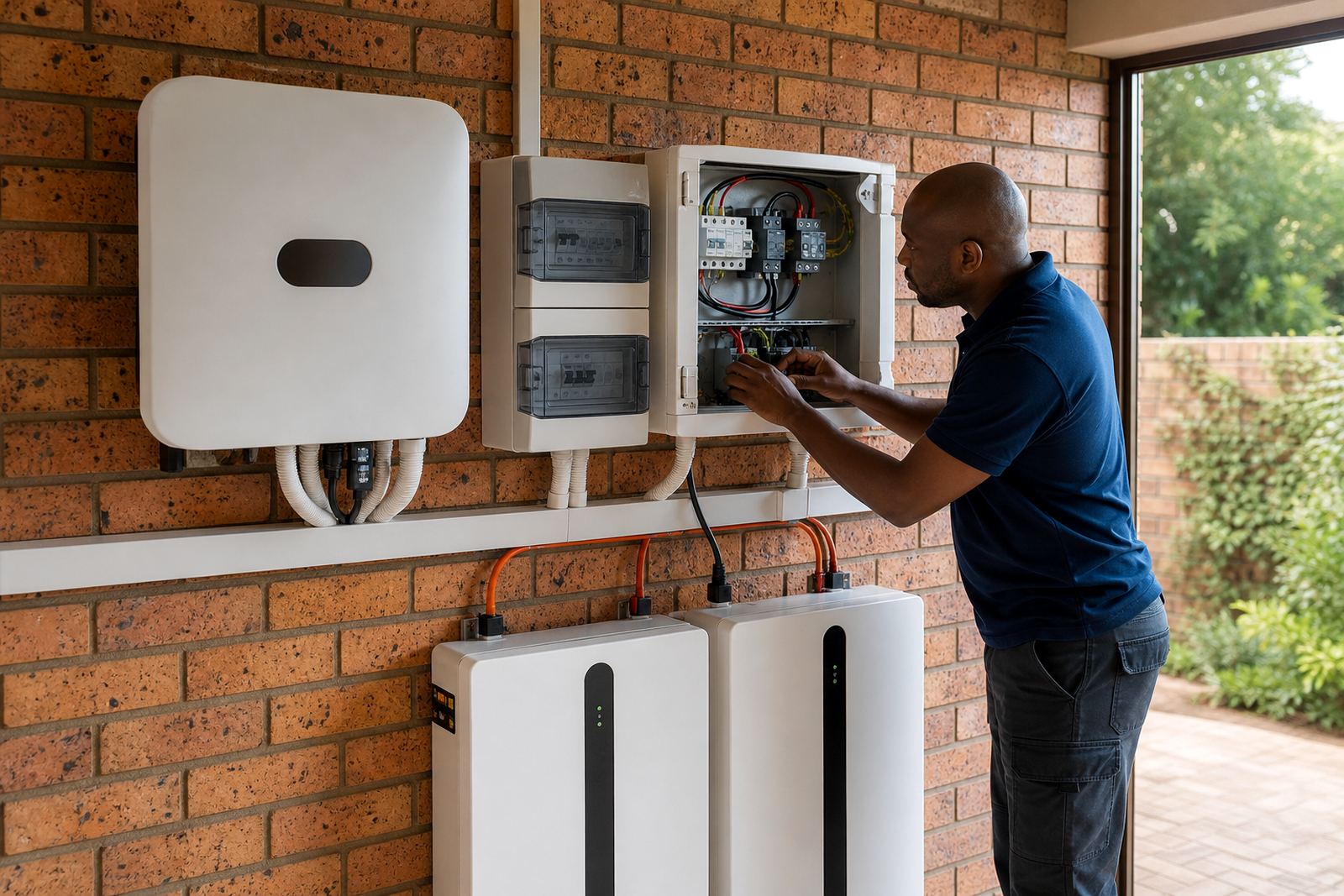
Before the winter outage season or any busy period, walk through the installation area and look for anything out of place. Check that the inverter, batteries, changeover gear and cabling are dry, tidy and easy to reach. In Randburg, Sandton and other parts of Johannesburg, dust builds up quickly in garages and storerooms so it helps to clear the area before it becomes a problem.
Look for signs of heat, loose covers, damaged conduit or any cable that appears strained. If the unit is in a coastal style environment with damp air or if the room is close to a kitchen or washing area, check for corrosion and moisture. A clean system is easier to inspect and less likely to develop small faults that turn into bigger ones.
Keep batteries in the right place and within safe limits
Lithium batteries should be installed in a cool, well ventilated area and kept away from direct sun, standing water and unnecessary heat. Do not stack boxes, paint tins or cleaning products against the battery cabinet. Keep at least a clear working space around the unit so labels, breakers and indicators can be checked without strain.
Battery health depends on regular use and correct sizing for the load. If the system often runs flat before the outage ends, it may be undersized for the essentials connected to it. If you notice the battery percentage dropping faster than expected, book a fault check and review the setup before the next municipal outage. That way you avoid repeated deep cycling, which can shorten useful service life.
- Keep the battery area dry and free of dust
- Leave space around vents and access panels
- Do not store tools or household items on top of the cabinet
- Check for swelling, unusual heat or warning lights
Share what must stay on during an outage and the size of the property, and a backup planner will phone or message you.
Contact formCheck the inverter display and settings every month
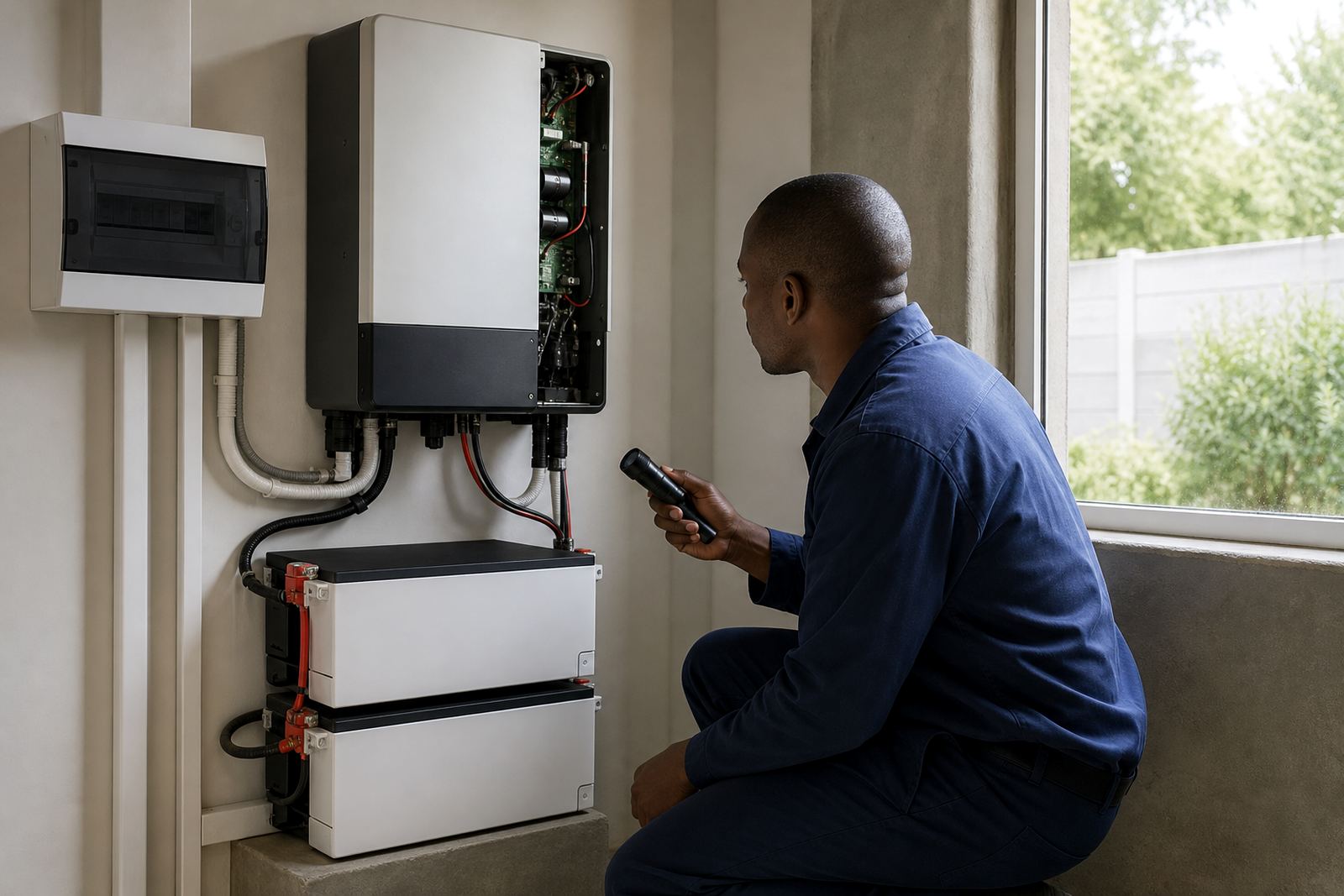
The inverter display gives useful signs of how the system is performing. Review the input, output and battery readings once a month, or after any extended outage. If the display shows error codes, low voltage warnings or repeated switching, note the time and what appliances were in use. Small clues help a technician find the cause quicker.
Also check that the time settings, priority settings and backup mode are still correct for the property. In homes and small offices across Midrand, Pretoria and Roodepoort, people often add fridges, security equipment or office routers after the original installation. When the load changes, the settings may need a fresh look. A quick review can save a lot of trouble later.
Test the changeover path and essential circuits
Essential circuit wiring should be checked so you know which loads stay on during an outage. Test the changeover under controlled conditions and confirm that lights, internet equipment, gates, alarms and selected plugs behave as expected. Do this when the system is not under heavy use, so you can see whether the backup path is working properly.
If a circuit trips, the fault may be in the wiring, the breaker size or the appliance itself. Do not keep resetting breakers without finding the cause. For businesses in Centurion, Sandton and Fourways, it is worth checking that critical equipment is still assigned to the right circuit after any office move or upgrade. A small wiring change can affect the whole backup plan.
- Confirm which circuits are backed up
- Test the system with normal household or office loads
- Check that sockets and breakers are labelled clearly
- Make sure no non-essential high draw items were added later
Book servicing after storms, faults or repeated outages
If the system has been through a storm, a power surge, or several long outages in a row, book routine servicing rather than waiting for a total failure. A service call can pick up loose terminations, worn components, dust inside enclosures and battery communication issues. It is better to sort these out early than to find them during a blackout.
For commercial properties, a planned service visit also helps with operational timing. Offices, small retail sites and workshops often cannot afford surprise downtime. A service planner can assess what needs attention, then schedule the work around trading hours. If the system has changed since the original install, the service visit is a good time to review backup sizing too.
Keep compliance records current and the installer qualified
Any inverter or battery installation must be done by a registered electrician, with a valid certificate of compliance issued for the work. If the system is grid tied, the installation also needs municipal registration where required. Keep these records with the site file, especially for commercial premises and sectional title properties in Johannesburg and Pretoria where compliance checks are often part of building management rules.
If you are expanding the battery bank, adding new circuits or changing the inverter arrangement, ask for compliance support before the work is switched on. Do not rely on informal wiring or unrecorded changes. A proper record helps with inspections, insurance queries and future maintenance, and it keeps the system aligned with local electrical requirements.
- Keep the certificate of compliance in a safe file
- Record any battery expansion or wiring changes
- Confirm municipal registration for grid tied systems
- Use a registered electrician for all installation work