

Why winter changes the backup picture in Gauteng
Winter backup planning is not only about surviving load-shedding, it is about handling the way households and workplaces use power differently when the temperature drops. In Randburg, Johannesburg and surrounding areas, people switch on heaters earlier, run kettles more often and keep lights on for longer, so the same inverter setup that felt fine in summer can start to feel tight by June.
Cold mornings also mean more demand at the office, with staff arriving to chilly rooms and the temptation to plug in extra appliances. If your backup plan only covers the TV and a few lights, it may not be enough for a small business that needs Wi-Fi, a gate motor, a till or a few workstations. A winter review helps you separate what is essential from what can wait until the grid is back.
Start with the loads that really matter
Good backup sizing begins with the circuits and appliances you cannot easily do without. For a home that may be the router, a few lights, alarm system, garage door and possibly the fridge. For a business it may include computers, network gear, point of sale equipment and security systems. Heating devices are often the biggest question, because portable heaters and panel heaters use a lot of power and can drain a battery bank quickly.
- List each item you want backed up and note the wattage if it is shown on the label.
- Check which items must run at the same time during an outage.
- Separate critical loads from comfort loads such as heaters or extra plug points.
- Allow for the surge when motors or compressors start up.
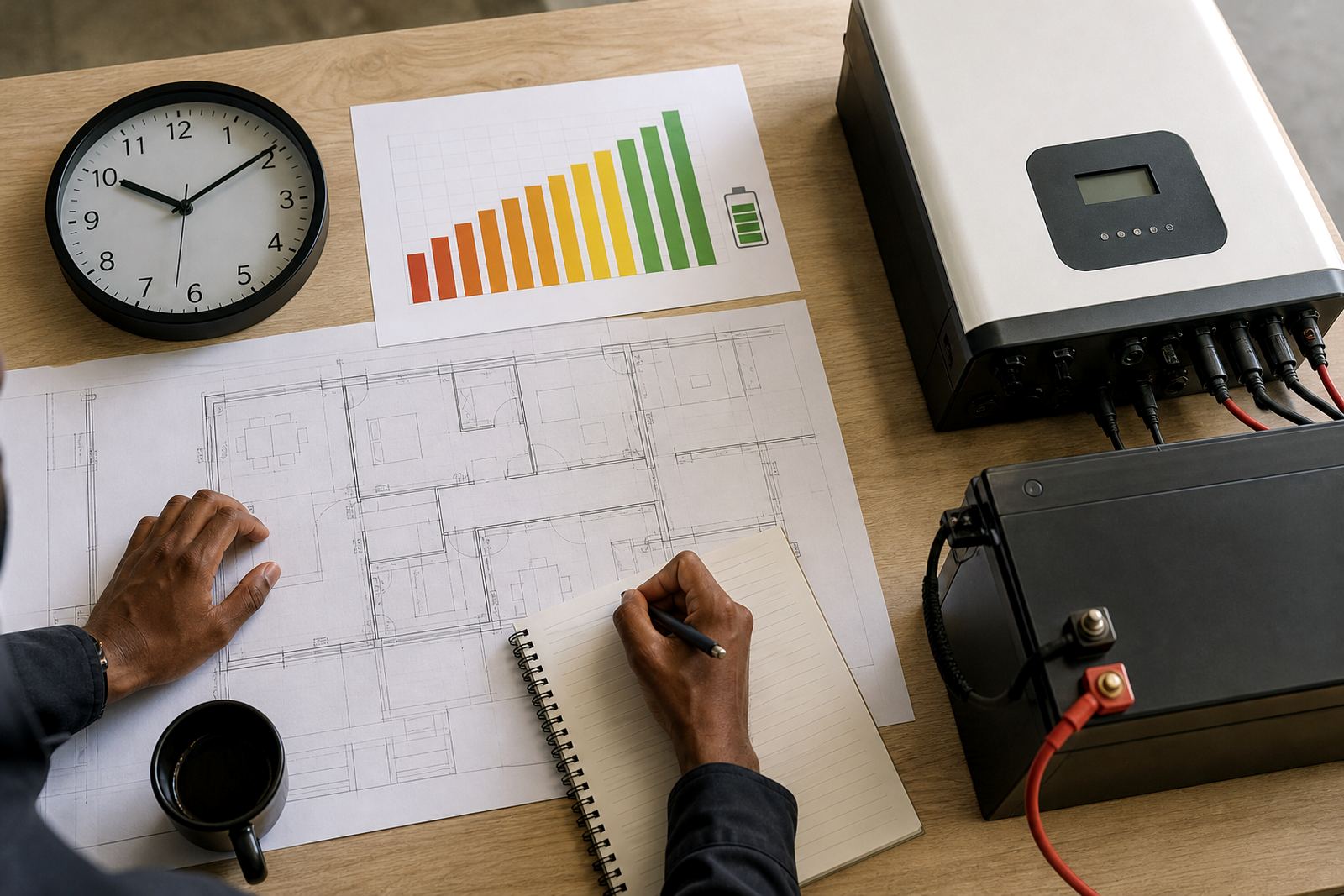
A practical site assessment can save a lot of guesswork. In many cases the answer is not a bigger system everywhere, but a better split between essential and non essential circuits.
Share what must stay on during an outage and the size of the property, and a backup planner will phone or message you.
Contact formInverter and lithium battery sizing for winter use
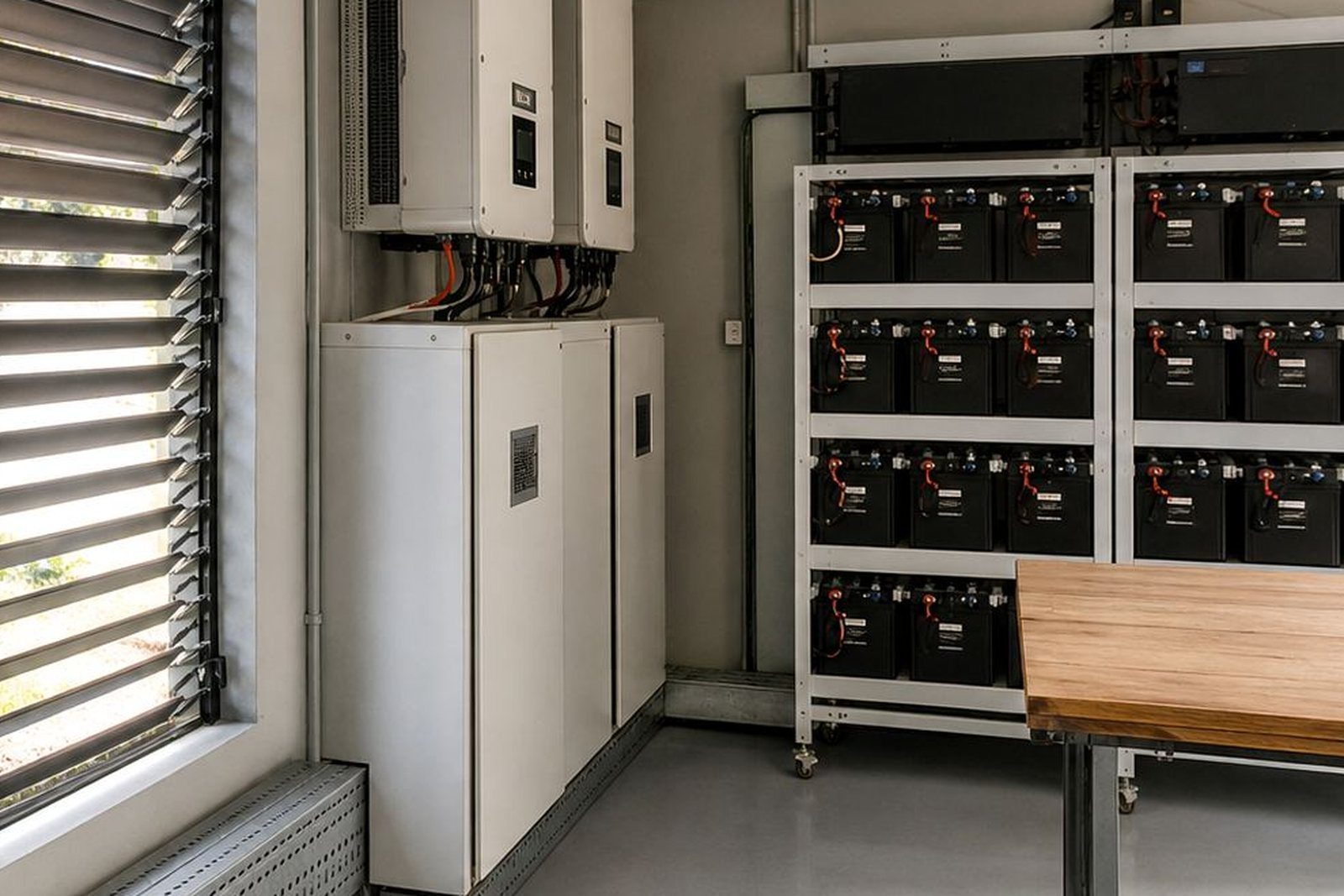
Inverters and lithium batteries work best when they are sized for the real pattern of use, not only the worst case on paper. A smaller system may cover a few lights and internet for a short outage, while a larger unit with more battery capacity can keep essential circuits going for longer stages of load-shedding. The right choice depends on how many hours you need to bridge, how often outages happen and whether you want to run anything beyond the basics.
Lithium batteries are often preferred for backup because they recharge well, handle repeated cycling and take up less space than older battery types. They still need proper installation, safe ventilation where required and correct settings on the inverter. If a business in Midrand has a server room or a home in Roodepoort wants to keep a double garage and study online, the battery size should be matched to the expected load and the duration of the outage. Overloading the system is where many winter plans go wrong.
- Choose inverter capacity with headroom for startup surges.
- Match battery capacity to the number of backup hours you need.
- Check whether the system must support solar input now or later.
- Plan for future battery expansion if your needs are likely to grow.
Keep essential circuits warm, not the whole building
One of the most useful winter decisions is to back up only the essential circuits instead of trying to keep everything live. That usually means a few plug points, lighting and communications, rather than geysers, large heaters and all non essential sockets. This approach gives you a longer runtime and a cleaner changeover when the power goes off.
For many homes in Sandton and Fourways, the goal is to keep the alarm, gate, Wi-Fi and selected rooms available while the rest of the house stays off. For a small office in Pretoria or Centurion, the focus may be network equipment, a few computers and reception. You can still be comfortable and operational without trying to power every appliance at once. That balance matters most during the cold evenings when outages feel longer than usual.
Changeover solutions should be planned carefully so the system switches safely between utility power and backup. A neat wiring plan also makes maintenance easier later, especially if you decide to add another battery or move loads around.
Compliance is part of winter planning, not an afterthought
Any inverter or battery installation should be done by a registered electrician. The installation must be accompanied by a certificate of compliance, and if the system is grid-tied, municipal registration is required as well. That is especially important in Gauteng where residential estates, sectional title schemes and business premises may all have their own electrical rules and submission requirements.
Skipping the paperwork can create problems when you sell a property, lodge an insurance claim or need an electrical inspection for a building. It can also create safety risks if the changeover, earthing or protection devices are not set up correctly. A proper installation is not just about making the lights stay on, it is about making sure the system is legal and safe to use.
- Use a registered electrician for all fixed wiring and inverter work.
- Ask for a certificate of compliance after installation.
- Register grid-tied systems with the municipality where required.
- Keep records of the equipment and the final circuit layout.
A winter example from Randburg to Roodepoort
Consider a mixed-use property in Randburg with a small office at the front and a home office at the back. In winter the family runs heaters in the evening, the office needs internet through the day and the gate motor must still work during load-shedding. A single backup plan for the entire property would waste power on non essential loads, but a staged approach can keep the important parts running for longer.
The practical route is usually a site assessment, backup sizing and then a proper installation plan for essential circuits, inverter and battery placement. From there you can add monitoring setup, battery expansion or routine servicing if the property needs it later. This is often the difference between a system that looks fine on paper and one that handles real winter use without constant trip outs or confusion.
Homes and businesses across Johannesburg, Pretoria, Centurion, Midrand and Roodepoort face the same seasonal pressure. The details differ, but the method stays the same: choose the right loads, size the backup properly and keep the installation compliant.