
Why heat matters as much as output
An inverter and lithium batteries are built to handle repeated use, but they still need room to breathe. When equipment runs in a hot, closed cupboard or a cramped storeroom, the internal temperature rises and the system may throttle output, trip early or wear faster than it should.
In Gauteng, that matters in summer when indoor temperatures climb quickly, especially in apartments, offices and lock-up utility rooms. A garage in Midrand or a back room in Randburg can become a heat trap by midday, and that extra warmth is carried into every load-shedding cycle. The safest approach is to think about cooling from the start, not after the first fault callout.
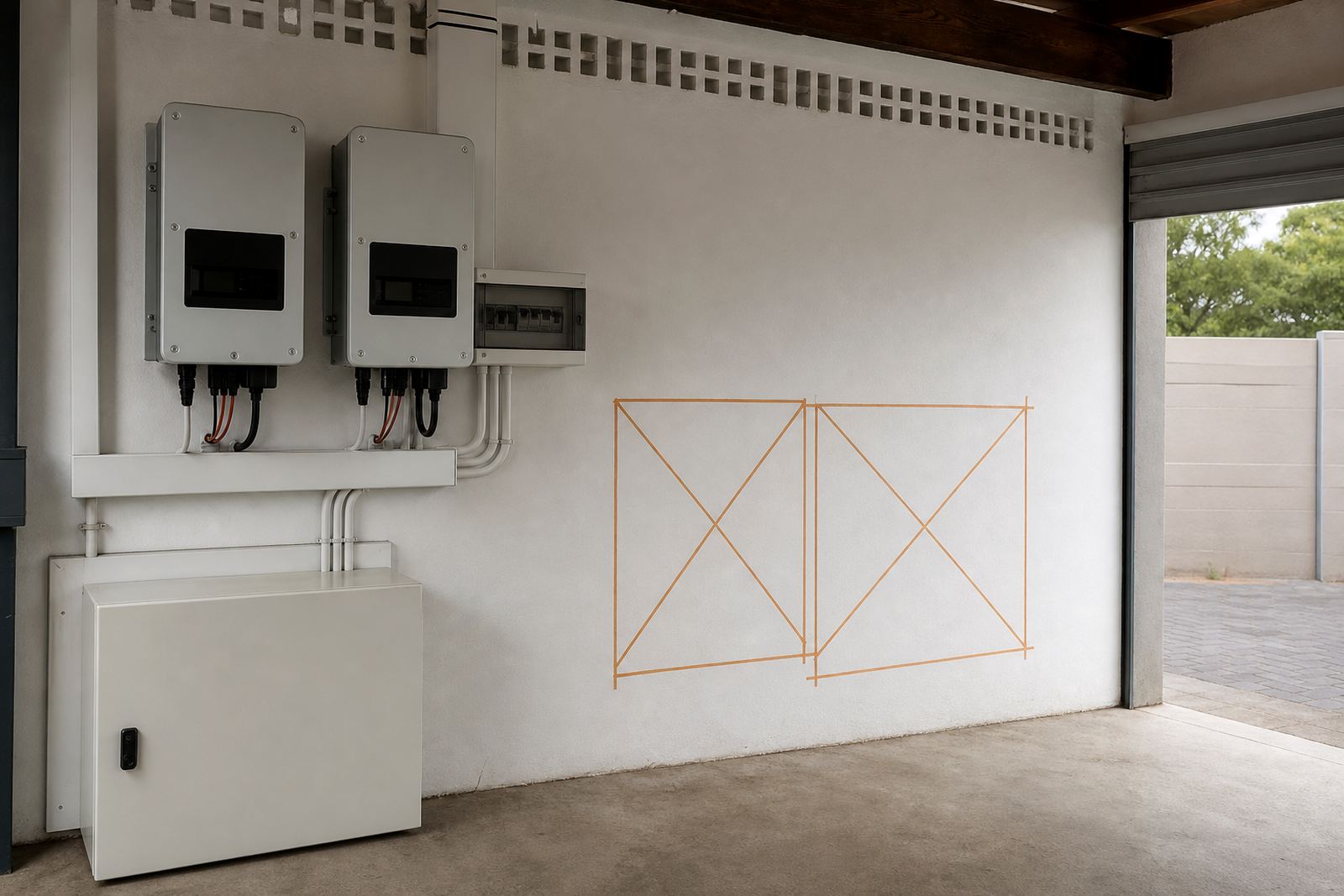
- Leave clear space around the inverter for airflow and maintenance access.
- Avoid placing batteries against hot water cylinders, ovens or direct afternoon sun.
- Keep ventilation paths open, even if the equipment is neatly boxed in.
- Do not seal the system into a cupboard without proper louvres or fan-assisted airflow.
Noise is usually a placement problem
Most backup systems are quieter than people expect, but fans, transfer switching and the hum of electrical equipment can still be noticeable in a small room. A light buzzing near a bedroom wall or open-plan office can become irritating, particularly during a long outage when everyone is already on edge.
The answer is not to hide the equipment anywhere available. It is better to choose a place where noise will not disturb daily use, while still giving safe access for inspection and servicing. In a Fourways townhouse, that might mean a garage wall instead of a passage cupboard. In a Sandton office, it may mean a plant room rather than a store used for printing and filing.
- Keep the inverter away from bedrooms, boardrooms and quiet working areas where possible.
- Mount equipment on a solid wall to reduce vibration transfer.
- Avoid placing batteries where footsteps, doors or loose shelving will shake them.
- If a fan noise changes suddenly, treat it as a fault check item not a normal sound.
Share what must stay on during an outage and the size of the property, and a backup planner will phone or message you.
Contact formWhat a proper backup room should feel like
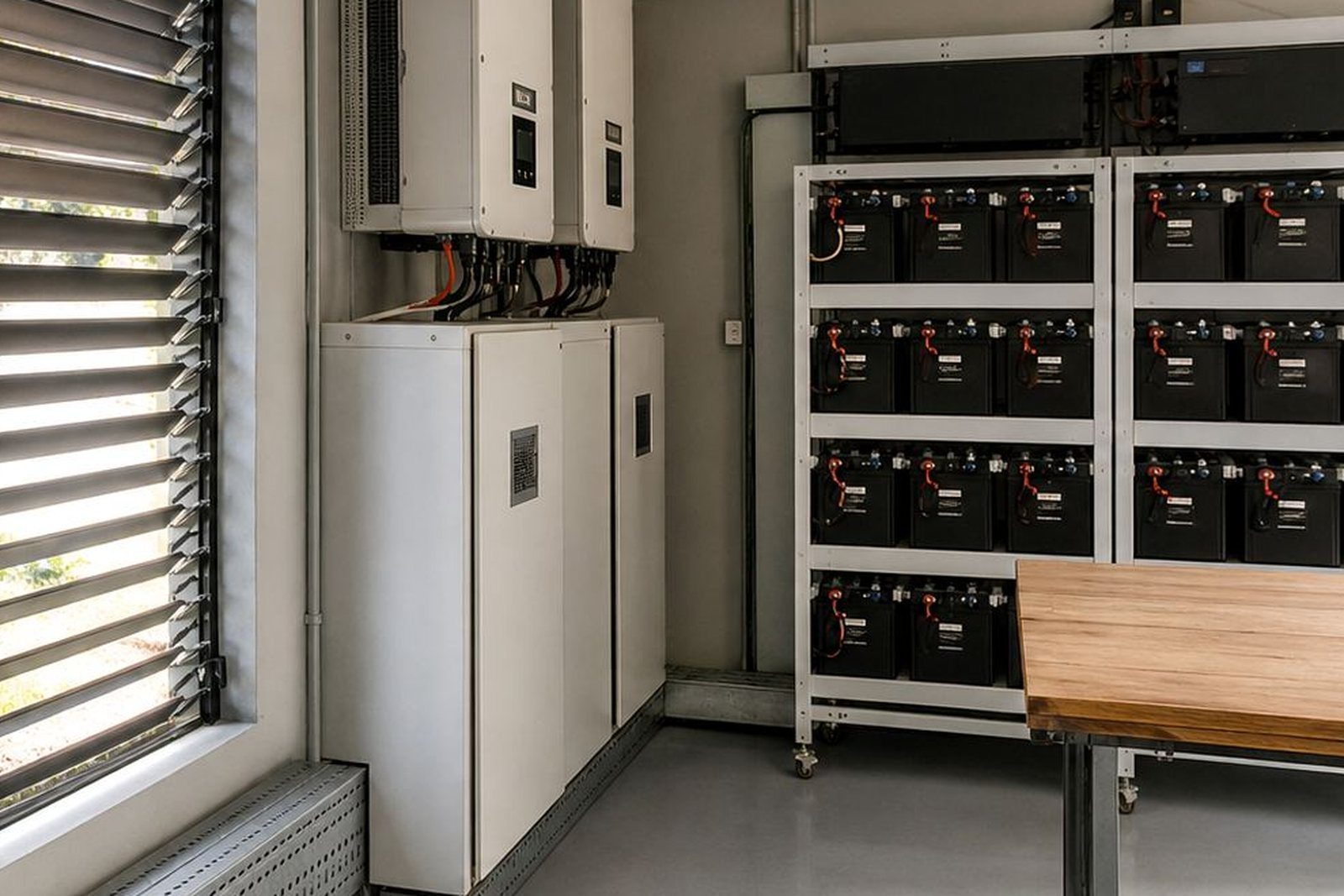
A good installation area does not need to be large, but it should be dry, tidy and easy to service. Lithium batteries prefer stable conditions, so a damp corner or a room exposed to coastal moisture is not ideal. That is one reason many homes and businesses in Johannesburg and Pretoria choose an internal wall in a secure utility area rather than an outside lean-to.
Ventilation also helps with everyday comfort. Even when the system is idle, electronics give off some warmth. If the room feels stuffy to you, it is likely to feel worse once charging starts and the inverter is carrying essential circuits during load-shedding. The goal is steady airflow, not a draught blowing directly onto the equipment.
- Choose a dry, accessible area with enough wall strength for the mounting load.
- Keep the floor clear for cleaning and inspection.
- Store no chemicals, paint thinners or fuel nearby.
- Allow space for cables, isolators and future battery expansion.
Sizing affects cooling and sound more than people realise
Backup sizing is not only about how long the lights stay on. It also affects how hard the inverter works and how often the fans come on. A system that is too small will run close to its limit and may sound busier during each outage. A system that is sized correctly for the essential load usually runs cooler and more quietly because it is not being pushed to its edge.
That is why a site assessment matters. A home in Roodepoort with a fridge, fibre, a few lights and gate motor has a different profile from a small business in Centurion that needs computers, printers and access control. Once the real load is known, the inverter and battery bank can be matched to the job instead of overworked or underused.
For practical planning, look at these points:
- Identify only the essential circuits that must stay on during outages.
- Check starting loads on fridges, pumps and office equipment.
- Allow for charging time after an outage, not only the outage itself.
- Plan for future additions if the property will add more circuits later.
Ventilation rules for homes, offices and small factories
Different properties need different solutions. A compact apartment in Midrand may need a quieter, wall-mounted setup with careful airflow. A warehouse office in Pretoria might allow a dedicated utility room with better spacing and natural ventilation. Small factories, workshops and retail sites often need even more attention because dust, heat and machine noise can all affect the system.
The basic rule is simple: do not assume that any spare corner will do. Equipment should be placed where airflow can move freely and where people can reach isolators, displays and breakers without climbing over storage or tools. If the site is near the coast or in a humid area of Gauteng after heavy rain, condensation risk should also be considered.
- Keep equipment away from dust-heavy work areas and solvent storage.
- Use a position that allows regular cleaning of vents and filters.
- Do not block airflow with packing boxes, cleaning gear or signage.
- Allow enough clearance for inspections, thermal checks and servicing.
Compliance comes first, even when the system is quiet
Noise and cooling are only part of the job. Any inverter installation should be done by a registered electrician, with the proper certificate of compliance issued afterwards. If the system is grid-tied, it also needs the required municipal registration. That is not paperwork for later, it is part of safe operation from day one.
Correct wiring, changeover arrangements and earthing also affect noise and temperature. Loose connections can create heat and electrical chatter, while poor cable routing can make maintenance harder and airflow worse. A clean installation is usually the quieter one because parts are not rubbing, vibrating or running hotter than they should.
At PowerCut, the focus is on practical backup support for homes and businesses across Randburg, Johannesburg, Pretoria, Centurion, Midrand and Roodepoort. The right room, the right ventilation and the right size setup will always do more for reliability than squeezing equipment into the nearest available space.