What load shedding actually means in South Africa
Load shedding is a controlled power interruption used when the electricity network cannot meet demand. In simple terms, supply has to be reduced for set periods so the grid can stay stable. That means your suburb, office park or shop may lose power even though there is no fault on your side.
In Gauteng the impact is often felt in the middle of the workday, during traffic peak times, or in the evening when homes are cooking, charging phones and running lights at the same time. For businesses this can stop tills, internet routers, access control and security systems. For homes it affects lighting, fridges, gate motors and the ability to work from home.
It helps to think of load shedding as planned disruption rather than a random outage. Once you know that, you can plan for the parts of your property that must stay on, and the parts that can be switched off for a few hours.
Why backup power is no longer only for emergencies
Many people only start thinking about backup after the first spoiled groceries or interrupted meeting. But in areas such as Randburg, Sandton and Midrand, backup power has become part of normal planning because outages can affect income, security and comfort at the same time.
A well-sized inverter and lithium battery setup can keep selected circuits running for the period you need. That might mean a few lights, the Wi-Fi router, TV and charging points at home. In a small business it may mean computers, point-of-sale equipment, fibre equipment and a security system. The key is to decide what must stay on, not try to power the whole building unless that is truly required.
Some sites only need short-term support, while others need longer runtime for repeated shedding stages or extended outages. The right answer depends on your load, your budget and the way the property is used. A good system is practical, not oversized for the sake of it.
Share what must stay on during an outage and the size of the property, and a backup planner will phone or message you.
Contact formHow inverters and lithium batteries work together
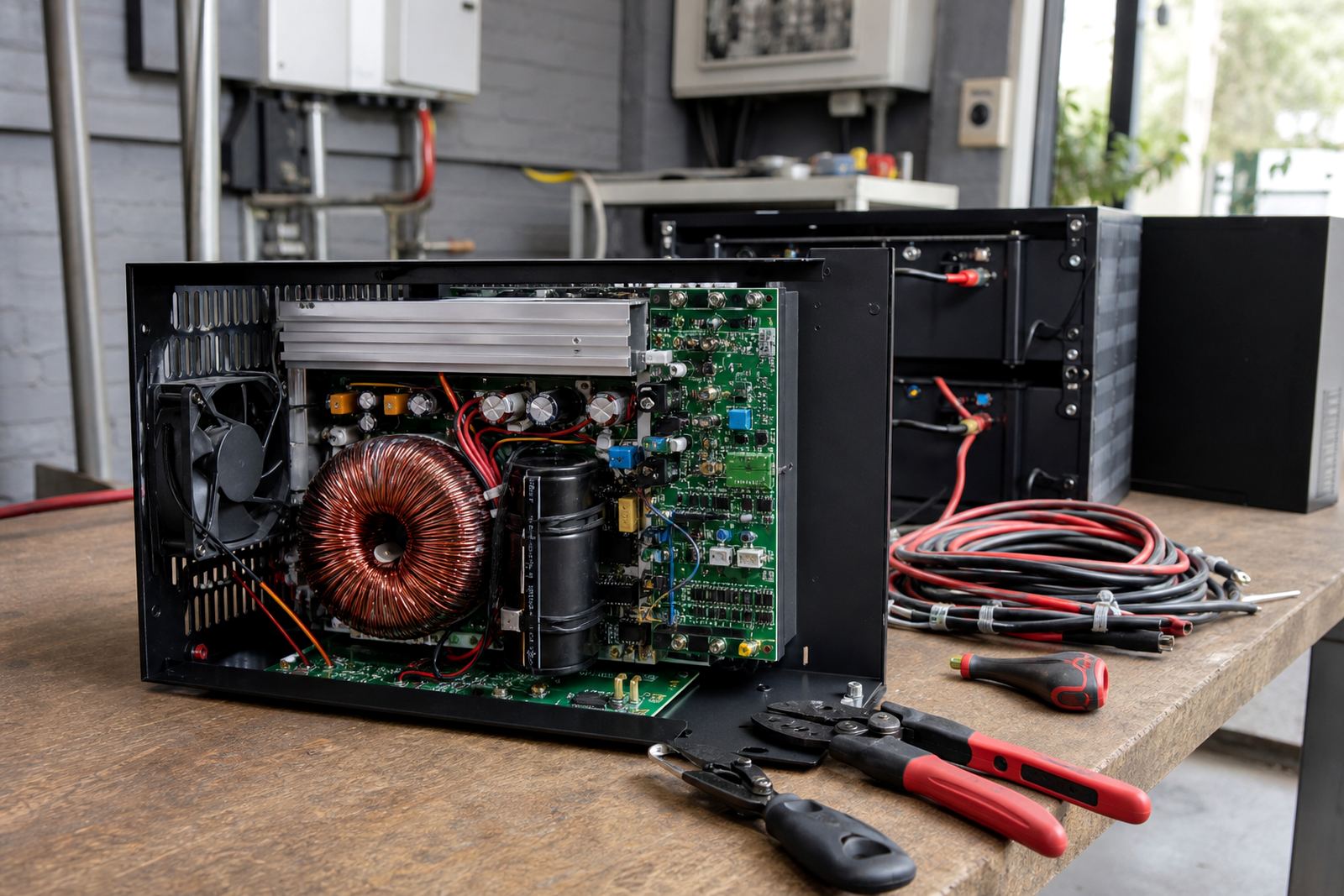
An inverter changes battery power into usable AC power for your appliances. A lithium battery stores energy efficiently and can discharge more consistently than older battery types in many backup setups. Together, they form the heart of a modern load shedding solution.
At a basic level, the battery is the storage tank and the inverter is the converter and controller. The inverter manages charging, changeover and output to the selected circuits. Lithium batteries are popular because they recharge quickly, handle repeated cycling well and take up less space than many older alternatives.
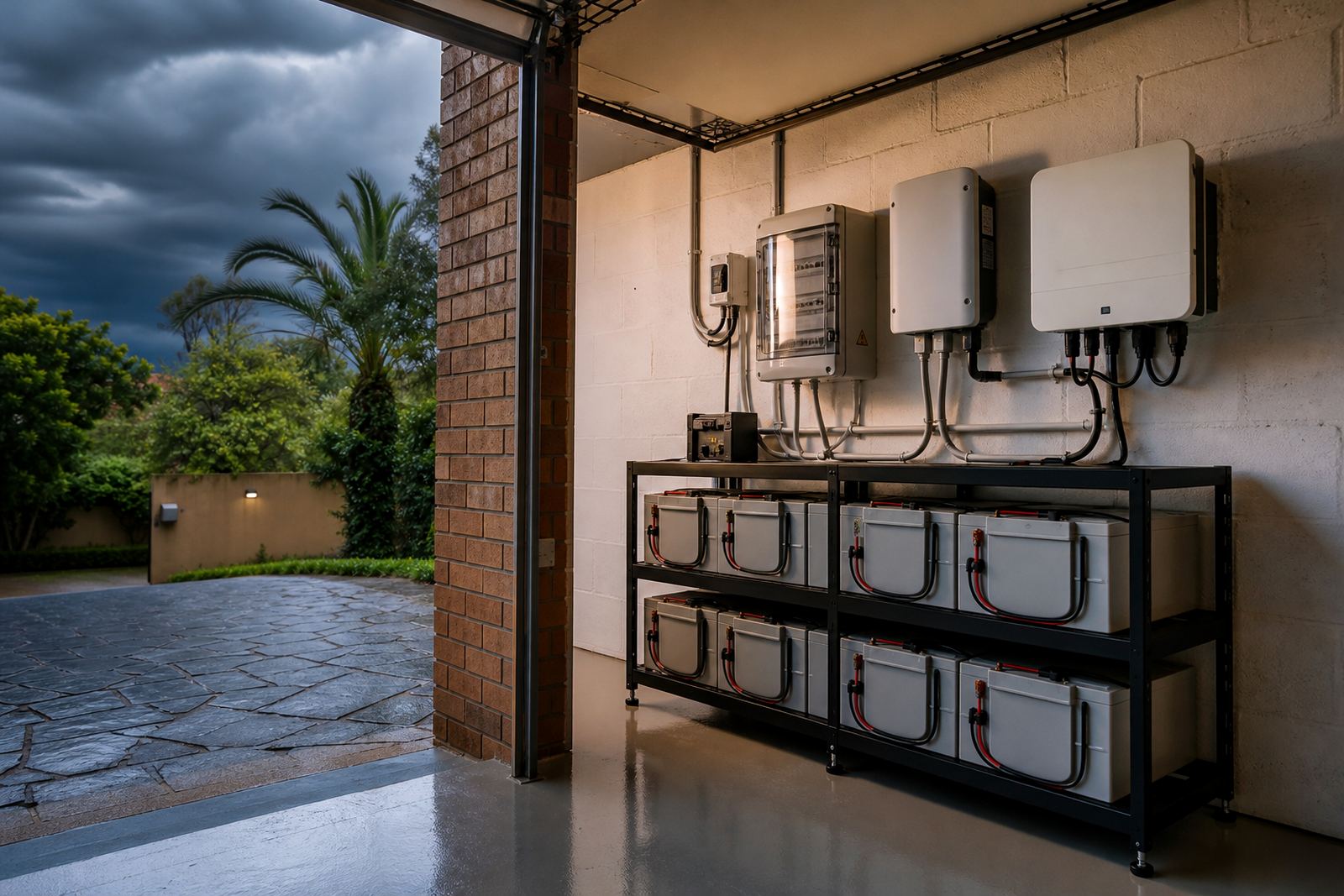
For coastal humidity or dusty site conditions, equipment placement still matters. A clean, ventilated area with enough clearance helps protect the system and keeps servicing easier. If the unit is installed in a garage, store room or plant room, there should be proper airflow and no risk of heat build-up.
Sizing backup power for a home or business
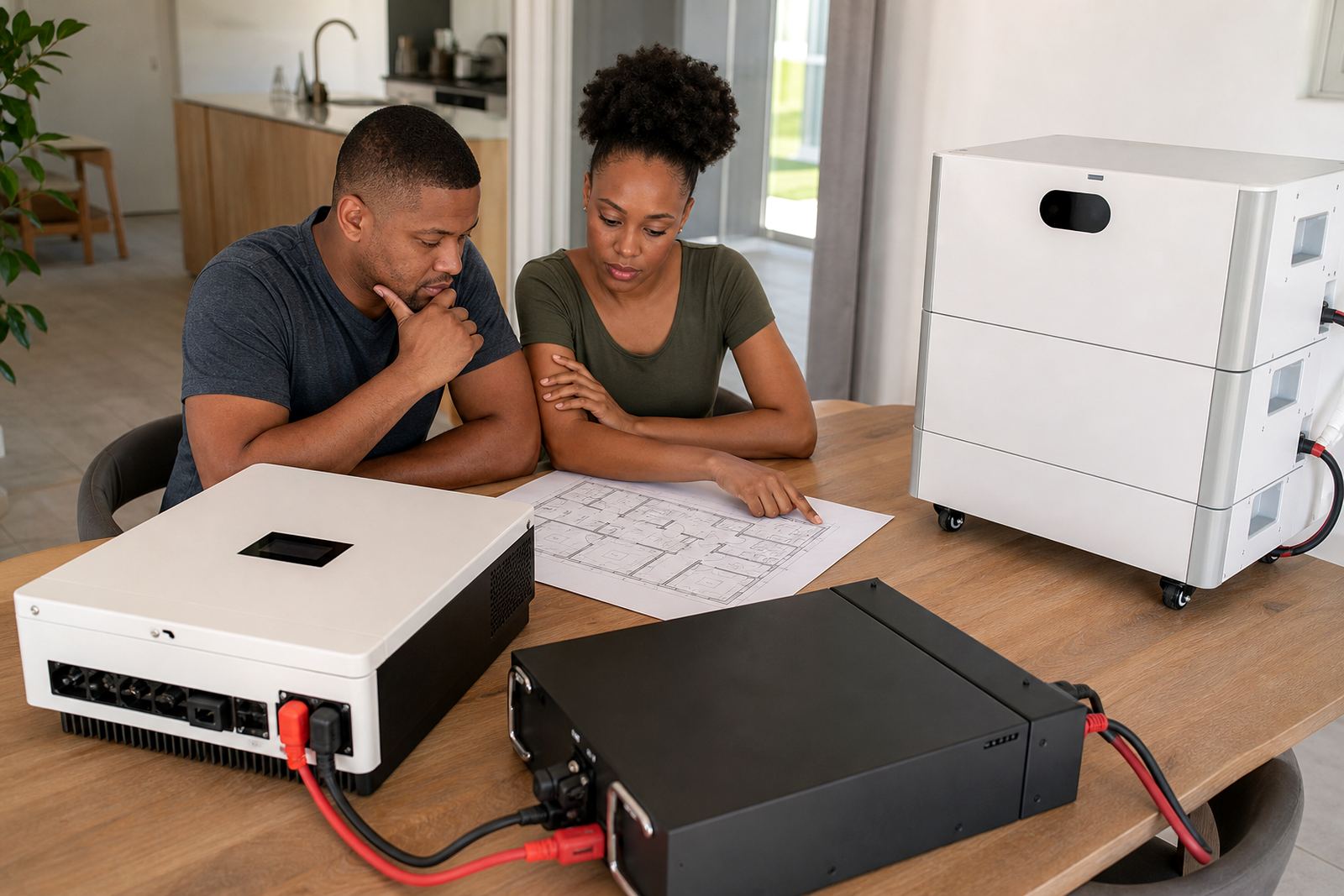
The first step is to list the equipment and circuits that need to remain live when the power goes off. That list is different for every property. A family home in Fourways may want lighting, Wi-Fi and a few plugs. A clinic in Pretoria might need computers, network equipment and selected medical support loads. A retail site in Roodepoort may need tills, cameras and a cash office.
Useful questions include how many circuits must stay live, how long you need them to run, and whether there are high-startup items such as pumps or fridges. A proper site assessment looks at those loads, the current electrical board and how the changeover will be handled. It also checks whether a battery expansion may be needed later if your needs grow.
- Start with essential loads only, then add convenience loads if the system allows it.
- Check the expected outage duration in your area, since shedding stages can change.
- Allow for future growth if you plan to add more circuits later on.
- Make sure the site has a safe place for the inverter and battery bank.
In practice, under-sizing leads to frustration and over-sizing adds cost without real benefit. The goal is balanced capacity that suits your actual usage.
What installation and compliance must include
Backup equipment should be installed by a registered electrician. That is not a formality, it is part of safe electrical work. The installation must be done correctly, tested and issued with a certificate of compliance where required. If the system is grid-tied, it also needs municipal registration according to the local rules that apply to the property.
This matters because backup systems interact with the main electrical supply. Essential circuit wiring, changeover solutions and commissioning all need to be done neatly and with the right protection in place. If the changeover is poor, you can end up with nuisance trips, overloaded circuits or unsafe back-feeding.
For homes and businesses across Johannesburg, Centurion and Pretoria, compliance is not just paperwork. It is part of making sure the system is safe for daily use and acceptable if you ever need to sell, insure or inspect the property. A proper handover should explain how the system operates and what to do if there is a fault.
Cutting work for a client in Roodepoort
Take a small office in Randburg with a few workstations, a router, a printer and security cameras. During load shedding, staff may lose connectivity and the alarm system can become unreliable if it has no backup. A practical solution is to protect the essential circuits only, so the office can keep working without trying to carry non-essential equipment.
Now compare that with a family home in Roodepoort. The owners may want lights, the Wi-Fi router, TV and a gate motor to remain available, especially when school runs and evening cooking happen at the same time. In both cases the idea is the same: identify what matters most and build a system around that load.
Our team works from Randburg, Johannesburg and supports homes and businesses across Gauteng including Sandton, Fourways, Midrand, Centurion and Pretoria. Site assessments, monitoring setup, battery expansions and routine servicing all help keep the system ready when the next outage comes round.
Keeping a backup system in good condition
Once a system is installed, it still needs attention. Batteries should be checked for correct operation, wiring must stay tight, and the inverter area should be kept clear and dry. Dust, heat and poor ventilation can shorten equipment life, especially where the unit is tucked into a cupboard or utility space.
Routine servicing helps catch small issues before they become outages of their own. Fault checks can identify a weak connection, a setting that needs adjustment, or a battery that is no longer performing as expected. If your needs change, a battery expansion or revised backup sizing may be the better move than waiting until the system is under pressure.
Load shedding is not something most people can control, but your response to it is. With a properly planned system, outages become a managed inconvenience instead of a full stop.