Start with the body corporate rules before you buy any equipment
In a sectional title scheme, the first question is not what size inverter you want, but what the conduct rules and trustees allow. Some schemes in Sandton, Fourways and Midrand are relaxed about equipment inside a private unit, while others control everything that affects common property, including cables through walls, vents, balconies and parking bays.
Read the management rules, look at any architectural or electrical approval process, and ask whether the trustees want drawings, a scope of work or contractor details before work begins. If the building is in Johannesburg or Pretoria, the managing agent may also have its own form for maintenance teams and access control. It saves time to ask these questions early, because a battery room or inverter wall in one block can be perfectly fine and not acceptable in another.
Residents often forget that even a neat installation can still affect neighbours if it changes noise, heat, airflow or backup circuits in shared areas. That is why the approval trail matters just as much as the equipment itself.
Know where the inverter and lithium batteries may go
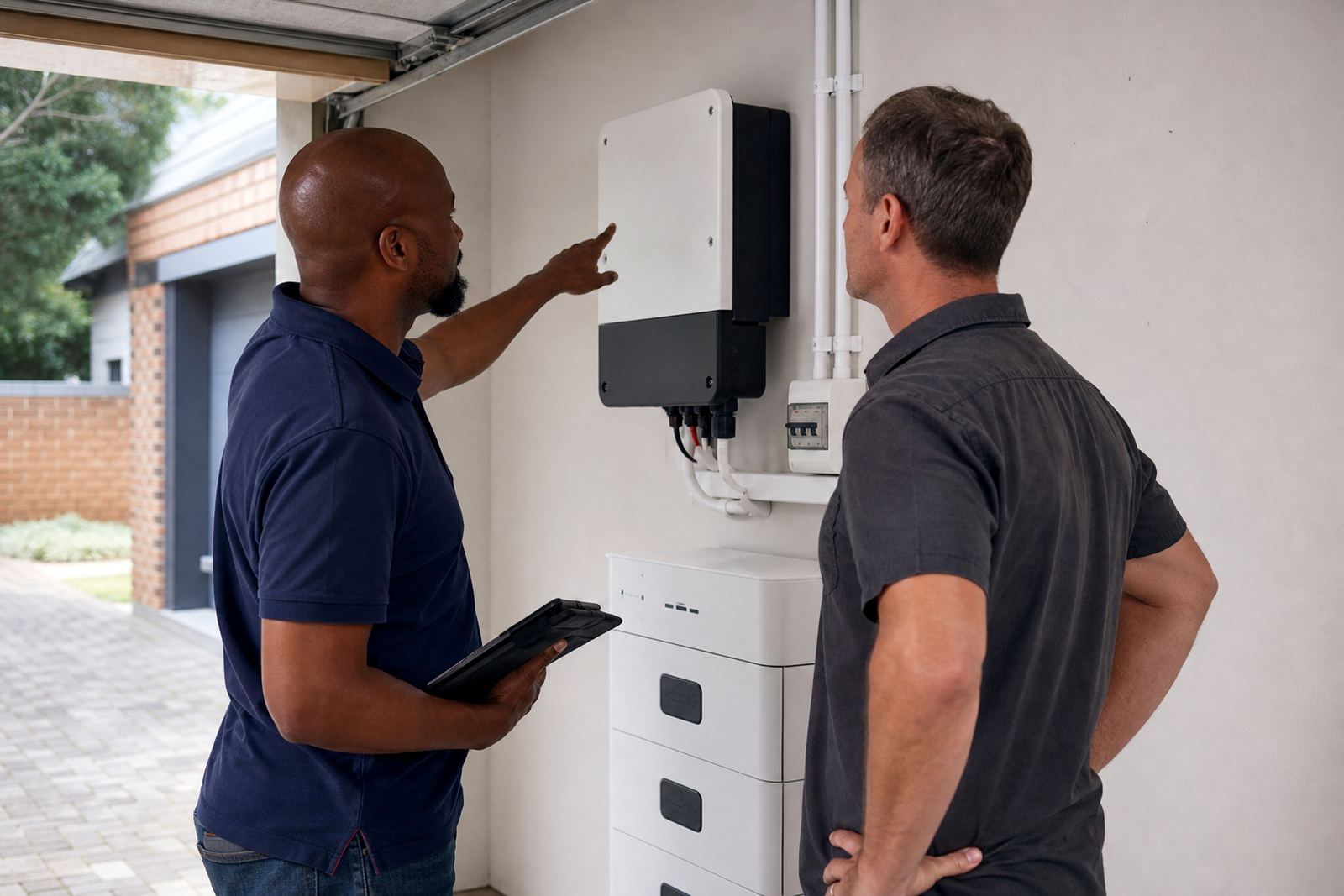
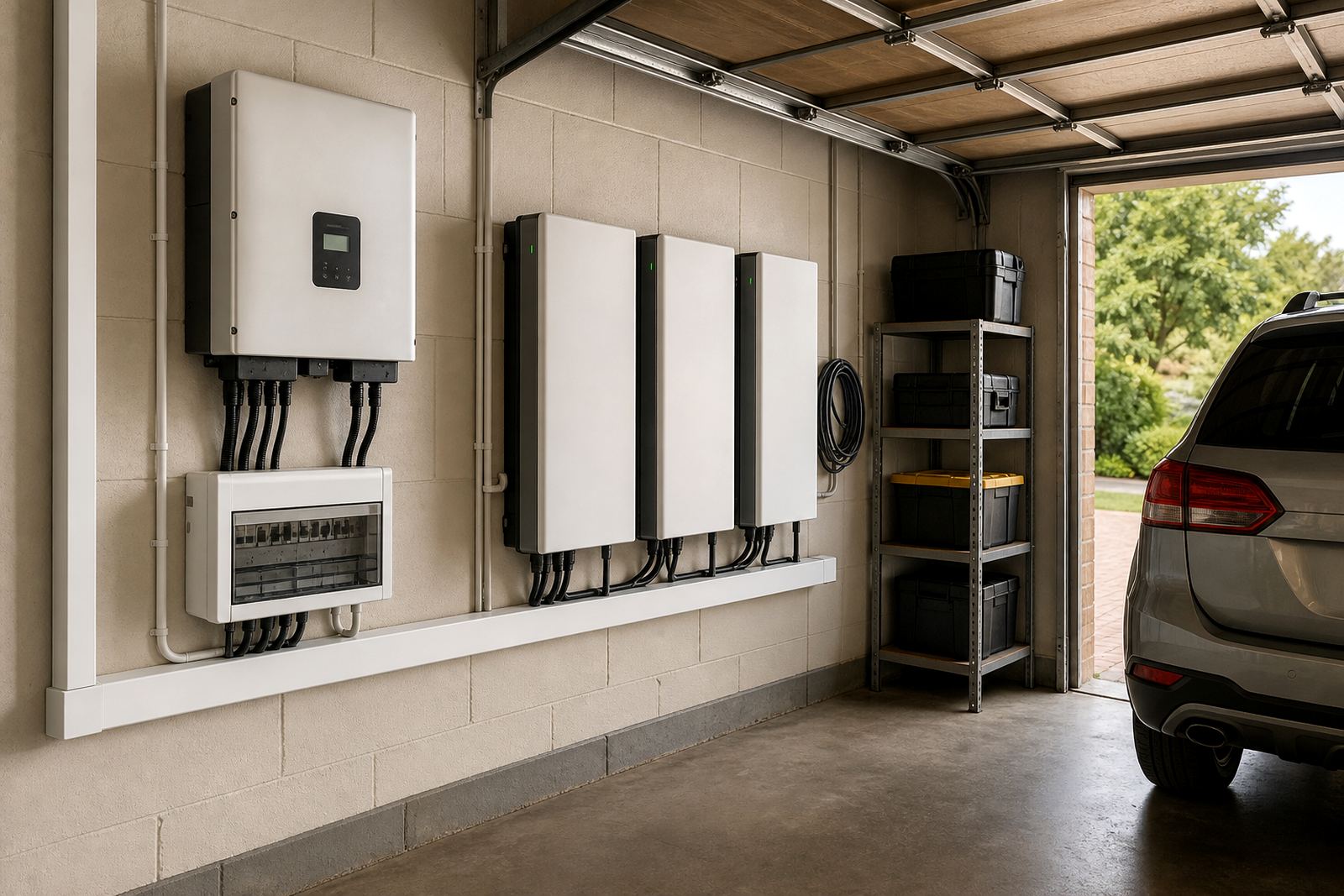
Most homes need a dry, ventilated spot with enough wall space and safe clearance around the inverter and batteries. In sectional title living, that might be inside a storeroom, laundry, garage or utility cupboard, but the exact place depends on the scheme rules and the unit layout. Coastal humidity is not a big issue in Gauteng, but dust, heat and poor airflow still matter. A closed cupboard with no ventilation is usually a bad idea.
Lithium batteries are commonly chosen for backup because they are compact and work well for repeated charging and discharging. Even so, they are not toys. They need correct mounting, correct cable sizing and enough room for future service access. If a system is squeezed into a cramped area, it can become harder to inspect and harder to keep safe.
- Check whether the installation area is inside your section or on common property.
- Ask whether drilling into walls, ceilings or fire-rated surfaces needs written approval.
- Confirm that there is enough ventilation and access for maintenance.
- Make sure the equipment will not block passages, metres or shared services.
In older complexes around Roodepoort and Randburg, it is common to find tight utility spaces, so planning the physical location is just as important as choosing the inverter size.
Share what must stay on during an outage and the size of the property, and a backup planner will phone or message you.
Contact formSizing should match essential loads, not the whole wish list
A common mistake in sectional title units is trying to back up everything at once. The better approach is to separate essential loads from non-essential ones. Fridge, lights, Wi-Fi, gate intercoms inside the unit, a TV point and a few plugs are different from geysers, aircons and ovens. Once you know what must stay on during load-shedding, the inverter and battery bank can be sized to suit that actual demand.
Backup sizing is not only about kilowatts. It also depends on how long you need power for, how often outages happen in your area, and whether the building has any restrictions on charging times. In a townhouse complex in Centurion, for example, a resident may only need enough capacity to cover two evening outages and keep the basics running. In a small office unit in Johannesburg, the essential load might include one workstation, a router, a point-of-sale device and security equipment.
When the battery bank is too small, the system runs flat too quickly. When it is too large for the inverter or the wiring, the installation becomes unnecessarily expensive and harder to manage. The right balance is practical, not fancy.
Grid-tied systems need municipal registration and proper paperwork
If your backup system will interact with the municipal supply, or feed power into the property in any form, do not treat it as a simple plug-and-play job. Grid-tied and hybrid systems may require municipal registration, approval documents or compliance checks, depending on the local authority and the scheme setup. That is especially relevant in Johannesburg and Tshwane, where building management may also want proof that the work was done correctly.
Installation must be done by a registered electrician, and the final electrical certificate of compliance is not optional. Sectional title owners sometimes assume the contractor can sort it out later, but that is risky. The electrician should confirm the wiring, changeover arrangement, earthing and protection devices, then issue the correct paperwork once the job is complete.
- Ask who is responsible for municipal registration if the system connects to the grid.
- Keep the certificate of compliance with your unit records.
- Confirm whether the trustees want a copy for their file.
- Check whether the metre or supply point needs additional approval.
Without the paperwork, a future sale, insurance claim or fault investigation can become much more difficult than it should be.
Think about neighbours, common property and building safety
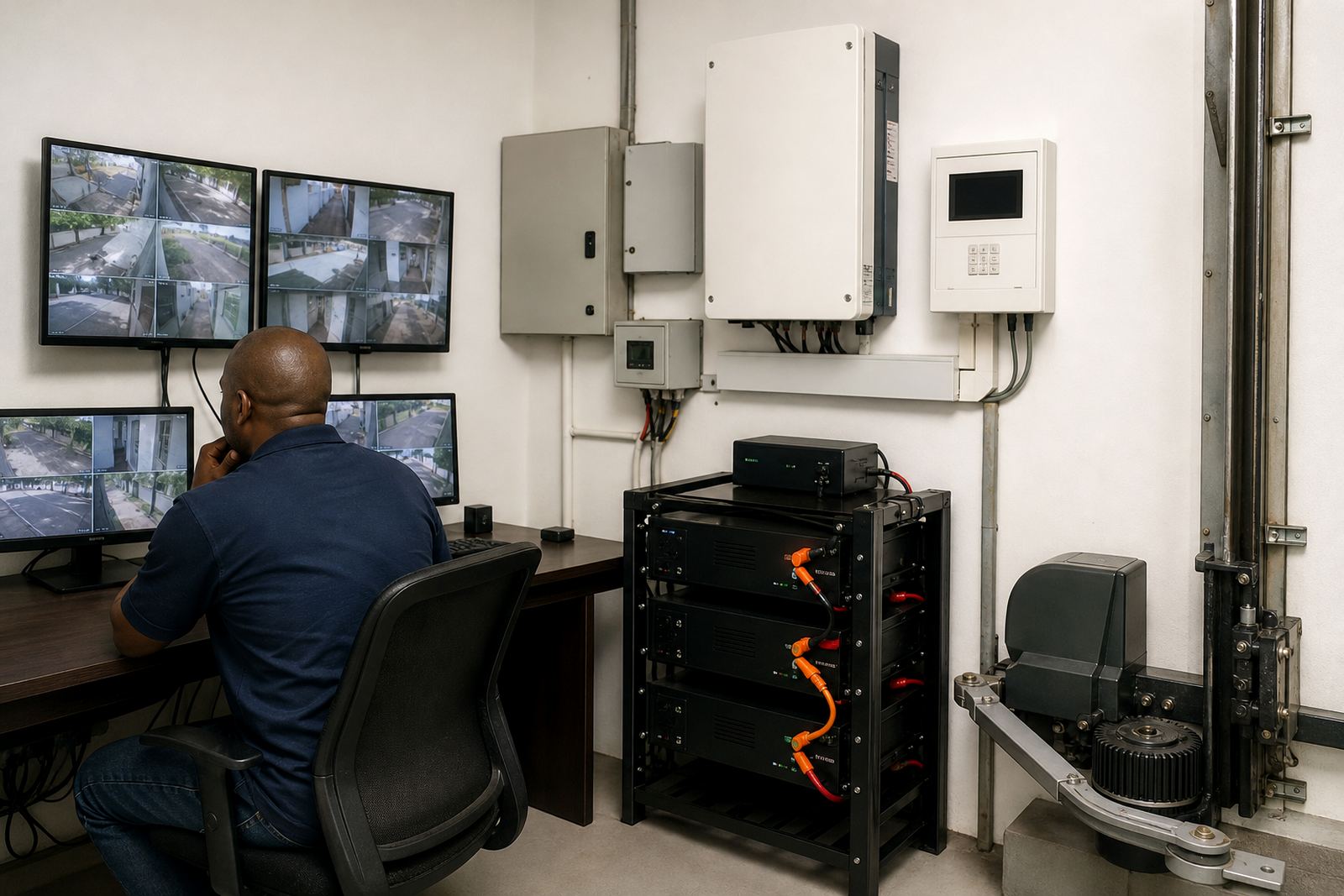
One person’s backup system can become everyone else’s headache if it is installed badly. In a sectional title block, common property is shared and the building rules exist for a reason. Loose cables, noisy fans, overfilled cupboards or battery gear placed too close to flammable items can create complaints fast. Even a neat installation can cause trouble if it makes a humming noise through a shared wall.
It helps to speak to the trustees before the work starts, especially if the installation may involve drilling, lifting heavy batteries or shutting off power for a few hours. In some complexes, access has to be arranged through security, and there may be rules about contractor hours, parking and waste removal. A service planner who understands these conditions can help avoid conflict and delays.
At a Midrand apartment block, for example, a resident may have the right to install backup power inside the unit, but still need permission to route cable through a service chase and schedule work during approved hours. That small detail can make the difference between a smooth job and a row with the managing agent.
Routine checks keep the system ready when load-shedding returns
Once the system is installed, the job is not finished. Batteries and inverters need occasional checks to make sure settings, ventilation and charging behaviour are still correct. Dust build-up, a tripped breaker or a loose connection can undo a lot of good work. In sectional title living, it also helps to keep the system tidy so that inspections by trustees, insurers or electricians are straightforward.
Routine servicing is especially useful where the unit has essential circuit wiring or a changeover arrangement that is used often. If the battery expansion happens later, the original setup should still be able to handle it safely. Records of commissioning, servicing and fault checks should be kept with the property file, not tucked away somewhere impossible to find.
For owners and trustees alike, the aim is simple: keep the lights on without creating a new building problem. That means clear approvals, proper installation and regular checks, all handled in the right order.