
What an inverter actually does during load-shedding
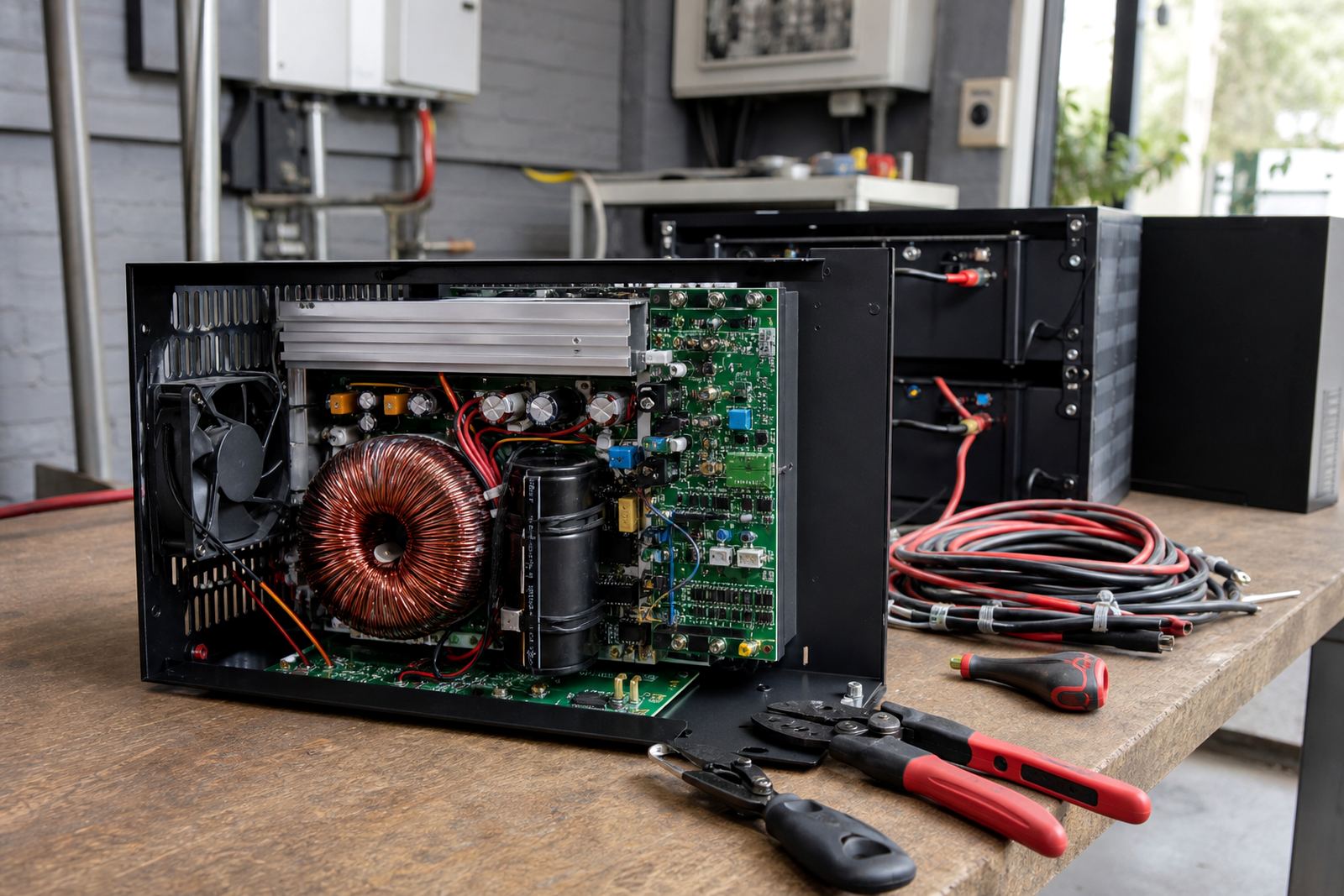
An inverter sits between your incoming supply, your battery bank and the circuits you want to keep alive. When Eskom supply drops out, it switches over and converts the battery’s DC power into AC power, which is the standard electricity used by lights, plugs, routers and many small appliances. In simple terms, it is the bridge between stored energy and everyday power.
For most homes in Randburg, Sandton or Roodepoort, that means keeping the basics on: lights, Wi-Fi, TV, laptop charging and perhaps a fridge or gate motor, depending on the size of the system. In a business setting, the same principle applies to point-of-sale systems, office lighting, computers and communications equipment. The inverter does not create power, it manages what is available from the battery and supplies it where it is needed.
Why lithium batteries are often paired with inverters
Lithium batteries are popular for backup systems because they charge efficiently, handle repeated use well and take up less space than older battery types. They also suit the stop-start pattern of load-shedding, where a battery may be discharged and recharged many times in a week. In coastal or humid areas, proper indoor placement still matters, but lithium units are generally easier to manage than heavier battery banks.
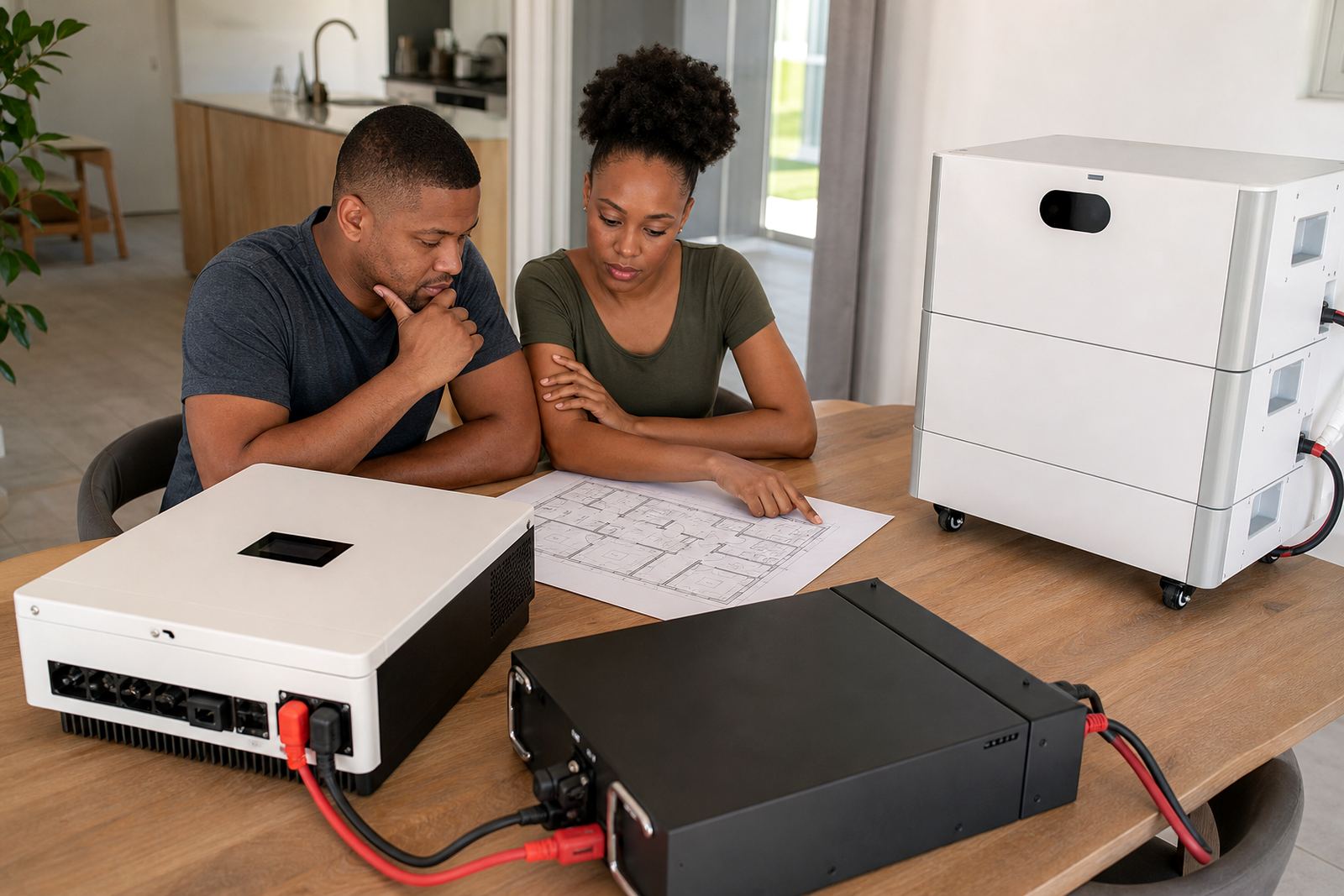
The battery stores energy in kilowatt-hours, while the inverter is rated by how much power it can deliver at once, usually in kilovolt-amperes or kilowatts. Those two figures need to match the actual use on site. A battery can last a long time on paper, but if too many appliances are switched on at once, the system may trip or shut down to protect itself.
- Choose battery capacity for runtime, not just for backup during one short outage.
- Check the inverter’s output size against the appliances you want to keep on.
- Allow for battery age, charging time and future expansion if your needs may grow.
Share what must stay on during an outage and the size of the property, and a backup planner will phone or message you.
Contact formHow backup sizing works in practical terms
The process begins with a clear list of the equipment you want the backup system to carry. A small apartment may only need lights, a fibre router and a laptop. A family home in Pretoria or Centurion may want the fridge, a few plugs and a gate motor as well. A small office in Midrand may need workstations, internet equipment and access control. The point is not to back up the whole property unless that is truly required, but to size the system around essential circuits.
Good sizing also considers how long the power cut lasts. A system that can carry a few lights for two hours is very different from one that must support a business through repeated outages across the day. If the load is too high, battery life drops quickly and the inverter works harder than it should. That is where site assessments help, because the right answer depends on the building, the wiring and the way the property is used.
- List the appliances that must stay on.
- Estimate the total running load in watts.
- Allow for starting surges on items like fridges and pumps.
- Decide whether the system should support only essentials or a wider section of the property.
What happens between the battery and the socket
Inside the system, the inverter does more than simply switch on when the power fails. It monitors input, battery level and load demand. Many units also include charging functions so the batteries refill when mains power returns. Some setups use a changeover arrangement for selected circuits, while others are arranged so the inverter and battery feed only the essential board. The wiring method matters because it affects safety, performance and fault finding later on.
For a home in Fourways or a small shop in Johannesburg, the most practical setup is usually a clean split between essential and non-essential loads. That gives better control and avoids wasting battery power on geysers, ovens or other heavy users that do not need backup. It also makes routine servicing simpler because the electrician can isolate the protected circuits more easily.
Why professional installation and compliance matter
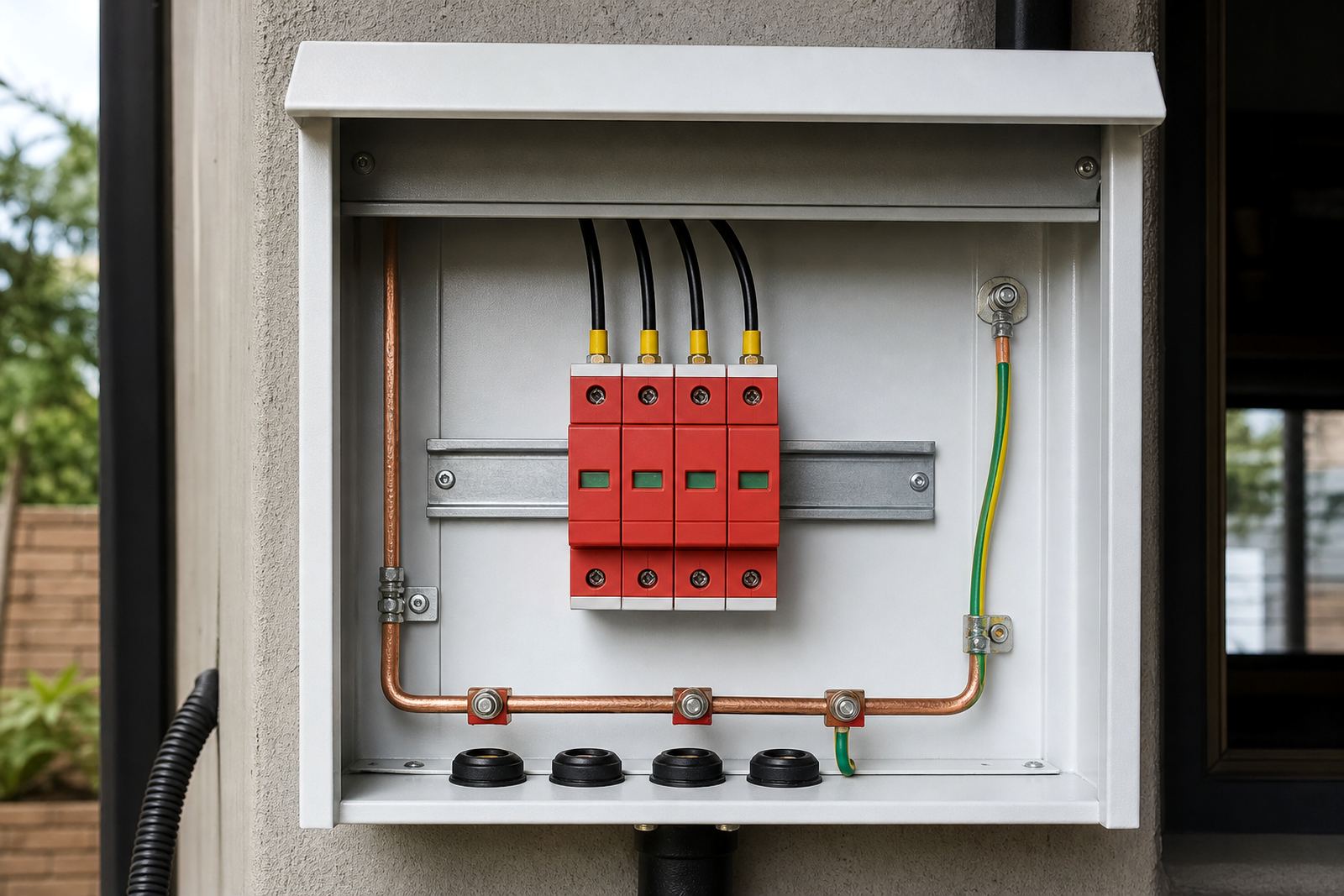
Inverter and battery systems must be installed by a registered electrician, and the installation must be followed by a certificate of compliance. If the system is grid-tied, it also needs municipal registration where required. That is not just paperwork. It confirms that the wiring, protection devices and changeover arrangement are safe and properly connected to the building supply. Skipping these steps can create fire risk, nuisance tripping or trouble when the property is inspected or sold.
In Gauteng, where many homes and businesses are adding backup power at the same time, it pays to treat compliance as part of the job, not an afterthought. Good installations also need correct cable sizing, correct isolators, proper ventilation for batteries and a clean label system for essential circuits. A neat board makes future maintenance far easier, and helps avoid confusion when the next outage comes along.
Cutting work for a client in Roodepoort
Take a typical family home in Randburg with a fridge, a few LED lights, a Wi-Fi router and a television that need to stay on during load-shedding. The electrical load is manageable, but only if the system is sized correctly and the circuits are split properly. If the owner also wants the gate motor and a small office setup covered, the battery and inverter capacity have to increase. That is where practical advice saves time and money, because oversizing adds unnecessary cost while undersizing leaves the home in the dark.
For a small business in Roodepoort or Sandton, the priorities may be different. A till point, computers, data line and selected lighting can keep trading going for a while, but only if the battery has enough capacity and the inverter can handle the load without strain. The right answer depends on the building, the habits of the people using it and how long outages usually last in that area. There is no one-size-fits-all setup.
That is why a site check, a clear load list and a proper commissioning process matter so much. Once the system is installed and tested, it should switch over cleanly, charge correctly and support the circuits you actually need. If something is not right, it is better to catch it early than wait for the first long outage to find the problem.