
Start with the room, not the equipment
Before choosing an inverter or lithium battery bank, look at where the equipment will sit. Indoors, the best location is usually a dry, well ventilated utility area, storeroom, garage wall or plant room where the unit can be fixed securely and checked without moving furniture or stock around. In Randburg and Sandton we often see people trying to squeeze backup gear into tight passages or small cupboards, but that makes heat build-up and servicing harder.
The room should stay reasonably cool, away from direct sun, geysers, laundry splash zones and places where dust or moisture collect. Coastal humidity is not the main issue in Johannesburg, but garages and outbuildings can still get damp, especially during summer storms. If the wall is shared with a kitchen or office, make sure the mounting point can carry the weight of the battery system and any tray or conduit work.
Keep cable runs short and tidy
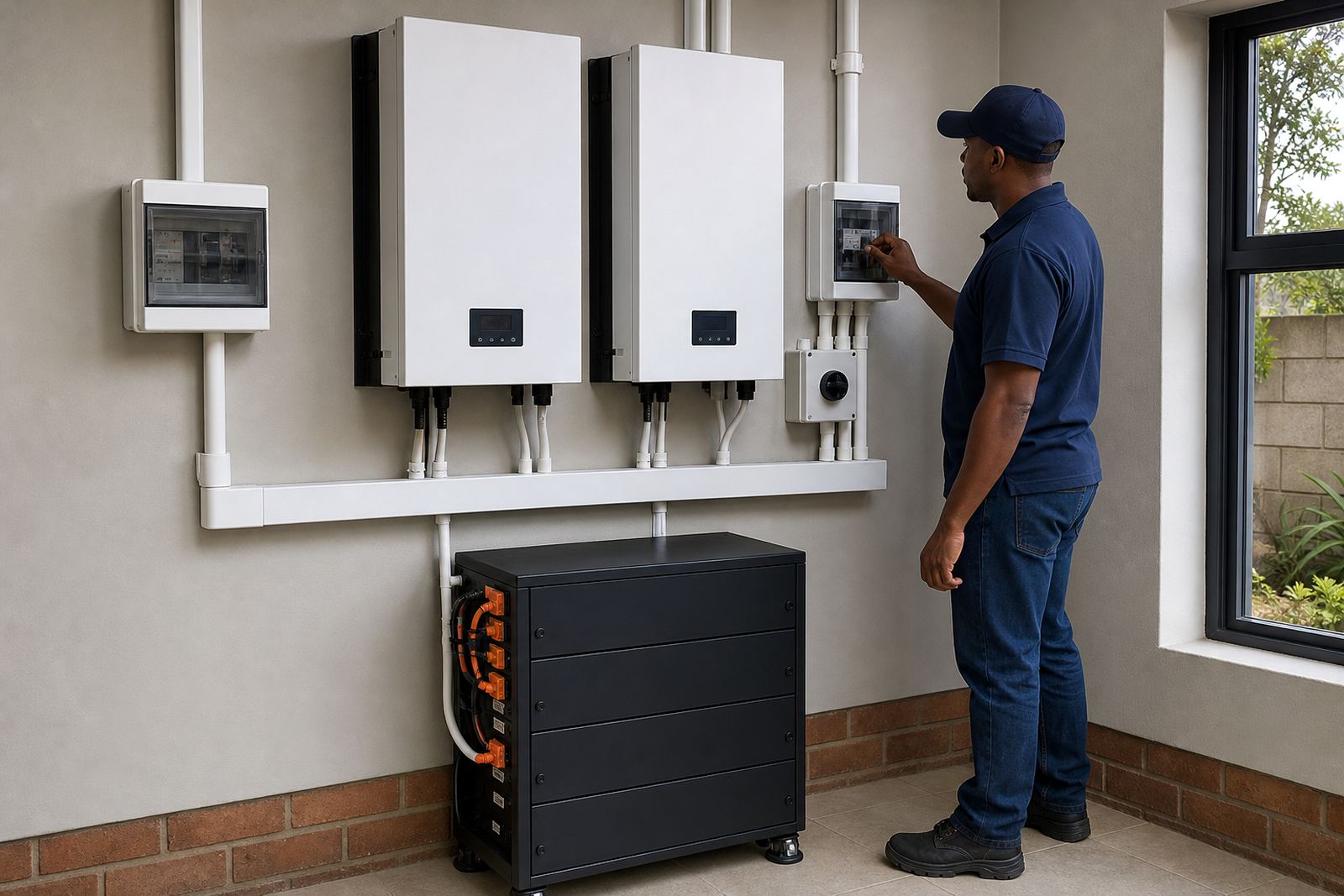
Short, direct cabling helps reduce voltage drop and makes the system easier to isolate during maintenance. Good indoor layouts keep the inverter close to the battery bank, with clear access to the distribution board or essential circuits. Long cable runs can be done, but they must be properly sized and protected, not simply extended because a convenient wall happened to be open.
A neat run also helps with fault finding later. When a battery trips or an inverter throws an alarm, a technician should be able to trace the route quickly. That is why cable routes, trunking and labels matter just as much as the inverter rating itself. In busy business premises in Midrand or Centurion, this saves time when load-shedding hits during trading hours.
- Keep high current cables as short as practical
- Use correct conduit or trunking for indoor protection
- Label isolators, breakers and battery links clearly
- Leave access space for inspections and servicing
Share what must stay on during an outage and the size of the property, and a backup planner will phone or message you.
Contact formPlan the battery position for weight and airflow
Lithium batteries are smaller than many older backup options, but they still need proper support and spacing. A floor area with a level surface is ideal for larger battery cabinets, while smaller wall mounted units must be fixed to a sound wall with the right anchors. Do not place batteries where they block passages, emergency exits or stock movement.
Airflow matters as much indoors as it does in a workshop. Batteries and inverters should not be boxed into a tight corner with no circulation. Even if the equipment runs quietly, it still needs breathing room for normal operation and maintenance. If a business in Roodepoort uses backup for point of sale, routers and lights, the battery position should also allow a quick visual check before opening time.
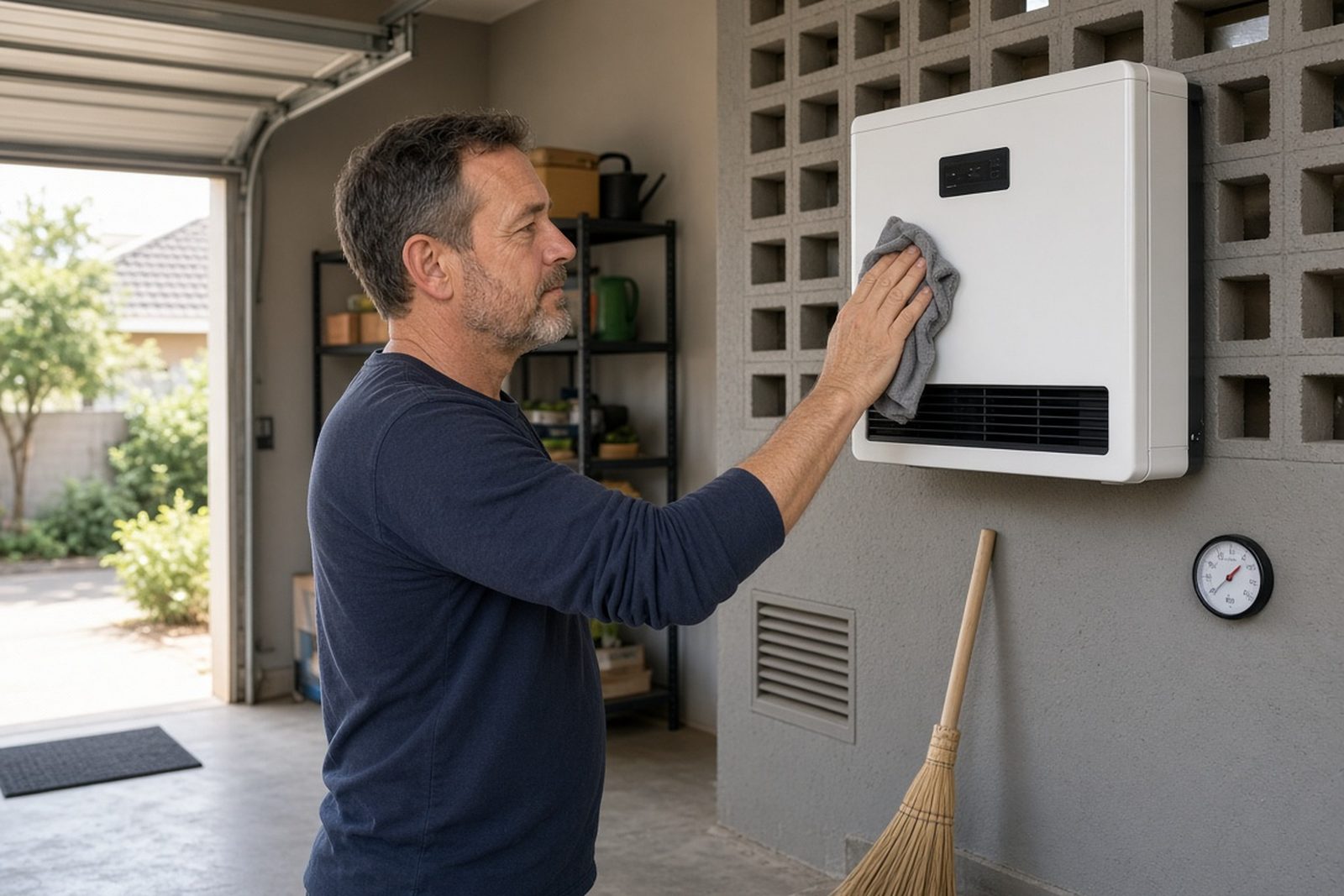
For homes, keep battery areas away from children, pets and stored chemicals. A clean wall space with enough height for safe mounting is better than hiding the system behind loose items and brooms. That is where many problems begin.
Size the system around the circuits you actually need
Backup sizing should start with the loads you want to carry during an outage. A whole house or whole office solution is not always the best indoor layout. In many cases, it makes more sense to back up the essentials: lights, Wi-Fi, gate motor, alarm, fridge, a few plug points and selected office equipment. This keeps the installation practical and helps the battery last through the load-shedding window.
Think about what must stay on during stage 4 at 6 pm, and what can wait until the power returns. A salon in Fourways may need lighting, a card machine and a small appliance circuit. A home in Pretoria might only need the fridge, TV, study plugs and security equipment. Once the load is clear, the inverter size and battery capacity can be matched properly instead of guessed.
- List essential circuits before buying equipment
- Separate critical loads from high draw appliances
- Allow for future battery expansion if usage grows
- Check whether the installation is for single phase or three phase supply
Do not skip compliance and municipal steps
Backup installations must be done by a registered electrician and the work should be supported by a valid certificate of compliance. That is non negotiable for homes and businesses. If the system is grid tied or connected in a way that can export or interact with the municipal supply, the relevant municipal registration process must also be followed. Skipping those steps can cause headaches during inspections, insurance claims or property transfers.
Good indoor installation practice includes proper isolators, surge protection where needed, neat distribution board changes and accurate labelling. The electrician should also confirm earthing, breaker sizing and changeover arrangements before the system is commissioned. In Gauteng, where many buildings already carry older wiring or mixed renovations, this check is just as important as the battery itself.
For landlords and business owners, it is worth keeping installation records in one folder. That should include the compliance certificate, circuit schedule and any commissioning notes. It makes later servicing much simpler and avoids confusion when a tenant changes or the system is expanded.
Cutting work for a client in Randburg
Take a small professional office in Randburg with a reception area, a few workstations, security gear and a network cabinet. The best indoor arrangement is usually a serviceable wall or utility space close to the essential circuit board, not the middle of the office. The inverter can be mounted where it is visible but out of the way, while the battery sits on a stable base with enough clearance for airflow and cable entry.
That setup lets the office keep working during load-shedding without turning the passage into a cable zone. If the business later adds more users or another battery, the original layout should still allow for expansion without a full rewire. That is the value of planning indoors from the start, especially in buildings where space is already tight and tenants do not want disruption.
For a home nearby, the same logic applies. Keep the installation near the distribution point, protect it from heat and dust, and make sure family members know which switches feed the backup circuits. A tidy indoor setup is easier to live with and easier to maintain.
Why a clean indoor layout pays off later
Indoor backup systems are meant to make life simpler during outages, not add another source of stress. When the room layout, cabling, airflow and compliance are handled properly, the equipment is easier to service, safer to operate and more dependable when load-shedding starts. That is true for a family home in Midrand and just as true for a small business in Centurion.
PowerCut helps homes and businesses across Gauteng with site assessments, backup sizing, inverter installation, battery installation, essential circuit wiring, changeover solutions, system commissioning, compliance support, monitoring setup, battery expansions, fault checks and routine servicing. If you are planning an indoor installation, start with the space you have and build the system around it, not the other way around.