

Start with the loads that matter every day
A good backup plan begins with the appliances you actually use during an outage, not every item in the house. In most homes that means lighting, the fridge, fibre, the alarm, TV, laptop charging and a few plugs for phones or a router. These are the basics that keep a family comfortable and informed while the power is off.
In Randburg, Johannesburg and the surrounding suburbs, many households build their backup around daily comfort first, then add bigger loads later. That approach works well because you can keep the system smaller at the start and expand it when needed. It also helps avoid oversizing, which can push the cost up without adding much value.
Why fridges and freezers need careful planning
Fridges and freezers are usually the first appliances people want to protect, and for good reason. They cycle on and off through the day, so they do not draw power at full load all the time, but they do need enough starting capacity when the compressor kicks in. That surge matters when choosing an inverter.
In a warm month, or in a kitchen where the door opens often, the fridge can work harder than expected. A household in Roodepoort with two bar fridges and a chest freezer will need a very different setup from a small flat with one standard fridge. If the battery is too small, you may still keep the lights on but the cold chain becomes the weak point.
- Single fridge or fridge-freezer: usually a core backup load
- Chest freezer: often added for families that buy in bulk
- Bar fridge: useful, but not always essential during outages
Share what must stay on during an outage and the size of the property, and a backup planner will phone or message you.
Contact formLighting, plugs and internet are usually the best value loads
For most homes, lighting and internet give the most comfort for the least energy. LED lights use far less power than old bulbs, so a few rooms can stay lit without draining the battery too fast. A router, fibre box and a couple of chargers also use very little power, which makes them practical loads for evenings with repeated outages.
Many households choose to back up the kitchen lights, lounge lights and one or two bedroom circuits rather than the whole house. That keeps the essential circuit wiring neat and more affordable, and it reduces the chance of overloading the system. In Midrand and Sandton, where work-from-home needs are common, this is often the first priority after the fridge. A laptop and Wi-Fi can keep a work day moving, even if the rest of the house is quiet.
- LED lighting uses much less power than old incandescent fittings
- Router and fibre equipment are small loads but important for connectivity
- Phone charging and laptop charging are easy to include
Heavy appliances can change the whole backup plan
Geysers, kettles, microwaves, irons and heaters are the loads that quickly change the size of a backup system. These appliances draw much more power than lights or electronics, and some of them use a lot of energy in a short time. If you try to run too many heavy loads at once, the inverter may trip or the battery may drain far faster than expected.
That is why many homes keep hot-water heating, cooking and space heating off the backup circuit. In winter, a heater can consume a large share of the available battery in a short period, and in summer a kettle or microwave can still create a spike. A practical setup often leaves these appliances on the grid side and focuses the backup on the things that must stay on.
For a family in Pretoria or Centurion, a clear load list is the best starting point. Note which appliances are used at the same time, which ones can wait and which ones must stay live during an outage. That makes backup sizing much more accurate.
How battery size and inverter output work together
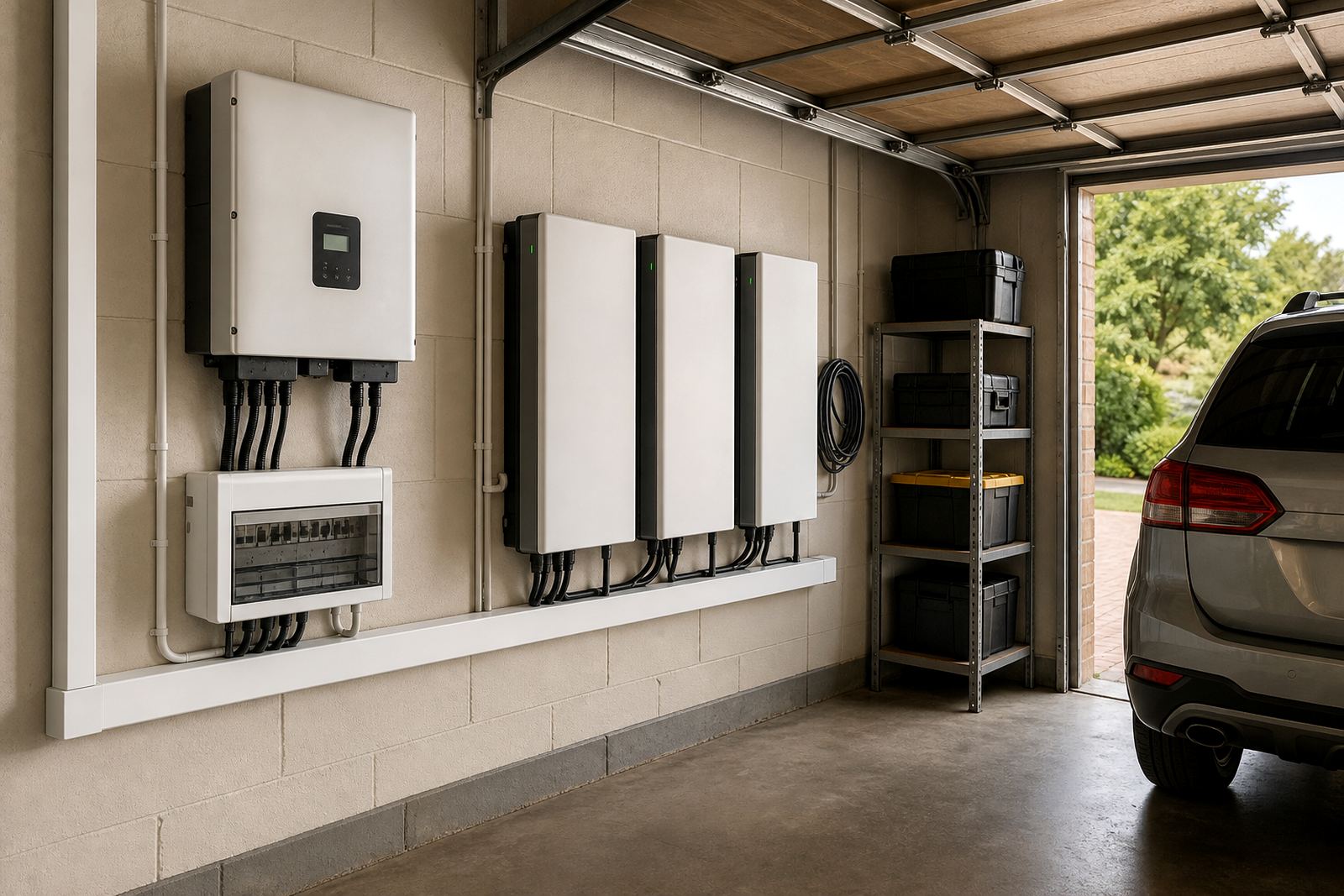
The inverter handles the power delivery, while the lithium battery stores the energy. Both parts must match the household demand. A battery with enough capacity but a small inverter output will still struggle if several appliances start together. On the other hand, a large inverter with too little battery storage will run out of energy too soon.
A proper backup plan begins with the essential loads you need to cover and the runtime you expect from the system. A home that only needs lights, Wi-Fi and a fridge for a few hours needs a different system from one that also runs office equipment through the whole afternoon. Battery expansions can often be added later if the original setup allows for it, so planning ahead matters.
- Short outage cover: lights, router and phone charging
- Mid-range cover: add fridge, TV and a few plugs
- Longer cover: include more battery capacity or reduce the load list
A Randburg example: one house, two very different load lists
Take a typical home in Randburg with two adults working from home and two children doing homework in the evening. The first load list might include the fridge, lounge lights, study lights, router and laptop charging. That can be a practical setup for daily load-shedding, especially if the family mainly wants to keep work and school going.
If that same home also wants to run a microwave, a geyser and a heater, the system needs to be much larger. The battery bank has to carry a heavier load, and the inverter must be able to cope with the starting surge and the combined draw. This is where a proper site assessment helps, because the right answer is not the same for every home. It depends on the appliances, the wiring and how the family uses power through the day.
Commercial clients across Johannesburg, Pretoria, Midrand, Roodepoort and nearby areas often use the same principle. Keep the important loads on backup, leave the heavy ones off, and size the system around real usage rather than guesswork.
Compliance and installation should never be treated as optional
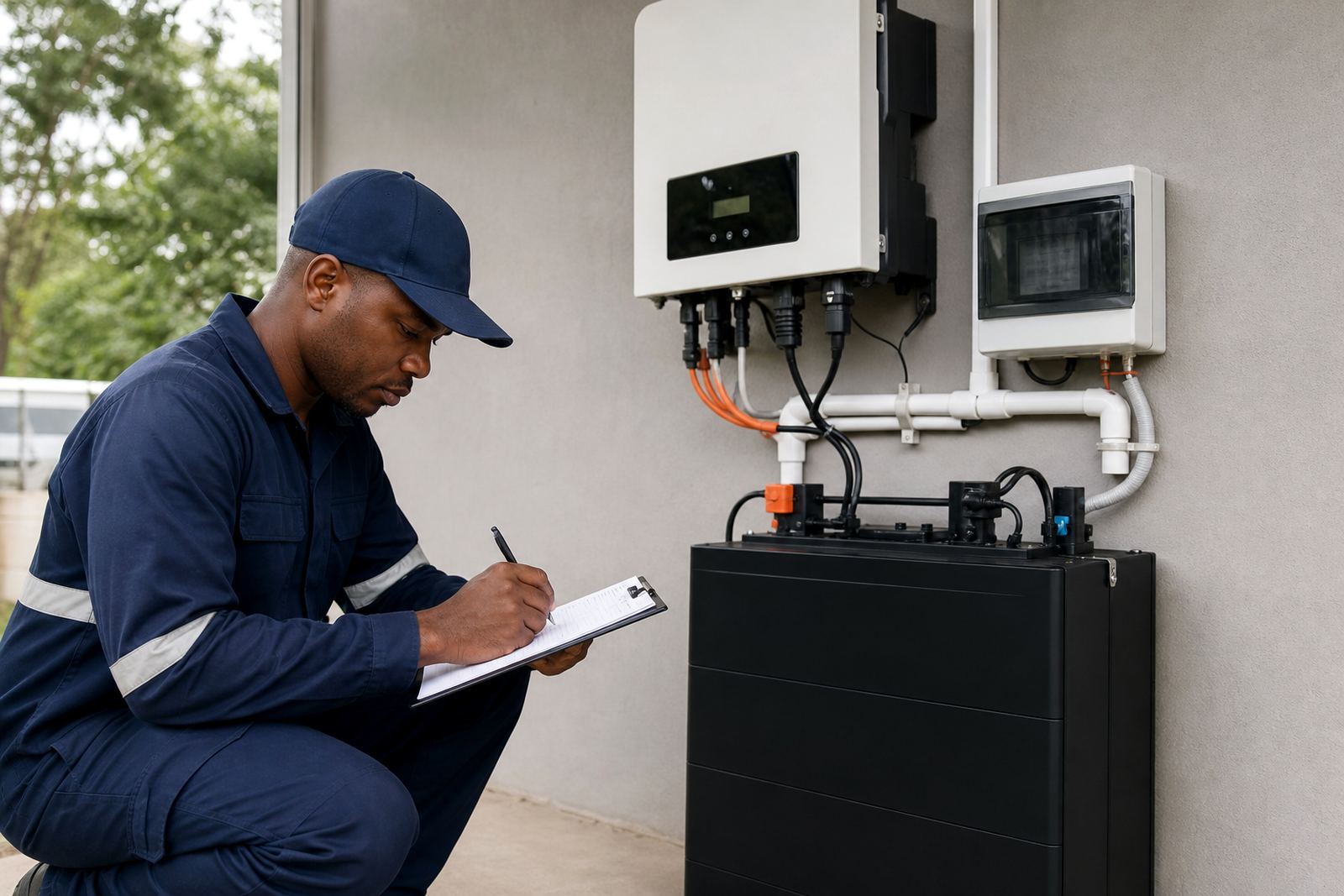
Any inverter or battery installation should be done by a registered electrician, and the work should be supported by a certificate of compliance. If the system is grid-tied, it also needs municipal registration where required. That is not just a formality. It helps make sure the installation is safe, properly connected and suitable for the property.
Once the system is installed, regular checks help keep it performing as expected. Battery settings, changeover behaviour, cable terminations and monitoring setup all matter. Coastal humidity, dusty roofs and older switchboards can also affect performance over time, so fault checks and routine servicing are worth scheduling. A tidy installation with the right protection is far easier to live with than a rushed one.