Why the garage is often the first sensible option
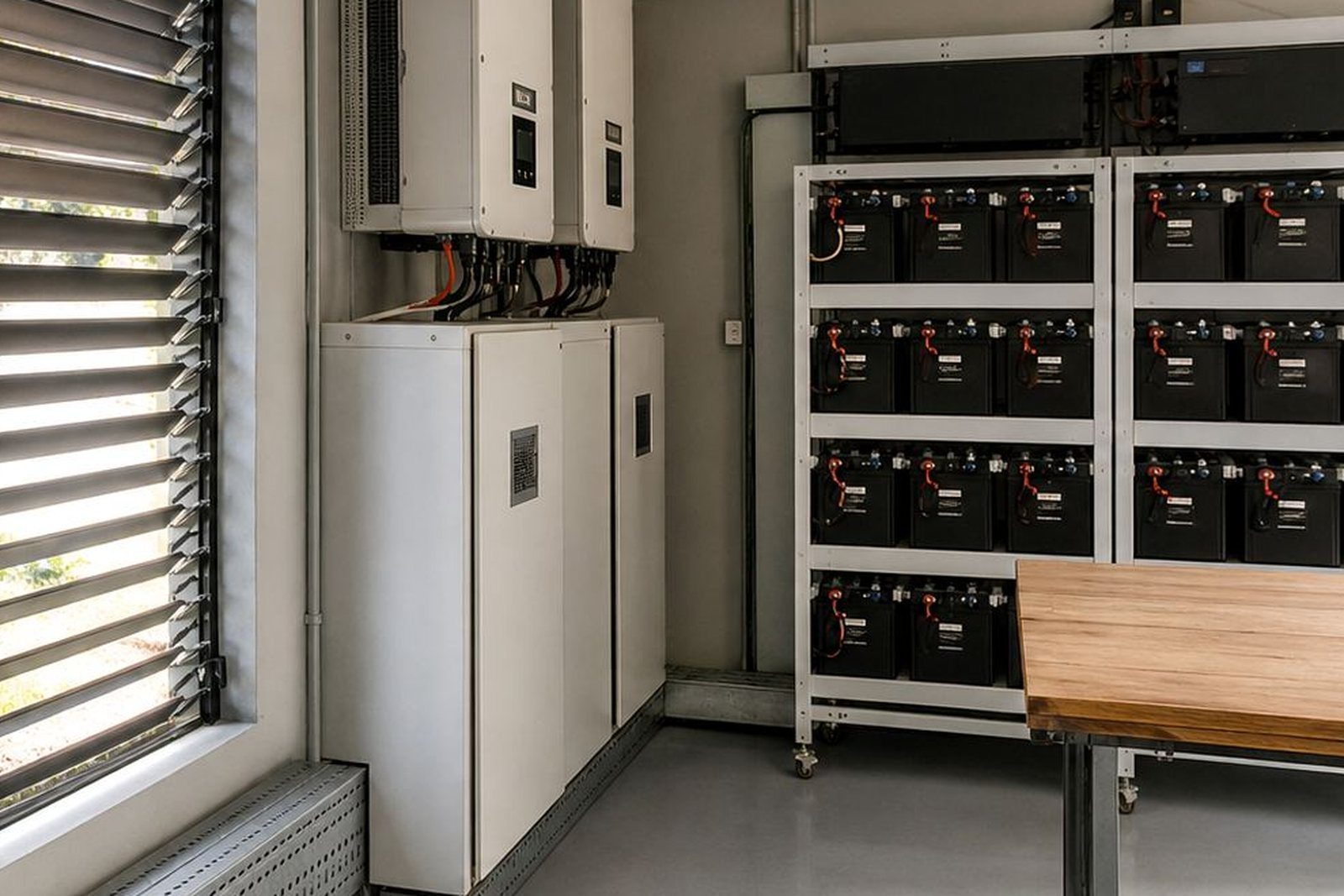
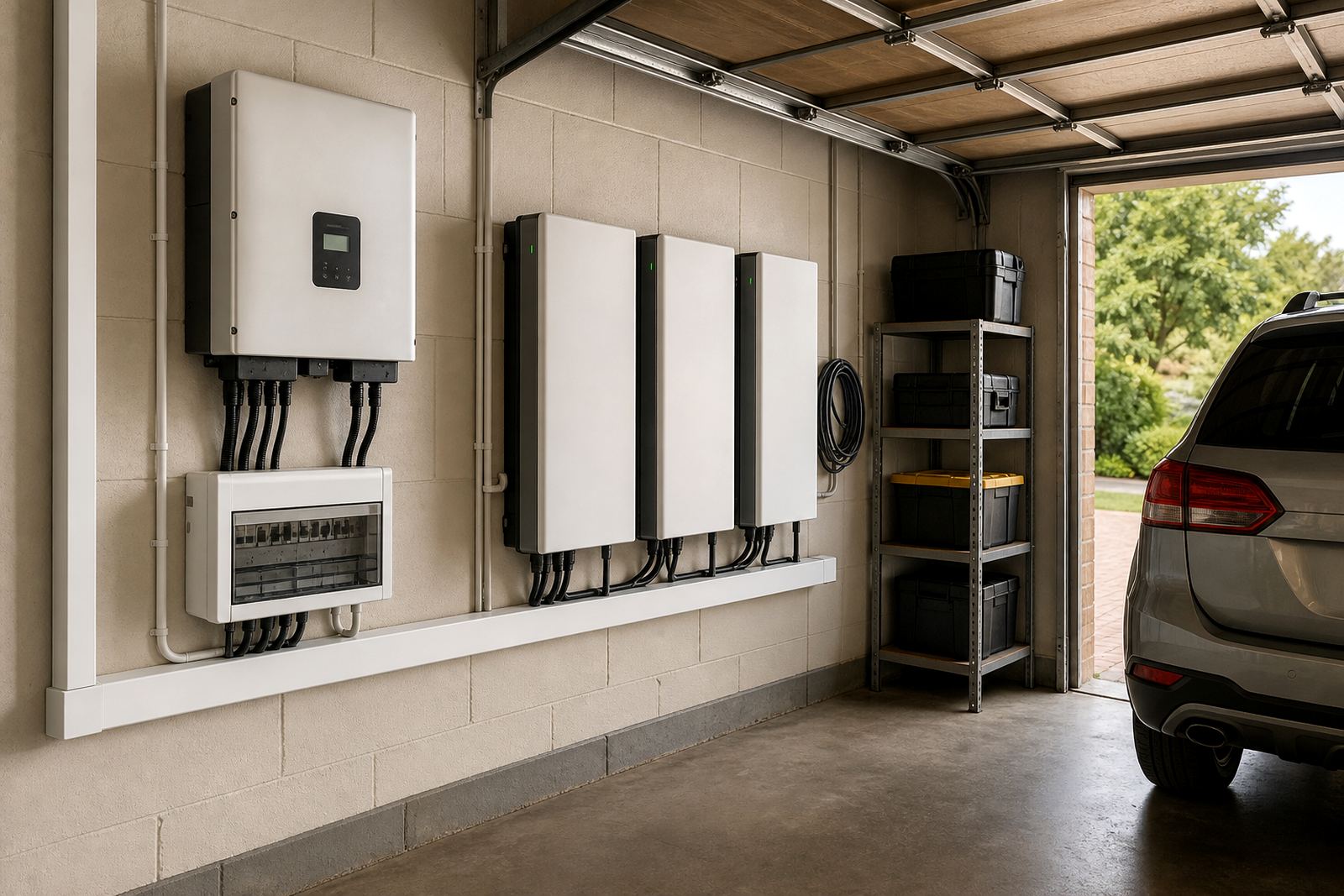
A garage gives you a sheltered space, a short route to the main distribution board and room for wall mounting or floor standing equipment. In Randburg, Fourways and Roodepoort, many homes already use the garage for solar inverters, lithium batteries and changeover gear because it keeps the system close to the electrical intake without taking over a living area.
The space still needs proper planning. Heat build-up, dust, vehicle fumes and moisture from washing floors can all affect how a system performs. If the garage is attached to the house, cable runs are usually easier. If it is detached, the installer needs to check trenching, cable sizing and protection from damage.
Check the garage before you choose equipment
Start with the basics: wall strength, floor space, ventilation and where the main supply comes in. A lithium battery should not be squeezed into a corner next to paint thinners, tools or a geyser pump. In a coastal-style damp garage or a dusty workshop space, good positioning matters because equipment lasts longer when it is kept clean and dry.
- Measure the wall and floor space available for the inverter, battery and isolators.
- Check whether the garage has enough airflow and does not trap heat.
- Look for safe cable paths into the house or office area.
- Confirm that the garage has lighting and enough access for future servicing.
If the garage door is the only place with usable wall space, the installer may need to plan around the door motor, shelving and the vehicle parking bay. A tidy layout makes future battery expansion much easier.
Share what must stay on during an outage and the size of the property, and a backup planner will phone or message you.
Contact formSizing the backup system for real use
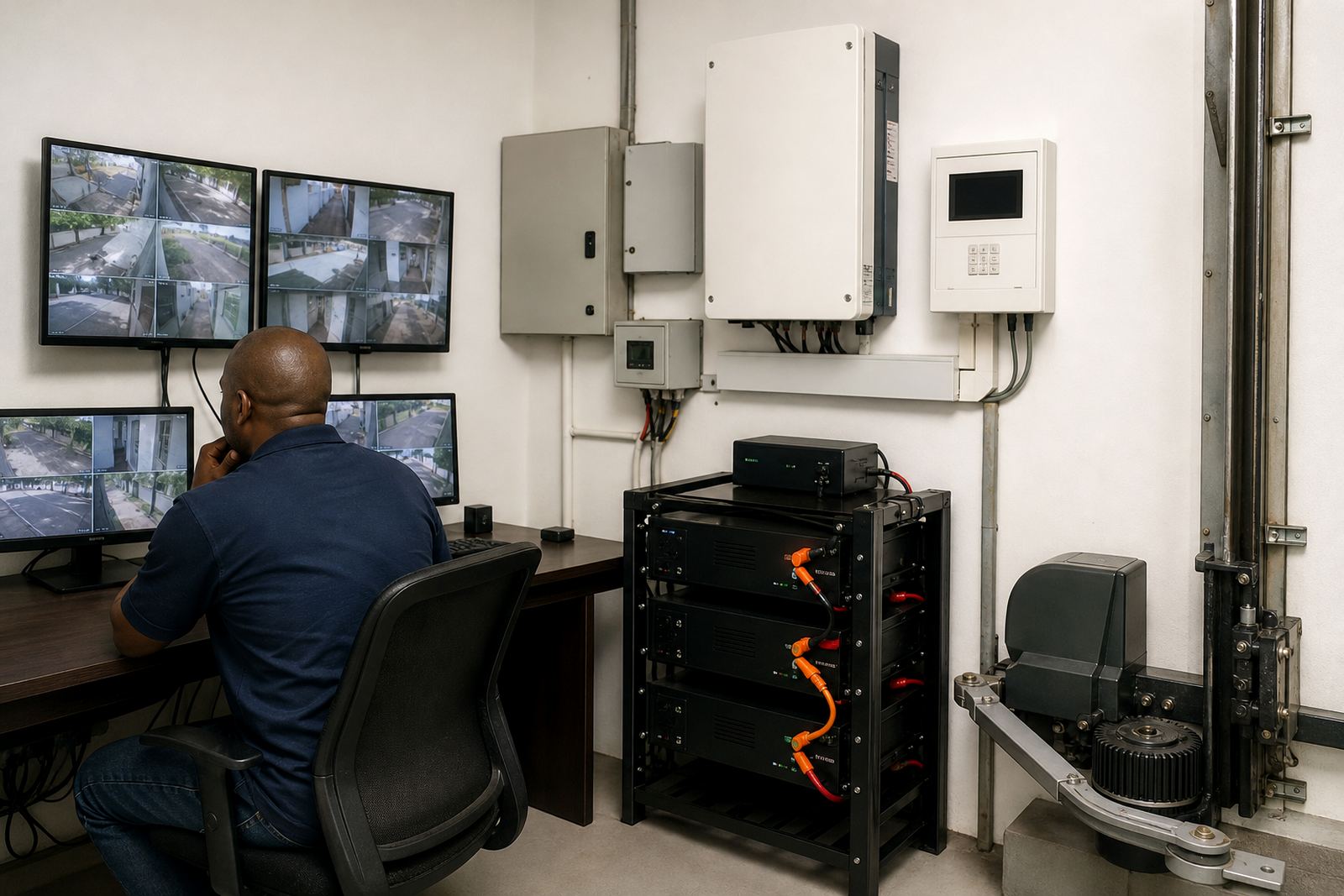
Backup sizing should follow the loads you actually want to keep on during load-shedding. A small home office setup might only need lights, Wi-Fi, a few plugs and a gate motor, while a larger family home may also need the fridge, TV and selected kitchen circuits. Businesses in Midrand, Centurion and Sandton often need to keep routers, point-of-sale equipment, office lights and security devices on line.
That is why a site assessment matters. The installer should identify essential circuits, check starting surge on fridges or pumps, and work out how long the battery must carry the load. For some properties one inverter and one lithium battery will do the job, while others need a larger inverter or more than one battery from the start. A garage is often suitable because it can take larger units without crowding the main building.
- Keep the essentials separate from high-draw appliances.
- Allow room for future battery expansion if the load is likely to grow.
- Match the inverter size to both running load and surge demand.
- Do not guess runtime from the battery label alone, ask for a proper load calculation.
Safety, heat and ventilation inside the garage
Lithium batteries are efficient and dependable, but they still need correct installation. They should not be placed against a hot wall or in direct sunlight coming through the garage door. If the garage gets very warm in summer, especially in Johannesburg where temperatures can rise inside enclosed spaces, the installer must allow for enough airflow around the equipment.
Keep the area clear of petrol containers, gas bottles and flammable liquids. The system should be mounted securely, with neat trunking, labelled isolators and enough space for future inspection. A clean install is easier to maintain and safer when the municipality or an electrician wants to check the setup later. It also avoids damage when the garage is used for storage, which happens often.
- Keep batteries away from direct heat sources and damp floors.
- Leave clear access to switches, breakers and the inverter screen.
- Do not block vents with boxes, tools or vehicle accessories.
- Ask for proper cable protection where leads pass along walls or ceilings.
Compliance is not optional
Any inverter or battery installation must be done by a registered electrician. Once the work is complete, a certificate of compliance is needed for the electrical work. If the system is grid-tied, it also needs municipal registration before it is connected in the approved way. That is important for homes and businesses across Gauteng, because the rules are there to protect people, property and the supply network.
Garage installs often look simple from the outside, but they still involve the main supply, essential circuits and protective devices. If changeover wiring is done badly, the system can back-feed or trip at the wrong time. A proper handover should include labels, test results and a clear explanation of what stays live during an outage and what does not.
Cutting work for a client in Randburg
In a Randburg property with a double garage, the owner wanted backup for a home office, Wi-Fi, lights and security. The garage had space on one wall, but the first check showed limited airflow and a long cable route to the main board. The solution was to mount the inverter high enough for clearance, place the lithium battery on a solid wall section and keep the essential circuits separate from the kitchen and pool pump.
The final layout worked well because the garage was dry, easy to access and close to the main supply. The owner still had space to park one vehicle, and servicing was straightforward. That kind of result depends on a proper site assessment, not guesswork. It also shows why garages are practical when they are planned carefully, not just filled with equipment.
What to ask before installation day
If you are using a garage for backup power, ask the installer these questions before work begins: Where will the inverter and battery sit? How will the cables enter the house? Which circuits will stay on during load-shedding? What needs to be done for compliance? These questions help avoid surprises and make the job smoother.
For businesses in Pretoria, Centurion, Midrand and Roodepoort, the same approach applies. A garage can be a tidy, practical plant room if it is planned well, but it should never be treated as a throwaway space. The right setup keeps the system accessible, safe and ready when the power goes off.
- Confirm the essential loads before equipment is ordered.
- Check whether the garage needs ventilation or minor electrical upgrades.
- Ask for commissioning, labelling and a CoC at handover.
- Plan for servicing access, not just day-one installation.