Why security backup needs its own plan
When the power goes off, most people think first about lights and Wi-Fi. For homes and businesses, security should sit right near the top of the list. An alarm panel, perimeter beams, CCTV system and electric gate are only useful if they stay live when Eskom trips, voltage dips or a breaker is switched off for maintenance.
Security loads are not all the same. An alarm may only need a small, steady supply, while a gate motor can need a higher surge for a few seconds at start-up. Cameras and recorders usually need continuous low power, but they can be sensitive to poor quality supply. That is why backup sizing has to start with the actual equipment, not a guess.
In Randburg and across Johannesburg, many homes now use layered protection. A burglar alarm might be backed up first, followed by cameras, then the gate motor if access control is critical. In a business setting the priorities can change. A retail store may keep cameras, access control and one or two gates running, while a small office may only need the alarm, network gear and security lights. The aim is to keep the security chain working, not to run the whole property on backup if it is not necessary.
What alarms, cameras and gate motors typically need
A practical security backup starts with a list of connected devices and how long they must stay on during an outage. Some systems use modest power all day and night, while others spike when a motor starts. Lithium batteries are often chosen because they handle regular cycling well, charge efficiently and suit repeated load-shedding more comfortably than older battery types.
Typical security loads to consider include:
- Alarm panel, keypad and indoor siren
- Perimeter beams or magnetic sensors
- IP cameras or analogue cameras and the recorder
- Network gear feeding cameras and remote viewing
- Gate motor and any access control gear
- Security lighting on a separate circuit if needed
It is also worth checking where each device is powered from. Many properties have cameras and recorders on one circuit, while the gate motor sits elsewhere. If the wiring is not mapped properly, you can end up backing up the wrong sockets and still losing the equipment that matters most. A proper site assessment should identify the essential circuits, the peak starting load and the runtime you want during a long outage.
Share what must stay on during an outage and the size of the property, and a backup planner will phone or message you.
Contact formSizing backup for a home in the northern suburbs
For a home in areas like Sandton, Fourways or Roodepoort, the usual question is simple: what must stay on, and for how long? A small system may only need the alarm, gate motor and a few cameras to run through evening load-shedding. A larger property may need the recorder, router, outside beams and the gate as well. The battery capacity and inverter size should match that plan, not a generic package.
As a rule, start with the essentials and build from there. If the gate motor is included, confirm whether it is connected through a suitable changeover solution or an essential circuit. If cameras are part of the backup, make sure the inverter provides clean enough power for the recorder and network equipment. If the system is grid-tied, it must be registered with the local municipality where required and installed by a registered electrician who can issue a certificate of compliance.
A common mistake is to size for running time only and ignore charging. In Gauteng, where outages can come in clusters, the system also needs enough charging capacity to recover between cuts. That is especially important for homes with repeated evening outages and early morning use of the gate. A good design balances runtime, charging speed and daily usage, so the security system is ready when needed.
Security backup for offices, warehouses and body corporates
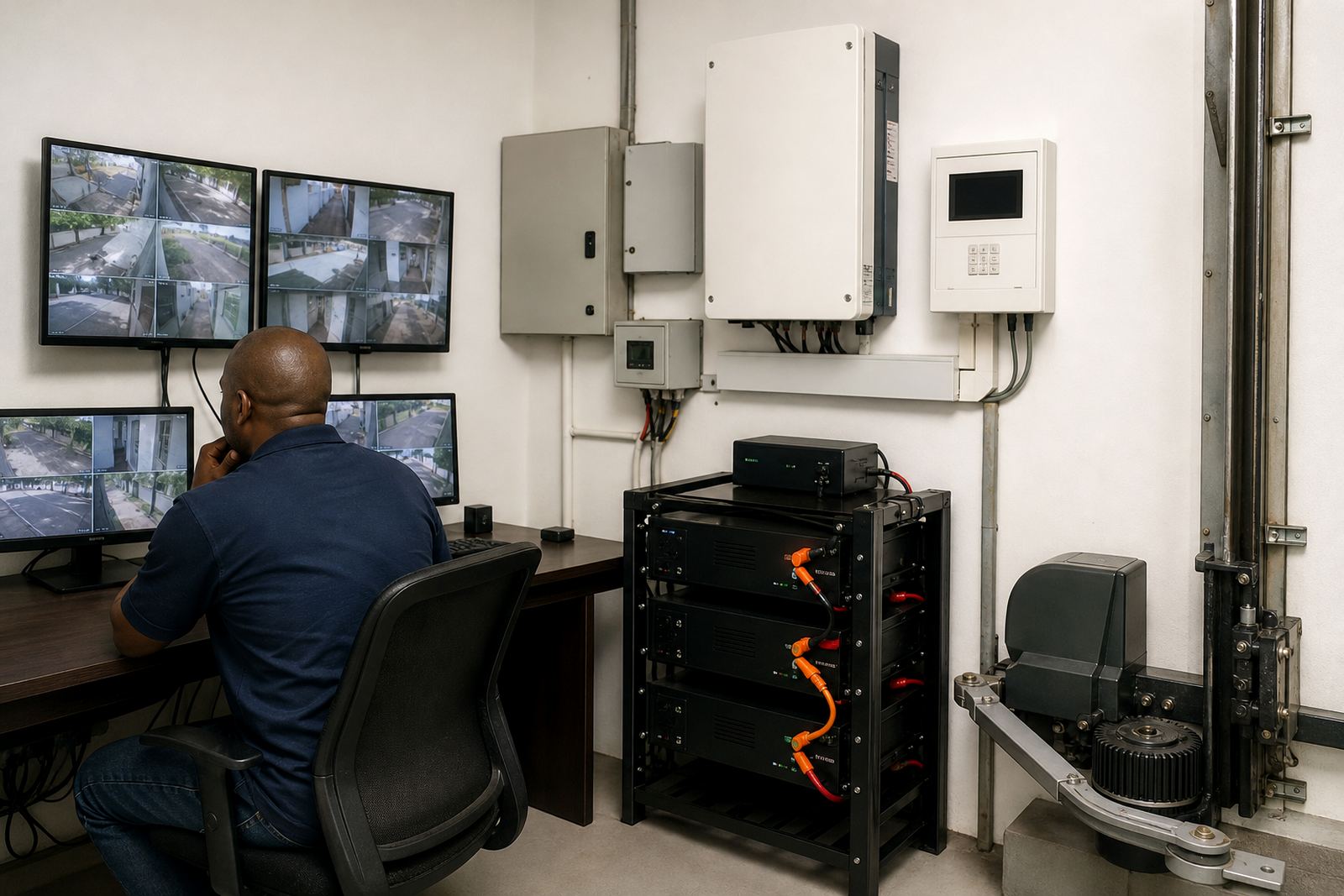
Commercial properties need a different approach because security often supports more than one function. In a small office park in Midrand or Centurion, the backup may need to keep access control, cameras, the alarm and selected network equipment running. In a warehouse or workshop, the emphasis may be on perimeter protection, the main entrance gate and monitoring equipment that records movement after hours.
Businesses should think in zones. Not every gate or every camera has to be on the backup circuit if the load would become too high. Instead, separate critical equipment from non-essential items and make sure the system is clear to staff. If a gate is on backup, employees should know how it behaves during an outage. If cameras are online, the recorder and internet supply must also be protected, otherwise remote viewing can fail even though the cameras are powered.
- Keep the alarm panel and recorder on backed up circuits
- Use essential circuit wiring where only priority loads are included
- Confirm gate motor surge requirements before installation
- Allow for future battery expansion if the site grows
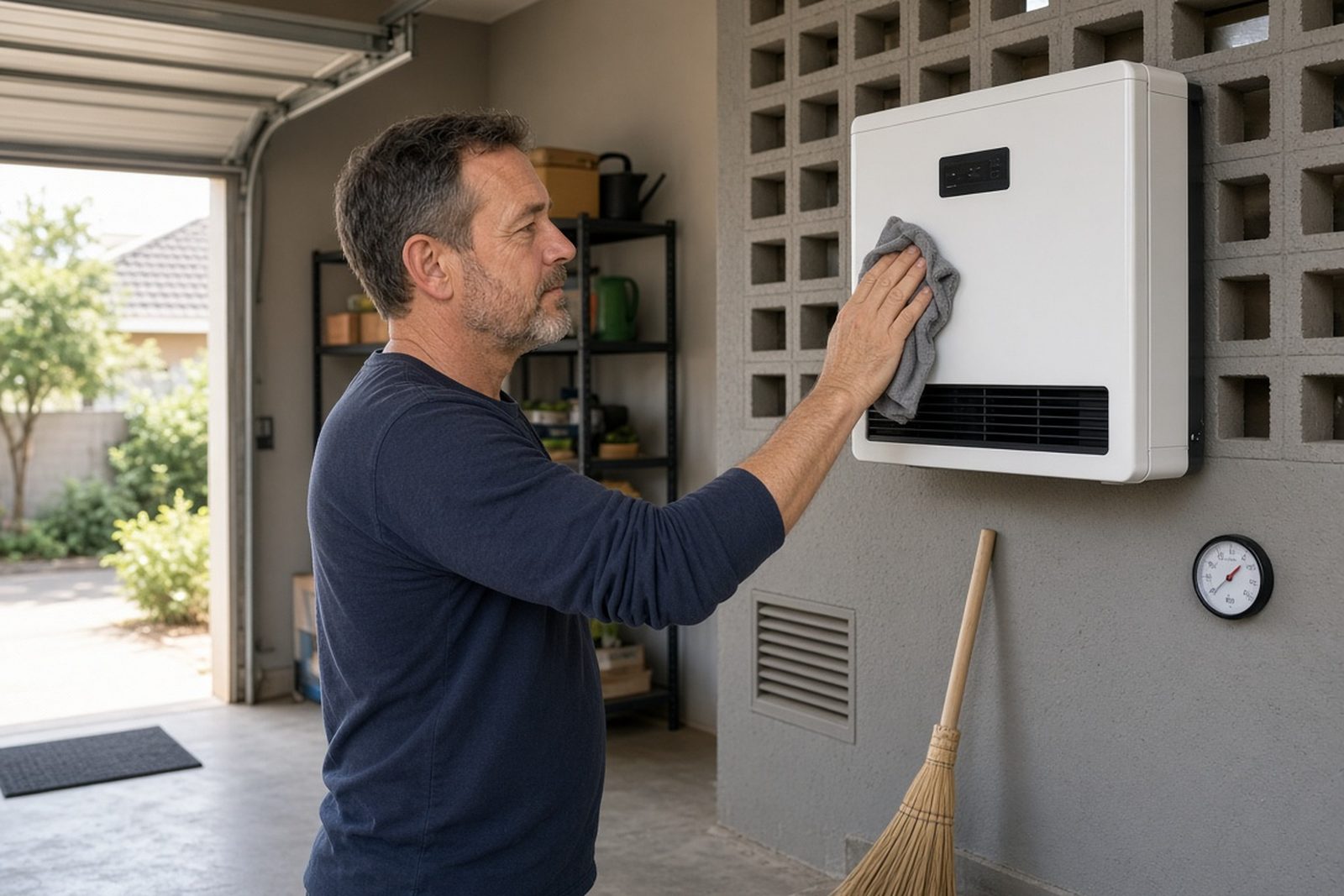
- Plan for routine servicing so fans, cabling and terminals stay in good condition
Commercial security systems also need orderly commissioning. That means checking switchover, confirming charging, testing the gate under backup power and making sure the recorder keeps date and time correctly. If anything is loose or undersized, the problem often shows up during the first long outage, not on the day of installation.
Installation, compliance and the registered electrician rule
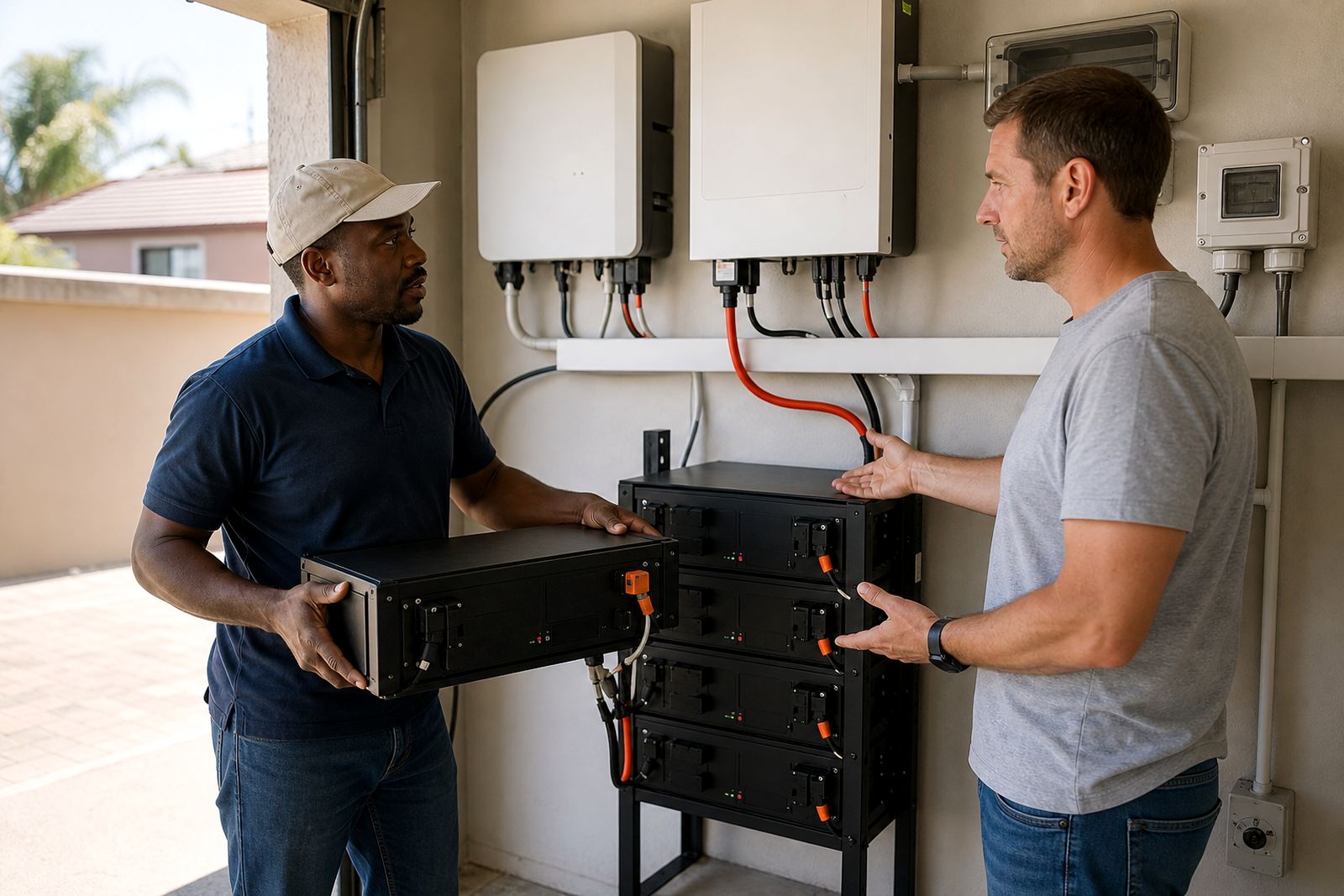
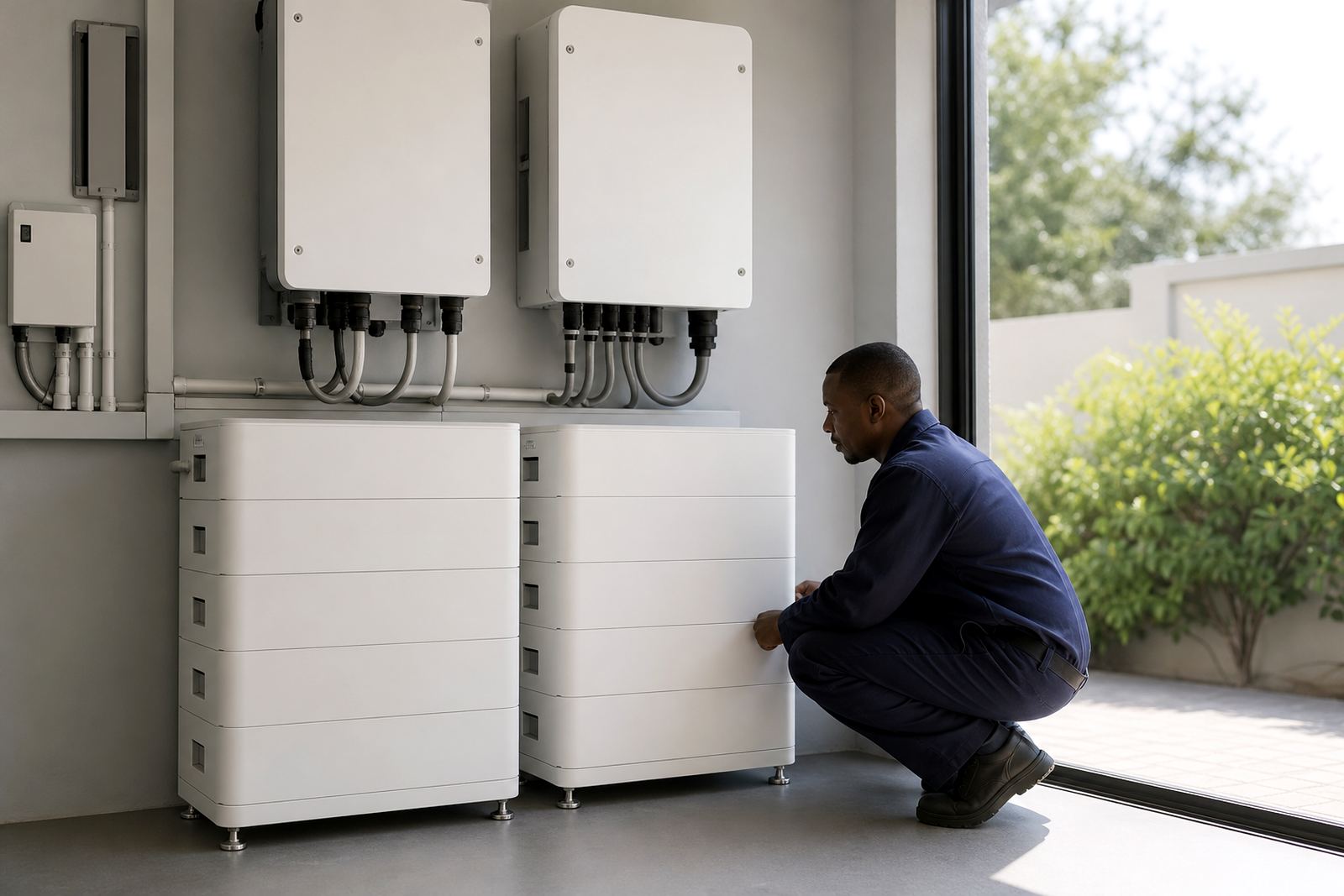
Any inverter and battery installation should be done by a registered electrician. That is not just a formality. Security backup systems are connected to the same property wiring as other loads, and poor work can lead to nuisance trips, damaged equipment or unsafe connections. After installation, the property should receive a certificate of compliance where applicable, and grid-tied systems need municipal registration if required by the local authority.
This matters even more when security equipment is involved because people often rely on it without thinking. An alarm that appears live may still drop out if the battery is undersized. A gate motor may work once and then fail under repeated use. A camera system can lose recording if the inverter or battery is not matched properly. Good installation includes checking all these points, not only switching the system on.
For homeowners and businesses in Gauteng, it helps to work with a team that understands both power backup and practical security use. That includes site assessments, backup sizing, inverter installation, battery installation, essential circuit wiring, changeover solutions, system commissioning, monitoring setup, battery expansions, fault checks and routine servicing. The goal is straightforward: keep the security system dependable when the grid is not.
A Randburg example from first assessment to working backup
A typical local job might start at a family home in Randburg with an electric gate, an alarm system and four cameras covering the driveway and boundary wall. The owners want the alarm and cameras to stay on during load-shedding, and they want the gate to work at least a few times a day. After checking the equipment list, cable routes and breaker board, the backup can be sized around those essentials rather than the entire house.
In that kind of setup, the assessment looks at how much power the recorder and network gear draw, how often the gate is used, and whether the security loads need their own essential circuit. The battery capacity is then matched to the expected outage pattern, with enough headroom for charging recovery between cuts. If the system is grid-tied, the paperwork is handled correctly and the installation is left compliant, which gives the owner peace of mind when the next outage starts.
The best result is simple. The alarm stays active, the cameras keep recording and the gate still opens when needed. That is what proper security backup should do, especially in a city where load-shedding, storms and local supply interruptions can happen without much warning.