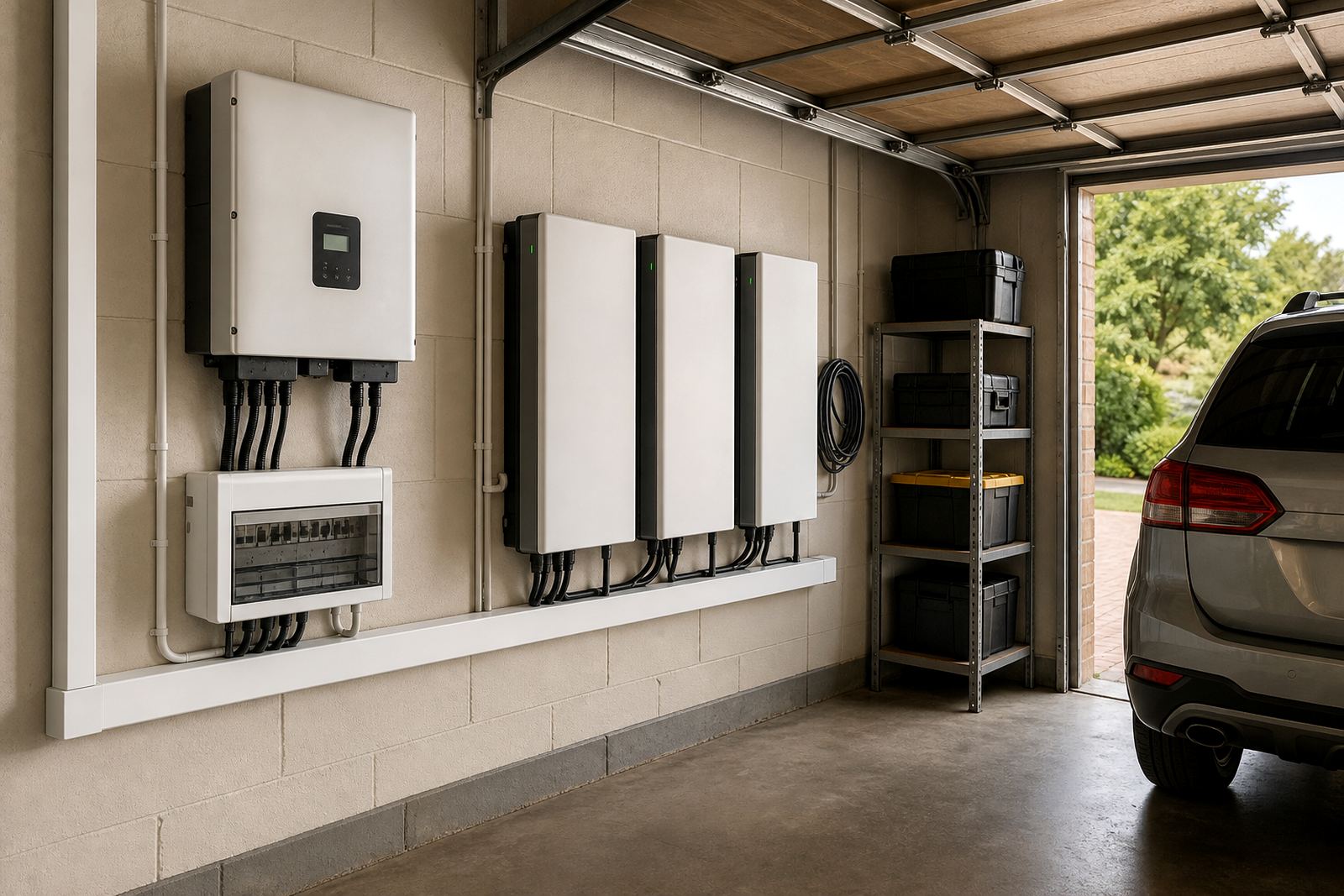


Why a CoC matters when load-shedding hits
When a home or business in Randburg, Sandton or Pretoria adds backup power, the system is not only about keeping the lights on. It becomes part of the property’s electrical installation, which means it must be checked, tested and signed off correctly. A certificate of compliance gives you that record. It shows that the work was done by a registered electrician and that the installation was inspected against the required standards.
Without that certificate, you may have trouble with insurance claims, property transfers or a municipal inspection. It can also be a sign that the wiring, isolation or earthing was not handled properly. In load-shedding conditions, that matters because inverters and lithium batteries are often asked to carry essential circuits for hours at a time. A neat install is not enough on its own. It must be verifiable.
What a registered electrician is responsible for
A registered electrician does more than connect cables. They assess the existing board, confirm the load on the essential circuits, check the size of the inverter and battery bank, and make sure the changeover arrangement is safe. They also look at cabling, protection devices, earthing and isolating points. If the system is grid-tied, they must also make sure the installation can be registered with the local municipality where required.
- Confirm whether the main board can handle the added backup circuit
- Install the correct protection and isolators
- Check cable sizes for the distance and load
- Test the changeover function under normal and backup use
- Issue the compliance paperwork after inspection and sign-off
If a backup system is fitted without proper sign-off, the owner may only discover the problem later when there is a fault, a sale is in progress, or a municipal query comes through. That is an expensive time to find out the job was not completed properly.
Share what must stay on during an outage and the size of the property, and a backup planner will phone or message you.
Contact formHow inverter and battery sizing affects compliance
Correct sizing is part of compliance because undersized equipment can overheat, trip or fail under real-world use. A small apartment in Midrand may only need essential lighting, Wi-Fi and a few plugs. A family home in Fourways might need the fridge, gate motor, TV, modem and selected sockets. A small office in Centurion may need computers, routers and security equipment. Each case needs a different design.
Battery chemistry matters too. Lithium batteries are commonly used for backup because they charge efficiently and can support repeated cycling, but they still need the right settings, matching, ventilation and protection. An installer must check compatibility between the inverter and battery management system. If the equipment is not paired correctly, the system may work for a while and then become unreliable under heavier use or during longer outages.
Good sizing keeps the system practical. It also reduces the chance of a certificate being delayed because the installation was rushed or the wrong components were chosen. A proper site assessment helps avoid that problem from the start.
Municipal registration for grid-tied systems
If a backup system is connected in a way that interacts with the grid, municipal rules come into play. That is especially relevant in parts of Johannesburg and Tshwane where electrical supply rules are applied carefully. The exact process can vary, but the key point is simple: if the system can export power, or is tied into the supply in a formal way, it may need registration and approval.
That is why the paperwork should never be treated as an afterthought. The electrician must know how the inverter is operating, what is connected to it and how the changeover behaves. In some cases, the design needs additional labelling, isolation or documentation before it can be signed off. If the system is only for backup and not export, the requirements may differ but the installation still needs to be compliant and properly recorded.
- Check whether the system is backup-only or grid-interactive
- Confirm the local municipal process before final commissioning
- Keep wiring diagrams and test results with the handover documents
- Make sure the owner understands the operating limits of the system
A local example: a business in Randburg with essential circuits
Consider a small office in Randburg that wanted backup for computers, network gear, lights and a security system. The owner first asked for a site assessment because the building had an older distribution board and mixed wiring on several circuits. The electrician identified which loads could be moved to an essential circuit and which ones should stay on the main supply. A suitable inverter and lithium battery setup was then matched to the actual demand, not guessed.
Once the installation was complete, the system was tested in the presence of the client and the changeover was confirmed. The paperwork followed after inspection, including the details needed for compliance. That process took a bit longer than simply installing the equipment, but it avoided rework and gave the owner a clear record for insurance and property files. It also meant staff could keep working during outages without wondering whether the setup was safe.
That is the practical value of a CoC. It is not there for show. It protects the property, the people using it and the person who inherits the system later.
What to keep in order after the handover
Once the certificate has been issued, store it with the property documents and keep the system records together. If you add more batteries later, change the inverter settings, or extend the essential circuit board, the installation may need to be reviewed again. Backup systems are often expanded over time, especially in Gauteng where outages and load-shedding can affect routines across homes and businesses.
- Keep the CoC, wiring notes and commissioning records in one file
- Record any battery expansions or changes to the setup
- Arrange routine servicing if the system is used daily
- Get fault checks done early if alarms, trips or hot cabling appear
For homeowners and business owners alike, the safest route is the simplest one: use a registered electrician, insist on proper testing, and make sure the compliance paperwork is complete before relying on the system day to day.