Start with permission, not equipment
In rented property, the first step is to check what the lease allows. Some landlords permit a full inverter and battery installation, while others only allow a smaller system that feeds selected circuits. It is worth getting written approval before any work starts, especially if drilling, new cabling, or a wall mounted battery is involved.
For landlords and tenants in Randburg, Sandton, Fourways and the wider Johannesburg area, the same rule applies: the backup system must fit the building, not force the building to fit the system. A rental flat with limited wall space and a small load profile needs a different solution from a four bedroom house or a business unit with computers, routers, lights and security systems.
Choose what must stay on during load-shedding
Backup for rentals should focus on essentials. The aim is to keep daily life or trading going without trying to power every appliance at once. A proper assessment looks at what must stay on, how long backup is needed, and whether the property can handle a changeover setup or a grid tied arrangement.
- Lights in key rooms and work areas
- Wi-Fi and communication equipment
- Fridge or small cold storage where needed
- Security gates, alarms and cameras
- Point of sale, computers or office networks
- Fans or a small number of plug points
That list changes from one rental to the next. A mid-size office in Centurion may need a different circuit plan from a family home in Roodepoort, and a shop in Midrand may need battery support for tills and networking above all else.
Share what must stay on during an outage and the size of the property, and a backup planner will phone or message you.
Contact formWhy inverter and battery sizing matters in leased spaces
Backup sizing is where many rental projects go wrong. Too small and the system trips when several items run together. Too large and you may end up with equipment that does not suit the premises or the lease terms. Correct sizing begins with the combined wattage of the essential loads, then adds a sensible margin for start-up surges and future use.
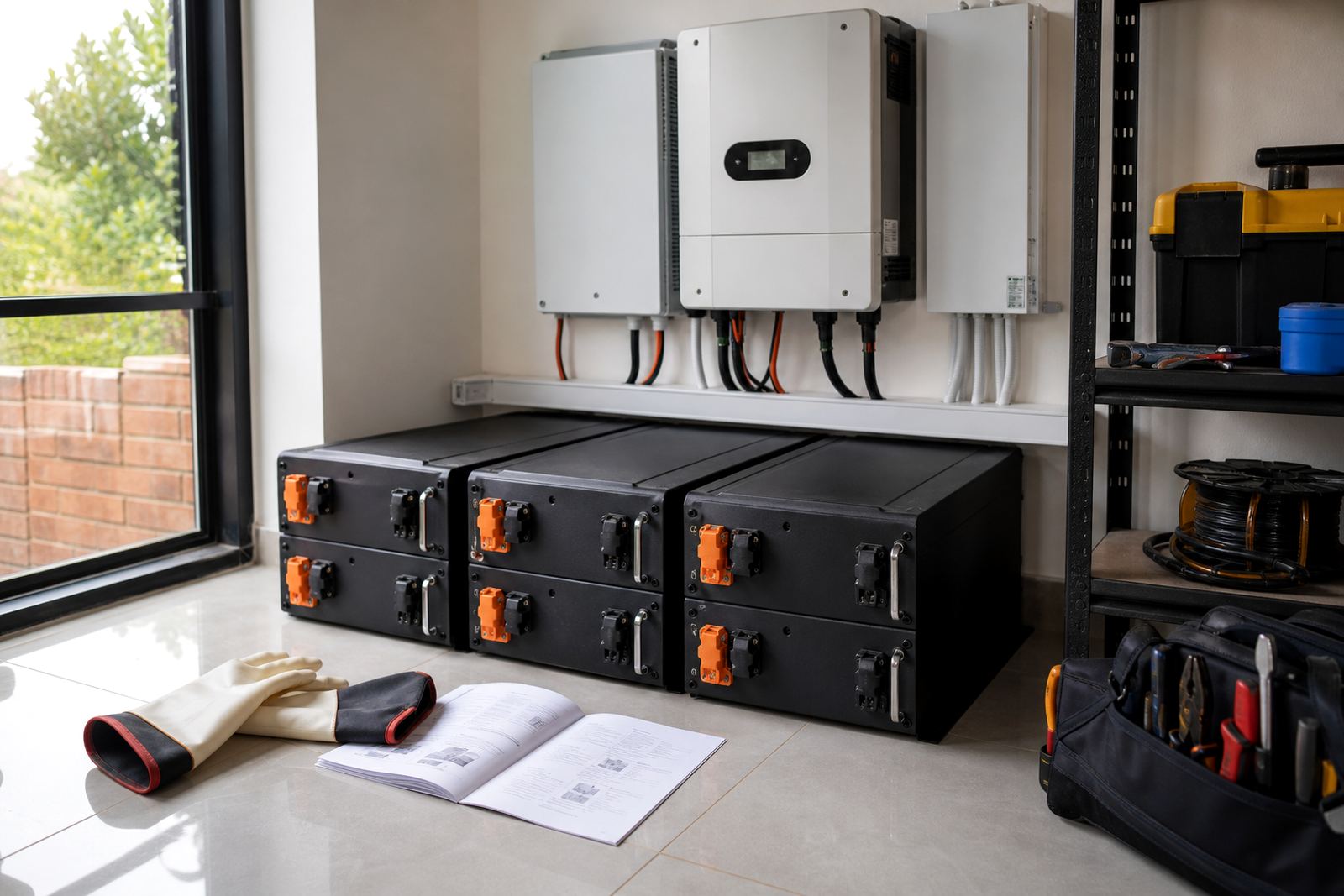
Inverters are commonly used to convert battery power into usable AC power for selected circuits. Lithium batteries store energy efficiently and are a practical fit for repeated load-shedding cycles, especially where space is limited. In humid coastal conditions the battery location matters, but inland rentals still need good ventilation, a dry wall, and enough clearance for maintenance. A kitchen cupboard is seldom the right place, and a hot ceiling void is worse.
For a rental, the most practical approach is often to keep the system compact, easy to service and easy to explain to the property owner. If the tenant later moves, the setup can be reviewed and, where possible, adapted for another premises.
Compliance is not optional in rented property
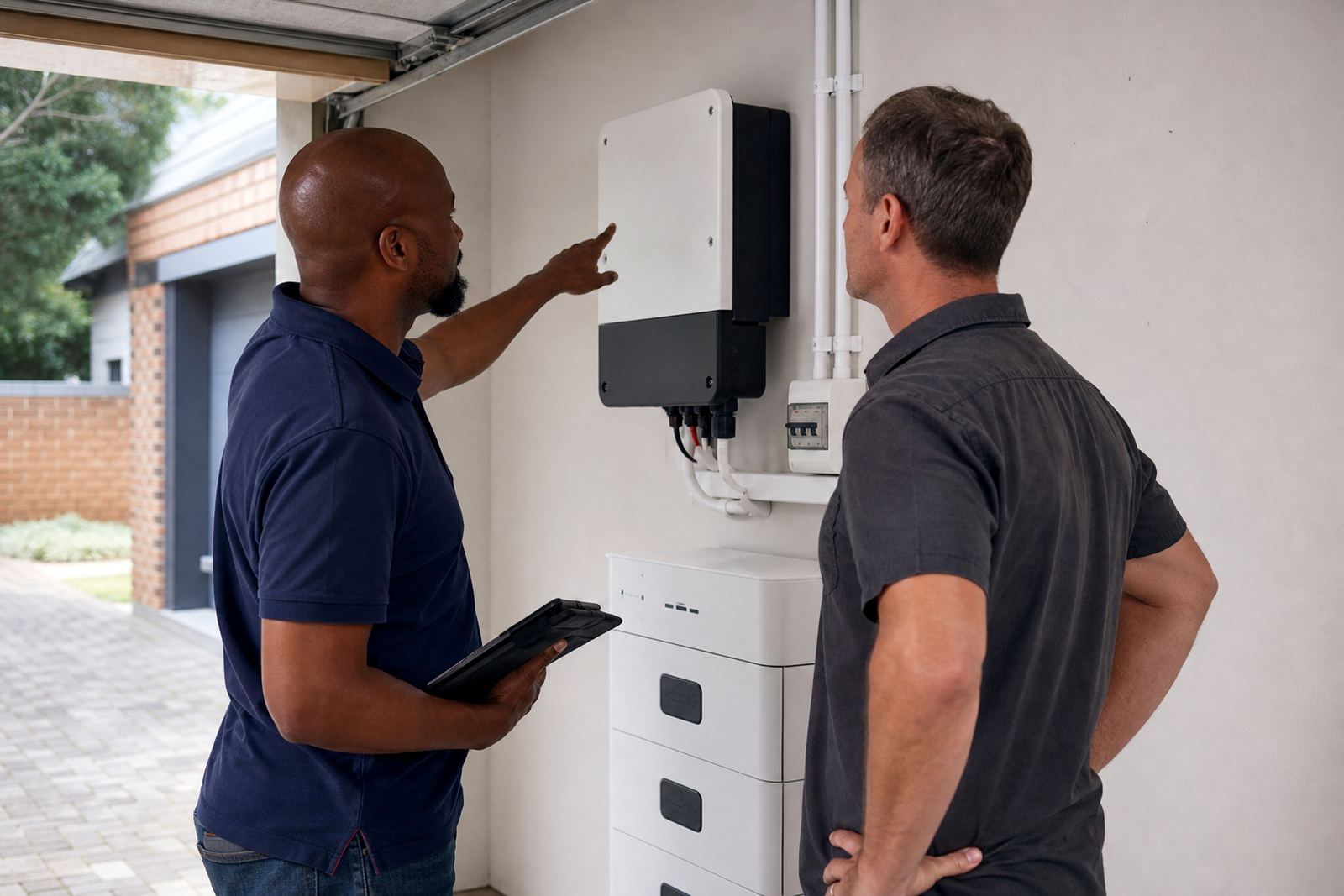
All inverter and battery installations must be carried out by a registered electrician. That work should end with a certificate of compliance, which matters for the owner, the tenant, the insurer and anyone who inspects the installation later. It is not enough to have the equipment working. The wiring must be safe, correctly isolated and properly labelled.
If the system is grid tied, or connected in a way that interacts with the municipal supply, the installation must also be registered with the relevant municipality. In Johannesburg and nearby areas, that can affect how the changeover is set up and what documentation is needed. For a landlord, this reduces risk. For a tenant, it gives peace of mind that the system was installed properly and not left as a loose arrangement behind a wall.
- Registered electrician for all installation work
- Certificate of compliance after completion
- Municipal registration for grid tied systems
- Clear labelling of changeover and backup circuits
- Owner approval before any drilling or rewiring
How rental businesses stay open during outages
Shops, offices and shared workspaces often need backup that is simple to use. Staff should not have to guess which switch to flip during load-shedding. The best rental solutions usually include a clearly marked essential circuit board, a changeover solution, and commissioning that tests the system under real conditions.
For a business tenant in Pretoria or Johannesburg, the key question is not just whether the lights stay on. It is whether the router stays up, the cashier can keep trading, and the security system stays active. A proper site assessment helps to separate business critical loads from optional loads. That keeps the system manageable and avoids unnecessary strain on the battery bank.
Routine servicing also matters. Dust, loose connections and unnoticed faults can build up over time, especially in premises with frequent access changes or multiple users. If the rental is in a busy centre or shared building, a planned service check can prevent problems before the next outage hits.
Cutting work for a client in Randburg
A tenant in Randburg running a small professional practice from a leased office wanted backup for computers, a network router, a printer and a few lights. The landlord allowed the installation on condition that the wiring stayed neat, the system was inspected properly and nothing damaged the premises. After a site assessment, the essential circuits were separated from the rest of the office, a compact inverter and lithium battery setup was selected, and the system was commissioned with the required paperwork in place.
When load-shedding returned that week, staff could continue working without needing to move equipment around or rely on extension leads. The setup did not try to power the whole building, just the parts that kept the office functioning. That is the practical model for most rentals: keep it specific, compliant and easy to hand back when the lease ends.
What PowerCut helps with
For rental properties across Gauteng, PowerCut supports owners, tenants and managing agents with backup planning that suits the property and the lease. The team works from Randburg and assists homes and businesses in Johannesburg, Pretoria, Centurion, Midrand, Roodepoort, Sandton and Fourways.
Services include site assessments, backup sizing, inverter installation, battery installation, essential circuit wiring, changeover solutions, system commissioning, compliance support, monitoring setup, battery expansions, fault checks and routine servicing. If you are planning backup for a rented premises, the best starting point is to confirm what is allowed, then size the system around the loads that truly matter.