When the lights stay on, but your runtime keeps dropping
The clearest sign that you may need to expand is simple: the backup system no longer covers the hours you need. If your lights, Wi-Fi and TV were fine for two stages of load-shedding last winter but now the batteries are flat halfway through the evening, the storage is no longer matching the demand. That does not always mean something is broken. Often it means the household or business has changed, with more appliances, longer outages, or a bigger essential load than before.
In Randburg and Sandton, many clients first notice this when they add a second television, more office equipment or extra lighting. In homes around Roodepoort and Midrand, the usual story is that the system used to carry the fridge, router and a few lights, then another freezer or gate motor was added. Once the daily draw increases, battery reserve drops faster. If you are charging devices by candlelight before the outage ends, the battery bank may simply be too small for current use.
Signs the inverter is the wrong size for the load
Battery storage is not the only issue. Sometimes the inverter is undersized for the combined load you are asking it to carry. A small inverter can work well for lights, a router and a television, but it may struggle once kettles, microwaves, pumps, office printers or workshop tools are added. When that happens, the system can trip, alarm, or shut down when the draw rises too quickly.
Watch for these warning signs:
- The inverter alarms when several appliances switch on at once.
- Battery percentage drops very quickly even though the outage is not long.
- You cannot run your most important appliances together.
- The system trips during normal evening use, not only at startup.
- Staff or family members keep asking what can be switched off first.
If this sounds familiar, the problem may be capacity rather than maintenance. A larger inverter can offer more headroom for starting loads and help avoid nuisance trips. In some cases the right answer is not a bigger inverter on its own, but a matched change in both inverter size and battery capacity.
Share what must stay on during an outage and the size of the property, and a backup planner will phone or message you.
Contact formWhat a proper backup check should cover
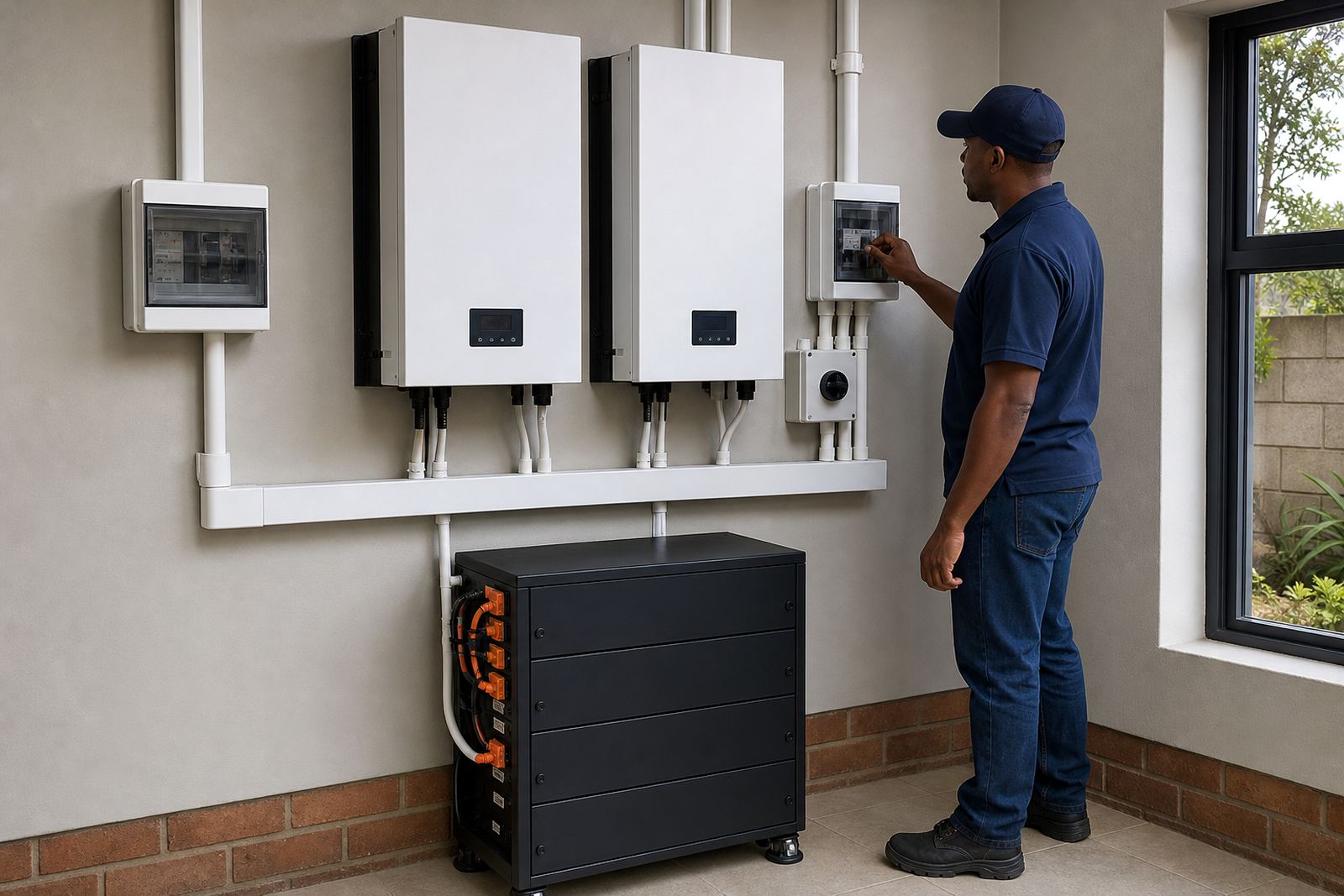
Before any expansion, the system should be checked properly. A site assessment should look at the actual appliances you want to carry, the cabling already in place, the battery age and the condition of the protection devices. It should also test how the system behaves under load, not just on paper. A battery that still holds charge may not deliver the same usable capacity as when it was new, especially after years of daily cycling.
For homes and smaller offices in Pretoria, Centurion and Johannesburg, the most useful questions are practical ones: what must stay on during an outage, for how long, and at what time of day. A family that only needs evening lighting has different needs from a medical practice that must keep a router, card machine and selected sockets live during trading hours. Once those priorities are clear, the system can be sized more accurately. That saves on overspending and helps avoid unnecessary gear sitting idle.
- List the appliances that must stay on.
- Check how many hours of backup you really need.
- Note which items have motors, heating elements or high startup draw.
- Review whether the current battery bank is ageing or under-sized.
- Confirm if the existing inverter has spare capacity for future growth.
Local example: a growing office in Randburg
A small office in Randburg may begin with a modest backup setup for the router, a few lights and a reception computer. That often works well at first. But when the team grows, more monitors are added, the printer runs more often, and a second room needs power during outages. The original system can then feel stretched even if nothing has failed.
In one common case, the client only wanted better battery life. After checking the load, it became clear the inverter was also nearing its practical limit. The better solution was to expand storage and move to a different inverter size that could handle the essential circuits more comfortably. That kind of change is often more cost-effective than patching the same setup piece by piece. It also makes the day-to-day experience easier because the system is less likely to trip when someone switches on an extra appliance.
Coastal humidity is not the issue in Gauteng, but dust, heat in enclosed spaces and poor ventilation are. If an inverter is tucked into a cramped cupboard or a battery is installed where air flow is poor, performance and lifespan can suffer. A clean, cool and accessible installation area matters just as much as the size of the equipment.
When battery expansion makes more sense than a bigger inverter
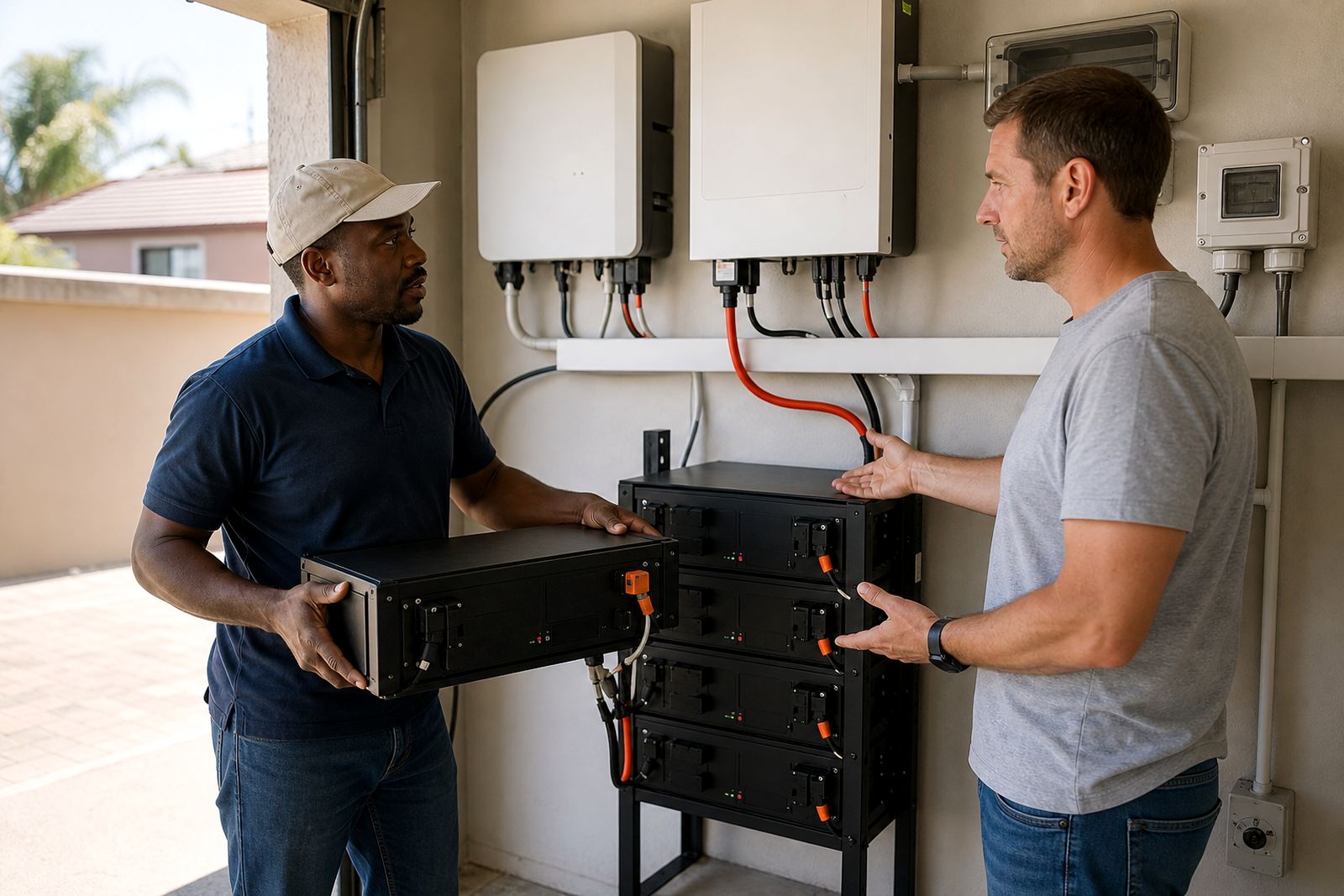
Sometimes the inverter is fine and the battery bank is the part that needs attention. This usually shows up when the system handles the load at first, but runs out of stored energy too soon. If your appliances are modest but the outage length has increased, extra battery storage may be the better move. It is also useful where the inverter still has room to support the load, but the batteries are simply not giving enough runtime.
Battery expansion is worth considering when:
- Your current inverter does not trip, but the runtime is too short.
- You can carry the load for an hour or two, not the full outage.
- The battery bank has aged and no longer delivers its original performance.
- You want to add only a few more essential circuits, not more power-hungry appliances.
- You need more stored energy for evening use, not higher surge capacity.
Lithium batteries are commonly chosen for their usable capacity and charging efficiency, but the system still needs to be matched carefully. More batteries are not always the answer if the inverter cannot support them correctly or if the installation was never planned for extra capacity.
Installation rules, compliance and municipal steps
Any expansion should be done by a registered electrician, with the required certificate of compliance issued for the work. That matters whether you are adding batteries, changing the inverter, or adjusting essential circuit wiring. If the system is grid-tied, municipal registration is also required. Skipping those steps can create problems later, especially if there is an insurance claim, a property sale or an inspection.
A good installation also needs to be practical for maintenance. Cabling should be neat, protection devices labelled, and the setup made easy to isolate during fault checks. In homes and businesses across Midrand, Centurion and Pretoria, this saves time when a fault appears after a storm or a prolonged outage. Compliance is not paperwork for the sake of it. It is part of keeping the system safe and serviceable.
A simple decision rule for homes and businesses
If your current system is still meeting your needs, you may not have to change anything yet. But if outages are lasting longer, the load has grown, or the inverter keeps reaching its limit, it is time to review the setup. The question is not whether the equipment is still working. The real question is whether it still matches the way you use power now.
A practical rule is this: if you are managing what stays on every single outage, rather than letting the system carry your essentials comfortably, the backup is probably due for review. That review can lead to more battery storage, a larger inverter, or a proper rework of the essential circuits. For clients in Johannesburg, Pretoria, Centurion, Midrand and Roodepoort, that kind of review is often the first step toward a setup that better fits present needs, not last year’s load-shedding pattern.
PowerCut supports site assessments, backup sizing, inverter installation, battery installation, essential circuit wiring, changeover solutions, system commissioning, compliance support, monitoring setup, battery expansions, fault checks and routine servicing. The right time to expand is usually before the system fails completely, when the warning signs are already there and the fix can still be planned properly.