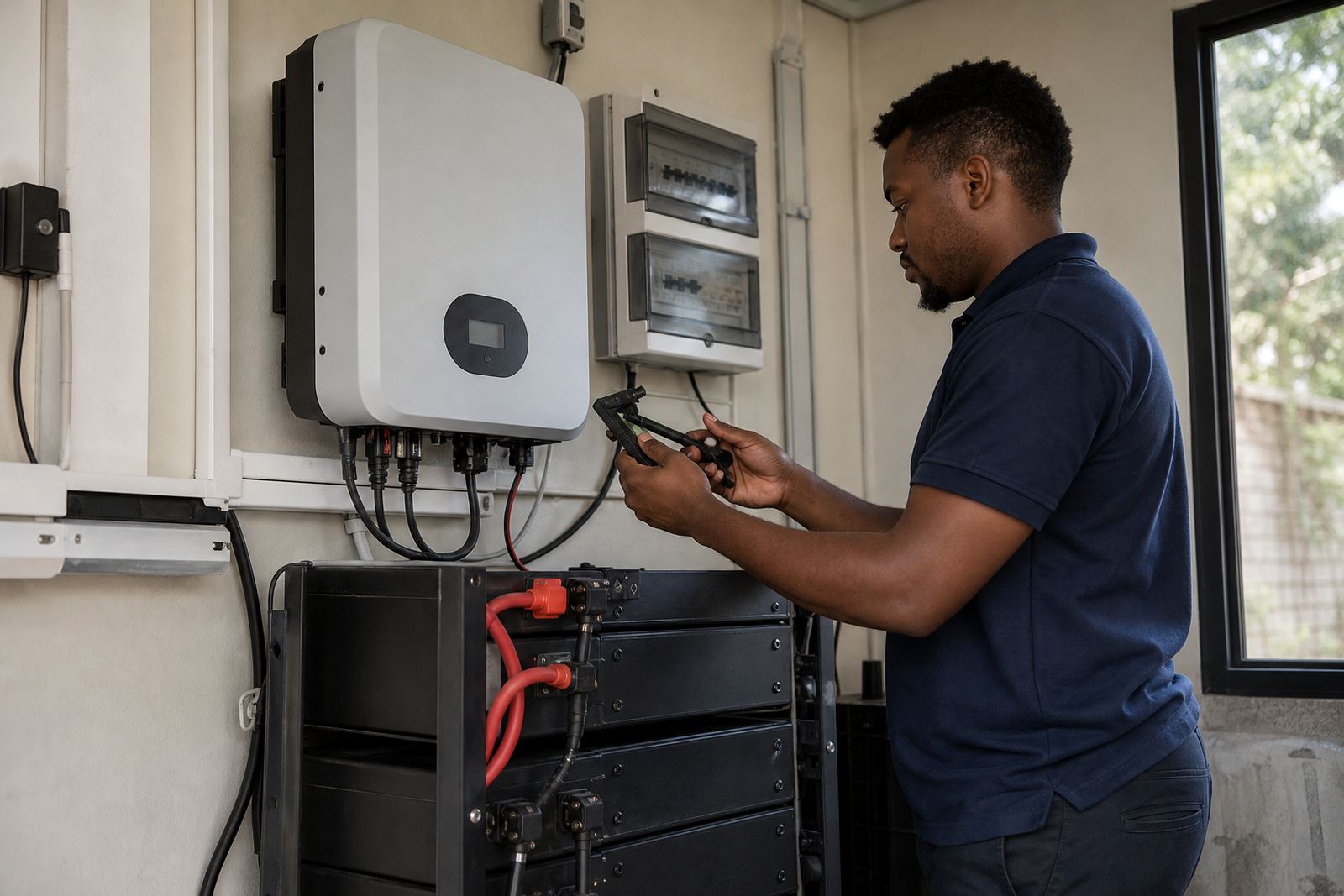
What Essential Circuit Wiring Covers
We wire selected outlets and lighting circuits into a backed-up distribution path so only the important loads stay live during load-shedding or a short outage. That means the backup system is not wasting battery capacity on geysers, ovens, pool pumps or other heavy loads that can drain storage too quickly. The result is better runtime, neater control and less strain on the inverter.
For most homes in Randburg, Sandton, Fourways and Roodepoort, essential circuits often include the Wi-Fi router, a few light circuits, TV points, gate motors, alarm systems and selected plug points. In offices and small shops around Johannesburg, Pretoria, Centurion and Midrand, we often separate workstations, network equipment, tills, security systems and selected lighting. Every property is different, so the circuit plan must match the actual board and the load profile, not a guess.
We work with standard single-phase and, where required, three-phase arrangements, and we size the backed-up circuits around the inverter output, battery capacity and startup loads. If the wiring is not arranged properly, a system can trip under pressure or run out of battery too soon, especially on longer stages of load-shedding.
How We Plan the Backed-Up Circuits
Before any wires are moved, we do a site assessment and identify which loads are essential, which are optional and which should stay off backup completely. This helps avoid nuisance trips and keeps the installation within safe current limits. We also check the distribution board, existing cabling, earthing and the condition of the protection devices.
- Identify essential and non-essential loads from the actual property layout
- Check inverter rating, battery size and expected runtime requirements
- Review the distribution board, labels and circuit protection
- Plan changeover paths and isolate heavy appliances
- Confirm any grid-tied requirements for municipal registration where applicable
Where a property already has a solar-ready or backup-ready board, we can usually adapt the existing layout with less interruption. Older properties may need cleaner labelling, new breakers or a more practical split between circuits. In either setup, the goal is a clearly arranged backup board that is safer during Gauteng outages and easier to maintain.: a clear setup that is easier to maintain and safer during outages.
Share what must stay on during an outage and the size of the property, and a backup planner will phone or message you.
Contact formInstallation Steps On Site
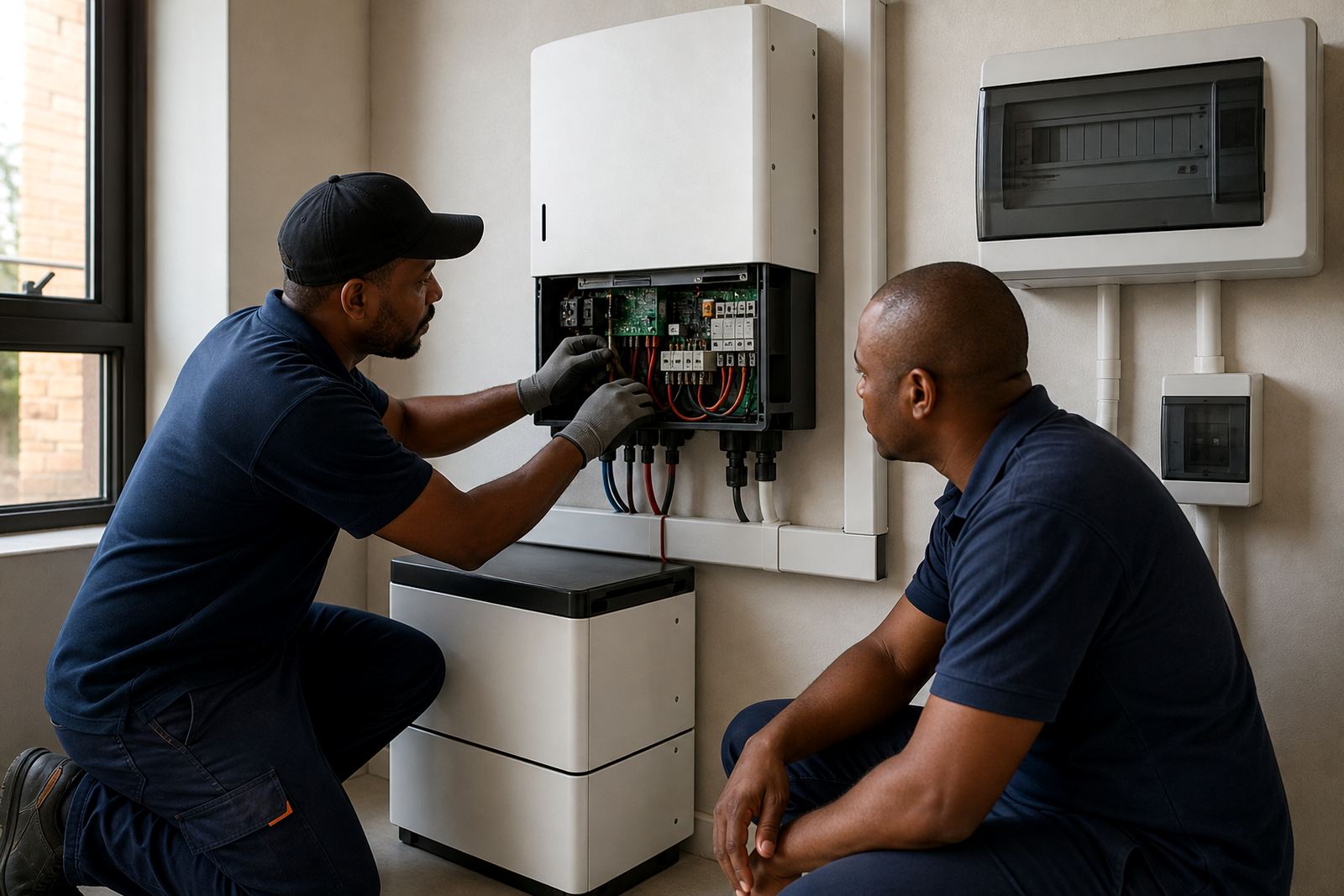
Once the circuit plan is approved, our team prepares the board, isolates supply and completes the wiring in a controlled sequence. This usually includes moving the chosen circuits to the backed-up side, adding protection where needed and testing the changeover operation. The work must be done by a registered electrician, and a certificate of compliance is required for the final installation record.
For grid-tied systems, municipal registration may also be required depending on the property and the local rules. We help with the practical side of that process by making sure the wiring and labels are in order and the system is set up for inspection. That saves time later, because poor labelling or mixed circuits can hold up approval.
- Safe isolation of the electrical supply
- Separation of critical circuits from non-essential loads
- Breaker and label updates for the distribution board
- Changeover and inverter input/output checks
- Final testing under load and handover notes
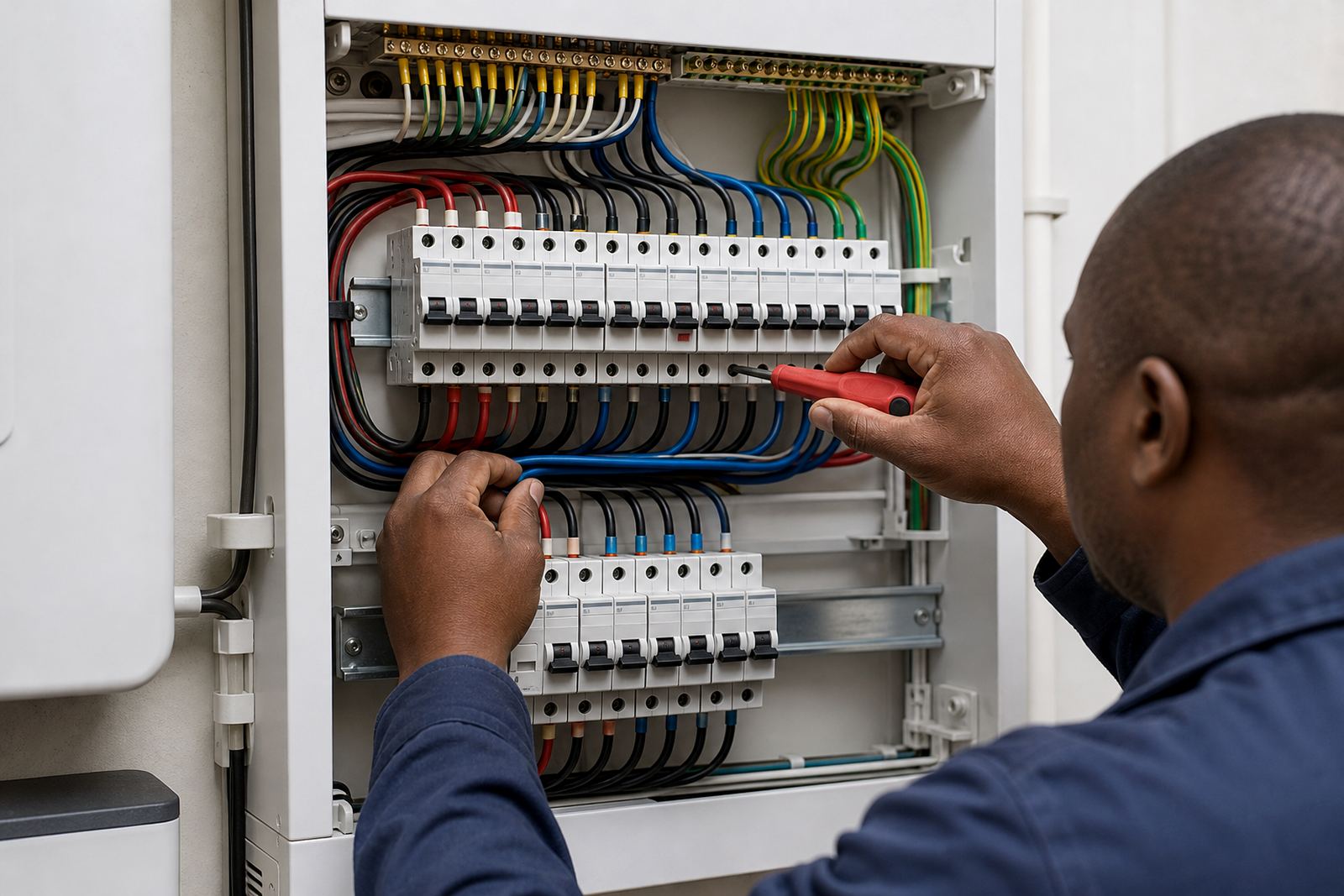
The workmanship needs to be neat because future fault finding is much easier when every circuit is clearly marked and grouped properly. A tidy board is not just about appearance, it helps with safety too.
Typical Specs For Backup Circuit Work
Essential circuit wiring is not one-size-fits-all, but there are common practical limits we work to. The exact set-up depends on whether the property uses a small backup inverter for lights and internet only, or a larger battery system that carries selected plug circuits as well. In humid coastal conditions and in dusty areas, we also consider enclosure quality and cable condition so the system stays dependable over time.
For most homes, backed-up circuits are kept to the minimum required for comfort and safety. For small businesses, we usually protect the equipment that must stay live for operations, while leaving high-draw appliances off the backup side. This keeps the installation sensible and easier to manage during repeated outages.
- Single-phase and three-phase circuit separation where required
- Essential loads typically kept within inverter output limits
- Battery-backed circuits arranged to suit runtime targets, not guesswork
- Protection devices selected to match cable size and load current
- Labels added for backed-up, non-backed-up and changeover sections
We also look at surge exposure, especially where gate motors, pumps or long cable runs are involved. If the circuit map is poor, the backup system can be overworked and that creates avoidable faults.
Turnaround, Access And Service Area
Most essential circuit wiring jobs are completed within one working day once the assessment is done, though more complex boards or larger commercial sites may take longer. If the property needs a new layout, extra breakers or coordination with a generator, the timing will depend on the condition of the existing installation. We keep clients updated at every step so there are no surprises.
We work across Randburg, Johannesburg, Pretoria, Centurion, Midrand, Roodepoort, Sandton and Fourways, and we regularly assist homes, offices, shops and small industrial sites. Because many clients are dealing with live outage schedules, we try to plan the work around business hours or lower-traffic periods where possible. That reduces disruption and makes the handover smoother.
When there are access restrictions in estates, office parks or sectional title buildings, we arrange the visit details in advance. Good planning matters, because a simple circuit change can take longer if the board is difficult to reach or the building has strict entry rules.
Pricing Approach And Ongoing Maintenance
Pricing for essential circuit wiring depends on the number of circuits being separated, the condition of the board, cable length, protection devices needed and whether a changeover arrangement must be added or upgraded. We quote after a proper site check so the work matches the actual installation, not a rough estimate. That keeps the pricing fair and avoids extras that were not discussed.
For maintenance, we recommend a quick check every 6 to 12 months on the wiring labels, breaker condition and changeover function, especially where load-shedding is frequent or the property is used heavily. If the system serves a business, more regular inspections may be sensible if the premises have had circuit changes, added equipment or repeated tripping. Small issues are easier to sort early, before they turn into downtime.
We also advise a recheck after any battery expansion, inverter upgrade or major electrical alteration. A circuit that was fine for a smaller system may no longer be suitable once the loads change. The board should grow with the system, not fight it.
Why A Proper Circuit Split Matters
Essential circuit wiring is one of the most practical parts of a backup installation because it decides where your power actually goes when the grid drops. If the split is done badly, you can end up with weak runtime, nuisance trips or a system that feels smaller than it should be. If it is done properly, the same inverter and lithium batteries work more efficiently and the property stays usable through outages.
We keep the process straightforward: assess the site, separate the circuits, test the backup path and leave the board clearly marked. For homeowners, that often means lights, internet and a few key points stay live. For businesses, it usually means the workday can carry on in a limited but useful way while non-essential loads stay off. It is practical, tidy and built around the way South African properties actually use power.
System at a glance
| Service type | Essential circuit wiring for inverter and battery backup systems |
|---|---|
| Property types | Homes, offices, shops and light commercial sites |
| Typical supply area | Randburg, Johannesburg, Pretoria, Centurion, Midrand, Roodepoort, Sandton, Fourways |
| Circuit scope | Lighting, routers, security, selected plug points and critical business loads |
| Compliance | Registered electrician required, with certificate of compliance and municipal registration where applicable |
| Maintenance interval | Inspect labels, breakers and changeover function every 6 to 12 months |