What our compliance support covers
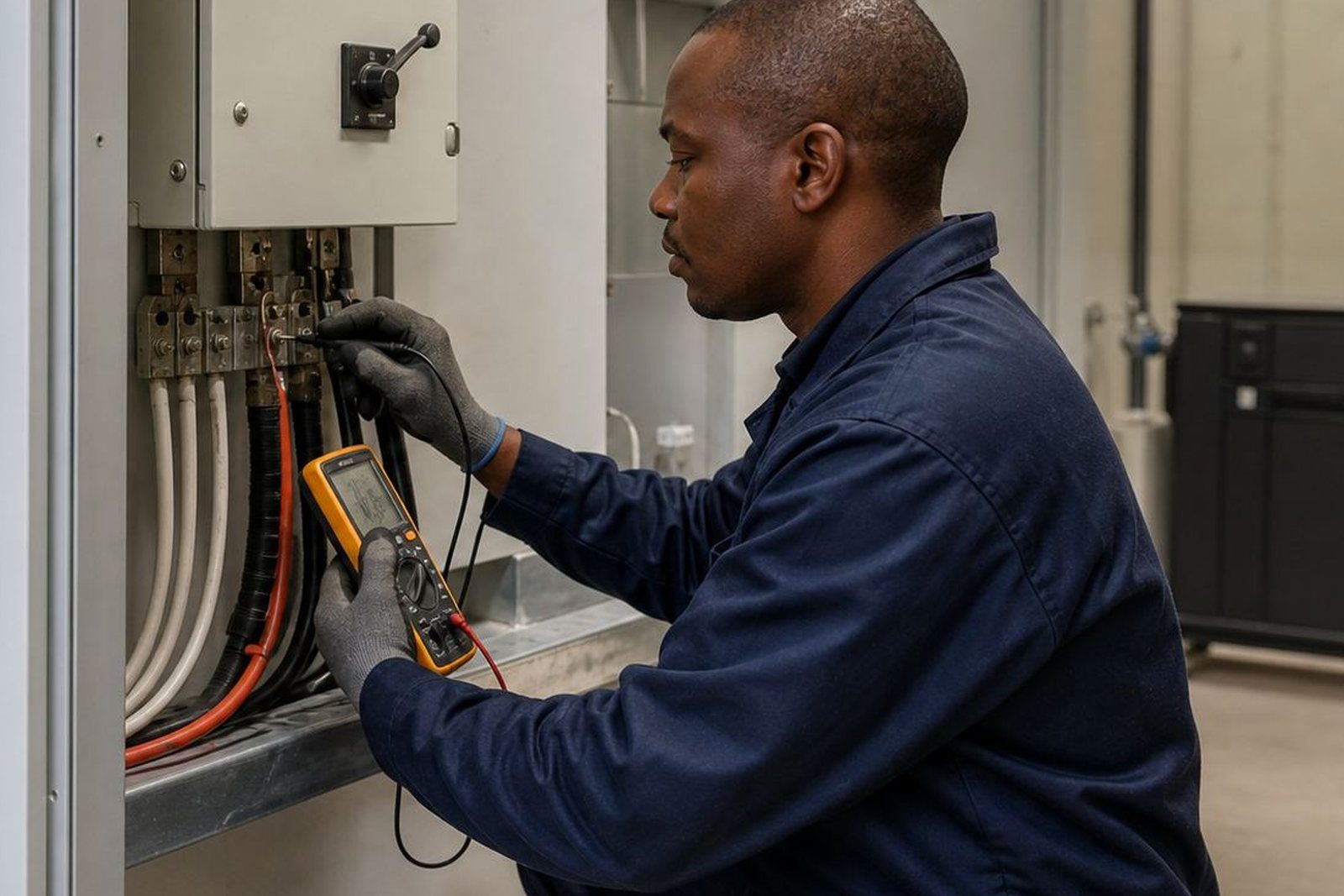
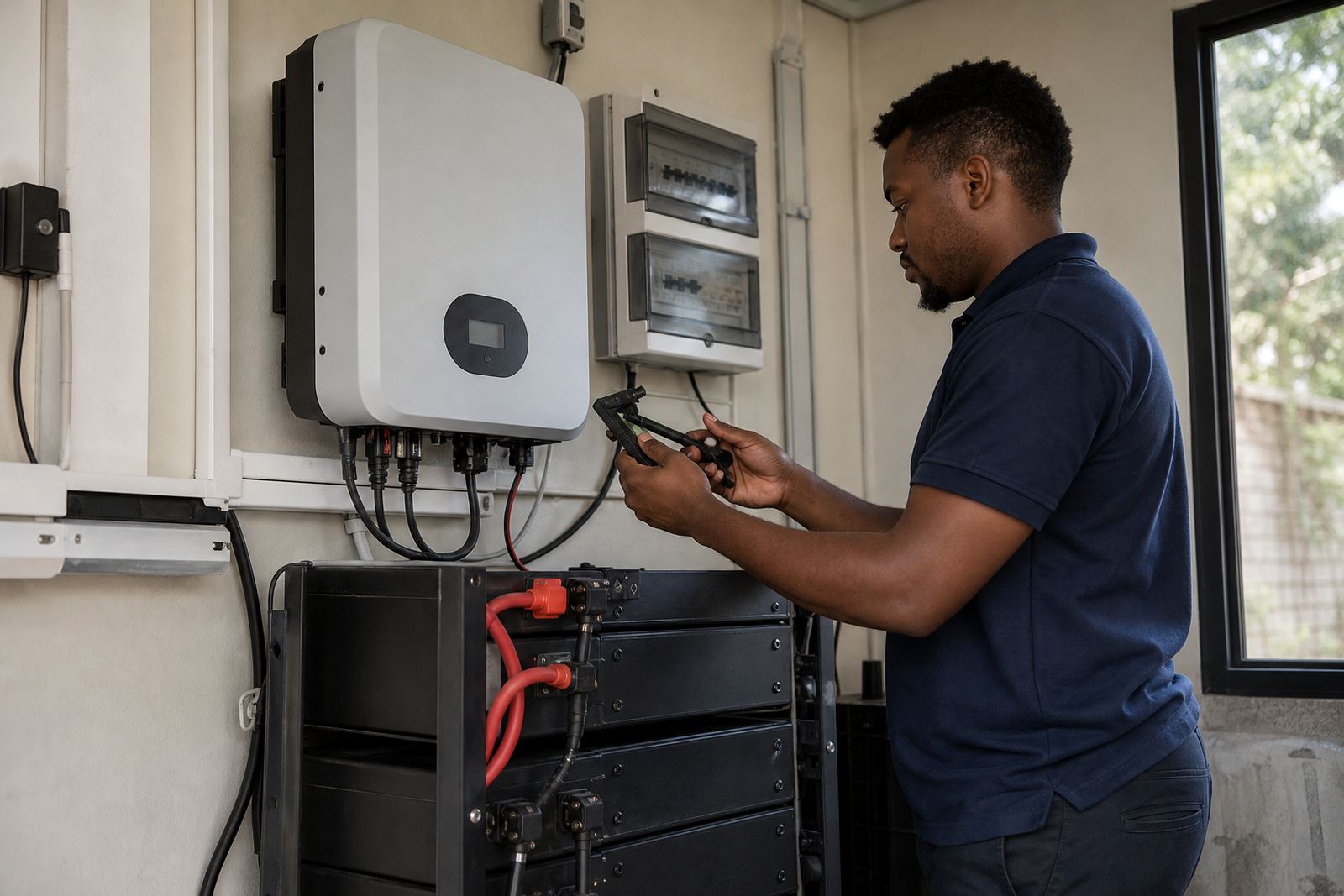
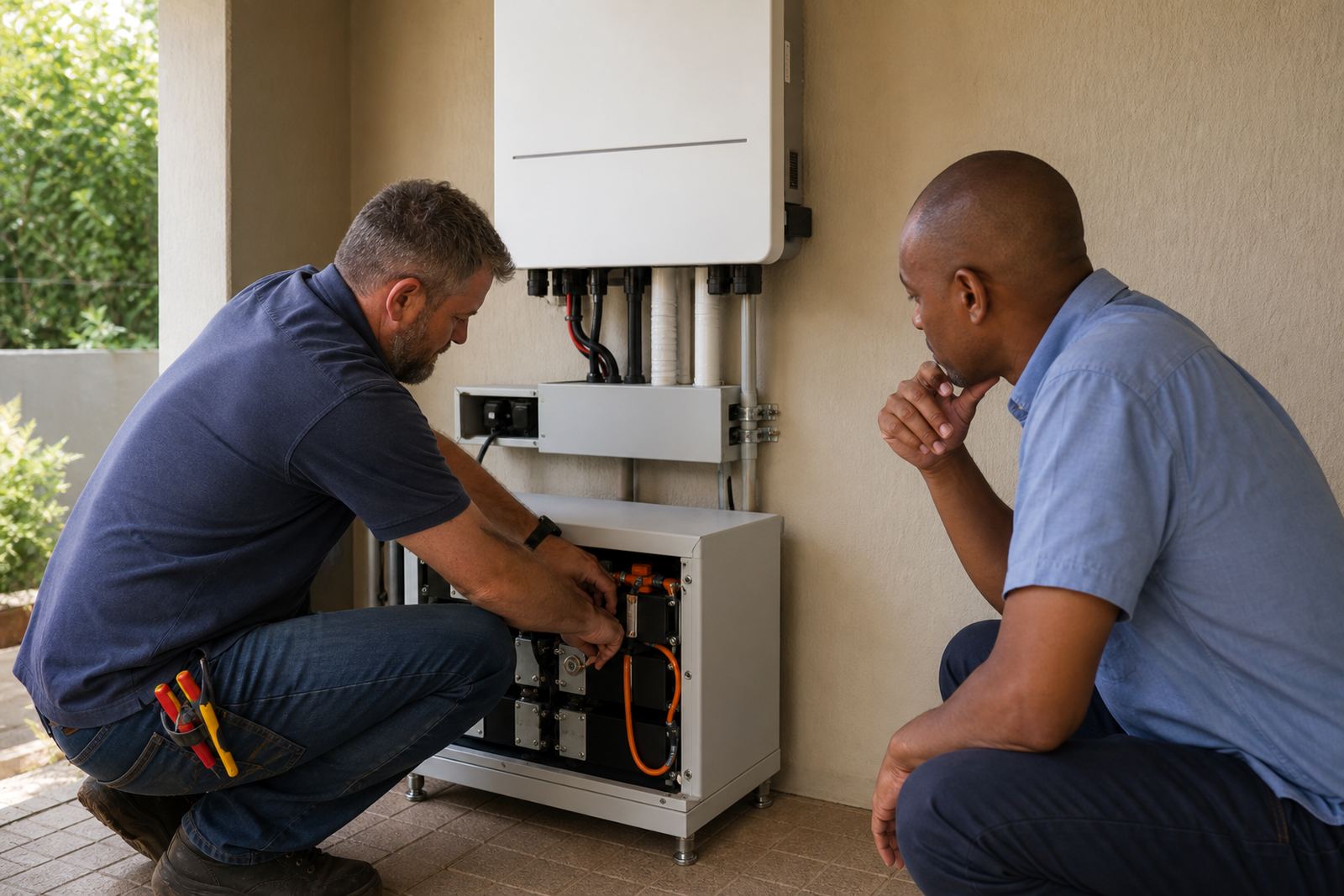
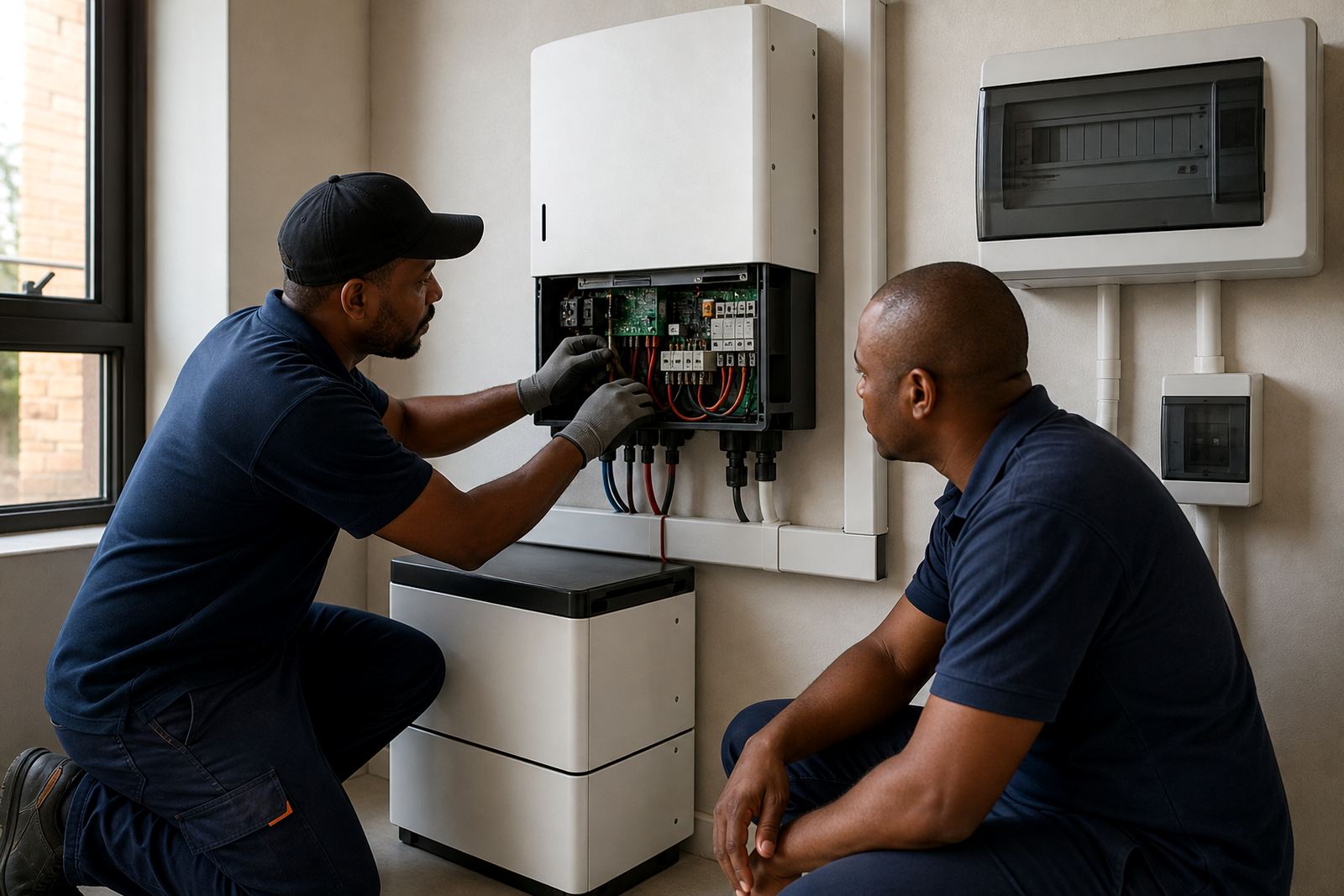
Compliance is not just paperwork, it is the record that your inverter, lithium battery and changeover arrangement were installed and tested correctly. For homes, offices, workshops and retail sites across Randburg, Johannesburg, Pretoria, Centurion, Midrand, Roodepoort, Sandton and Fourways, we help make sure the system setup matches the way it is used on site. That includes checking the main distribution board, essential circuits, battery location, cabling routes and the isolation points needed for safe operation.
Our support covers the practical side of backup installations as well as the documents that normally need to be kept with the property file. If a system is tied into the municipal supply, the registration step must also be handled correctly. We do not leave clients guessing about what is required, especially when the installation must stand up to an inspection later on.
- Certificate of compliance guidance for the electrical installation
- Checks on inverter, battery and changeover wiring layout
- Identification of circuits kept on backup power
- Municipal registration guidance for grid-tied systems
- Support with records for landlords, body corporates and business premises
How we handle the compliance process
We start with a site assessment or a review of the existing installation. The goal is to see whether the system is a simple essential-load setup or a more involved grid-tied arrangement with export protection, backup circuits and monitoring. Once we understand the site, we can advise what documentation is needed and what needs to be corrected before a certificate can be issued by the appropriate registered professional.
Where the system has already been installed, we check common problem areas such as undersized cabling, poor battery ventilation, loose terminations, missing labels and non-standard changeover arrangements. If the system is still in planning, we help set it up in a way that is easier to certify later. That saves time and avoids rework, which can become costly if the system has to be opened up again. A tidy install makes the process much smoother, no two ways about it.
- Initial inspection or plan review
- Verification of load, circuit and equipment details
- Identification of compliance gaps
- Corrective work coordination where needed
- Final documentation and handover support
Share what must stay on during an outage and the size of the property, and a backup planner will phone or message you.
Contact formBackup sizing that supports compliance
Good compliance starts with correct sizing. If a system is too small for the load, the user may bypass protection, overload the battery or run the inverter outside its intended range. We look at the essential appliances and circuits that must stay on during load-shedding, then size the inverter and lithium battery bank around the actual demand. That usually means checking kettle load, fridge startup current, office equipment, lighting and any gate or security equipment that must stay live.
Typical residential backup systems in Gauteng often use a 5 kW to 8 kW inverter with 5 kWh to 15 kWh of lithium storage, depending on what has to run during outages. Small commercial sites may need larger multi-unit systems with staged loads, separate essential boards and more careful protection layout. The aim is to keep the installation within a clean electrical structure so the compliance paperwork aligns with what is on site, not just what was planned on paper.
- Load review for essential circuits only
- Battery capacity matched to outage duration expectations
- Inverter rating matched to peak start-up demand
- Advice on where separate sub-boards may help compliance
- Checks for safe battery placement and access space
Grid-tied systems and municipal registration
When a backup system connects to the municipal supply, there are extra rules to follow. Grid-tied systems need to be treated carefully because the utility and the municipality need to know how the installation interacts with the supply network. This is especially important where there is backfeed risk, embedded generation or a hybrid inverter that can draw from and interact with the grid. Compliance support in this area includes guidance on the information usually needed for registration and the items that must be visible on the installation itself.
We help clients prepare for the registration process by making sure the physical system matches the declared setup. That includes labelling, isolating devices, changeover arrangement and the way essential loads are separated from non-essential loads. In some cases the municipality may require additional forms or test details. We keep the process practical and clear, so the client knows what to submit and what to keep on file.
For body corporates, landlords and business owners, this step is especially important because there may be future inspections, tenant changes or property transfers. A system that is properly recorded is easier to manage later and much simpler to explain to an electrician or inspector.
Turnaround times, pricing approach and site realities
Turnaround depends on the condition of the site, the size of the backup system and whether the installation is new or already in place. A straightforward home system may only need a focused visit and a short review, while a business with multiple circuits, battery cabinets and changeover points will take longer. Where remedial work is needed, we schedule that in a practical order so the compliance step is not delayed by avoidable faults.
Our pricing approach is based on the scope of the work, not guesswork. That means we first establish whether you need a basic compliance review, support for a full backup installation, or a more detailed grid-tied registration process. We do not quote blind, because every site is different and the electrical condition of the property matters. Coastal humidity is not the issue in Gauteng, but dust, heat and long outage cycles still affect cable terminations, battery rooms and switchgear over time.
- Simple site review and document guidance for smaller homes
- More detailed inspections for commercial or multi-tenant premises
- Separate scope for corrective wiring, labels and load separation
- Registration support for grid-tied systems where required
Ongoing checks after the paperwork is done
Compliance support should not end on the day the certificate is filed. Inverters, lithium batteries and protection devices need periodic checks because a system that was correct at handover can drift out of spec through later changes, loose connections or added loads. We recommend routine servicing at intervals that suit the usage pattern, with a closer look after any extension to the battery bank or any change to the essential circuits.
For most homes, an annual inspection is a sensible starting point, especially if the system carries the house through regular load-shedding. Busy commercial sites may benefit from six-monthly checks, particularly where the equipment runs daily and there is staff turnover or tenant movement. After a fault trip, smoke event, battery expansion or change in municipal requirements, a fresh review is wise. Small issues are easier to fix before they become a certification headache.
Our team in Randburg can assist with follow-up checks, fault checks and maintenance planning so the system stays safe, neat and document-ready through the year.
System at a glance
| Compliance focus | Certificates of compliance, safe documentation and municipal registration guidance |
|---|---|
| Typical system sizes | Residential 3 kW to 8 kW, small commercial systems from 5 kW upward |
| Battery types | Lithium batteries for backup storage and fast recharge support |
| Installation requirement | Must be installed by a registered electrician or qualified electrical professional |
| Documentation | Cabling notes, labels, changeover details, test records and handover file support |
| Maintenance intervals | Annual checks for homes, six-monthly checks for active commercial systems |