What a workshop backup system should cover
A workshop backup setup is usually about keeping the working parts of the site on while heavier machinery stays off. That often means office sockets, lighting, alarms, gate motors, a server or router, point of sale equipment and a few small support tools. The aim is not to run everything. It is to keep the business moving safely until supply returns.
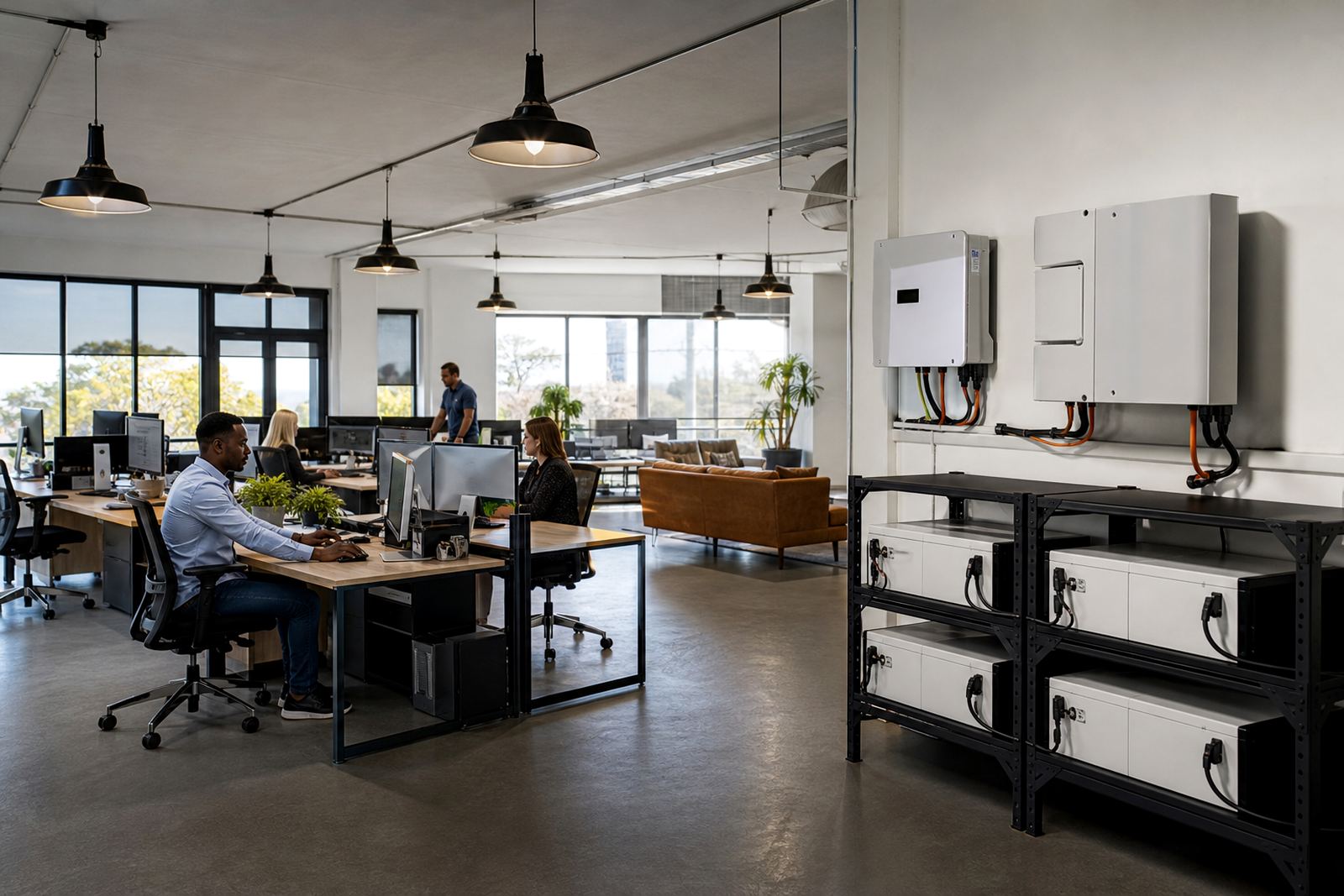
For many Gauteng workshops, the main question is which circuits are worth backing up and which loads should stay isolated. A clean layout makes a big difference. If your lighting, admin area and communications are all on one side of the board, the electrician can separate them more neatly and keep the backup system focused on the right circuits.
- Office circuits and admin workstations
- LED lighting in key rooms and passages
- Wi-Fi, routers and security equipment
- Small printers, scanners or label printers
- Selected support sockets for charging and light use
Choosing the right inverter and lithium batteries
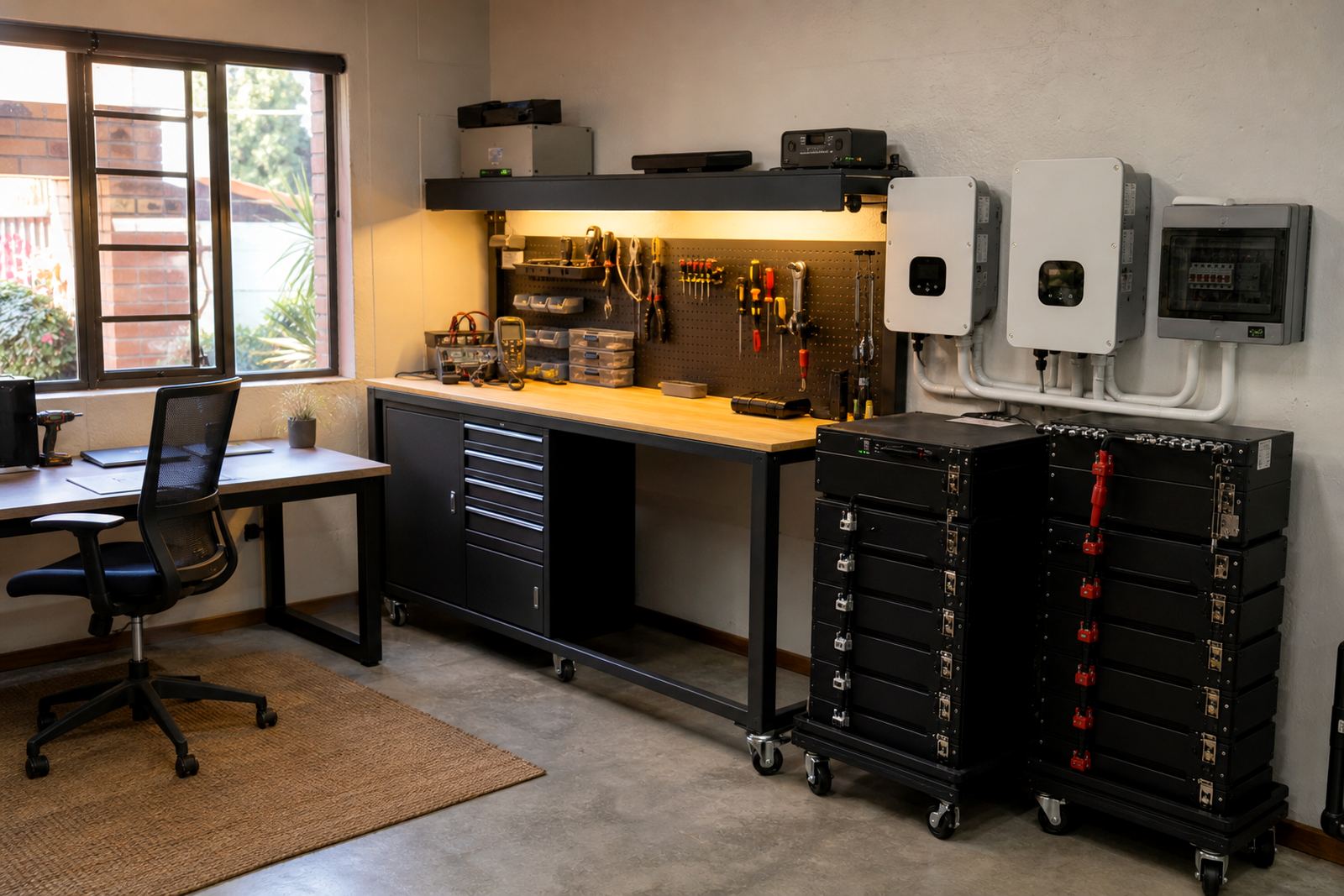
Most workshop backup systems use an inverter with lithium batteries because they respond well to repeated cycling and take less space than older battery types. The inverter changes battery power into usable AC power for the circuits you have selected, while the battery bank stores energy for the outage period. The final size depends on your load, how long you need to stay up, and whether the site has room for future expansion.
A careful backup sizing exercise looks at both starting loads and running loads. Computers and network gear are usually modest, but printers, power tools and older fluorescent fittings can add up quickly. If you want lights and admin sockets for a few hours, the battery capacity and inverter rating must be matched properly or the system will trip when demand rises.
- Pure sine wave output is preferred for sensitive office equipment
- Lithium batteries suit regular load-shedding cycles and limited space
- Battery expansion should be planned from the start where future growth is likely
- Ventilation and wall mounting space matter in tight workshop rooms
Share what must stay on during an outage and the size of the property, and a backup planner will phone or message you.
Contact formHow to plan the layout in a real workshop
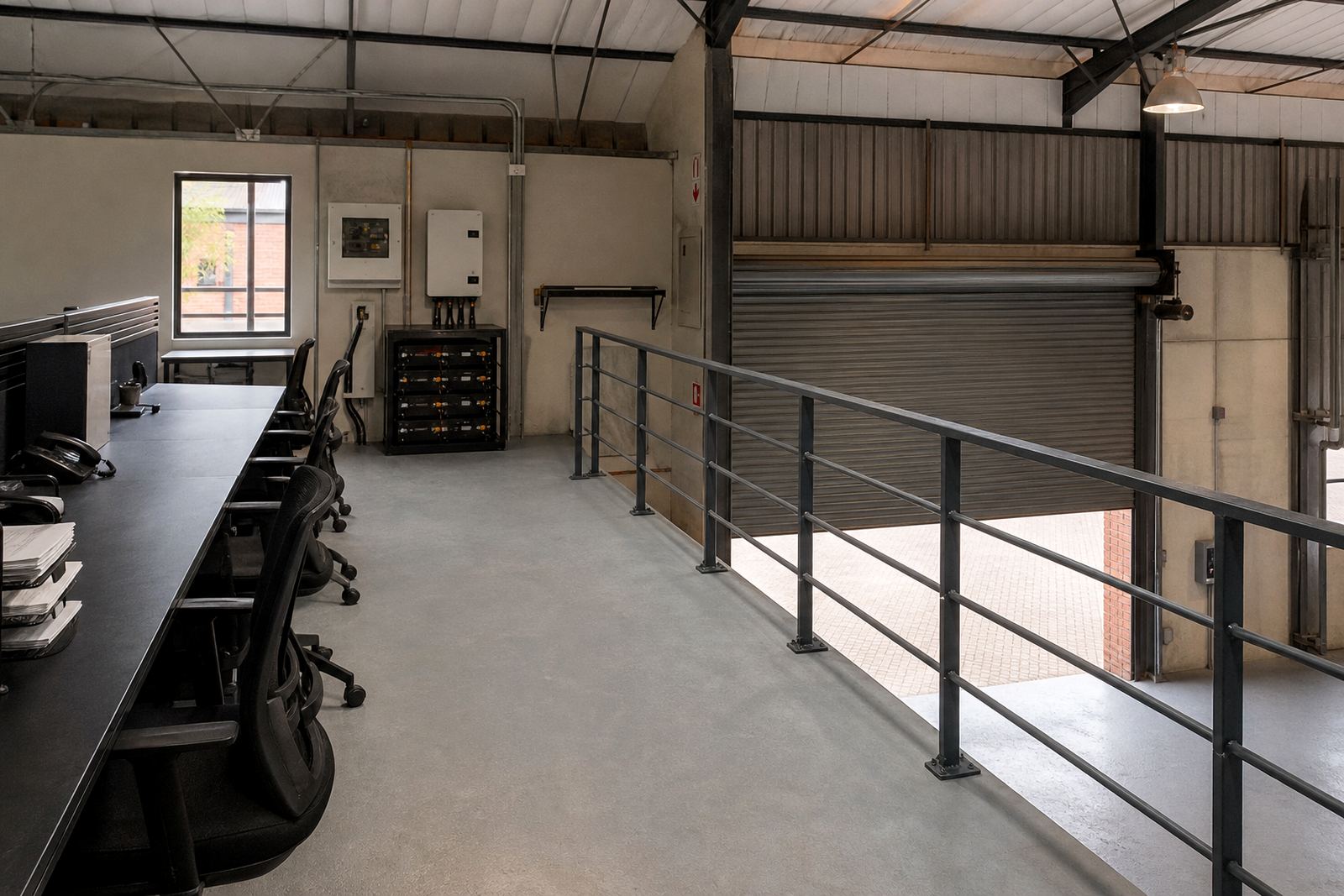
In Randburg, Sandton and Fourways, many workshops share space with offices, storerooms and light manufacturing or service bays. That means the installation needs to be practical, neat and easy to service. The inverter and batteries should be placed where they are protected from dust, moisture and direct heat, but still accessible for checks. Coastal humidity is not the issue in Gauteng, yet dust, vibration and poor cable routing can still shorten equipment life.
It helps to keep the backup circuits separate from the heavy machinery board where possible. Essential circuit wiring should be clearly labelled so that staff know what stays on during an outage. If your site has a generator point, solar add-on plans, or a future need to expand, the electrical layout should allow for that now instead of forcing a costly rework later.
- Keep equipment off the floor and away from wet cleaning areas
- Allow enough wall space for ventilation and future servicing
- Label backed-up circuits clearly for staff and contractors
- Plan cable routes so they do not cross busy walkways
Common mistakes that cause trouble later
One common mistake is trying to back up too many circuits because it sounds safer. In practice this usually means short runtime and nuisance trips. Another issue is mixing heavy workshop loads with office backup, which can overload the inverter or flatten the batteries too quickly. A system that is too small becomes frustrating, while one that is too large for the actual use case wastes money and space.
Other problems are more simple but just as damaging. Poor earthing, loose terminals, no commissioning and unclear changeover arrangements can all lead to downtime. Installations must be done by a registered electrician, and a certificate of compliance is required. If the system is grid-tied or linked to municipal supply in a way that requires approval, it must also be registered with the local municipality.
- Backing up machines that should stay off during load-shedding
- Skipping proper circuit separation and labels
- Using undersized cabling or poor terminations
- Leaving out compliance paperwork and municipal registration where needed
Budget ranges for workshop backup systems
Workshop backup budgets depend on the size of the inverter, the battery capacity, the number of essential circuits and the amount of wiring work needed. A smaller office and lighting package will cost less than a site with several admin rooms, security loads and expanded runtime. The electrical condition of the building also matters. Older boards may need upgrading before the backup system can be connected safely.
As a broad working range, compact workshop backup systems can start from around R25 000 to R45 000 for limited essentials, while more capable setups for larger offices and support areas often move into the R50 000 to R120 000 range or higher. Final pricing depends on site conditions, load requirements and whether battery expansion or monitoring is included. We do not give financial advice, only practical sizing based on the load you want covered.
What our team helps with in Gauteng
From our Randburg, Johannesburg base, PowerCut supports workshops across Johannesburg, Pretoria, Centurion, Midrand, Roodepoort, Sandton and Fourways. Our team works on site assessments, backup sizing, inverter installation, battery installation, essential circuit wiring, changeover solutions, system commissioning, compliance support, monitoring setup, battery expansions, fault checks and routine servicing. That mix matters because a workshop does not only need equipment, it needs a plan that fits how the place actually operates.
Clients usually reach us through the enquiry form on our contact page, then we work through the load list, the board layout and the practical backup goals. Sifiso Ngobeni leads the business, with Ayesha Ntuli handling operations, Marnus Rabie on technical sales, Nompumelelo Sigcau coordinating projects, Sibusiso Govender planning service work and Rentia Fouche looking after customer support. The right backup system should be straightforward to use and simple to maintain, not something that creates new problems when the power goes off.