Keeping tills and card payments running
For a retail shop, backup power is not just about keeping the lights on. The priority is usually the till point, card machine, router, receipt printer and a few essential lights so staff can keep serving customers without confusion. In a clothing store, pharmacy, convenience shop or small supermarket, even a short outage can slow queues and affect sales at the busiest time of day.
We start by looking at what must stay on and what can switch off. A good plan usually covers the point of sale area first, then adds selected lighting in the front of house and any small network equipment needed for card payments or stock systems. If fridges, freezers or larger prep equipment must also stay on, that changes the size and type of backup system quite a bit.
Shops across Johannesburg, Sandton, Fourways, Pretoria, Midrand, Centurion and Roodepoort often need a compact but dependable setup that fits into a storeroom, back office or secure utility space. The aim is steady operation, not overloading the system with items that do not support customer service.
Typical equipment set for retail backup
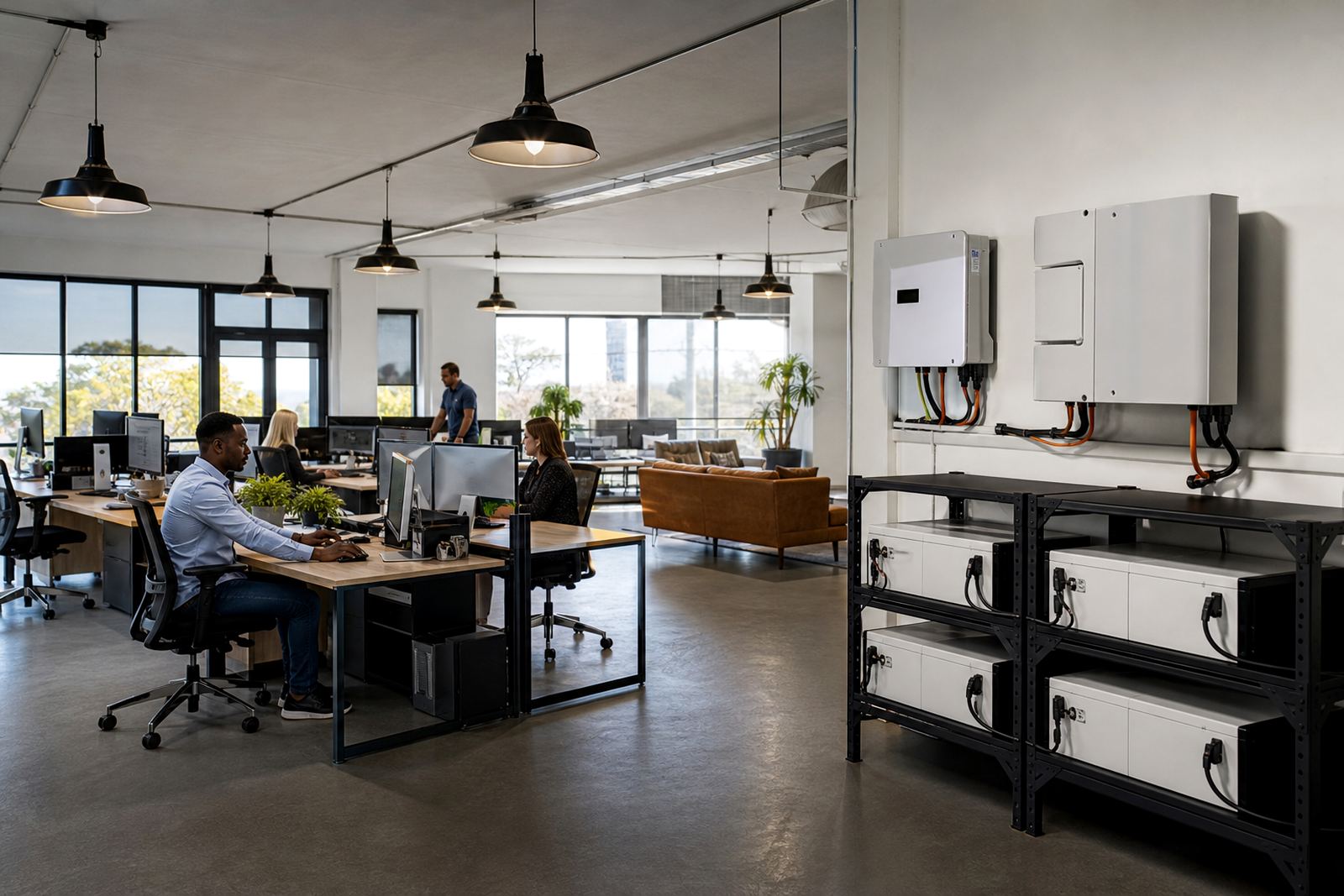
Most retail backup systems use a correctly sized inverter paired with lithium batteries. The inverter changes battery power into usable power for your shop, while lithium batteries give stable storage and handle repeated charge and discharge cycles well. For many shops, this is a better fit than noisy generator backup where fumes, fuel storage and start-up delays can be a problem.
A typical retail setup may include:
- Inverter sized to the essential load, often 1 kW to 5 kW for smaller shops, and larger where more circuits must stay live
- Lithium battery bank matched to the outage duration and the number of tills or devices in use
- Changeover protection so the selected circuits move over safely when the power fails
- Dedicated wiring for essential circuits only, keeping backup loads separate from non-essential items
- Surge protection where sensitive payment and network devices are in use
If the shop runs card terminals, Wi-Fi routers, CCTV or a small server for stock control, those loads should be listed during the site assessment. That way the backup system is sized to real use, not guesswork. In a humid coastal store or a dusty inland centre, the equipment placement also matters because heat and poor ventilation shorten service life.
Share what must stay on during an outage and the size of the property, and a backup planner will phone or message you.
Contact formPlanning the layout so the shop still trades
Good layout planning helps the backup system do its job without disrupting the shop floor. We usually advise keeping the inverter and batteries in a cool, dry and secure spot with enough clearance for airflow and maintenance. A back office, storeroom or enclosed service area often works well, provided there is access for the electrician and enough space for safe mounting.
The wiring plan should be simple. Essential circuits should be grouped so the tills, selected lights and network points are clearly separated from non-essential loads like kettles, display heaters or extra air-conditioning. This keeps the backup runtime predictable and reduces the risk of overload during trading hours.
Retailers should also think about staff workflow. If a shop has one till point only, that point must remain powered and easy to use. If there are multiple tills, the plan may need one central backup point or several connected work areas. In busy centres around Gauteng, a small layout mistake can cause long queues, dropped card payments and avoidable frustration.
Common mistakes that cause trouble later
Many shop owners buy backup power based on peak fear rather than actual load. That usually leads to a system that is too small, or one that is built around the wrong equipment. A backup unit that can handle a printer and a light or two may still fail when the card machine, router and another till are added.
Other common mistakes include running too many circuits through the backup system, placing batteries in a hot unventilated corner, or forgetting that a grid-tied system needs municipal registration. Another frequent issue is having the system installed without a registered electrician. That can leave the shop exposed on safety, insurance and compliance, which is not worth the risk.
- Do not size backup only for lights and ignore payment equipment
- Do not place batteries where heat builds up all day
- Do not connect essential and non-essential circuits together
- Do not skip the certificate of compliance after installation
- Do not assume a grid-tied setup can be used without municipal approval where required
For shops in older buildings, extra checks may be needed on the existing board and wiring. Some sites have limited spare capacity, which affects how the backup system is connected and commissioned.
Budget ranges for retail backup in Rand
Backup budgets depend on the size of the shop, the number of essential circuits and how long you need to keep trading during an outage. A small kiosk or single till operation will usually need a simpler system than a supermarket, pharmacy or showroom with several payment points and more lighting.
As a general guide, smaller retail backup systems may fall in the lower range for an inverter and lithium battery package, while larger shops with more circuits, longer runtime and cleaner changeover requirements move into a higher range. The cost also changes if wiring upgrades, changeover work, monitoring setup or battery expansion is included. We do not quote from guesswork. The site assessment should confirm the actual load, the existing board condition and the space available for installation.
Retail owners often ask how to choose between a smaller system and a larger one. The answer depends on how much downtime the shop can tolerate, whether trading can continue with reduced lighting, and how many sales devices must stay live. A good backup plan should meet daily trading needs without paying for unnecessary capacity.
Installation, compliance and support for shops
PowerCut supports retail clients from Randburg, Johannesburg and surrounding Gauteng areas with site assessments, backup sizing, inverter installation, battery installation, essential circuit wiring, changeover solutions and system commissioning. We also assist with monitoring setup, battery expansions, fault checks and routine servicing where a shop wants the system kept in working order.
Every installation must be done by a registered electrician, and a valid certificate of compliance is required. Where the system is grid-tied, municipal registration is needed as well. That applies whether the shop is in Sandton, Fourways, Pretoria, Midrand, Centurion or Roodepoort. Good paperwork matters just as much as good equipment because it protects the business and keeps the installation in order.
If your shop needs backup for tills, card payments and basic lighting, the first step is an enquiry and a proper site assessment. From there we can size the system to suit the way you trade, the equipment you use and the hours you need to keep serving customers during load-shedding.