When space is tight, every circuit matters
In a small apartment, backup power should be planned around the essentials first. That usually means the fibre router, a few lights, TV if needed, and charging for phones and laptops. If the unit has limited cupboard space, no outside wall area, or a shared boundary with body corporate rules, the equipment choice and layout need to be practical from the start.
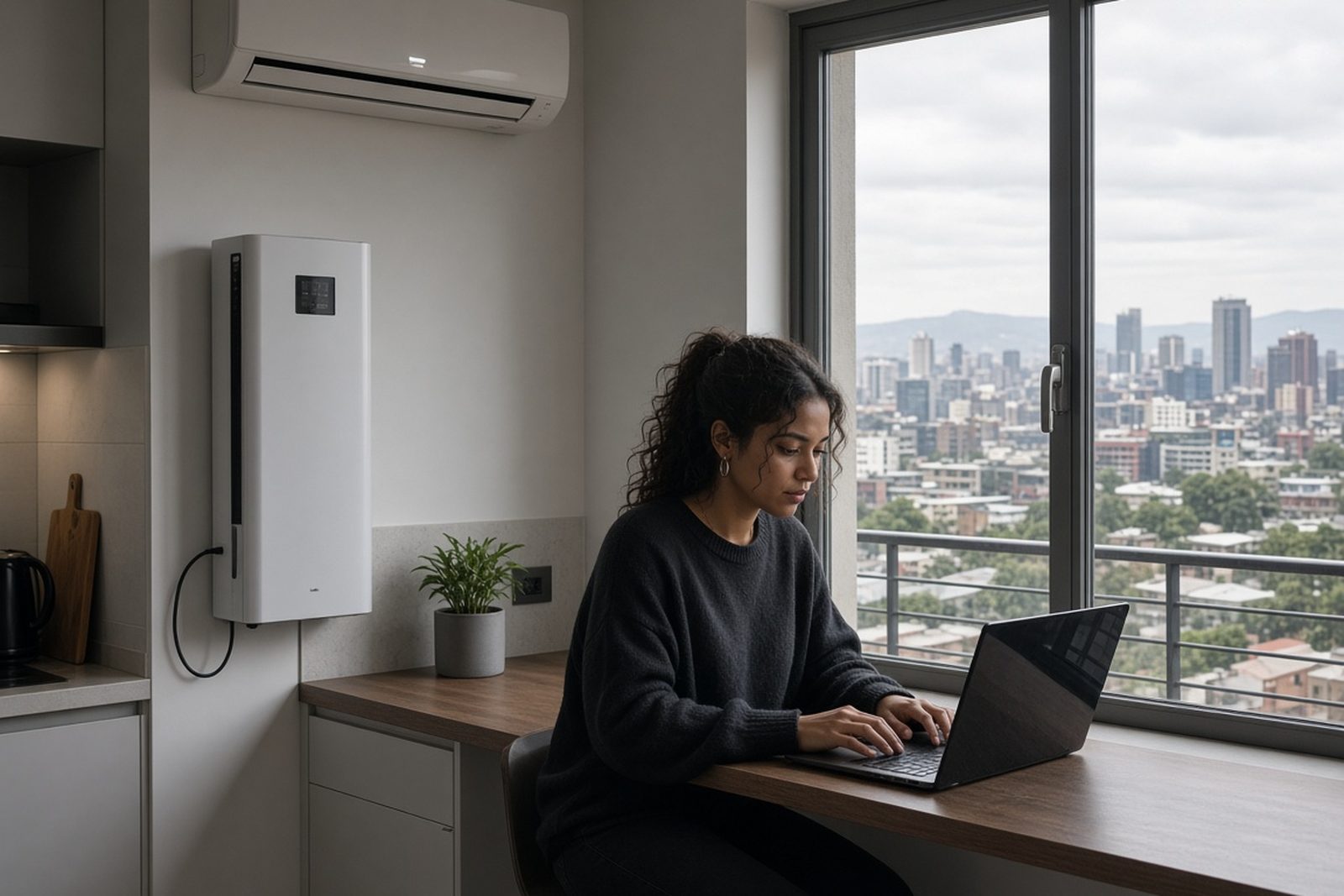
Most apartment clients are trying to stay online for work or study during load-shedding, keep the lounge and passage lit, and avoid running extension leads across the floor. A compact inverter and lithium battery setup can do that well, as long as the load is sized properly and the wiring is done neatly. In many cases, the right answer is not the biggest system, but the one that fits the flat and the way it is used.
We work with clients in Randburg, Sandton, Fourways, Midrand, Roodepoort, Johannesburg, Pretoria and Centurion, where apartment blocks often have tighter rules about installation points, noise, and access. The aim is to keep things simple and safe for everyday use.
Typical backup set for a compact home
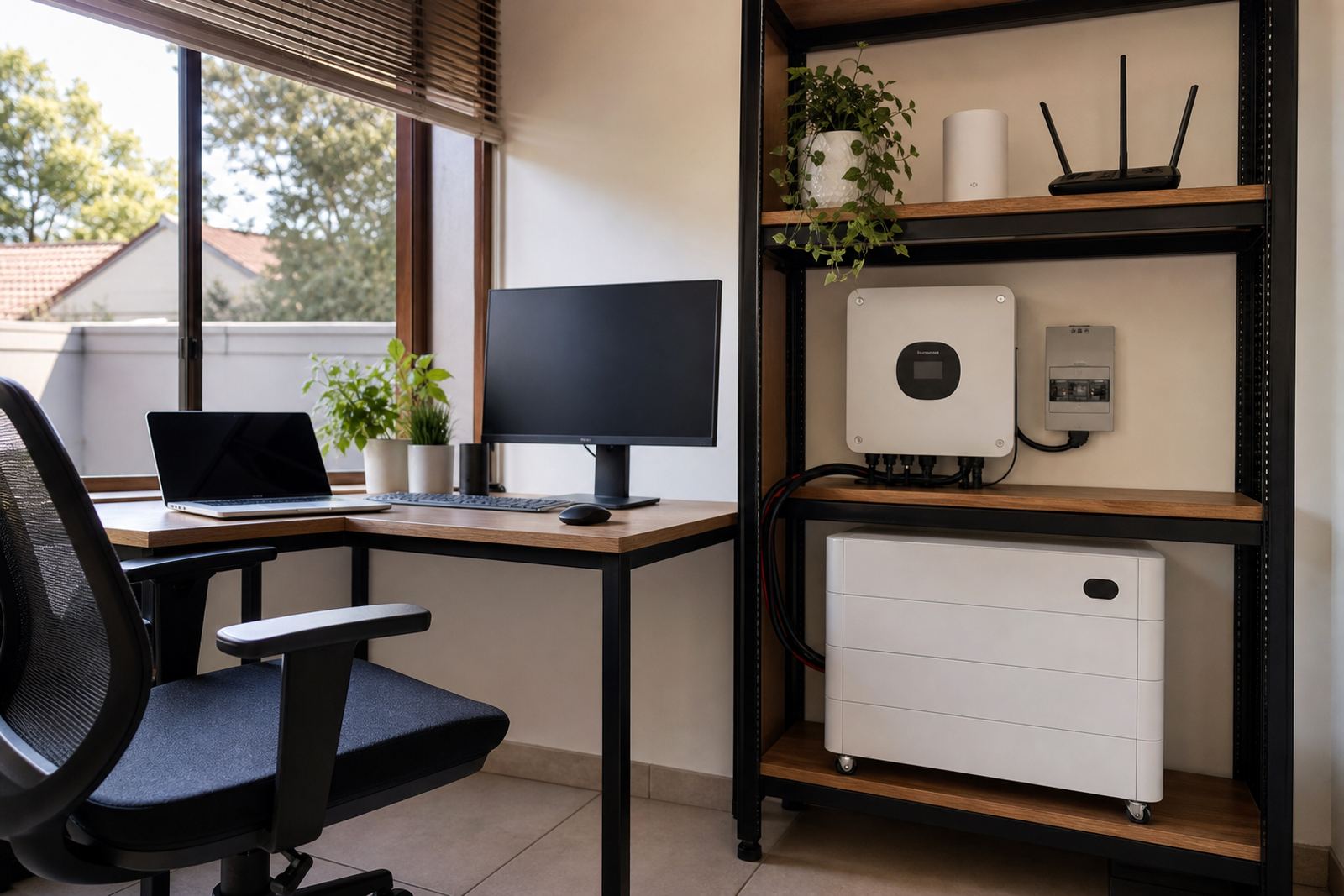
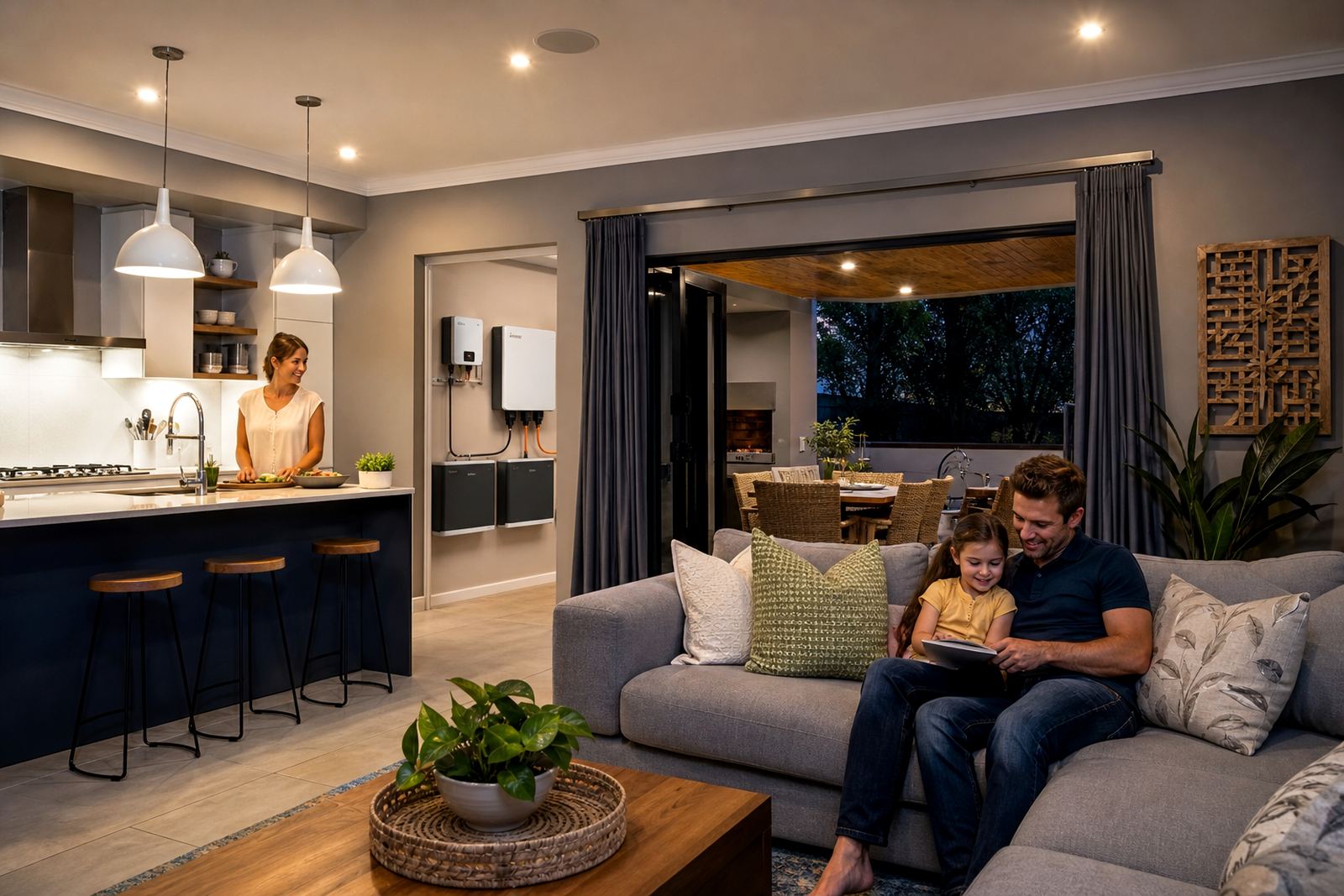
For a small apartment, the usual setup includes a small inverter, one lithium battery or a pair of compact batteries, and a changeover arrangement for essential circuits. Some homes only need the router and a few LED lights backed up, while others also need a fridge, although that pushes the system size up and may affect runtime quite a bit.
Modern lithium batteries suit apartment use because they take up less space than older battery types and can handle regular cycling better. They are also easier to place in a cupboard, storeroom or utility corner, provided there is enough ventilation and access for service. Heat build-up should not be ignored, especially in west-facing apartments and enclosed balconies where temperatures can climb.
- Compact inverter for light loads and charging points
- Lithium battery for longer runtime in a smaller footprint
- Essential circuit wiring for lights, router and selected plugs
- Changeover switch or automatic changeover where suitable
- Basic monitoring so the battery status is easy to check
Where space is very limited, a smaller wall mounted setup may suit better than a floor-standing arrangement. The final choice depends on the unit layout, the number of circuits, and how long you need power during an outage.
Share what must stay on during an outage and the size of the property, and a backup planner will phone or message you.
Contact formHow to size backup for apartment living
For a small apartment, the right size is based on the loads you actually use. In a one bedroom or studio apartment, the priority list is usually router, a few lights, a fan in summer, and charging for devices. If the client also wants the fridge backed up, the system needs more capacity and a better check of starting surge, because compressors can cause trouble if the inverter is too small.
A useful first step is to list each item, its wattage, and the hours it must run during load shedding. A router and fibre box are not heavy loads, but they need reliable power every time. LED lights use little power too, so it is often possible to keep the essentials running without overspending on hardware. That said, undersizing is a common mistake and it usually shows up during the first long outage.
- Keep the essential load separate from the rest of the apartment
- Check whether the fridge must stay online or can be left off
- Allow for surge on appliances with motors or compressors
- Leave spare capacity if you plan to add more battery later
- Make sure the system matches the apartment board and wiring layout
A site assessment helps prevent guesswork. It also shows whether the apartment has enough space for the equipment and whether cable routes can be kept short and tidy.
Layout advice for flats, lofts and compact units
Apartment installs work best when the equipment is placed close to the distribution board and out of the way of daily movement. Cupboards, sculleries, utility spaces and secure storage areas are common options. The inverter and battery should not block access to water shut-off points, metres or electrical panels, and they should never be squeezed into a sealed corner with no air flow.
If the building has shared walls or strict body corporate rules, it is important to plan for noise, cable entry and appearance. Even a quiet system can be a concern if it is mounted in the wrong place. The wiring should be neat and clearly marked, and any work should be done with proper isolation so that future maintenance is straightforward. A messy install in a small flat becomes a real problem fast.
For clients in older buildings around Johannesburg or Pretoria, the electrical board may need extra care because some apartments were not designed for modern backup systems. In newer complexes, the challenge is often access and approval rather than raw capacity.
Common mistakes that cause trouble later
One of the biggest mistakes is buying equipment before confirming the actual load. Another is assuming that any battery will fit any system. In apartment settings, these errors can lead to short runtimes, nuisance trips, or equipment that simply does not suit the space. It is also common to forget about cable runs, heat, and where the equipment will live once the first installation is finished.
- Choosing too much power for a flat that only needs light backup
- Ignoring surge loads from a fridge or microwave
- Placing equipment in a cramped cupboard with poor air flow
- Leaving the router and charging points off the backed up circuits
- Skipping compliance paperwork and then having trouble with inspections later
Installations must be done by a registered electrician, and a certificate of compliance is required. If the system is grid-tied, it also needs municipal registration. That matters in apartments too, not only in houses. Compliance is not a box to tick at the end, it should be part of the planning from day one.
Budget ranges for small apartment backup
Budget depends on how many circuits you want to back up, how long you need them to run, and whether the system includes changeover work or monitoring. A very basic apartment setup for lighting, router and charging will sit at the lower end. A more useful setup for a larger flat, or one that includes the fridge and selected plug points, will cost more because it needs greater inverter and battery capacity.
It is better to think in terms of fit for purpose rather than trying to buy the cheapest option. A low cost system that cannot handle everyday use becomes expensive later when it needs replacing or expanding sooner than planned. For many apartment clients, the most sensible route is a phased setup, starting with the essentials and allowing for battery expansion if needed. That way the system can grow with your needs, and the initial spend stays more manageable.
If you are in Randburg, Sandton, Midrand, Roodepoort, Fourways or nearby areas, PowerCut can help with site assessments, backup sizing, inverter installation, battery installation, essential circuit wiring, commissioning and fault checks for small apartment living.