

What a family home usually needs during load-shedding
In a family home the backup plan normally starts with essentials, not the full house. That usually means lights in key rooms, the fridge and freezer, Wi-Fi, alarm equipment, TV or decoder, a few plugs for phones and laptops, and sometimes a gate motor or garage door if the layout allows it. If the household works from home, the load can grow quickly, so it helps to separate true essentials from nice-to-have circuits.
In Randburg, Sandton, Fourways and similar suburbs, homes often have a mix of older wiring and newer appliances, so a good backup setup must be planned around what the house already uses. The aim is to keep the family comfortable during outages without trying to run a geyser, stove and aircon from the same backup system unless the design really allows it.
We look at your daily routine, the number of people in the house and which appliances must stay on during load-shedding. That gives a clearer picture of whether a smaller inverter with one battery is enough, or whether a larger lithium battery bank makes more sense for longer outages and future growth.
Choosing the right inverter and lithium battery mix
For many households, an inverter paired with lithium batteries is the practical choice because it can handle frequent switching and regular cycling. The inverter changes battery power into usable household power, while the battery stores energy for the period when the grid is off. The right size depends on the load you want to carry and how long you need it to last.
A smaller system can suit a flat, townhouse or compact home where only a few essential circuits are backed up. A larger system is better where the family wants more lights, more plug points and longer runtime. Battery capacity is often increased first, because families usually discover that load-shedding lasts longer than expected, or the household adds new equipment later.
Common equipment options include:
- Pure sine wave inverters for sensitive electronics and general household use
- Lithium batteries for better cycle life and cleaner storage of backup power
- Changeover equipment for safe switching between grid and backup supply
- Distribution changes for essential circuits only, rather than the full board
- Monitoring gear so you can see battery state and loading at a glance
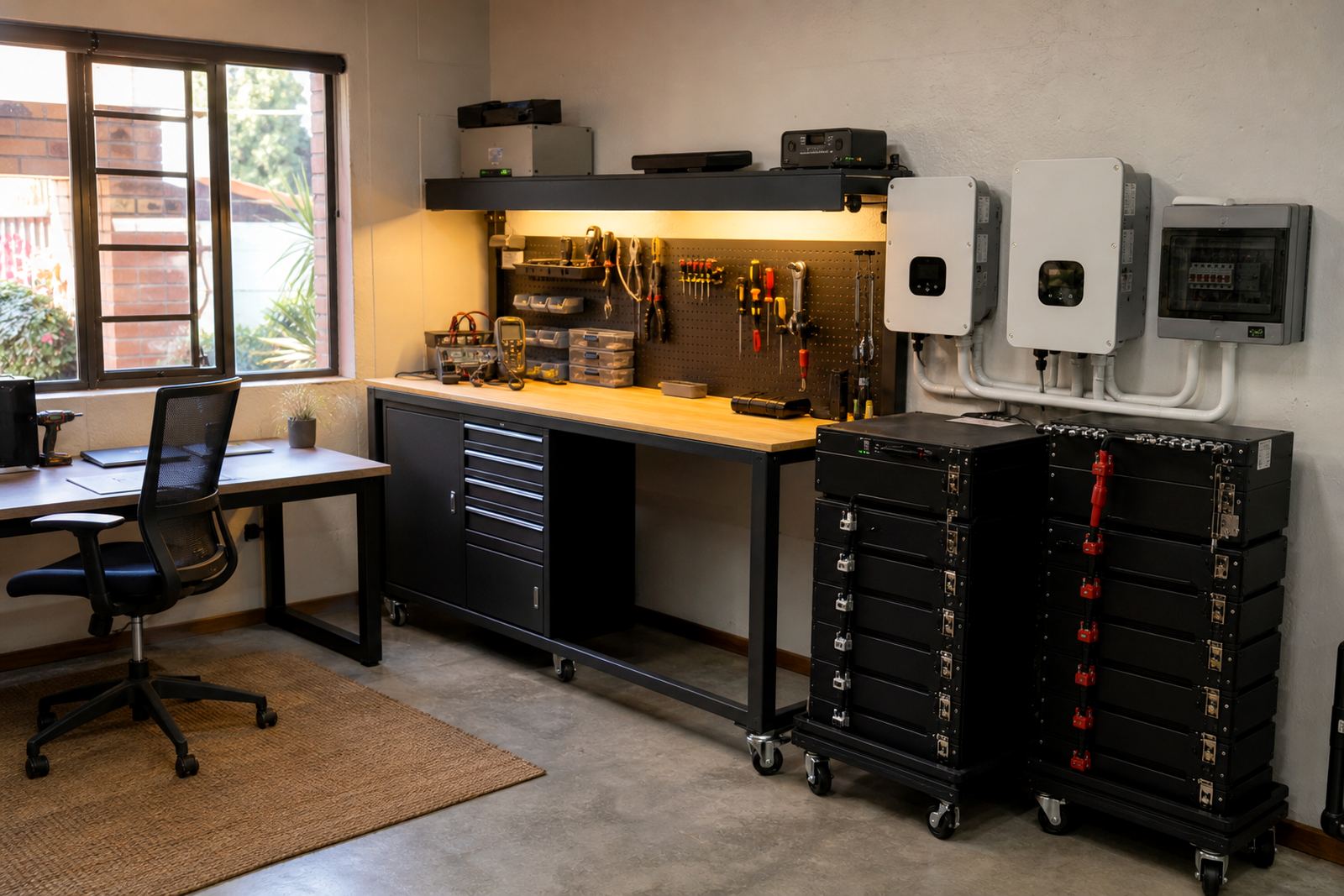
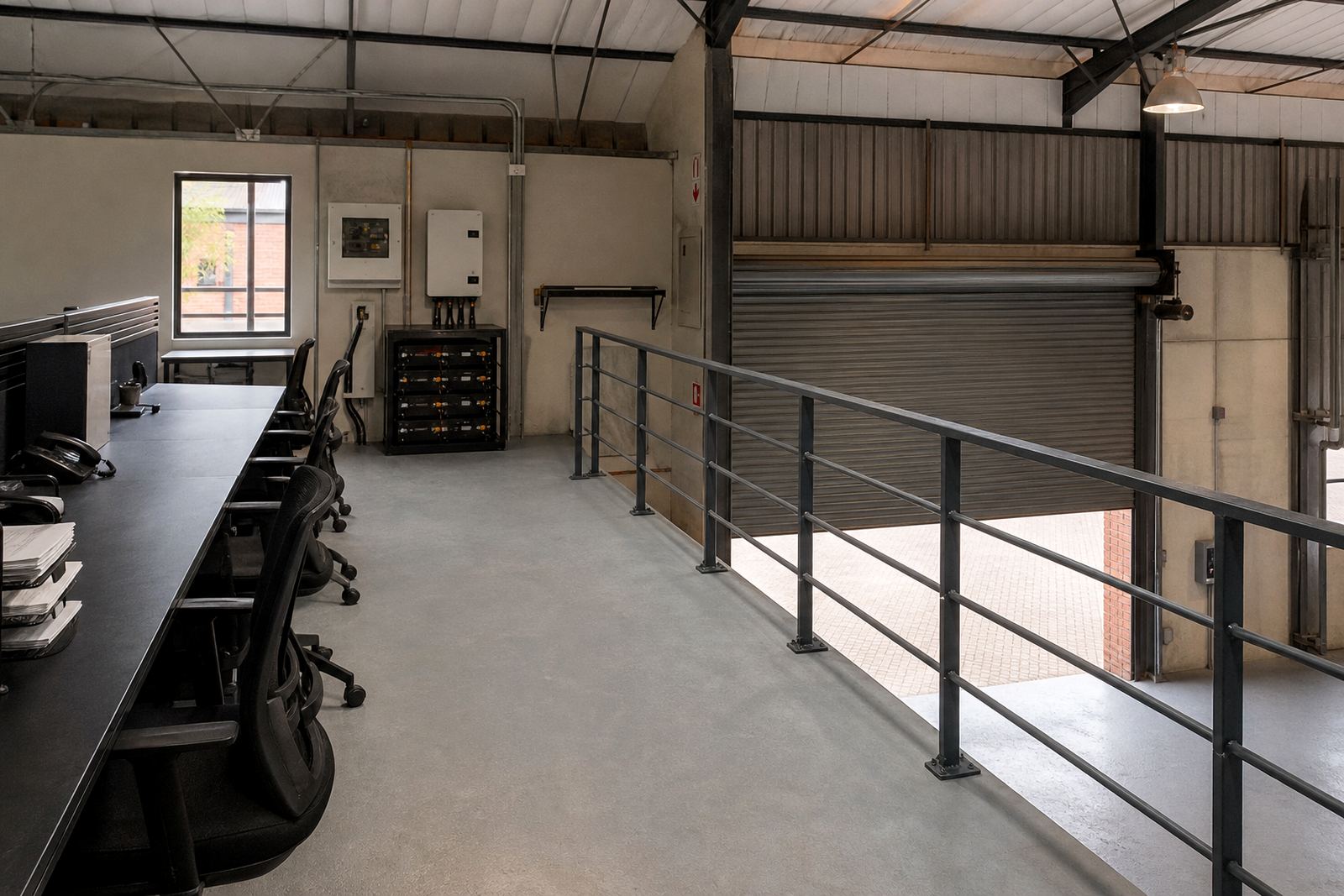
It is also worth checking if the home has space for ventilation, cable runs and a tidy wall mount or floor position. Coastal humidity is not the issue in Johannesburg, but dust, heat and poor airflow can still shorten equipment life if the install is cramped.
Share what must stay on during an outage and the size of the property, and a backup planner will phone or message you.
Contact formHow we size backup for busy households
Begin with the appliances your household really needs during an outage. We record the starting surge of the fridge and freezer, the steady draw of lights and devices, and any extra usage from routers, security systems or work equipment. This is where many families get caught out, because the number on the appliance label is not always the full story once everything switches on together.
A useful home setup is usually planned in stages. The first stage covers the main essentials and gets the house through load-shedding with minimal disruption. The second stage adds more battery capacity, and the third stage may bring in extra circuits or a larger inverter if the family expands the system later. That staged approach can be easier on the budget and gives you space to adapt.
When we do site assessments, we also check the condition of the existing distribution board, cable routing, wall space and access for maintenance. If the property is in Johannesburg, Pretoria, Centurion, Midrand or Roodepoort, it is common to find different municipal practices and supply arrangements, so the design needs to suit the local setup as well as the house itself.
- Keep essential circuits separate from high-use appliances
- Allow for battery expansion if the household grows or load-shedding worsens
- Check whether the fridge, freezer and network gear must stay on together
- Plan for the worst case, not just the shortest outage
Installation, wiring and compliance in South African homes
Backup systems must be installed by a registered electrician, and the installation needs a certificate of compliance. If the system is grid-tied, municipal registration is also required. That is not just paperwork, it is part of making sure the household installation is safe and accepted where required.
For family homes, the wiring arrangement matters as much as the equipment itself. Essential circuit wiring should be neat, labelled and easy to isolate. Changeover solutions need to be clear so the family can use the system without confusion during a power cut. A good install also considers surge protection, earthing and sensible placement away from damp areas or direct heat.
We work with households that want backup support without turning the home into a building site. That means practical planning around cable paths, mounting points, and where the battery and inverter will sit. A clean layout helps with servicing later and makes fault checks quicker if something trips unexpectedly.
Common mistakes that make home backup frustrating
One of the most common mistakes is overloading the system with too many circuits. Families often want every plug and room backed up, then discover the inverter is working harder than expected and the battery runs down too quickly. Another mistake is ignoring future expansion, which can mean replacing equipment sooner than planned when the household adds a freezer, office setup or extra rooms.
Some homes also mix backup and non-backup wiring without proper labelling. That leads to confusion when load-shedding starts, especially if different family members need to know which plugs still work. Poor cable routing and cramped installation spaces can also cause heat build-up and make maintenance awkward.
Here are the issues we see most often:
- Choosing a battery that is too small for the actual evening load
- Trying to back up heavy appliances that should be left out of the system
- Skipping a proper site assessment before buying equipment
- Leaving no room for battery expansion later
- Not checking compliance requirements before installation
A bit of planning at the start usually saves trouble later, and it helps the family get a system that matches daily life instead of guessing.
Budget ranges for family home backup in Rand terms
Family home backup budgets vary widely because the equipment choice depends on runtime, load and whether the house needs only essentials or a broader backup area. A smaller system for basic household cover sits in a different range from a larger setup that supports longer outages and extra appliances. The cost also changes with cable runs, changeover work and the condition of the existing wiring.
It is best to think in stages rather than chasing the biggest system available. A practical household may begin with a modest inverter and lithium battery combination, then add capacity later once the family has used the system through a few outages. That gives clearer value because the system grows with real need, not guesswork.
We do not give financial advice, but we can help you compare the equipment and layout choices that affect the final budget. If you are in Randburg, Johannesburg or surrounding Gauteng areas, a site assessment is usually the easiest way to narrow down the right range before any purchase is made.
How PowerCut supports homes after the first install
Once the system is in place, households often need small adjustments. That might include monitoring setup, a battery expansion, a fault check, or routine servicing before the next load-shedding cycle gets heavy. If a breaker trips or a family changes its daily routine, the system can often be adjusted rather than replaced.
PowerCut supports residential clients across Randburg, Sandton, Fourways, Johannesburg, Pretoria, Centurion, Midrand and Roodepoort, with a focus on clear planning and practical aftercare. Our team handles site assessments, backup sizing, inverter installation, battery installation, essential circuit wiring, changeover solutions, system commissioning, compliance support, monitoring setup, battery expansions, fault checks and routine servicing.
If your home needs a backup plan that fits the way your family actually lives, write to PowerCut through the contact page form and we can talk through the next step.