What a restaurant backup system should keep running
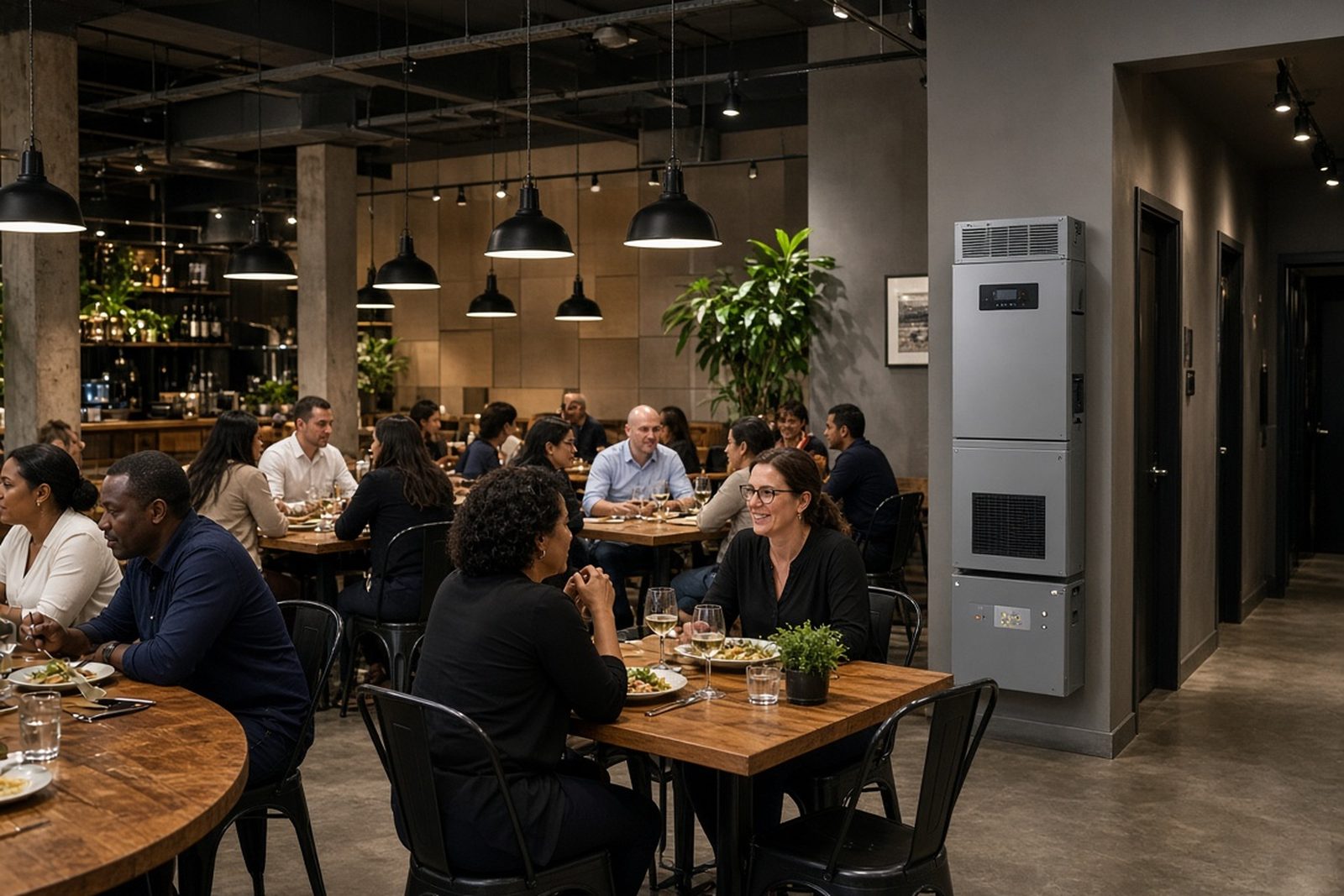
In a restaurant, backup power is usually about keeping the trading floor working first, then supporting the parts of the kitchen that can safely stay on during an outage. That often means tills, card machines, Wi-Fi, routers, point-of-sale screens, a few lights, security equipment and selected refrigeration. In some cases a small prep area, extractor fans or one or two light kitchen circuits can be added if the load is planned properly.
PowerCut works from Randburg and supports restaurants in Johannesburg, Sandton, Fourways, Pretoria, Centurion, Midrand and Roodepoort. The right setup depends on whether the site is a coffee shop, takeaway, family restaurant or a busy dining venue with longer service hours. A small site may only need to keep the tills and lighting alive for a few hours, while a larger operation may need battery capacity for lunch and dinner trade if the grid is unstable.
For restaurant owners, the main goal is continuity. Customers should still be able to pay, staff should still see what they are doing, and chilled stock should be protected as far as possible. The system also needs to recover cleanly when power returns, with no nuisance tripping or repeated resets.
Typical equipment set for front-of-house and support loads
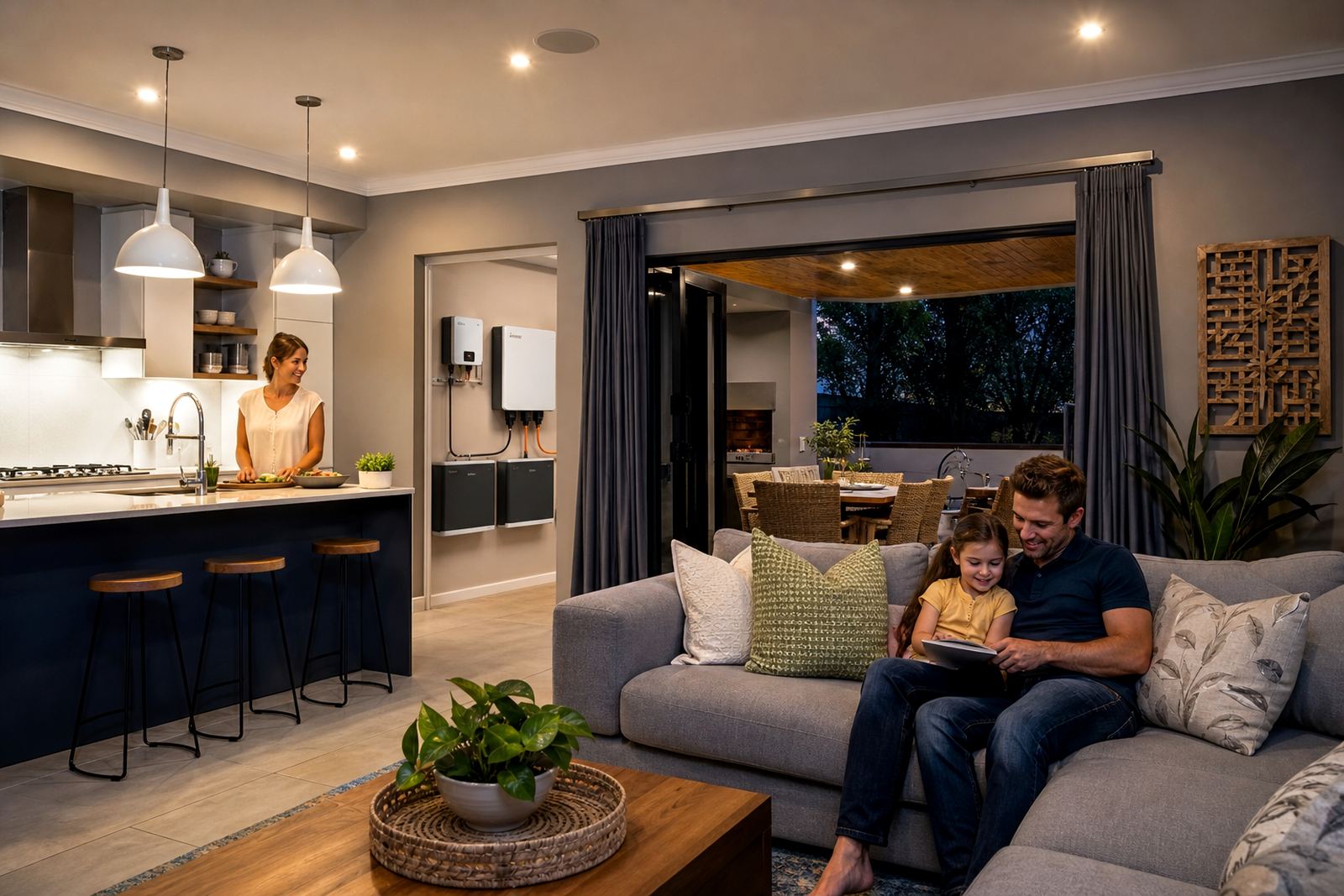
Most restaurant backup systems use a few core components. The exact mix changes with the load, but the principles stay the same. Inverters convert battery power into usable AC power for the essential circuits. Lithium batteries store energy for the outage period and are preferred for frequent cycling during load-shedding because they charge and discharge efficiently.
- Hybrid or inverter unit sized to the essential load
- Lithium battery bank sized for the required outage duration
- Changeover or essential load distribution board
- Dedicated circuits for tills, lights, routers and selected kitchen support loads
- Surge protection and proper earthing
- Monitoring setup where the owner wants battery status and usage visibility
In humid coastal conditions, battery and inverter placement matters, but even in Gauteng it is best to keep equipment in a dry, ventilated room away from heat, steam and grease. A scullery or hot kitchen wall is usually not the right place. The equipment should be easy to reach for servicing and protected from vibration and dust.
Share what must stay on during an outage and the size of the property, and a backup planner will phone or message you.
Contact formSizing the system around trading hours and kitchen habits
Backup sizing is where many restaurants go wrong. A system that is too small will trip when the coffee machine starts or when the fridge compressors cycle. A system that is too large can be unnecessary, but the more common mistake is under-sizing. The important step is to separate essential loads from nice-to-have loads and then calculate how long the restaurant needs to trade through outages.
Start with the equipment that must stay on. A till, router, a few LED lights and security equipment draw far less than ovens, kettles, dishwashers and air conditioning. If the business wants some kitchen support, we look carefully at start-up surges, because motors and compressor loads can spike at switch-on. That is why a site assessment is useful before any equipment is selected.
- List every load that must run during load-shedding
- Check whether any kitchen appliance can be moved off the backup side
- Allow for motor start-up surge on fridges and pumps
- Match battery capacity to the hours you need, not just the power rating
- Leave space for future battery expansion if trading hours are long
A practical restaurant setup often begins with the front-of-house essentials and later expands to selected kitchen support circuits once real usage is understood. That staged approach helps avoid overspending and keeps the system easier to manage.
Layout planning for busy service areas
Good planning keeps the backup system out of the way of staff and customers. The inverter and batteries should not sit in a passage, near a heat source or where cleaning water can reach them. Cables should be properly labelled, clipped and protected. For restaurants with a front counter, the ideal solution is often a separate essential circuits board that feeds only the loads chosen for backup.
We also pay attention to how power is restored after an outage. If the restaurant has refrigeration that must stay steady, the changeover should be arranged so equipment comes back online in a controlled way. Where a venue uses a generator for longer outages, the inverter can still play a useful role as a bridge or support system. In mixed systems, the changeover logic needs to be planned carefully to avoid back-feeding or repeated switching.
For landlords and tenants in shopping centres or standalone sites, municipal and building rules may affect how a system is installed. If the setup is grid-tied, it must be registered with the municipality where required. That is not paperwork to leave until after the job. It should be part of the plan from the start.
Common mistakes restaurant owners make with backup power
The biggest mistake is trying to keep everything on backup. Air conditioning, full ovens, dishwashers and every socket circuit can drain a battery bank very quickly. Another mistake is placing the battery bank too close to heat and steam, which shortens equipment life and can create a maintenance problem. Some owners also forget that the backup must support the correct circuit arrangement, not just the equipment list on paper.
- Backing up too many loads and expecting long runtime
- Ignoring appliance surge when fridges and pumps start
- Skipping a proper site assessment
- Using informal wiring instead of a dedicated essential load board
- Not planning for future battery expansion
- Leaving compliance for later
Installations must be done by a registered electrician, and the completed work needs a certificate of compliance. That matters for safety, insurance and peace of mind. If the site uses a grid-tied configuration, municipal registration may also be required. PowerCut supports the process with compliance support, but the electrical work itself must always be handled correctly.
Budget ranges for restaurant backup in Rand
Restaurant backup budgets vary a lot because the load profile is different from one site to the next. A small takeaway that only wants to keep tills, lights and connectivity running will sit in a different bracket from a larger dining room that also wants refrigeration support. Battery capacity, inverter size, cable runs, changeover work and commissioning all affect the final budget.
As a rough planning guide, smaller restaurant backup packages often start in the lower Rand tens of thousands, while systems for busier venues with longer runtime or added kitchen support can move into the higher Rand tens of thousands or more. Sites with expansion plans should allow extra room in the budget for battery growth, because the right base system is easier to build on than a rushed full-size install later.
PowerCut’s team, led by Sifiso Ngobeni, supports restaurants from the first site assessment through to system commissioning and routine servicing. Ayesha Ntuli, Marnus Rabie, Nompumelelo Sigcau, Sibusiso Govender and Rentia Fouche help manage the project flow, technical selection and after-sales support so the venue can keep trading with less disruption during load-shedding.