
Keeping the guest experience steady when the power drops
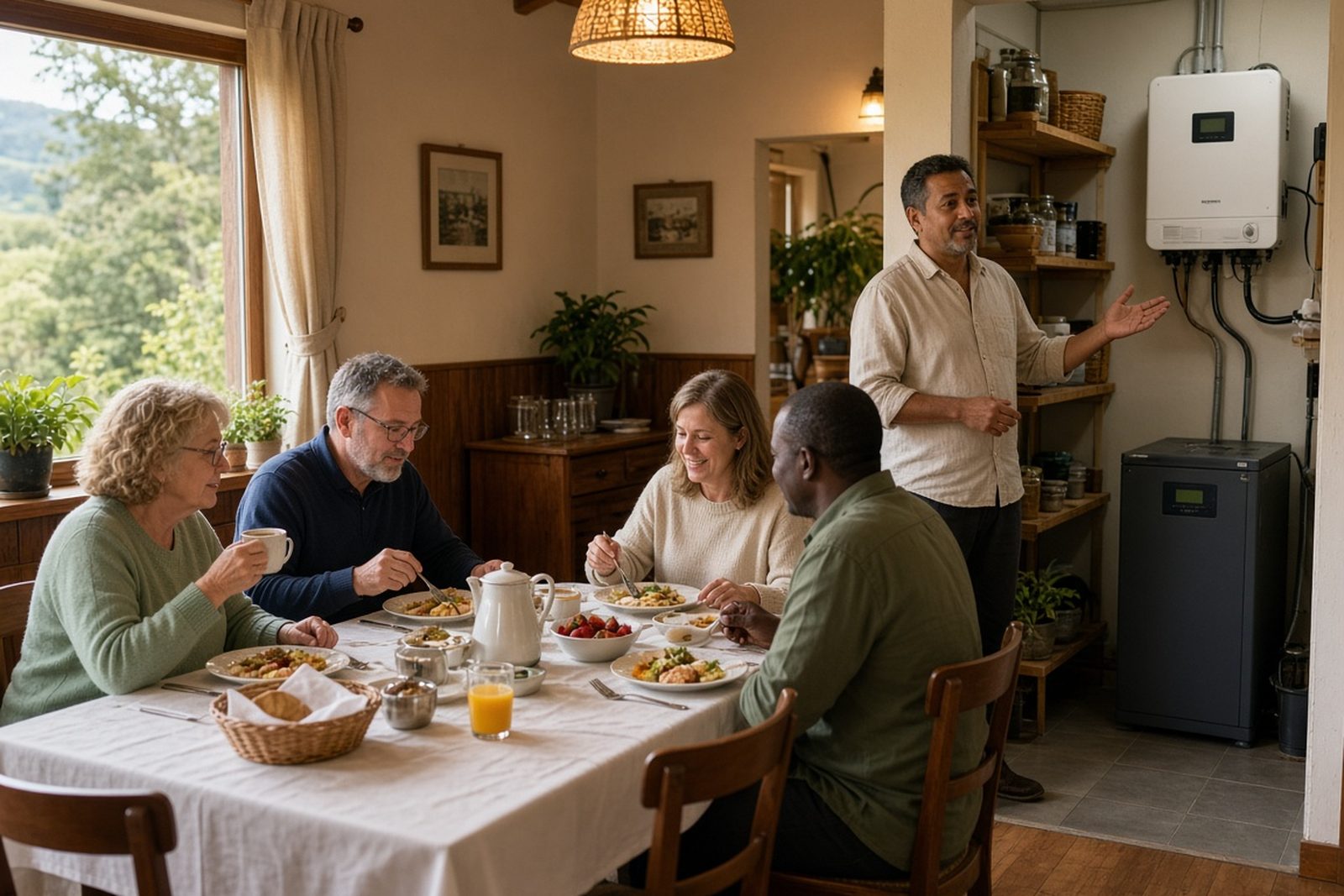
At a guesthouse, a power cut is not only an inconvenience, it affects check-in, lighting, Wi-Fi, card machines, gate motors and the general feeling of order in the property. Guests usually want the basics to keep running without having to ask what is still working. That is where selected-circuit backup makes sense. Instead of trying to support the entire building, the system is sized around the parts that matter most during load-shedding.
For many guest properties in Randburg, Sandton, Fourways and around Johannesburg, the priority is to keep the reception area, a few lights, internet equipment and key guest comfort circuits live. In larger guesthouses or properties with separate cottages, the backup plan may be split so the front office and common areas stay up while individual rooms have limited backup. The right approach depends on how the property is used during the day and how many guests are usually on site.
Good planning starts with an honest look at daily routines. If check-in happens late, the reception and access control need priority. If guests work from the property, the network equipment and selected plugs matter more. If the building has electric gates, pool pumps or laundry loads then those circuits usually need to be left off backup unless the system has been properly sized for them.
Typical backup equipment for guesthouses
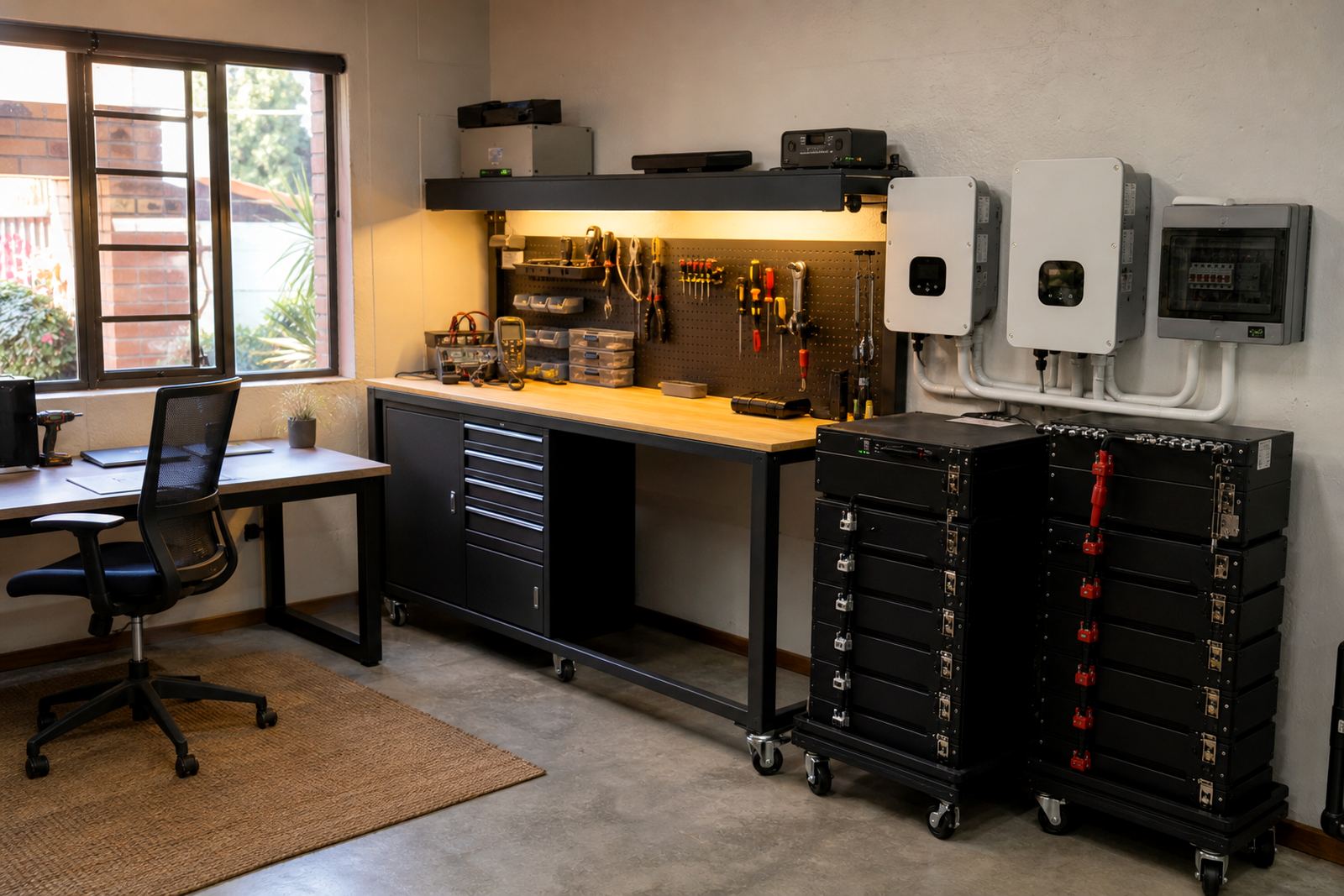
Most guesthouse setups use an inverter paired with lithium batteries. The inverter changes stored battery power into usable electricity for the chosen circuits, while the batteries store energy for the duration of the outage. Lithium batteries are popular for these sites because they charge efficiently, handle repeated load-shedding cycles well and take up less space than older battery types.
A practical guesthouse system often includes the following:
- An inverter sized to support the selected loads without overload trips
- Lithium battery capacity matched to the outage pattern and the number of circuits in use
- A changeover arrangement for switching between grid and backup supply
- Essential circuit wiring for lights, plugs, internet and reception equipment
- Protection equipment and neat distribution board work for safe operation
- Monitoring setup where the owner wants to see battery state and usage
The exact size depends on what must stay on. A small guesthouse might only need a modest inverter with one or two batteries, while a property with several rooms and common areas may need a much larger bank. It is better to size carefully than to guess, because an undersized system can trip when guests turn on kettles, hairdryers or extra heaters.
Share what must stay on during an outage and the size of the property, and a backup planner will phone or message you.
Contact formHow to plan the layout so the right loads stay on
Guesthouse backup should be planned circuit by circuit. Reception, passage lights, router equipment and selected bedroom sockets are often the first items to consider. Once those are covered, the next step is to decide what should be excluded. High-demand appliances such as ovens, aircons, geysers and laundry machines can drain a battery bank quickly if they are included without proper sizing.
In many properties the best result comes from separating the building into a few clear zones. For example, the front office and shared areas can be on one backup circuit group, while guest room sockets are limited to chargers and laptop use. Outdoor lighting, security equipment and gate access may be included if the site needs them. This type of planning keeps the installation practical and easier to maintain.
For guesthouses in coastal-humidity conditions or areas with older electrical infrastructure, enclosure placement and cable routing matter as much as the equipment itself. Clean installation work helps reduce maintenance problems later. A tidy setup also makes it simpler for a technician to test, isolate faults and expand the system if the guesthouse grows.
- Keep essential circuits clearly labelled
- Separate heavy appliances from backup circuits
- Allow space for future battery expansion
- Place equipment where ventilation and access are easy
- Plan for overnight outages, not only short cuts
Common mistakes guesthouses should avoid
One common mistake is trying to power too much at once. A guesthouse owner may want the whole property running, but that usually pushes the system beyond sensible limits. It is more practical to protect the areas that affect guest comfort and business continuity first. Another mistake is treating all plugs as equal. A few kettles, heaters or irons on the wrong circuit can flatten a battery bank far quicker than expected.
Another issue is poor coordination between electrical work and backup planning. The inverter and battery can only perform well if the circuits are arranged correctly and the installation is done by a registered electrician. A certificate of compliance is required for the electrical work, and grid-tied systems must also be registered with the local municipality. That is not optional, and it should be part of the job from the start.
Guesthouses also sometimes forget to plan for how staff will use the system during an outage. If the changeover is unclear, someone may switch on a load that should have stayed off. Simple labels and a short handover for reception or maintenance staff can prevent a lot of frustration. In one or two cases, owners only think about backup after a long outage has already exposed the weak points.
Budget ranges for guesthouse backup in Rand
Budgeting for backup power is usually easier when the guesthouse is split into stages. A smaller system for reception, internet and a few lights will sit in a different range from a larger arrangement that also supports more rooms or common areas. Because every property has a different load profile, the final cost depends on the inverter size, battery capacity, wiring work and whether the installation needs upgrades to the existing board.
As a broad guide, many guesthouse owners start with an entry-level selected-circuit setup and later add battery capacity or extra circuits once they see how the property uses power during outages. This staged approach can help keep the project manageable. It also gives room to expand if the guesthouse adds more rooms, a backup office area or stronger internet equipment.
For a proper quotation, the site needs an assessment. That allows the electrician or technical team to check the existing wiring, the size of the incoming supply, the loads to be backed up and any space limits in the plant room or store area. A careful backup sizing exercise is usually more useful than guessing from appliance lists alone. It avoids under-specced systems and also stops the property from spending more than needed on circuits that do not have to be supported.
Service support across Randburg and Gauteng
PowerCut works with guesthouses across Randburg, Johannesburg, Pretoria, Centurion, Midrand, Roodepoort, Sandton and Fourways, helping owners plan around outages with practical inverter and lithium battery solutions. The service includes site assessments, backup sizing, inverter installation, battery installation, essential circuit wiring, changeover solutions, system commissioning, monitoring setup, battery expansions, fault checks and routine servicing.
For guest properties, support usually starts with a clear discussion about what must stay on and what can remain off during load-shedding. From there, the team can plan the layout, confirm the electrical requirements and coordinate the work so the installation is neat and suitable for ongoing use. Sifiso Ngobeni leads the business, with Ayesha Ntuli, Marnus Rabie, Nompumelelo Sigcau, Sibusiso Govender and Rentia Fouche supporting operations, technical sales, project coordination, service planning and customer support.
Guesthouses need systems that are sensible, quiet and easy to manage. When the backup is set up properly, guests notice the lights, the internet and the calm, not the outage.
- Enquiry form available for site visits and planning
- Selected-circuit backup for guest comfort and reception needs
- Support for system expansion when the property grows