What sectional title homes usually need from backup power
In an estate or complex, the goal is rarely to run the whole house as if the grid never went down. Most owners want the lights, Wi-Fi, TV, gate access, a few plugs and maybe the fridge covered during load-shedding. That usually calls for a smaller, well planned inverter and lithium battery setup rather than a large system with unused capacity.
Space is often the first issue. Many units have no spare garage wall, a cramped storeroom or a utility cupboard that is not ideal for heat and ventilation. Apartments and duplexes may also have stricter body corporate rules on where equipment can go, how cables are routed and how visible the installation may be from common property. In coastal areas humidity can add another layer of care, but even inland sites in Johannesburg, Pretoria, Centurion, Midrand and Roodepoort need a tidy, protected install.
- Choose backup for essential circuits first, not the whole unit by default
- Check where the inverter, batteries and isolators can sit without blocking access
- Allow for ventilation, cable runs and noise from cooling fans
- Keep the setup neat for body corporate approval and future maintenance
Typical equipment sets for estates and complexes
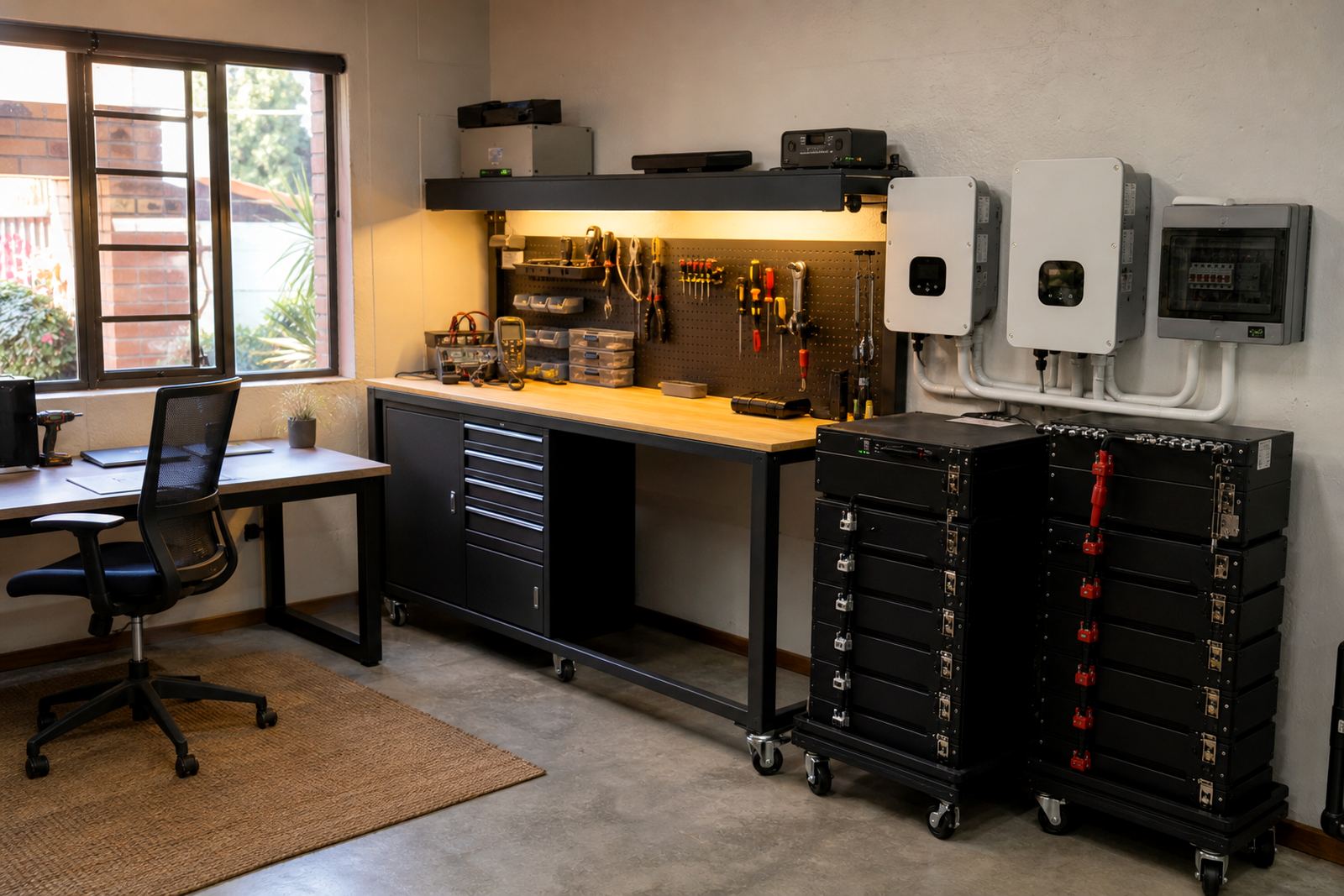
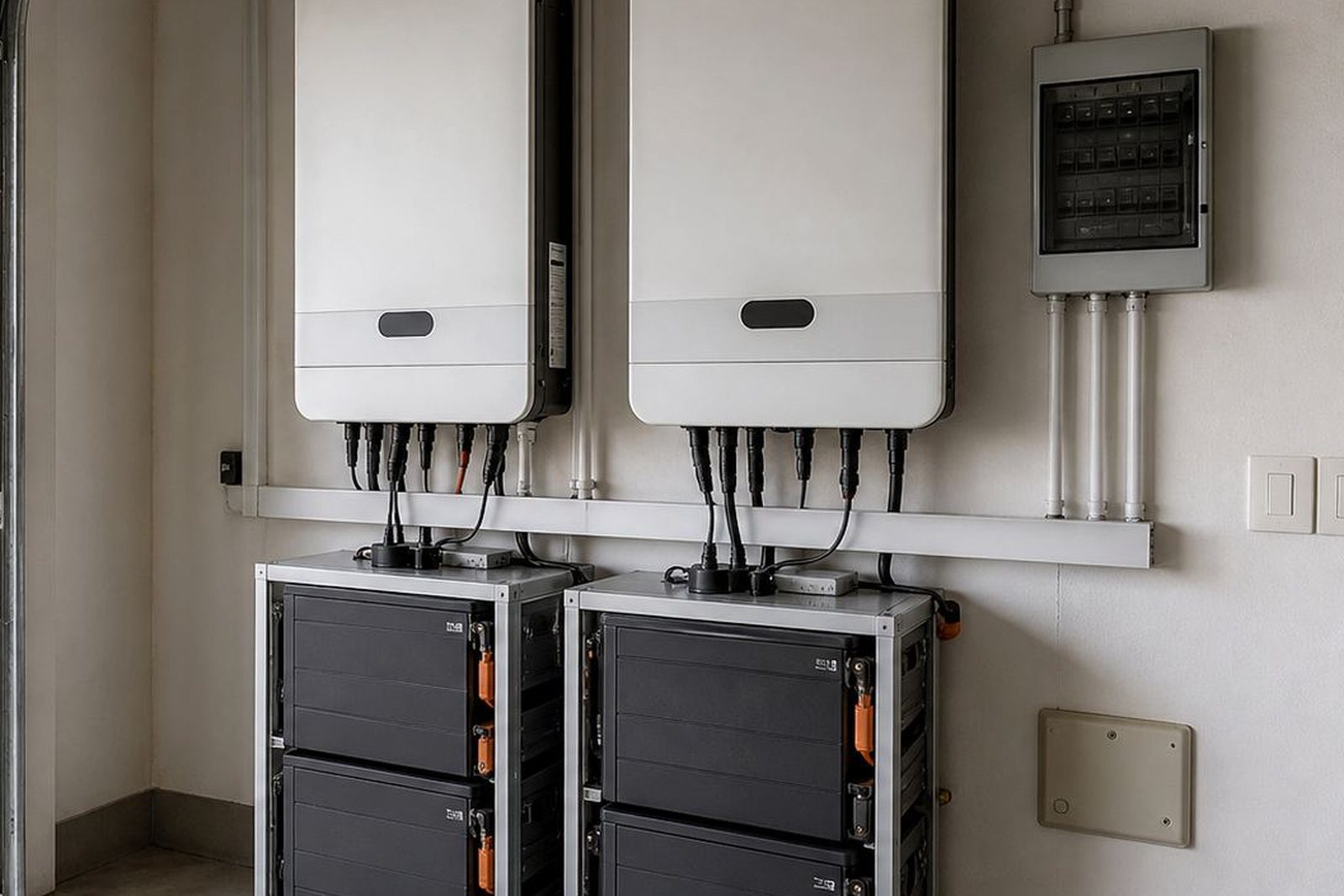
A common residential backup package for a sectional title home includes a hybrid or off-grid inverter, one or more lithium batteries, changeover hardware, essential circuit wiring and protection devices. The exact size depends on what you want to keep on during an outage, how long the load-shedding period lasts and whether you plan to add more battery later.
For a two or three bedroom unit, many owners start with backup for lights, entertainment, fibre, a few sockets and the fridge. If there is a work from home setup, the load grows quickly. If an estate has frequent gate interruptions or the unit has a small home office, it can make sense to include dedicated circuits for networking and a study area. Battery expansion is often the smarter route than oversizing on day one.
- Smaller units: essential lighting, Wi-Fi, TV and fridge support
- Work from home units: add networking, computer and printer circuits
- Higher demand homes: allow for kettle, microwave or pump use only if the inverter size supports it
- Future-ready setups: leave room for battery expansion and neat cable management
We also check whether the installation will be grid-tied or kept as a separate backup system. If it connects to the municipal supply, the registration process must be handled properly and the installation must be done by a registered electrician with a certificate of compliance issued after completion.
Share what must stay on during an outage and the size of the property, and a backup planner will phone or message you.
Contact formPlanning around body corporate rules and shared services
Many problems in estates start before the first cable is run. Body corporates often require written approval for external cabling, wall mounting, shared roof access and any equipment that changes the outside appearance of the unit. Some complexes also have rules about generator style noise, battery storage locations and work times for contractors. It helps to get the layout accepted before buying equipment.
Where the unit uses a common-property metre room or shared distribution arrangement, the wiring plan has to be approached carefully. The electrician should confirm which circuits belong to the unit, where the main isolator sits and whether any municipal or estate paperwork is needed. In some developments the homeowner wants backup only for the unit, while in others the estate manager asks for limited support to gate rooms, guard houses or network gear. Those are different plans and should be treated that way.
- Get body corporate approval before drilling, mounting or routing visible cables
- Confirm the permitted location for batteries and inverter equipment
- Check whether the installation affects common property or only the unit
- Keep records for the CoC and any municipal registration required for grid-tied systems
Layout and siting tips for compact homes
Good backup in a complex is usually about placement as much as it is about size. The inverter should sit where it is easy to inspect, with enough airflow and a sensible path to the essential circuits. Batteries should be mounted or placed in a cool, dry area away from direct sun and damp floors. In older units, the metre box and main board may be on opposite sides of the home, which can affect both cost and practicality.
On ground floor homes, garage walls and store rooms are common choices if the estate allows it. In apartments, the utility cupboard or a dedicated internal wall is often the only option. It is worth thinking about future servicing too. A neat install is easier to fault check when load-shedding hits at 7pm and the whole block is trying to get power back quickly. Small details matter, like clear labelling, accessible breakers and enough room to swap a battery later.
If you are planning expansion, tell the installer at the start. A system that looks fine for today can become cramped when a second battery is added later. Leaving room now avoids rework later on.
Common mistakes in estate backup planning
The most common mistake is oversizing for wants instead of needs. A sectional title home with limited wall space does not always benefit from a large system if the owner only needs the basics during load-shedding. Another frequent issue is forgetting about the body corporate and moving ahead without approval, which can create delays or disputes after the equipment arrives.
Some owners also assume all appliances can stay on because the inverter is there. That leads to overloads, short run times or nuisance tripping. Kettles, heaters, air fryers and large pumps can pull more power than many compact systems can comfortably handle. The better approach is to map the essential circuits first and then decide what else can reasonably be included.
- Ignoring body corporate rules on visible equipment and cable routes
- Choosing battery capacity without checking actual evening usage
- Mixing essential and non-essential circuits on one backup line
- Skipping commissioning, labelling and compliance paperwork
- Forgetting that grid-tied systems need municipal registration
Budget ranges for sectional title backup systems
Budget depends on the load you want covered, the inverter size, the battery capacity and how much rewiring the unit needs. A simple essentials-only setup for a small unit will sit at the lower end, while a larger home with more circuits, neat concealed wiring and room for future battery expansion will cost more. Special access, long cable runs and compliance work can also affect the final figure.
For planning purposes, it helps to think in stages. Many sectional title owners start with a practical essentials system, then add battery capacity later once they know how the home behaves during outages. That approach can work well in estates where wall space is tight or approval takes time. We can size the system around what you actually need now, rather than pushing a one size fits all package.
Every installation must still be handled properly by a registered electrician, with a certificate of compliance issued afterwards. If the system is tied to the grid, municipal registration is part of the process as well. That protects the owner and keeps the installation in line with local rules.
How PowerCut supports homes in Randburg and across Gauteng
PowerCut works with homeowners, trustees and managing agents across Randburg, Johannesburg, Pretoria, Centurion, Midrand, Roodepoort, Sandton and Fourways. Our team handles site assessments, backup sizing, inverter installation, battery installation, essential circuit wiring, changeover solutions, system commissioning, compliance support, monitoring setup, battery expansions, fault checks and routine servicing.
For estates and complexes, the process usually starts with a site visit and a discussion about what the unit should keep running. From there we look at space, cable routes, load requirements and approval points. The aim is a practical setup that works in daily use and does not create trouble with the body corporate or the municipality. Sifiso Ngobeni and the team keep the advice straightforward, especially where the layout is tight or the rules are specific.
If you are planning backup for a sectional title home, write to PowerCut through the contact page form and tell us what you want to power. That gives us enough detail to suggest a sensible system and avoid guesswork.