The brief from a Sandton legal practice
The client was a professional office in Sandton, Johannesburg with a steady daily flow of admin work, video calls, printing and client consultations. Their main concern was keeping the essential parts of the office live during outages without trying to back up every socket in the building.
The brief was clear: keep the administration area, router and network equipment, a few workstations, and the client meeting room running when the municipal supply dropped. They also wanted a solution that would fit into a managed office environment, with tidy cable routes and no unnecessary downtime during the working week.
- Selected-circuit backup only, not whole-building coverage
- Priority on internet, lighting and core office equipment
- Clean installation suitable for a professional setting
- Simple operation for staff on site
Site limits and compliance matters
The office was in a sectional title commercial building, so the installation had to respect body corporate rules, common-area access and the available wall space in the plant room. Noise and heat also mattered, because the equipment needed to sit in a space that would not interfere with staff or visitors.
We also had to work within South African electrical rules. The installation was carried out by a registered electrician and the final work was supported with a certificate of compliance. Where a system is grid-tied or interacts with the municipal supply in that way, registration with the local municipality is also needed. That part should always be handled properly before any handover.
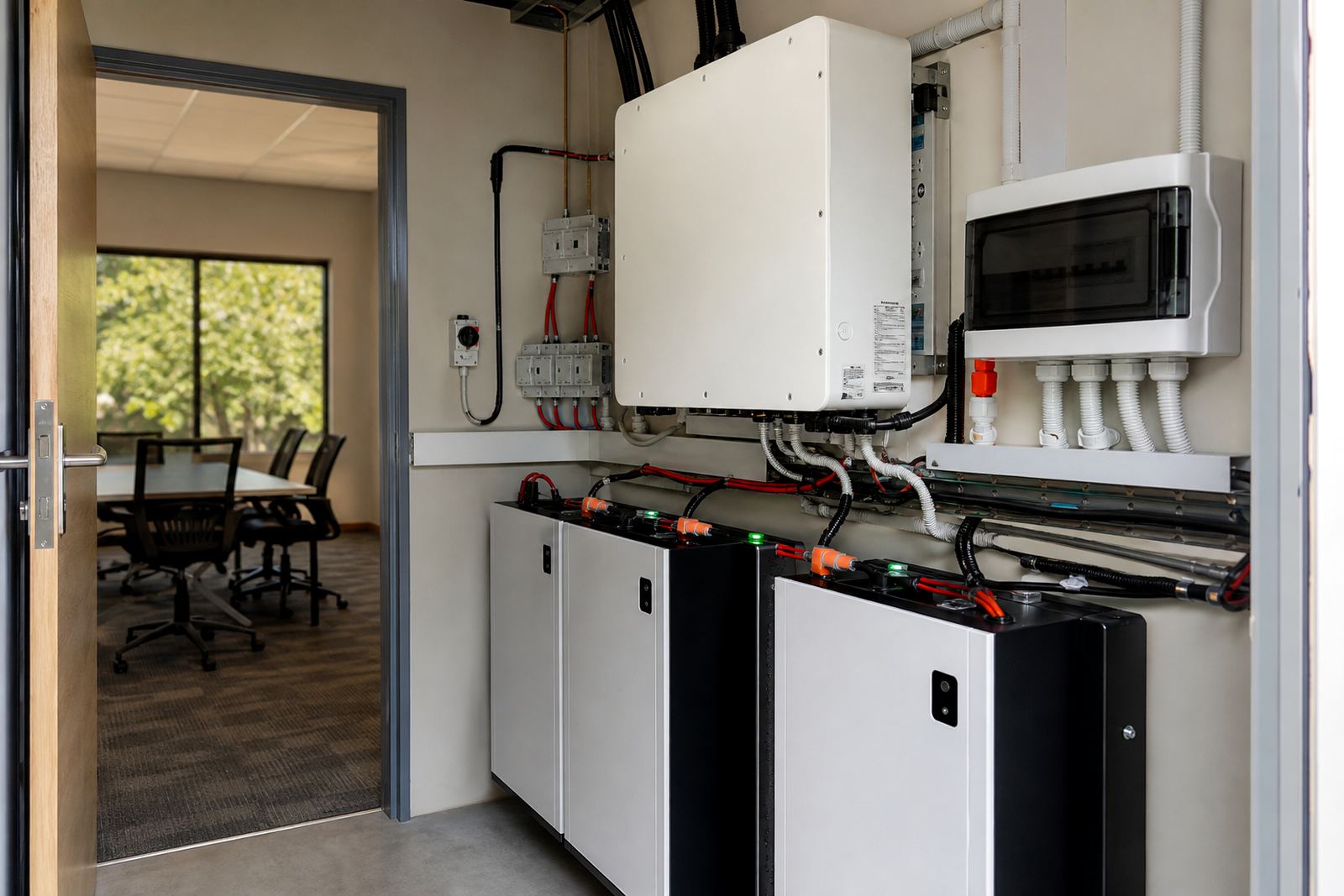
- Wall-mounted equipment placed in a secure service area
- Ventilation checked for inverter and battery placement
- Essential circuits separated from non-essential office loads
- Compliance paperwork prepared for the owner’s file
Share what must stay on during an outage and the size of the property, and a backup planner will phone or message you.
Contact formWhat we supplied and how it was sized
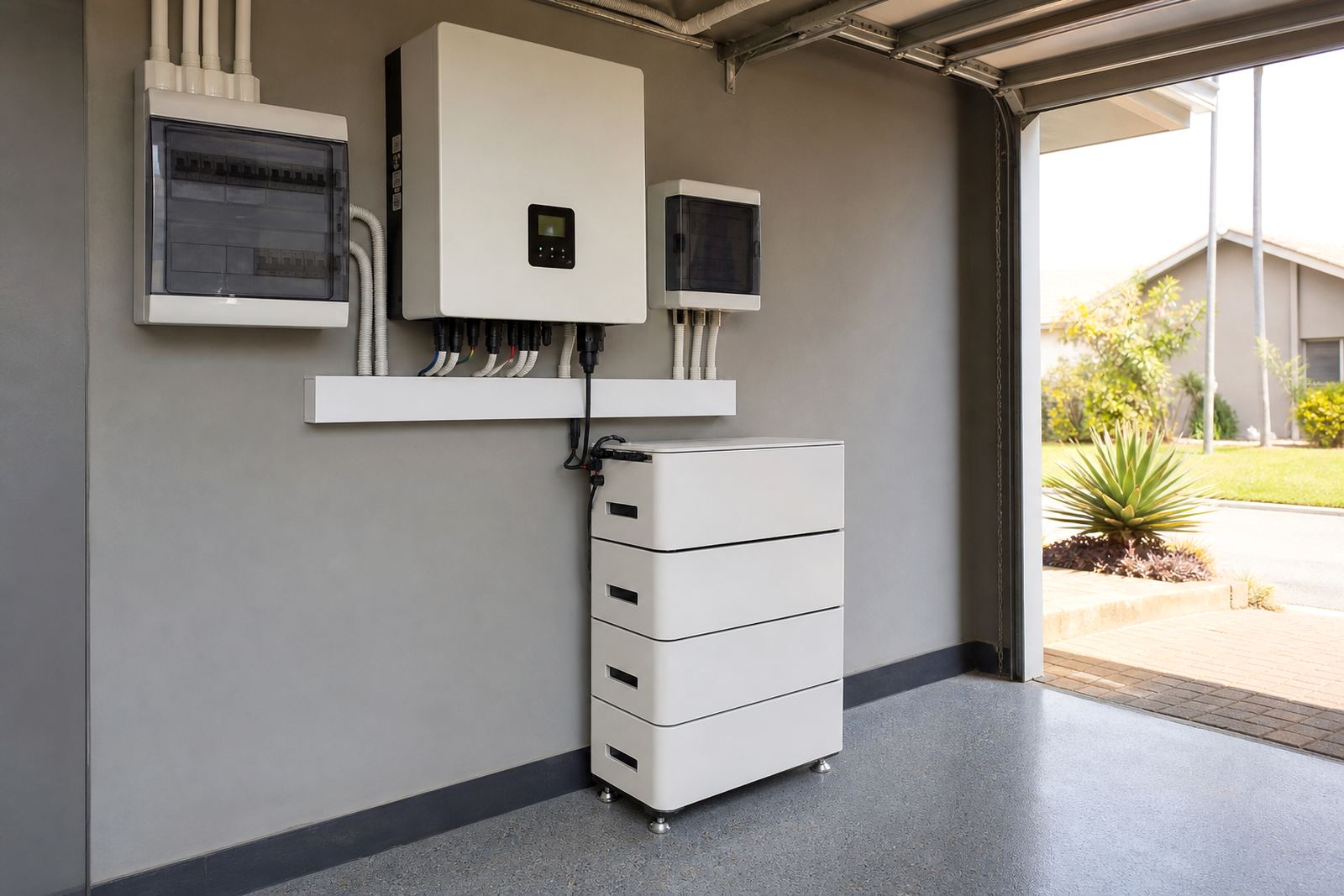
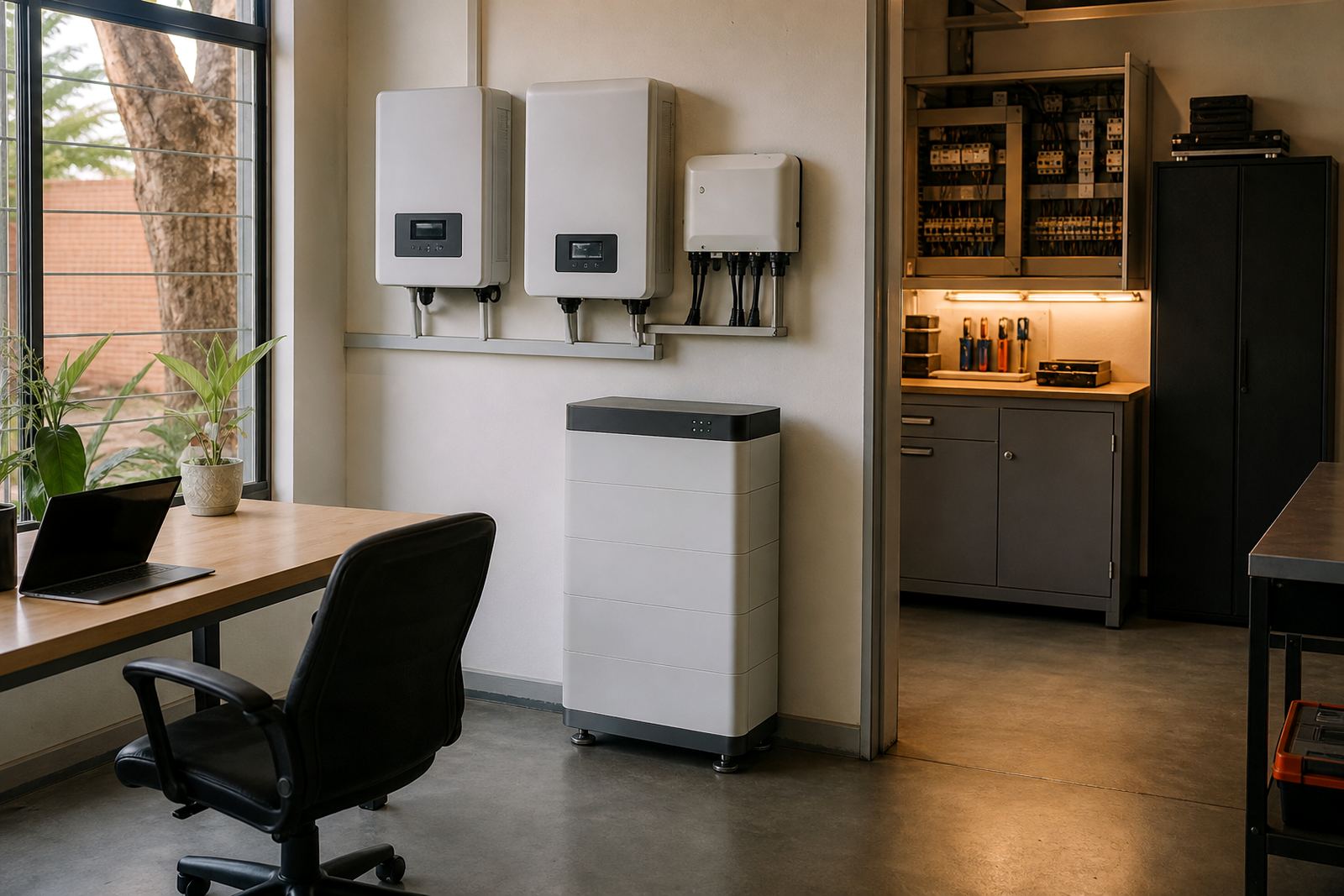
For this project we supplied a hybrid inverter and lithium battery storage sized around the office’s essential demand rather than peak whole-office usage. That approach keeps the system practical and avoids overloading it with non-critical equipment such as kettles, heaters or general plug points that are better left off during outages.
The battery bank was selected to cover the expected load-shedding blocks and short interruptions with enough headroom for internet, lighting and office work. We also included essential circuit wiring, changeover solutions and commissioning so the system could switch correctly between utility power and backup supply.
- Hybrid inverter for automatic switchover and charging
- Lithium batteries for lower maintenance and good cycle life
- Essential circuit board for admin and meeting spaces
- Surge protection and clear labelling at the distribution board
Installation sequence over two weeks
The work was completed over two weeks from first site assessment to final handover. In week one we visited the property, measured the loads, checked the distribution board and mapped out which circuits needed to stay live. We then confirmed the battery and inverter placement with the office manager and planned the cabling route.
In week two our team returned to install the equipment, wire the selected circuits and test the changeover under controlled conditions. The service planner coordinated access so the office could keep functioning during the process, and the technical sales lead explained how staff should use the system during outages. There was some pressure to fit it all in between client meetings, but the work stayed on track.
- Week 1: site assessment, load review and circuit planning
- Week 2: installation, testing and handover training
- Commissioning completed before leaving site
- Basic monitoring setup included for simple status checks
How the office used the backup power
Once commissioned, the backup system kept the business side of the office moving during outages. The admin team could continue working, the internet stayed up for client communications, and the meeting room remained usable for scheduled appointments. That mattered because legal work depends on continuity, even when the grid does not cooperate.
The selected-circuit design also reduced stress on the system. Instead of trying to support every appliance, the office only drew power from the circuits that were actually needed. That makes the battery last longer through the outage cycle and gives staff a simpler routine when load-shedding starts.
- Administration and network equipment stayed online
- Client meeting spaces remained usable
- Printing and non-essential loads were kept separate
- Staff had a clear switching routine for outages
Service support after handover
After handover, the client wanted a straightforward support path for future checks and battery expansion planning. We advised routine servicing, fault checks if any warning lights appear, and a review if the office adds more equipment later. That is especially useful in Sandton where office needs can change quickly as teams grow or layouts shift.
For a business like this, we would do the same thing again: keep the design tight, back up only the essential circuits, and allow for future expansion without oversizing from the start. It gives a cleaner result, lower installation complexity and a better fit for an office that values order and uptime.
- Routine servicing recommended at planned intervals
- Battery expansion can be added if loads increase
- Fault checks available for alarms or irregular behaviour
- Monitoring can be extended if the client wants closer oversight
System at a glance
| Project type | Selected-circuit backup installation for a legal office |
|---|---|
| Town | Sandton, Johannesburg |
| System type | Hybrid inverter with lithium battery storage |
| Backup coverage | Administration, internet, lighting and client meeting spaces |
| Installation period | 2 weeks from assessment to handover |
| Compliance | Registered electrician installation with certificate of compliance; municipal registration required for grid-tied systems |