A café brief built around trading hours
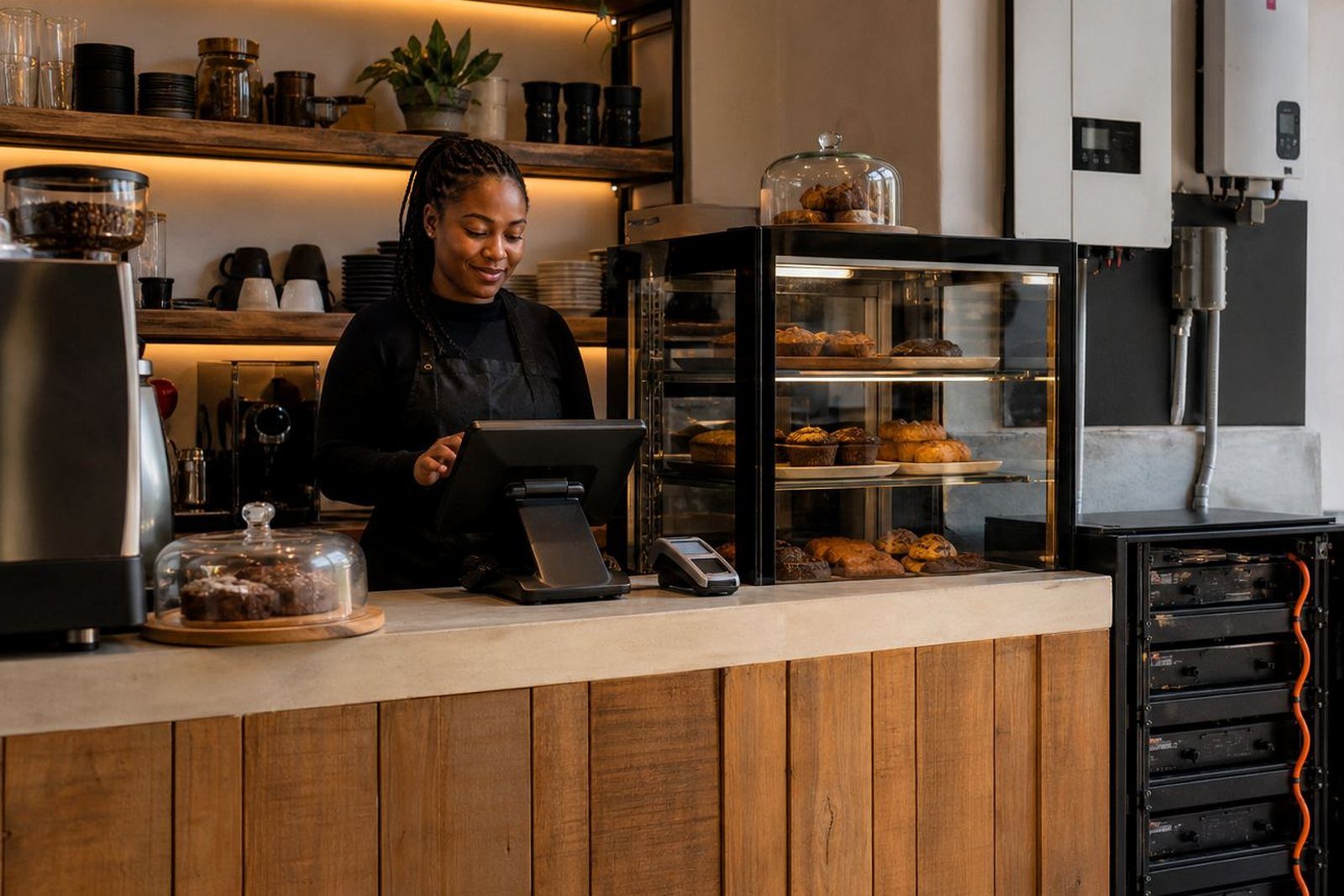
The client was a busy coffee shop in Linden, Johannesburg serving early-morning trade, laptop users and takeaways through the day. Their main concern was not running every appliance in the shop, but keeping the core load alive long enough to trade normally when the municipal supply dropped.
The brief covered the lighting circuit, point-of-sale equipment, router and customer WiFi, plus a few small devices behind the counter. We also had to work around limited wall space, existing cabling and the reality of load-shedding interruptions that can come at peak service times. In a café setting, a dark room or dead till can lose trade very quickly, so the system had to be simple for staff to use.
- Area: Linden, Randburg
- Use case: lights, tills and WiFi
- Property type: small commercial food service space
- Main goal: keep essential circuits live during outages
Sizing the backup for essential circuits only
We started with a site assessment and backup sizing review. For a coffee shop, the safest approach is usually to separate essential circuits from non-essential loads. Fridges, grinders, kettles and heating equipment can change the size of the system very quickly, so we focused on the actual must-run items for trading continuity.
The selected setup used an inverter with lithium battery storage sized for the lighting, till points and network equipment. Lithium batteries were the better fit here because they charge efficiently, handle regular cycling well and take up less space than older battery types. The inverter was sized to support the starting and running demand of the chosen circuits, with enough headroom for day-to-day use and brief spikes when the till or router came back online. We checked cable routes, protection devices and the distribution board before any installation work began.
- Essential circuits isolated from higher-load equipment
- Lithium storage chosen for compact footprint and repeat cycling
- Backup sizing based on actual trade loads, not the whole shop
- Protection and cabling reviewed before commissioning
Share what must stay on during an outage and the size of the property, and a backup planner will phone or message you.
Contact formInstallation work in a live retail space
The install had to be done with minimum disruption because the shop remained open for trade. The team planned the work in stages, starting with the mounting position for the inverter and batteries, then the essential circuit wiring and changeover arrangement. This let the shop keep normal operations going while the backup system was brought online.
We installed the inverter, battery bank and changeover controls, then tied the selected circuits into the backup side of the board. Once the wiring was complete, we carried out system commissioning and practical checks on the lights, tills and network gear. The setup was tested through a simulated power failure so the staff could see the changeover process and understand what would happen during load-shedding. The handover also covered normal operating checks and what to look for if a fault appears.
- Equipment mounted in a tidy, serviceable position
- Essential circuit wiring separated from the rest of the shop loads
- Changeover tested under controlled conditions
- Staff shown the basic operating steps before handover
Compliance, registration and the right paperwork
Backup power in a commercial space must be done properly. All installation work needs to be carried out by a registered electrician, and the finished installation must have a certificate of compliance. Where a system is grid-tied, municipal registration is also required. That part matters because a café cannot afford confusion around safety, isolation or legal sign-off.
We supported the client through the practical compliance steps, including the documentation needed for a lawful installation. The result was a system that could be used confidently by staff and maintained properly later on. It also meant the owner had the paperwork in place for future inspections or changes to the electrical setup. For businesses in Johannesburg and the wider Gauteng area, this is a step that should not be skipped.
- Registered electrician required for installation
- Certificate of compliance needed after the work is completed
- Municipal registration required for grid-tied systems
- Documentation kept in line with normal commercial electrical practice
Timeline from assessment to handover
That timeline also gave enough space to check the site properly. In a coffee shop, small details matter, like where cables can run without creating trip hazards and whether the battery unit can be kept clear of heat and everyday foot traffic. The final setup was left neat, practical and ready for regular use.
- Week 1: site assessment, load review and sizing
- Week 2: installation, testing and handover
- Minimal interruption to normal trading
- Final setup arranged for easy access and servicing
What changed once the backup was in place
Once the system was live, the shop could keep trading through outages with the core front-of-house services intact. Lights stayed on, the tills remained active and customer WiFi continued to run, which helped the staff keep the space usable and reduced the scramble that usually comes with sudden load-shedding. For a café, that kind of continuity is worth a lot on a busy morning.
The client also had a clearer way to plan for future growth. If the business later adds more essential loads, such as another checkout point or extra lighting, the system can be reviewed for a battery expansion or control update. That gives the owner room to adjust without starting from scratch. What we would keep for the next backup system is the same practical approach: size only the essential circuits, keep the install tidy and make sure staff know exactly how the backup behaves.
- Lighting, tills and WiFi remained available during outages
- Trading interruptions were reduced during load-shedding
- Future battery expansion can be planned if the load changes
- Practical handover made day-to-day use straightforward
System at a glance
| Project | Linden Coffee Shop, Linden, Johannesburg |
|---|---|
| Client type | Small commercial coffee shop |
| Backup focus | Lighting, till points and customer WiFi |
| Core equipment | Inverter with lithium battery storage |
| Timeline | 2 weeks from assessment to handover |
| Service areas | Randburg, Johannesburg and Gauteng |
| Compliance | Registered electrician, CoC and municipal registration where applicable |