Family home brief in Randburg
The client was a suburban family in Randburg looking for a backup solution that would cover the rooms and appliances they use most during outages. The brief was clear: keep the lights on, keep the router running, power the TV for the evening news and entertainment, and support kitchen essentials without overloading the system.
They did not want a large, complicated setup or a full rewrite of the house wiring. They wanted something practical for Gauteng load-shedding, sized for typical evening use and planned around the realities of a normal family home. The property had a standard suburban layout with a mix of living areas, bedrooms and a kitchen that needed careful load management.
As with many homes in the area, the main concern was not just the outage itself but the repeat pattern of interruptions. The family needed a setup that could handle short and medium cuts, recover properly after each cycle, and remain sensible for everyday use. That meant keeping the backup to the essential circuits and avoiding unnecessary loads like geysers, kettles and heaters.
What we sized for and why
We started with a site assessment and basic load review. The home needed a backup system that could support a sensible evening routine: several lights, WiFi, one or two televisions and selected kitchen points for charging, refrigeration support and light cooking tasks. The final sizing was based on essential use rather than whole-house supply.
- Lighting circuits for main living areas and bedrooms
- WiFi and network equipment
- TV points for family viewing
- Kitchen essentials on selected circuits
- Space for future battery expansion if the family later wants longer runtime
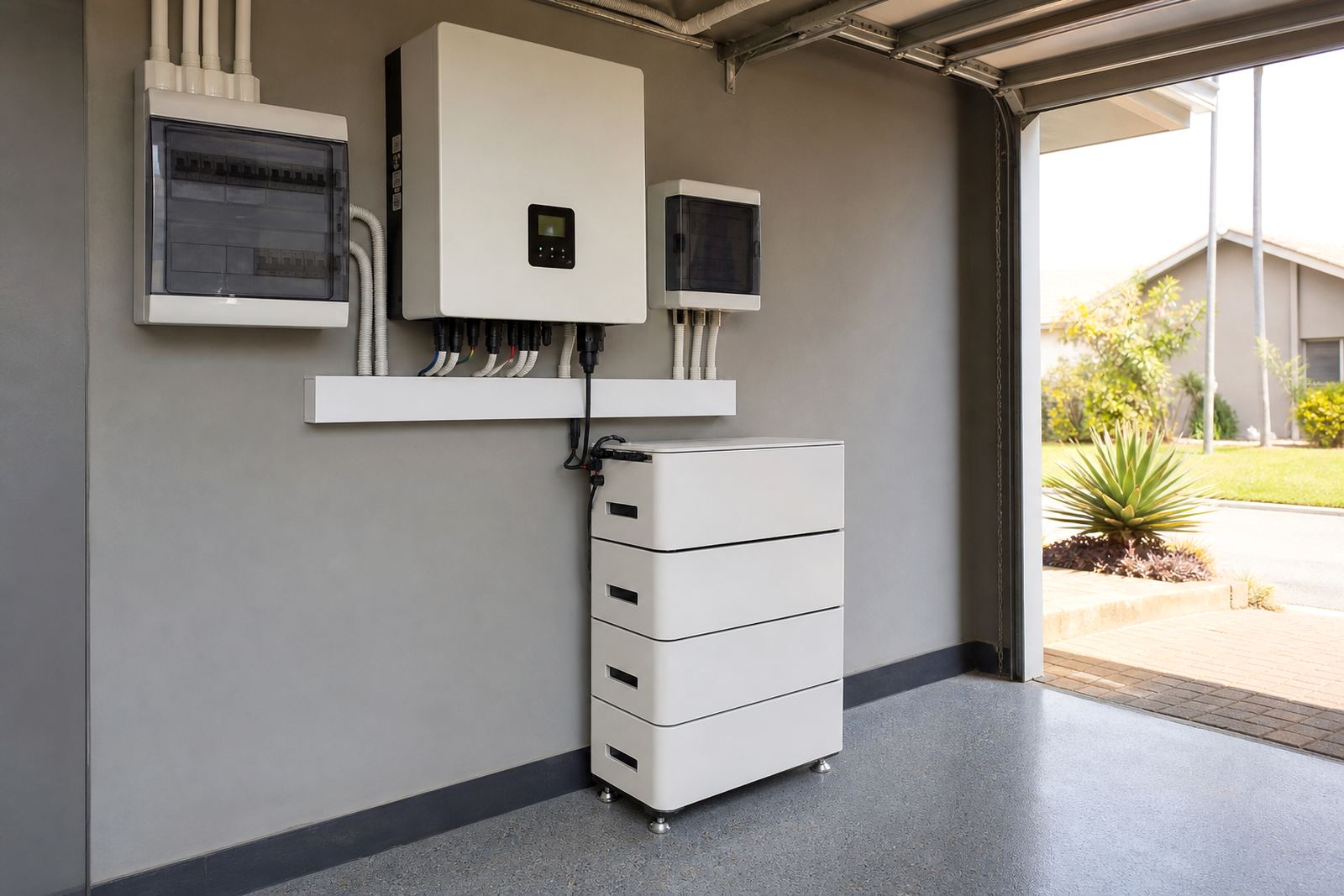
We recommended a lithium battery bank matched to an inverter that could handle the household’s essential demand without running too close to its limit. Lithium batteries suit this kind of backup because they charge faster, handle regular cycles well and take up less space than older battery types. The inverter was selected for steady supply, automatic changeover and enough headroom for normal startup loads. A bit of reserve capacity matters, especially when the fridge compressor starts or more than one item switches on at once.
The system was intentionally kept to a practical size. In a family home, oversizing can push the cost up and makes monitoring harder, while undersizing leads to nuisance trips and frustration. The point was to get the balance right for the home’s actual use, not a guess.
Share what must stay on during an outage and the size of the property, and a backup planner will phone or message you.
Contact formInstallation details and electrical work
Once the sizing was agreed, we carried out the inverter installation, battery installation and essential circuit wiring. The setup included changeover solutions so the selected circuits could move to backup supply during outages and return to mains power when the supply came back. We also handled system commissioning and checked that the changeover behaved correctly under load.
All installation work for this kind of system must be done by a registered electrician, and a certificate of compliance is required. Where a grid-tied arrangement is involved, municipal registration is also needed. Those steps are not just paperwork, they are part of making sure the installation is safe, properly documented and suitable for the property.
The home had a few ordinary site constraints common in Randburg properties: limited cupboard space, neat cable routing around existing finishes, and the need to keep the installation tidy in a lived-in home. We worked around those constraints by placing the equipment in a sensible indoor location with enough ventilation and easy access for future maintenance. This avoided clutter in the passage and kept the working area practical for the family. The battery was mounted securely, with cabling dressed cleanly and labelled for future fault checks.
- Inverter installation with changeover arrangement
- Lithium battery installation and secure mounting
- Essential circuit wiring for selected loads
- System commissioning and basic test run
- Compliance support for the registered electrician process
Timeline from assessment to handover
The project ran over two weeks from the initial visit to handover. The first week covered the site assessment, load review and final backup sizing. That gave enough time to confirm which circuits should remain live and how the family used the house during evening outages.
The second week covered installation, commissioning and support on the new setup. We tested the handover behaviour, checked battery charge and discharge operation, and confirmed that the family knew how to use the system day to day. The handover also covered normal operating habits, such as not stacking too many heavy appliances onto the backup supply at the same time.
For many homes, a quick installation is less useful than a correct one. This project moved at a sensible pace so the family had time to ask questions and the work could be completed properly. A rushed setup often causes trouble later. By taking the time to size and test the system, the result was more practical for real loadshedding conditions in Johannesburg. It was also easier to keep the wiring neat and serviceable.
Results in day-to-day use
After commissioning, the home had a dependable backup arrangement for the parts of the house that matter most during outages. The family could keep lights on, stay connected online, watch TV and run kitchen essentials without needing to reset the whole house each time the power failed.
The key result was not just backup during the outage, but a calmer routine around it. The family could plan evening meals, homework and entertainment with less disruption. The inverter handled the switchover cleanly and the lithium batteries provided steady supply for the chosen loads. With the system sized correctly, there was less stress around what could be used at the same time and what should be left off.
Because the home is in Randburg, the solution also makes sense for repeated load-shedding cycles, brief municipal interruptions and the general pressure on local supply. For a suburban household, that means fewer surprises and less dependence on candles, torches and improvised charging plans. The setup is also ready for a future battery expansion if the family’s needs change.
What we would repeat on the next Randburg home
We would use the same approach again: start with a proper site assessment, size the system around essential circuits, and keep the backup practical for the family’s real habits. In homes like this, the best results come from simple planning rather than trying to back up the entire property at once.
We would also keep the wiring focused on the circuits that matter most and leave room for future expansion where possible. That gives the homeowner flexibility if the family later adds a second battery, changes how the kitchen is used, or wants a longer runtime for evening outages. The aim is always to keep the system tidy, clear to operate and easy to maintain.
- Choose essential loads first, not every appliance
- Leave enough battery headroom for real evening use
- Keep the installation neat and accessible for servicing
- Confirm compliance paperwork and municipal requirements where needed
For a Randburg family home, this project showed how a well planned inverter and lithium battery system can cover the basics without overcomplicating the household. It is a straightforward answer to load-shedding, and it fits the way most suburban homes actually live.
System at a glance
| Project type | Residential backup project for a suburban family home |
|---|---|
| Town | Randburg, Johannesburg |
| Backup focus | Lighting, WiFi, TVs and kitchen essentials |
| Core equipment | Inverter, lithium battery bank and changeover solution |
| Work completed | Site assessment, sizing, installation, commissioning and compliance support |
| Timeline | 2 weeks from assessment to handover |