What the Krugersdorp workshop needed to keep running
The client was a small industrial workshop in Krugersdorp with an office area attached to the main work floor. Their main concern was not full production backup, but keeping admin work moving, keeping the gate and access control live, and making sure staff had basic lighting during outages. In practice that meant a clean changeover, a battery bank that could cover repeated load-shedding slots, and a setup that would fit the building’s day-to-day use.
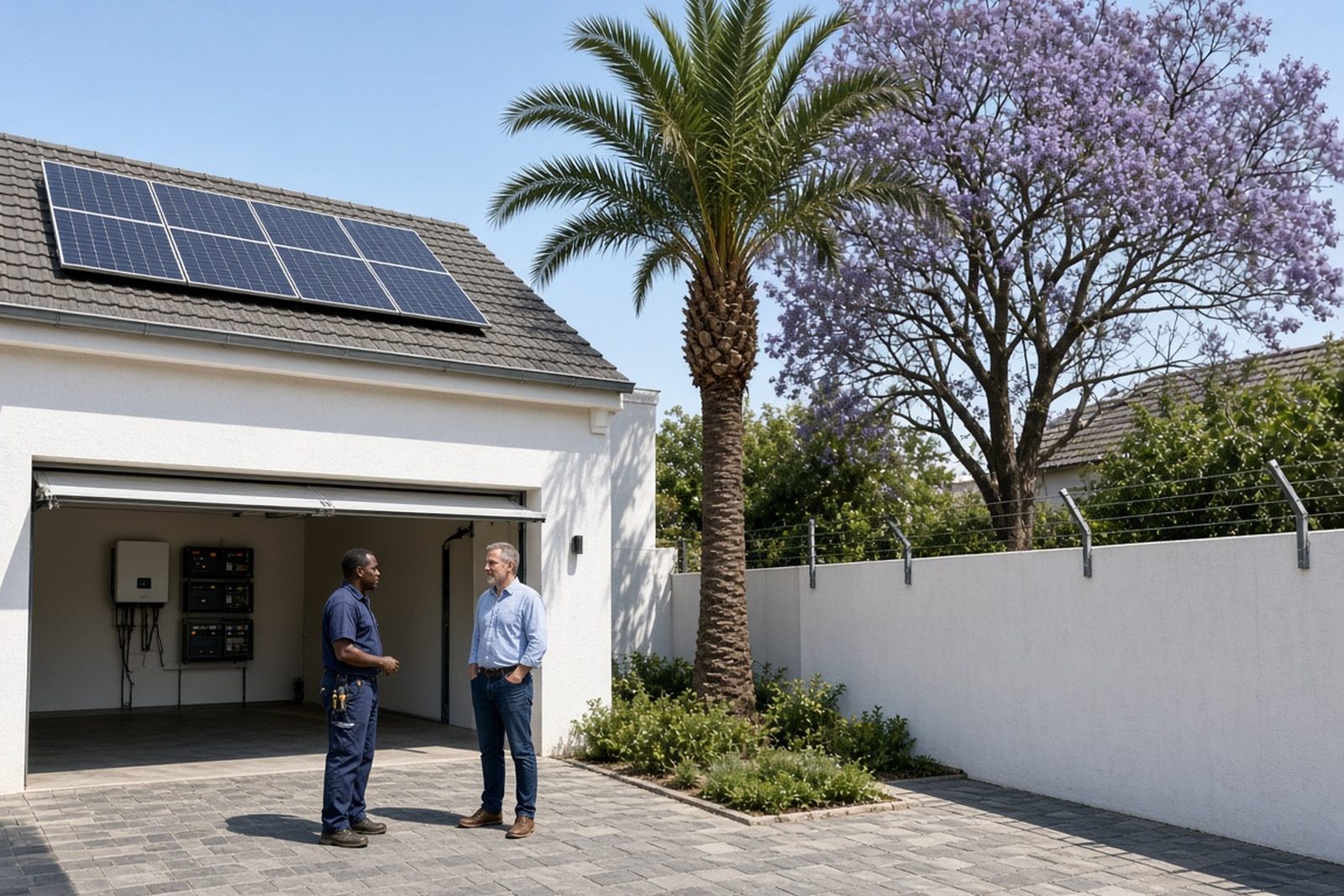
We started with a site assessment to identify which circuits were worth backing up and which loads should stay off the system. That is usually the right approach in workshop environments, because once you try to carry too many non-essential items on backup, the batteries drain too quickly and the system becomes harder to manage.
- Office admin sockets on backup
- Access control and gate power
- Selected LED lighting circuits
- No heavy machinery on the backup side
Sizing the backup for admin loads not workshop loads
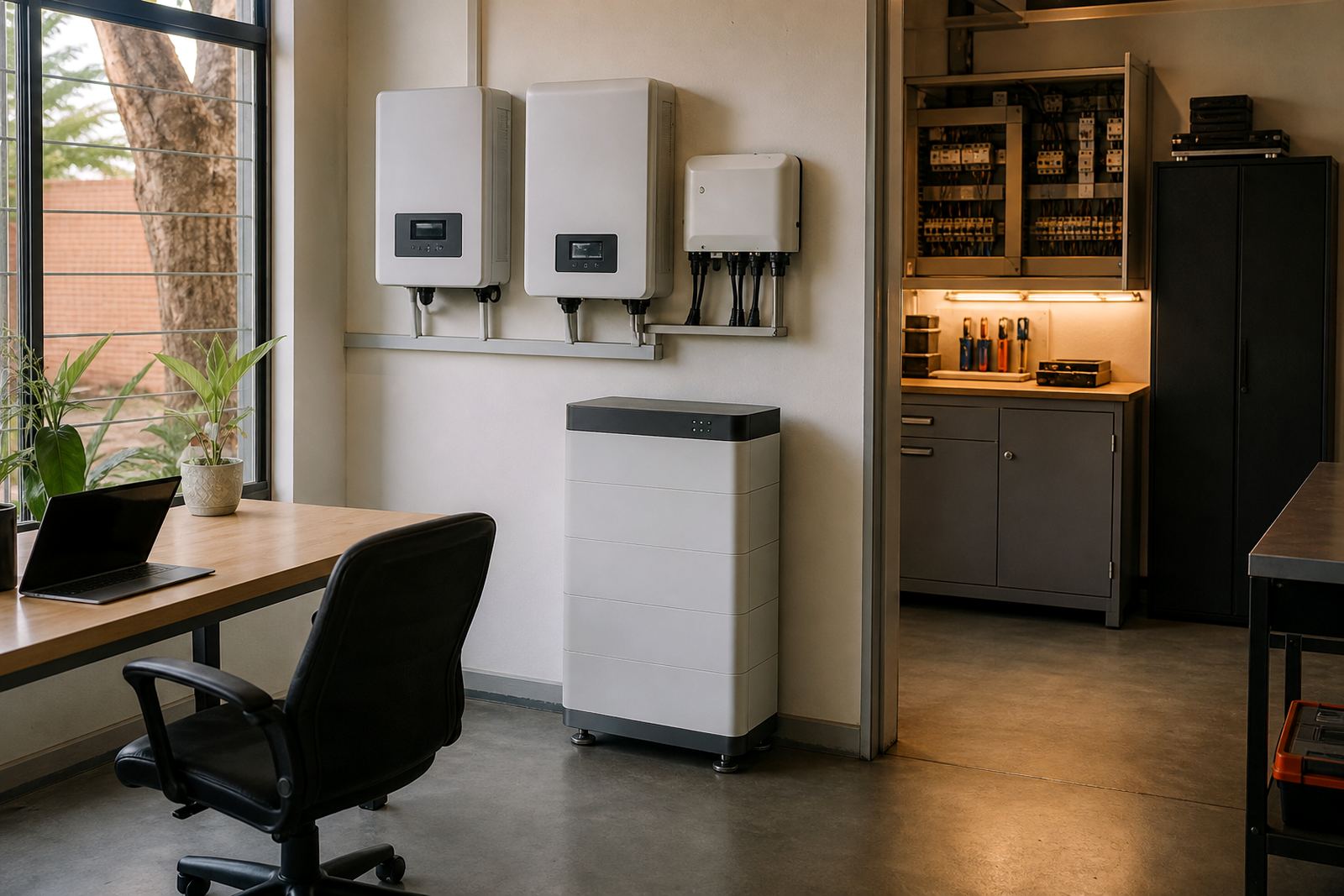
The backup sizing was guided by the actual daily use of the office. The system had to support computers, a router, a printer, the access control panel and selected lights, while avoiding unnecessary strain from plugs that did not need to remain live. For a site like this, lithium battery storage makes sense because it copes better with frequent cycling and short outage windows common in Gauteng load-shedding schedules.
We sized the solution around the essential circuits only, with enough inverter capacity to handle start-up load from office equipment and enough battery reserve to make repeated interruptions manageable. The exact mix depends on how many workstations are active, how long the site expects to stay on backup, and whether the customer wants to expand later. A bit of planning here saves trouble later, and avoids an undersized system that trips when the gate opens or the printer starts.
- Inverter capacity matched to essential admin use
- Lithium battery bank sized for practical outage coverage
- Essential circuits separated from workshop machinery
- Allowance made for future battery expansion
Share what must stay on during an outage and the size of the property, and a backup planner will phone or message you.
Contact formInstallation details and compliance on site
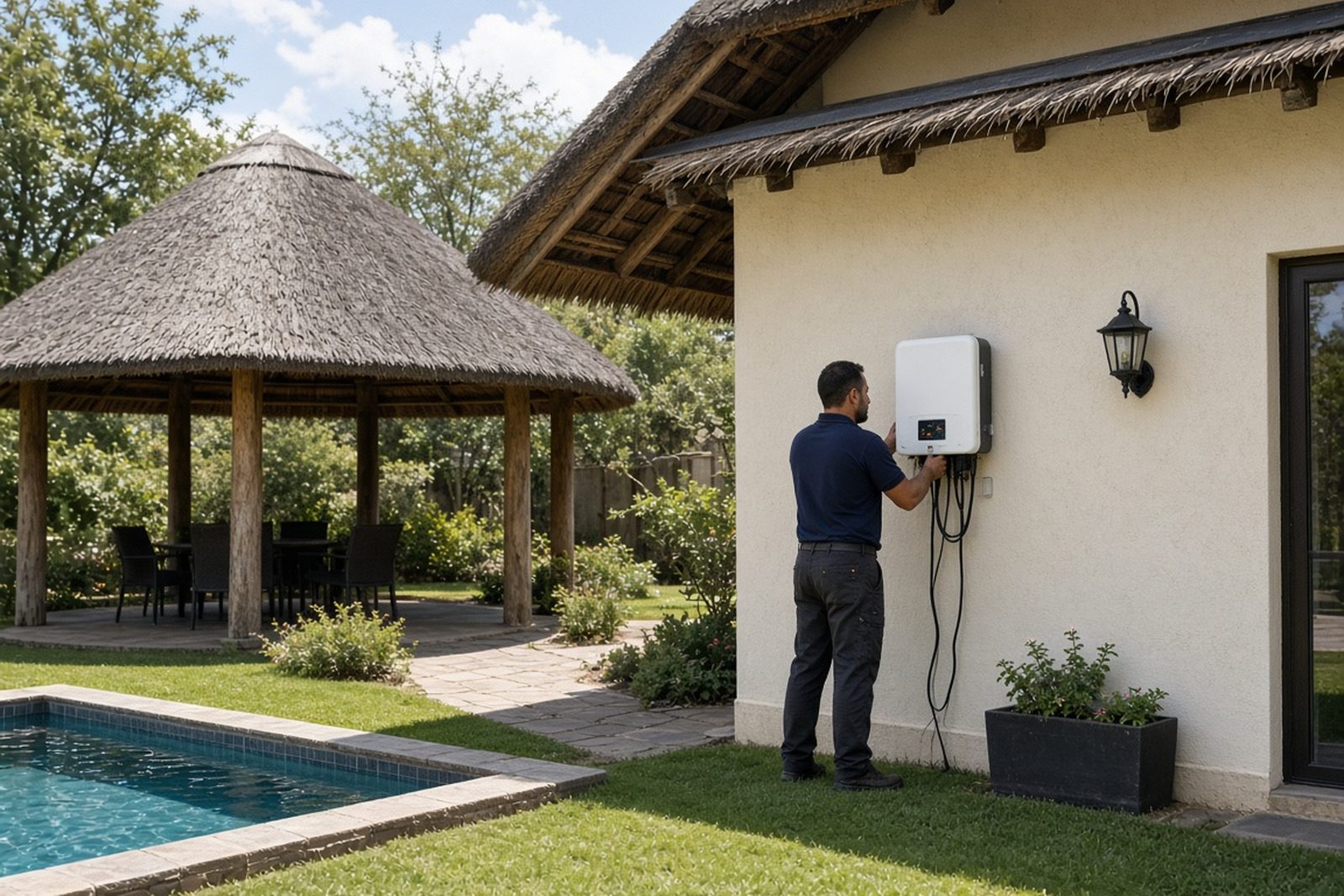
The installation was handled in stages so the business could keep operating. We prepared the distribution side first, then brought the backup circuits across with proper labelling, isolation and changeover arrangement. The battery enclosure was positioned with ventilation and service access in mind, which matters in enclosed workshop offices where heat and dust can build up.
As with any backup installation, the work must be carried out by a registered electrician and the final installation requires a certificate of compliance. Where a system is grid-tied, municipal registration is also needed before it is put into service. That is standard practice and should never be left as an afterthought. On this site the customer wanted the process handled neatly because the office was small and there was not much room for loose wiring or messy routing.
- Registered electrician required for installation
- Certificate of compliance issued after completion
- Grid-tied systems require municipal registration
- Clean cabling and clear circuit labelling
Timeline from assessment to handover
That short timeline worked well because the scope was focused. There was no need to redesign the whole electrical system, only to separate what mattered and make the backup behave properly. The client appreciated that the process was direct and tidy, and the final handover included a basic explanation of how the inverter and batteries should be monitored.
- Week 1: assessment and sizing
- Week 2: installation, testing and commissioning
- Handover included user guidance and load checks
Results for the office and access control
Once in service, the system gave the workshop a steadier way to ride through outages without disrupting admin work or access control. Staff could keep up with calls, paperwork and basic computer use while the entrance system stayed functional. The lighting circuits selected for backup also improved safety, which is especially useful in a workshop setting where people move between the office, yard and storage areas.
The end result was not a full factory backup, and that was the right call. It was a practical office solution sized for the loads that actually matter during load-shedding. The batteries can be monitored and expanded later if the site grows or if the client decides more circuits should be protected. For now, the system does the job it was meant to do, without unnecessary complexity.
- Admin functions stayed operational during outages
- Access control and gate power remained available
- Basic lighting stayed on for safety and movement
- System left room for future expansion
What we would repeat on a similar Krugersdorp site
We would take the same approach again for a small workshop office in Krugersdorp or nearby industrial areas. Start with the essential circuits, size the inverter and lithium batteries around real use, and keep the installation neat enough for easy servicing later. That is especially important in Gauteng, where mixed usage, dust and frequent outages can make a badly planned backup system more trouble than help.
For this kind of site, the best outcomes usually come from clear priorities and proper compliance from the start. If the office only needs admin, access control and lighting, there is no need to carry the whole workshop on backup. Keep the scope tight, make the changeover simple, and leave the client with a system that is easy to understand and easy to maintain.
- Focus on essential loads only
- Keep wiring simple and clearly marked
- Plan for service access from day one
- Leave room for future battery expansion if needed
System at a glance
| Project type | Workshop office backup for admin, access control and basic lighting |
|---|---|
| Town | Krugersdorp |
| System focus | Inverter and lithium battery backup |
| Scope | Essential circuit wiring, changeover, commissioning and compliance support |
| Timeline | 2 weeks from assessment to handover |
| Service area | Gauteng, including Johannesburg, Pretoria, Centurion, Midrand and Roodepoort |