What the client in Rosebank needed
The brief came from a private apartment owner in Rosebank, Johannesburg, who wanted reliable backup for a compact home without turning the unit into a full off-grid site. The priority was to keep the router, a few lights, laptop charging and phone charging running through outages, while keeping the equipment neat and quiet for apartment living.
Because the unit sits in a sectional title complex, space was limited and the installation had to stay practical for the body corporate rules. There was no room for a large battery bank or a complicated layout. The client also wanted a setup that would recover quickly between outages, because in Johannesburg load-shedding can come in blocks and the power can return unpredictably.
Site constraints and backup sizing
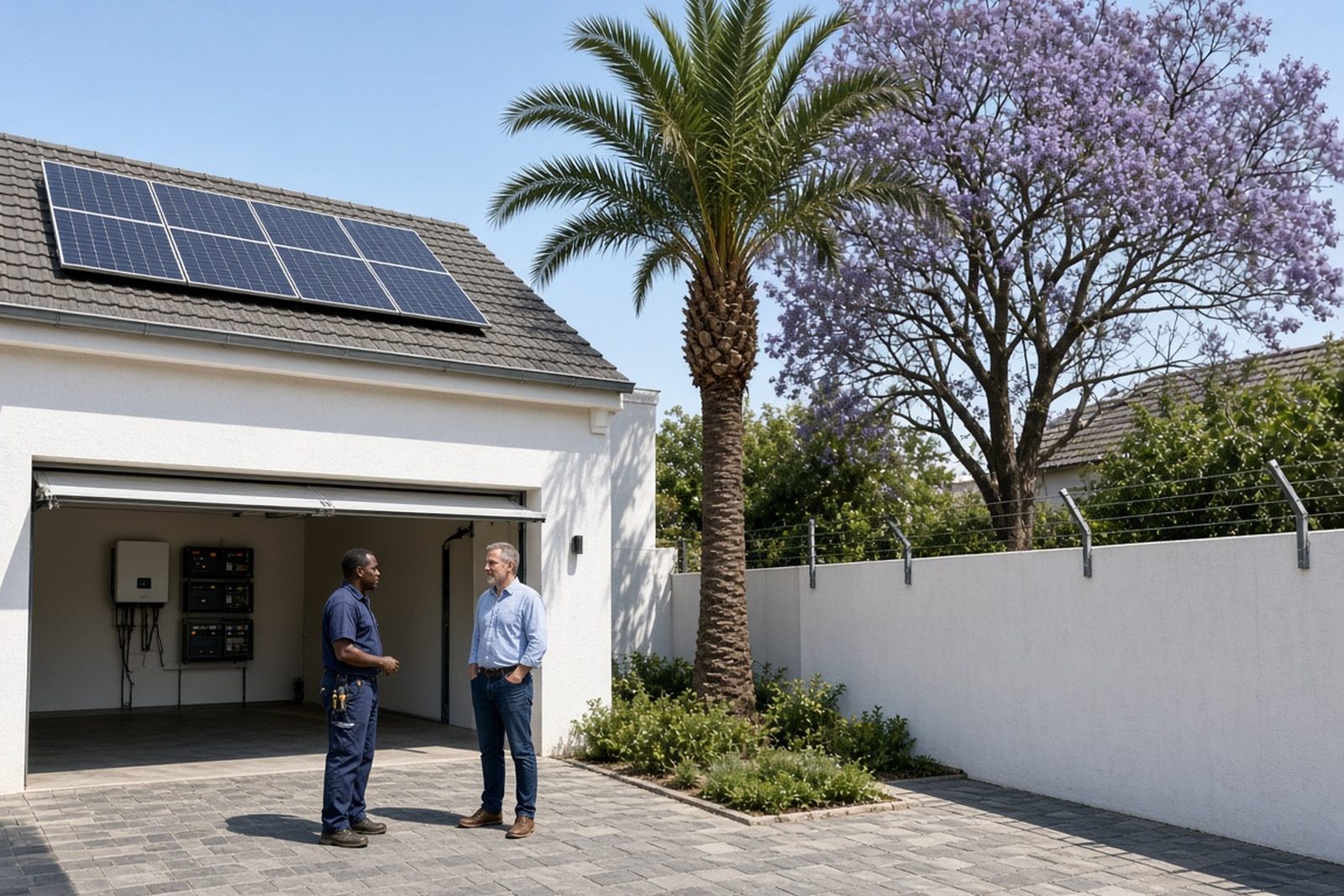
We started with a site assessment to check available wall space, cable runs, DB board access and where the equipment could be placed without blocking movement or ventilation. In apartments, the main issues are usually heat build-up, short cable routes and keeping the system tidy enough for day to day use. We also checked the condition of the existing wiring so that the backup circuits would be properly separated and clearly marked.
The backup sizing was based on essential loads rather than the whole apartment. That means the system was built to carry low to moderate demand, not high power appliances like ovens, kettles or space heaters. For a setup like this, a correctly sized inverter and lithium battery are far more useful than overspecifying and wasting space. The aim is to cover the basics for a few hours, then recharge efficiently when grid power returns.
- Essential loads only: internet, LED lighting and charging points
- Compact footprint for apartment installation
- Fast recharge behaviour between outages
- Quiet operation suited to residential use
Share what must stay on during an outage and the size of the property, and a backup planner will phone or message you.
Contact formWhat we supplied and installed for backup power
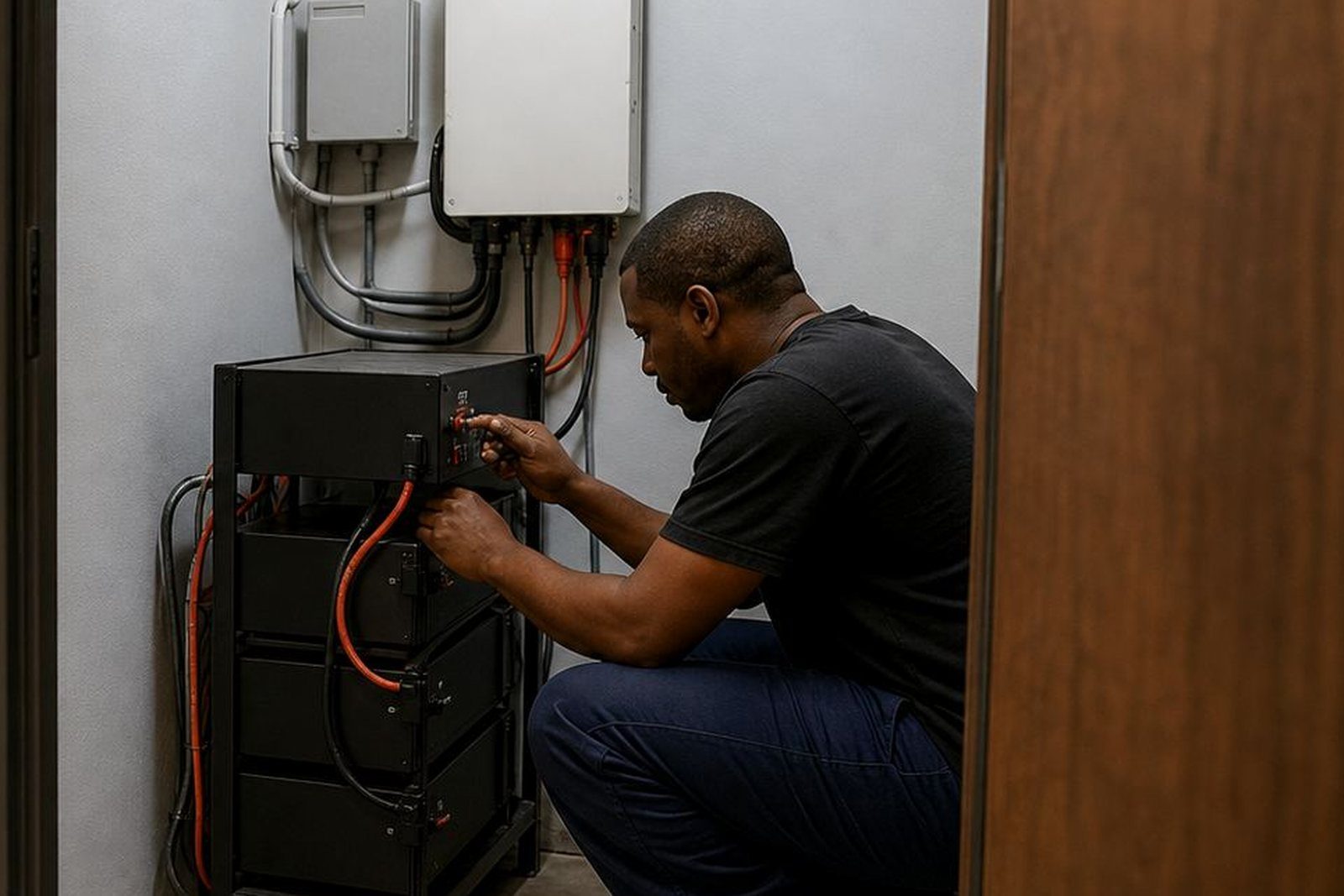
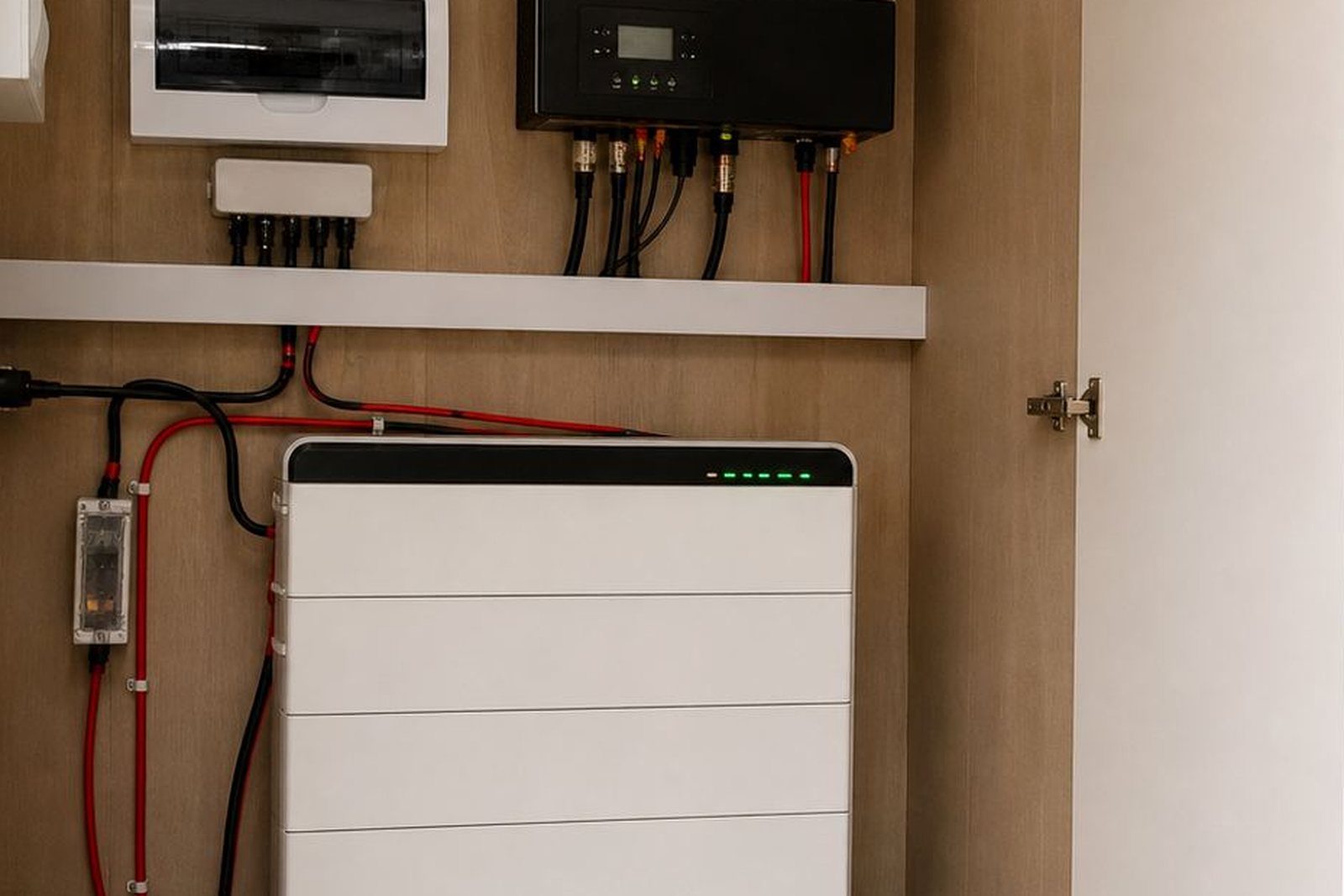
We supplied a compact inverter backup package with lithium battery storage and the supporting protection gear needed for a clean installation. The inverter was set up to handle the apartment's essential circuit load, with battery storage sized for practical runtime rather than oversized capacity. Lithium battery technology was the right fit here because it gives good cycle life, stable performance and a smaller footprint than older battery types.
We also completed essential circuit wiring so that the selected loads could run from backup without affecting the rest of the apartment. The changeover arrangement was configured for simple and reliable switching during outages. Once the hardware was mounted, we carried out system commissioning, tested the transfer behaviour and checked that the unit recovered correctly after grid power was restored.
- Inverter supply and mounting
- Lithium battery installation
- Essential circuit wiring
- Changeover solution and commissioning
- Monitoring setup for status checks
Compliance, safety and apartment rules
For any fixed electrical installation, the work must be done by a registered electrician and a certificate of compliance is required. That matters even more in sectional title buildings where the body corporate may have additional requirements on cable routing, ventilation, shared spaces and the position of electrical equipment. We kept the layout tidy and practical so the client could use it without drawing attention to the installation.
Where a system is grid-tied, municipal registration is needed as well. For this project the client wanted backup focused on essentials, so we kept the arrangement aligned to that use case and made sure the switching and labelling were clear. In apartment settings, clean workmanship and correct protection devices are not optional, they are what keep the setup safe and serviceable over time.
Install day to CoC handover
At handover we explained which circuits were backed up, how the system would behave during load-shedding and what to expect during a longer outage. The client was shown the basic indicators on the inverter and battery system, along with the everyday checks that make sense in a home setting. We also pointed out the limits of the setup so there would be no confusion later.
- Assessment and sizing: week 1
- Supply and installation: week 2
- Testing and handover: end of week 2
- Final explanation of backed up loads and indicators
Results for daily apartment use
The completed system gave the apartment practical backup for the essentials, which is what the client needed most. Internet stayed on, selected lighting remained available and device charging could continue during outages. That makes a real difference in a one or two bedroom apartment where working from home and basic communication still need to carry on when the power drops.
Because the solution was sized properly, the installation stayed neat and the battery capacity was not wasted on loads the client did not need. The result was a clean setup that suited the unit, the building and the way the home is used. In short, it did the job without trying to be more than it needed to be, which is often the best outcome for city apartments.
What we would keep for the next backup system
If we were doing a similar Rosebank apartment again, we would follow the same approach: assess the essential loads first, check the building constraints early, and size the inverter and lithium battery around realistic usage. For apartment work, that planning step saves time and avoids overcomplicating the job later. It also keeps the installation neater and easier to live with.
We would also keep the same focus on proper labelling, compliant wiring and a simple handover. When a client only needs internet, lighting and charging backed up, the smartest solution is usually the one that is matched to the load, not the biggest system available. That is true in Rosebank, Sandton, Fourways and across the rest of Gauteng where load-shedding can interrupt a working day at any hour.
System at a glance
| Project type | Compact apartment backup for essentials |
|---|---|
| Area | Rosebank, Johannesburg |
| Backup scope | Internet, lighting and charging circuits |
| Main equipment | Inverter and lithium battery storage |
| Work completed | Assessment, sizing, installation, commissioning and compliance support |
| Timeline | 2 weeks |