Estate home brief in Bryanston
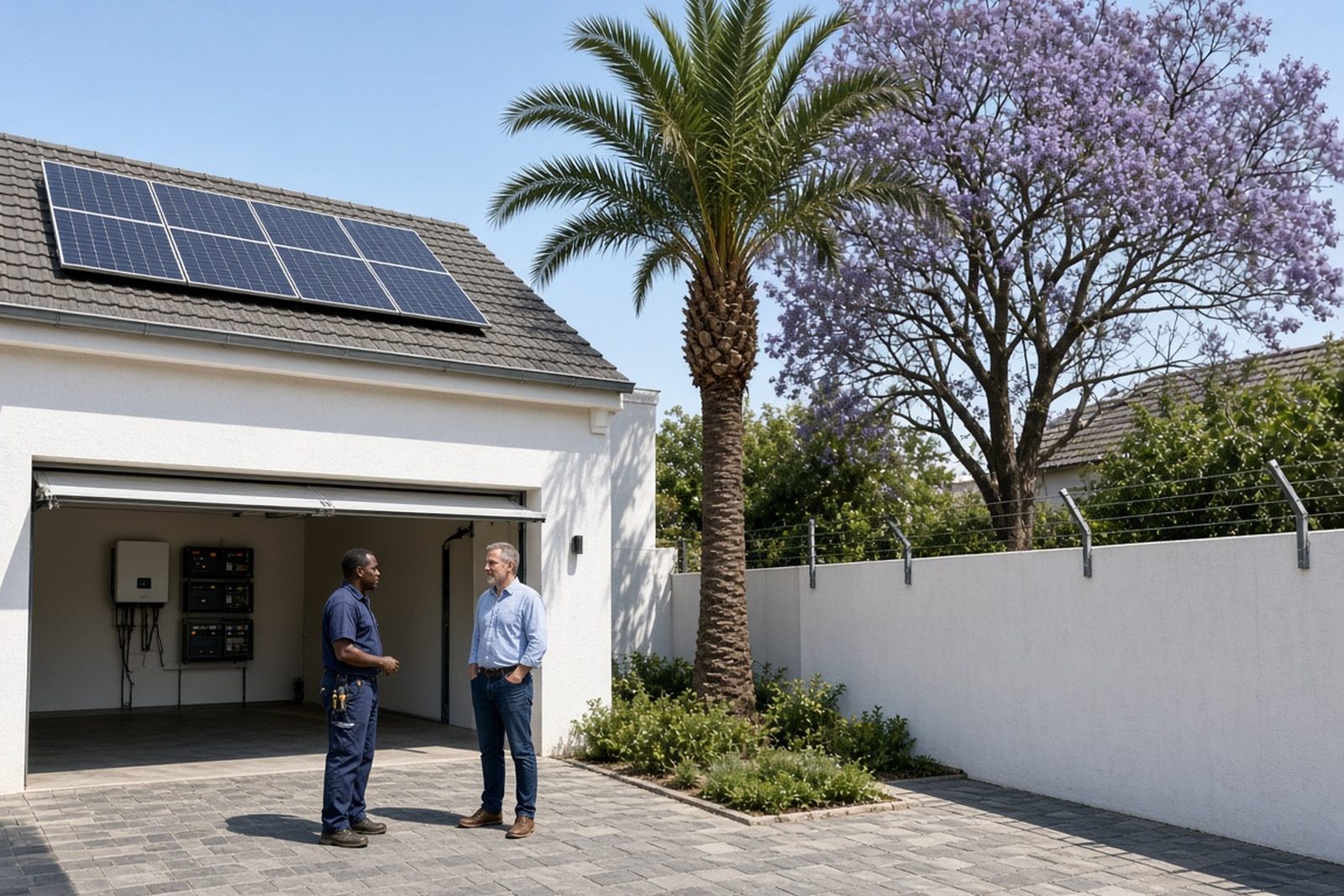
The client was a private homeowner in Bryanston, Johannesburg looking for a practical backup power setup for everyday load-shedding. The house had a compact wall area for equipment, so the system had to be planned carefully around available space, ventilation and safe cable runs. The homeowner wanted essential circuits backed up first, rather than trying to carry the full property on day one.
We started with a site assessment to check the incoming supply, board layout, cable routes and the position of the main distribution board. The property also had body corporate style expectations around neat work, low visual impact and quiet operation. That meant the installation had to be tidy and easy to maintain, with no loose cabling or crowded mounting positions.
- Property type: single family estate home
- Area: Bryanston, Johannesburg
- Goal: backup for key lights, Wi-Fi, security, TV and selected kitchen circuits
- Constraint: limited wall space in the service area
Sizing the inverter and battery bank
The main task was to balance runtime against available wall space. Instead of oversizing the system, we mapped the household loads and separated must-have circuits from nice-to-have circuits. That made it possible to choose an inverter and lithium battery bank that could handle the daily outage pattern without taking over the room. The final sizing was based on typical evening use, fridges, networking equipment, a few lights and a manageable kitchen load.
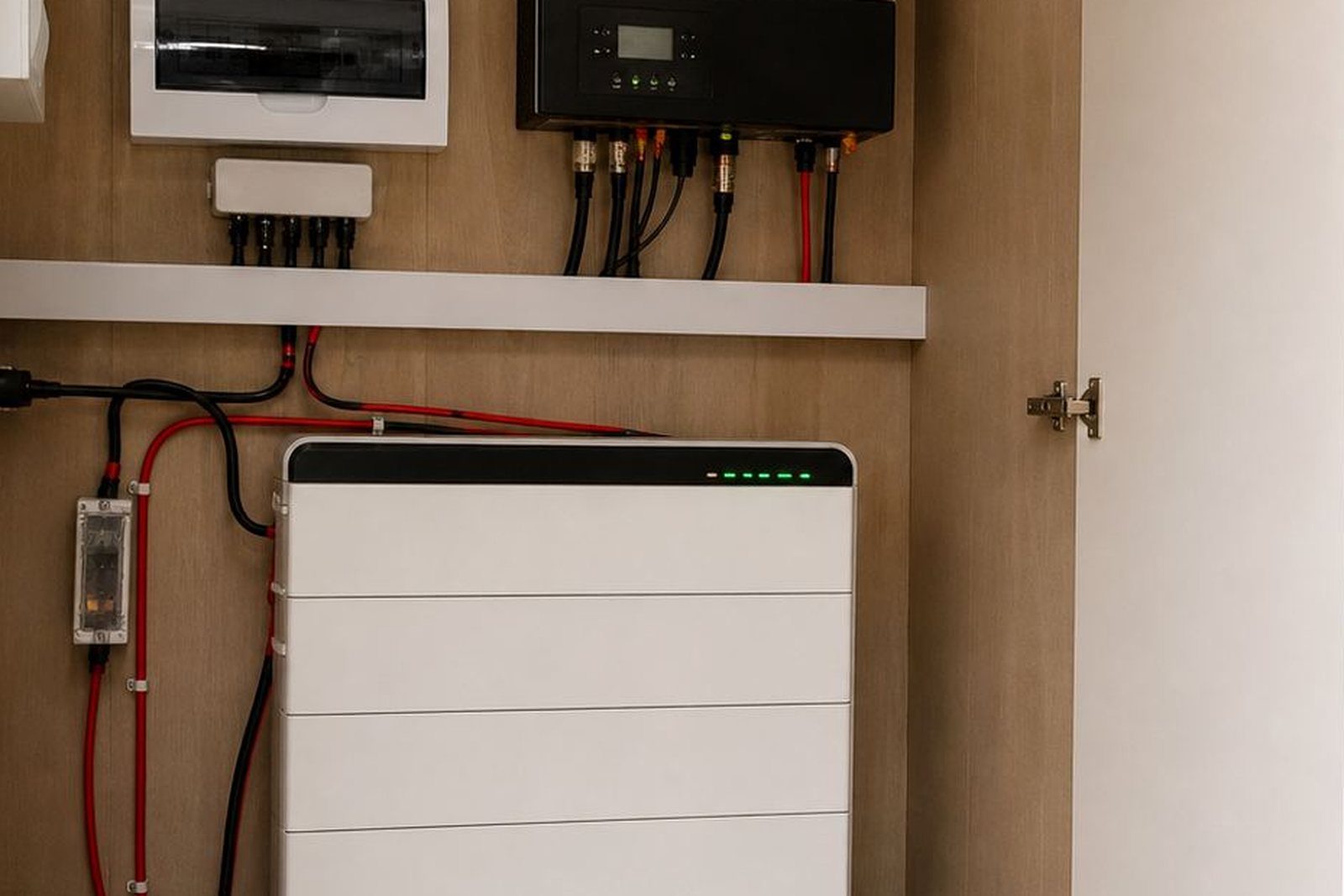
We supplied an inverter system with lithium battery storage sized for practical backup rather than peak wish-list usage. Lithium batteries were selected because they are compact, efficient and better suited to repeated cycling than older battery types. In a suburb like Bryanston, where homes often have limited utility space and need a neat finish, that made good sense.
- Inverter type: hybrid-style backup inverter for essential loads
- Battery type: lithium battery bank for repeated discharge and recharge cycles
- Load plan: essential circuits only, with future expansion kept in mind
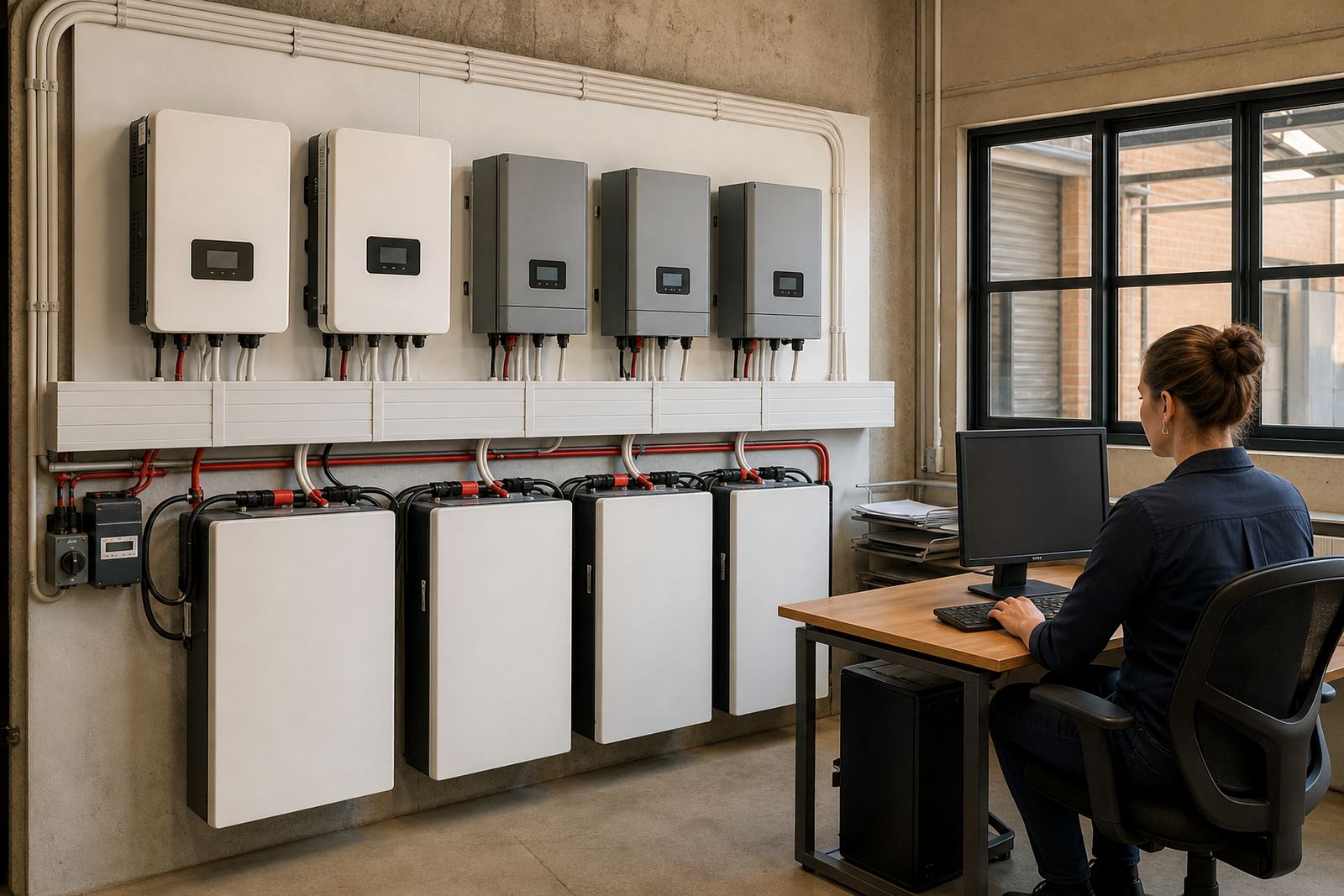
- Space planning: wall mounted equipment with clear access for service
Share what must stay on during an outage and the size of the property, and a backup planner will phone or message you.
Contact formWhat we installed and wired
The installation covered the core backup works needed to bring the system online properly. We handled the inverter installation, battery installation, essential circuit wiring and the changeover arrangement so the household could move from grid to backup supply cleanly during outages. The distribution board was reworked where needed so the chosen circuits were grouped in a way that made sense for backup use.
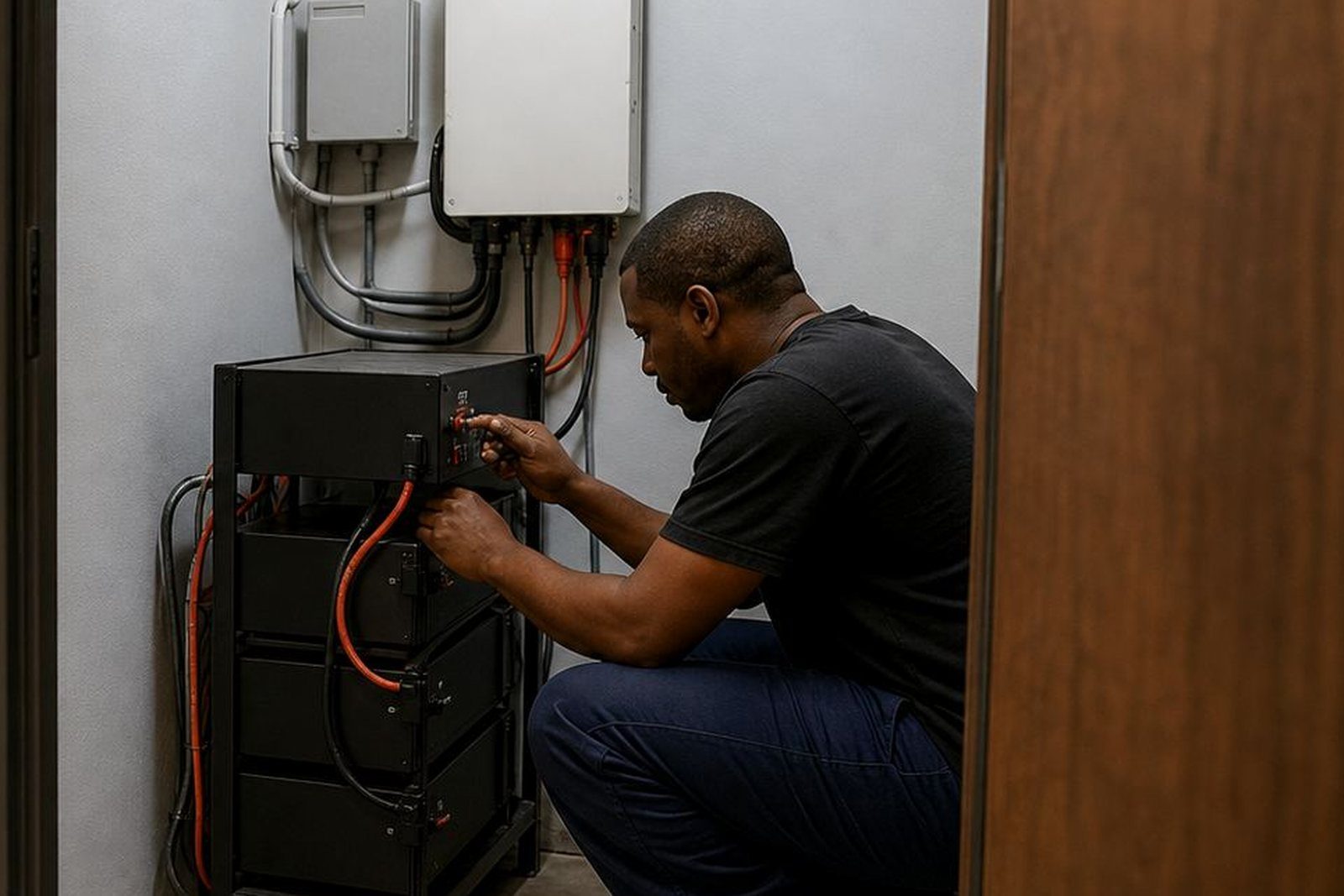
We also completed system commissioning and checked that the setup behaved correctly under load. Because the home was in an estate environment, the final appearance mattered as much as the technical side. Cables were clipped neatly, labels were added and the equipment was positioned so the wall space still looked orderly.
- Inverter installation and mounting
- Lithium battery installation and interconnection
- Essential circuit wiring to selected loads
- Changeover solution for automatic or managed transfer
- System commissioning and functional checks
Compliance and registration requirements
We made the compliance side clear from the beginning. Backup power installations must be done by a registered electrician, and the work needs a certificate of compliance when complete. That is not something to leave for later, especially in a home where the owner wants the installation to be accepted and properly documented. For grid-tied systems, municipal registration is also required, so we guided the client on what paperwork and sign-off would be needed if the system is later expanded or tied into the municipal supply rules.
This project did not need any shortcuts. The wiring had to be safe, the protection devices had to match the system, and the final handover had to leave the homeowner with a clear understanding of what is backed up and what is not. The result was a practical setup that fits the property and meets the normal requirements expected in Gauteng suburbs.
- Installed by a registered electrician
- Certificate of compliance required after completion
- Municipal registration needed for grid-tied arrangements
- Protection, labelling and changeover points checked at handover
Timeline from assessment to handover
From the first site visit to final handover, this Bryanston estate installation ran over two weeks. The first week was used for assessment, load review and final sizing. That gave enough time to confirm the circuit split and make sure the wall space could take the proposed equipment without crowding. The second week covered installation, testing and final commissioning.
There were no major site changes, but we still allowed time for practical checks such as cable routing, battery location and confirming that the changeover behaviour matched the homeowner’s expectations. In a busy Johannesburg home, it helps to finish properly the first time rather than coming back later to tidy up avoidable issues.
- Week 1: site assessment and backup sizing
- Week 2: installation, testing and commissioning
- Handover: labels, operating notes and compliance support
Outcome for the homeowner
The finished setup gave the homeowner reliable backup for the circuits that matter most during stage-based outages and unexpected interruptions. The inverter and lithium battery bank fit the available wall area neatly and the essential load split kept the system sensible, not overcomplicated. The homeowner now has a cleaner way to ride through load-shedding without dragging extension leads across the house.
What stood out on this job was the balance between runtime, appearance and compliance. The system is practical for daily use, easy to understand and arranged in a way that should make future servicing straightforward. If the homeowner wants to expand later, the groundwork is already there to add battery capacity or include additional circuits where the supply and rules allow it.
- Essential loads stayed online during outages
- The installation kept clear access for future servicing
- The layout left room for planned expansion
- The final result suited an estate home environment
What we would repeat on the next install
We would follow the same approach on another Bryanston estate home. Start with the load review, keep the circuit split disciplined and size the battery bank to actual use rather than guesswork. That approach gives a better result for most homes than trying to cover every appliance at once.
We would also keep the compliance process front and centre from day one. On suburban properties across Gauteng, especially in areas like Sandton, Fourways and Bryanston, good backup work is not just about keeping the lights on. It is about doing the job neatly, safely and in line with the rules so the owner can use the system with confidence.
System at a glance
| Project | Bryanston Estate Home |
|---|---|
| Location | Bryanston, Johannesburg |
| Client type | Private homeowner |
| System | Inverter with lithium battery backup |
| Scope | Site assessment, backup sizing, essential circuit wiring, installation, commissioning |
| Timeline | 2 weeks |