What the restaurant needed in Bedfordview
The client was a busy restaurant in Bedfordview, Johannesburg with a simple brief: keep the front of house running when the municipal supply dropped. The owners were not looking to back up the whole kitchen. They wanted the tills, card machines, Wi-Fi, selected lights and a few small admin loads to stay on so service could continue and staff could still process orders without delays.
That meant the system had to be sized carefully. Restaurants are sensitive to even short interruptions because a dark dining room, dead point-of-sale equipment or an offline network can slow everything down fast. The site also had limited wall space in the back area and the installation had to fit neatly around existing wiring, fridge circuits and customer access points.
The location brought its own pressure too. Bedfordview sees a fair amount of load-shedding, and the restaurant needed backup that would switch over cleanly and recover without upsetting the business. The goal was not just to power a few sockets, but to create a setup that was dependable, tidy and easy to manage day to day.
Backup sizing and equipment selection
We started with a load review for the essential circuits. The biggest consideration was not total building demand, but what had to remain live during an outage. Tills, routers, a switch, a few LED light circuits and a small amount of support equipment gave us a clear target for inverter capacity and battery runtime.
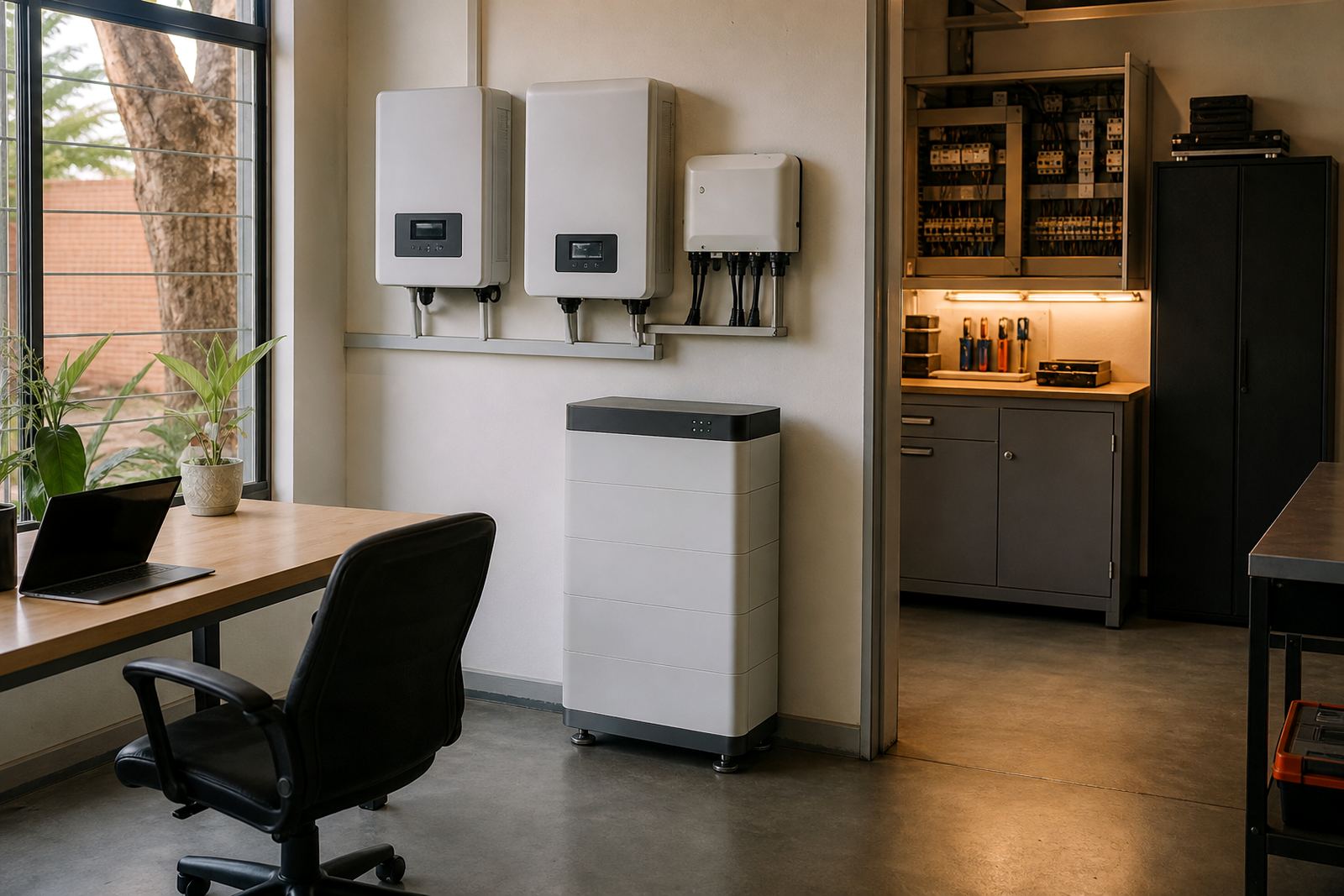
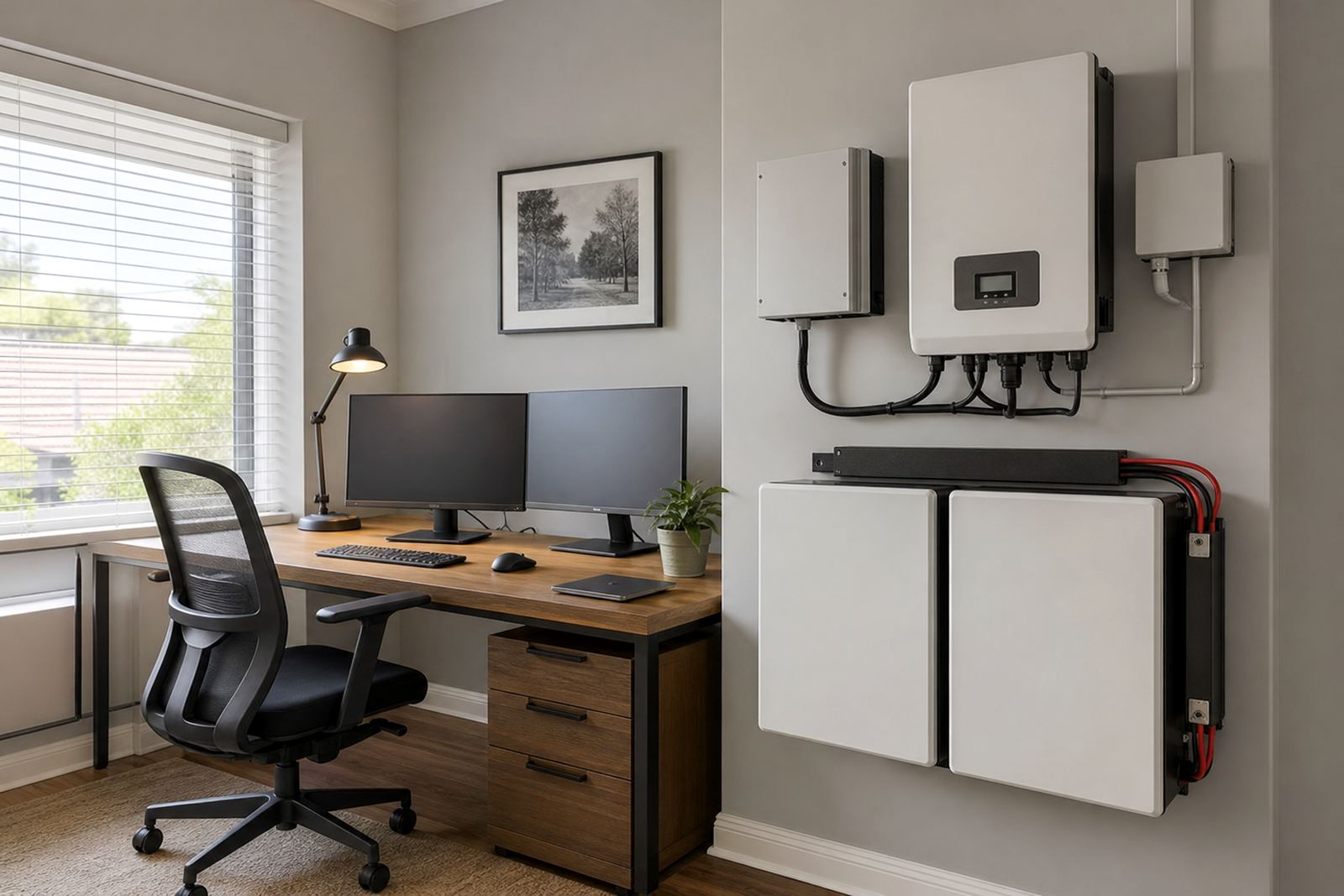
The final arrangement used a hybrid style inverter system paired with lithium batteries, chosen for fast switchover, good cycle life and stable output for sensitive electronics. Lithium batteries suit restaurant use well because they charge efficiently and handle repeated outages better than older battery types in most daily backup applications. We also allowed for future battery expansion so the client could add more runtime later if trading patterns changed.
Key decisions included:
- Backing up essential front-of-house circuits only, not the full premises
- Using an inverter sized for the combined live load with headroom for start-up surges
- Choosing lithium batteries to support regular load-shedding cycles
- Separating non-essential loads so the backup system was not overloaded
- Allowing for clean cable routing and safe maintenance access
Share what must stay on during an outage and the size of the property, and a backup planner will phone or message you.
Contact formInstallation, wiring and changeover work
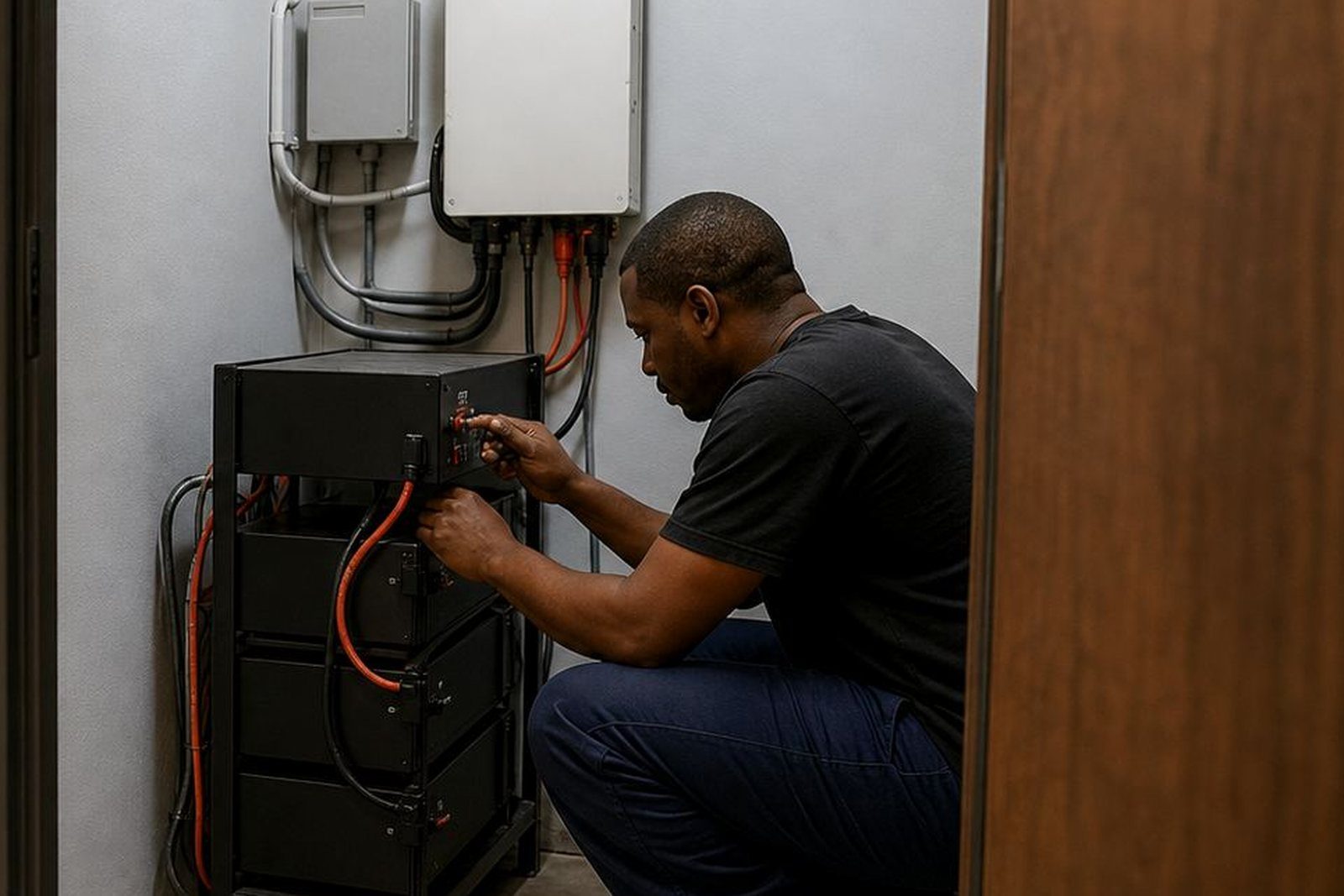
The installation was completed over two working weeks, including site checks, materials planning, wiring changes and commissioning. The restaurant could not afford a long shutdown, so we scheduled the work around quieter trading periods and kept the interruption to a minimum. Some of the existing wiring needed careful rework to isolate essential circuits properly, and we added a changeover solution so the backup supply would take over in a controlled way during outages.
We installed the inverter and batteries in a secure back-of-house position with enough ventilation and access for servicing. Cable runs were kept neat and labelled for future fault finding. Because the site had a mix of lighting and network equipment, we paid close attention to earthing, protection devices and the separation of sensitive electronic loads from heavier circuits. A few small adjustments were needed on the day once the load readings were confirmed, but the final arrangement came together well.
The system was commissioned with practical use in mind. We tested transfer behaviour, confirmed that the key front-of-house loads stayed up and checked that the battery charge path was working correctly. The restaurant team was shown how the system behaved during outages and what to look for if they ever needed to report a fault.
Compliance, municipal rules and who must install it
For any inverter and battery backup system in South Africa, the electrical work must be done by a registered electrician. That is not optional. The installation also needs a certificate of compliance, and where a system is tied into the grid or can export in any form, municipal registration is required as well. We kept the Bedfordview project aligned with those requirements from the start so the client would not have problems later.
In a restaurant environment this matters even more because the backup system is not sitting in isolation. It interacts with fixed wiring, lighting, network equipment and customer-facing operations. Poorly done changeover work can create nuisance trips, unsafe circuits or hidden faults that only show up when the power fails. We treated the job as a proper electrical project, not just an equipment swap.
We also made sure the final documentation matched the installation layout. That makes servicing easier and helps when a landlord, managing agent or municipal inspector asks for records. It saves time later, which matters when the business is already dealing with daily trading pressures.
- Registered electrician required for installation
- Certificate of compliance needed after the work is completed
- Municipal registration needed for grid-tied arrangements
- Essential circuits must be identified and labelled properly
What changed after commissioning
Once the system was live, the restaurant had a much steadier front-of-house experience during outages. The tills stayed available, the lights stayed on in the customer area and the internet link remained up for card payments and order handling. Staff did not need to scramble for flashlights or stop taking orders while the power moved on and off.
There was also a practical improvement in how the team managed load-shedding. Instead of reacting each time the supply dropped, they had a clear backup process. The owner could see battery status, understand when the system was charging and know which loads were protected. That reduced confusion during busy service periods and made the backup easier to live with.
The setup was not oversized, and that was part of the point. It was matched to the actual front-of-house need, which kept the installation sensible and the battery bank from doing more work than necessary. For a restaurant, that balance is often better than trying to carry every single circuit through an outage.
Kept for the next backup install
If we were handling another Bedfordview restaurant tomorrow, we would follow the same approach: start with the essential loads, separate the circuits properly and keep the installation easy to maintain. Restaurants often grow over time, so planning for battery expansion and neat access to the equipment is worth doing from day one.
We would also keep the client involved in the practical side of the handover. When owners and managers understand what the inverter does, what the batteries support and how the changeover behaves, they are more confident when load-shedding happens. That makes the system more useful in day-to-day trading, not just on paper.
For sites across Gauteng, from Bedfordview and Sandton to Randburg, Midrand, Pretoria, Centurion and Roodepoort, this kind of backup work is usually about continuity more than anything else. It is about keeping the lights on, the network alive and the till working so the business can carry on with less hassle.
- Size the backup to the real essential load, not the whole building
- Allow for future battery expansion where trading patterns may change
- Keep the electrical layout neat for servicing and fault checks
- Test the handover with the team before the site goes back into normal use
System at a glance
| Project type | Front-of-house backup for a restaurant |
|---|---|
| Town | Bedfordview, Johannesburg |
| Protected loads | Tills, lighting, internet and selected admin circuits |
| Core equipment | Inverter with lithium battery storage |
| Timeline | 2 weeks from site review to commissioning |
| Compliance | Registered electrician work with certificate of compliance and municipal registration where required |