
A salon in Northcliff that could not afford dark corners
The client was a busy salon in Northcliff, Johannesburg, with a steady flow of appointments through the day and into the late afternoon when load-shedding can hit hardest. The brief was simple but specific: keep the front of house working, keep the treatment areas bright enough for safe service, and make sure card machines, Wi-Fi and reception systems stayed live when the grid went down.
The owners did not want every single appliance backed up. They wanted the parts that matter most in a salon, especially during a two hour outage or an unplanned dip in supply. That meant careful backup sizing, sensible circuit selection and equipment that would fit the available wall space without turning the back room into a tangle of cables.
We also had to work around a normal retail environment. The salon could not close for long, and access around mirrors, storage and styling stations was tight. Noise, dust and downtime had to be kept to a minimum, so the install needed to be planned properly from the start.
What we had to work around in a live business
This kind of project needs more than just a battery and an inverter. Salons often have mixed loads, some of them simple and some of them sensitive. Lights need to stay steady, music must not cut out mid-client, and payment terminals cannot keep rebooting every time the power flickers. In this case, the building also had limited spare space for new equipment and a compact distribution board that had to be mapped out carefully.
There were also practical limits around the building itself. The premises are in an area where municipal supply can be uneven during high demand periods, and the owners wanted a backup system that would recover cleanly after an outage. Because the site is in a commercial setting, the work also needed to be done by a registered electrician and supported with a certificate of compliance. For any grid-tied arrangement, municipal registration is required as well, which is something business owners often overlook until the end.
- Essential circuits only, not the whole salon
- Low-noise operation for front-of-house comfort
- Battery placement suitable for a small service area
- Clean switchover for lights, router and card payment equipment
Share what must stay on during an outage and the size of the property, and a backup planner will phone or message you.
Contact formThe equipment and circuit plan we supplied
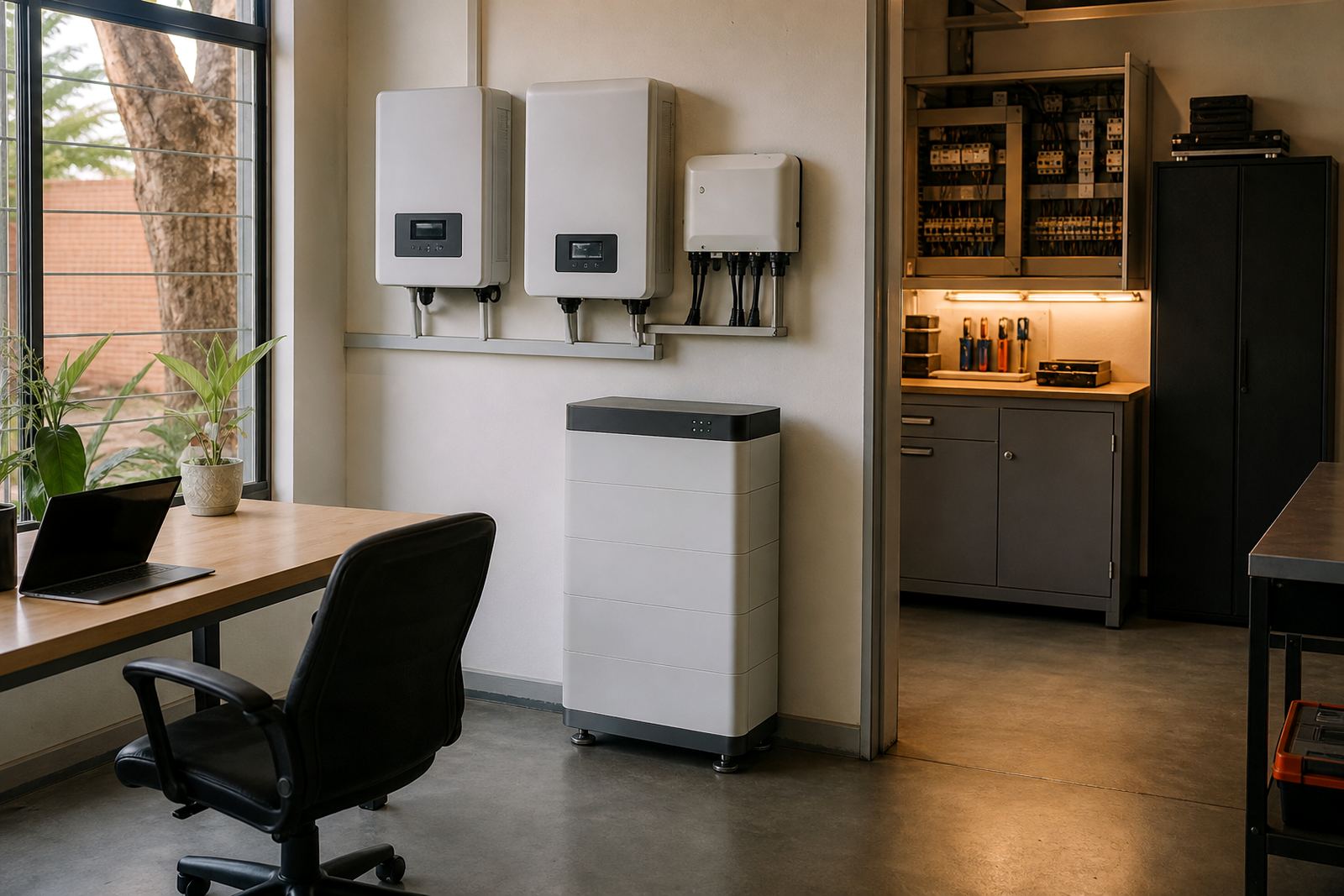
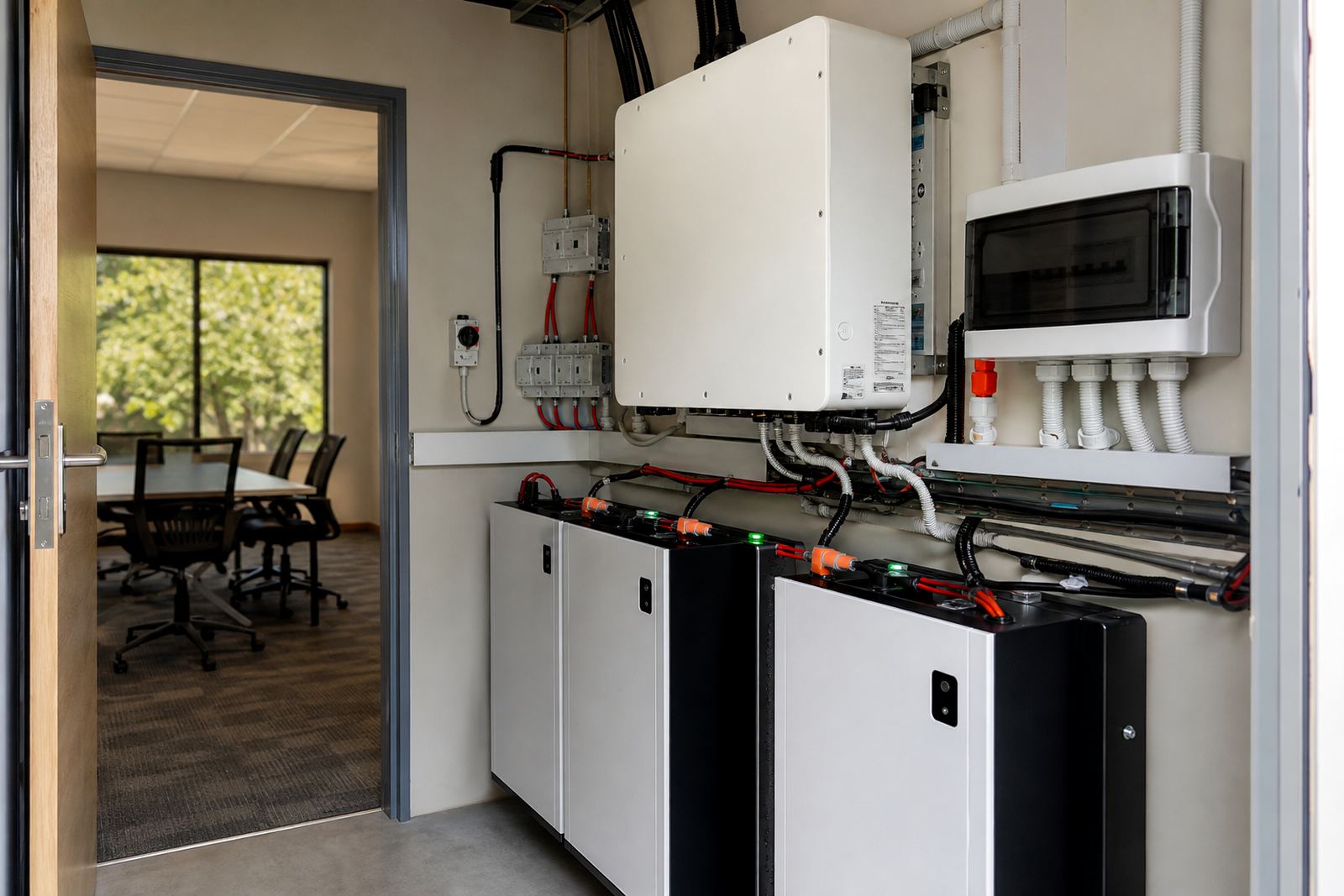
We supplied an inverter-based backup setup paired with lithium batteries sized for the salon’s essential load. The inverter was selected for stable output and efficient battery use, while the battery bank was sized to support the agreed circuits for a practical outage window. The final design focused on lighting, the reception point, internet equipment and card payment systems, with enough headroom for the music system and a small number of support devices.
The essential circuit wiring was separated from the rest of the premises so the backup system would not be overloaded by hair dryers, washing equipment or other high-draw appliances. That is usually the right call in a salon. Backup is there to keep trading going, not to force the system to carry every load at once. We also added changeover solutions so the transition between grid power and backup power would be automatic and predictable.
- Inverter system for essential load support
- Lithium battery bank for frequent cycling and dependable discharge
- Essential circuit wiring to isolate critical loads
- Changeover arrangement for automatic transfer
- Monitoring setup so the team could see battery status at a glance
How this Northcliff salon installation was phased over two weeks
The project ran over two weeks from assessment to commissioning. In week one we completed the site assessment, checked the existing electrical layout and confirmed which circuits had to stay on during load-shedding. That stage included looking at the board, noting cable routes and checking that the proposed equipment location would stay dry, ventilated and out of the way of daily salon traffic.
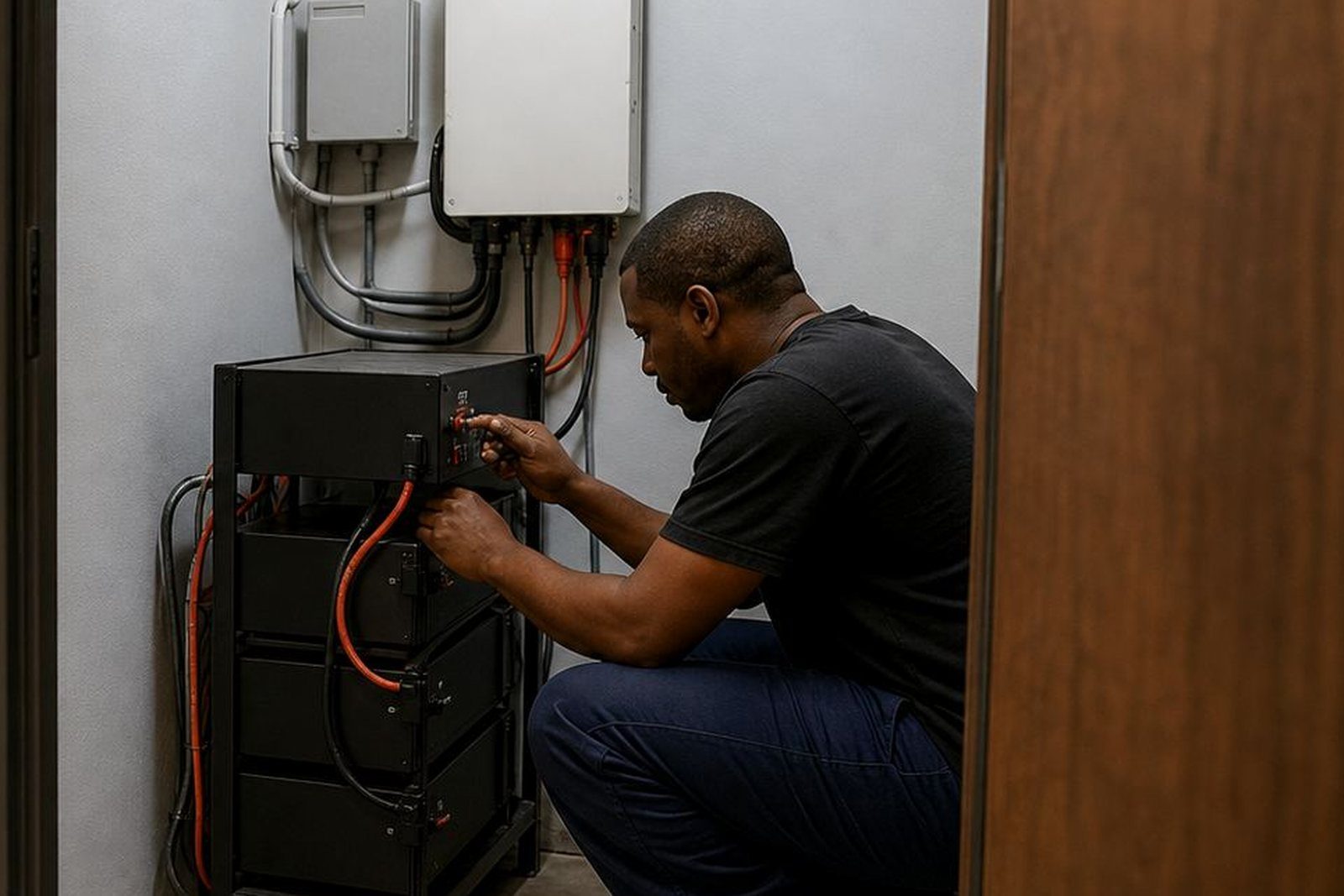
In week two the electrician completed the physical installation, the essential circuits were separated, and the inverter and batteries were mounted and commissioned. We then tested the switchover, checked charging behaviour and confirmed that the reception point, lights and network equipment stayed online without nuisance tripping. It was a fairly tidy job overall, though one cable route needed a small adjustment to keep the path clear behind a storage unit.
The handover included basic operating guidance for the owners and reception staff, plus a simple service plan so they knew what to monitor over time. Lithium battery systems do not need the same attention as older battery types, but they still need correct settings, clean ventilation and periodic checks. A little maintenance goes a long way.
What changed once the backup was in place
Once the system was commissioned, the biggest change was the way the salon could keep working through outages without stopping the appointment flow. Clients could still arrive at reception, pay by card and sit under proper lighting while staff continued with the day’s schedule. The music stayed on, the front area remained welcoming, and the team no longer had to rush through rebooking during every power cut.
Just as important, the staff were able to plan around load-shedding instead of reacting to it. That matters in a service business where timing is everything and one dark hour can affect the rest of the day. The owners also had a clearer path for future expansion, because the backup design left room for an additional battery module if their needs increase later on.
- Reception stayed active during outages
- Card payment terminals remained usable
- Lighting stayed bright enough for client comfort
- Music and internet equipment kept running
- Staff had a simple operating routine for outages
What we would do again for another Northcliff salon
If we were doing the same type of job again, we would take the same approach: back up only the essentials, size the system around real daily loads, and keep the installation neat and serviceable. Salons in Northcliff, Randburg and across Johannesburg often work in compact spaces with mixed electrical demands, so a tailored backup plan usually makes more sense than trying to cover everything at once.
We would also repeat the same compliance steps without compromise. A registered electrician must handle the installation, a certificate of compliance is required, and any grid-tied system must be registered with the municipality. That protects the business, the building and the people working inside it. It also makes servicing simpler later on, especially when a client wants to add capacity or check a fault.
For salons, the best backup systems are the ones that quietly do the job. No drama, no guessing, just power where it is needed most when the grid goes off again.
System at a glance
| Project type | Salon backup power for lights, music, card payments and reception systems |
|---|---|
| Area | Northcliff, Johannesburg |
| System type | Inverter with lithium battery backup |
| Coverage | Essential circuits only, including lighting, internet and payment equipment |
| Timeline | 2 weeks from assessment to commissioning |
| Compliance | Registered electrician, certificate of compliance, municipal registration for grid-tied systems |