Retail brief for a busy Roodepoort shop
The client was a small retail shop in Roodepoort trading in a mixed-use centre with limited spare space in the back area. They needed backup for the parts of the store that matter most during outages, namely the point of sale terminals, receipt printer, card machine, selected lights and one small communications point for data and router equipment.
The main concern was not running the whole shop, but keeping trading possible when the municipality or the local network went down. The store also wanted a solution that would fit neatly into a corner of the back office space, with clear labelling and simple operation for staff on a busy floor.
What we checked before sizing the system
We started with a site assessment and load review, then mapped which circuits were essential and which could stay off during an outage. Retail loads can be tricky because they are small individually, but if you include tills, routers, lights and security extras the total grows quickly. We sized the system around realistic business use rather than full premises backup.
- Checked the existing distribution board and spare capacity
- Separated essential circuits from non-essential loads
- Reviewed outage duration expectations for load-shedding stages
- Looked at cable routes, wall space and battery ventilation
- Confirmed the changeover method suited staff use during trading hours
This kind of planning matters in Gauteng where outages can be short and repeated, and where a shop needs recovery time to be fast not fiddly.
Share what must stay on during an outage and the size of the property, and a backup planner will phone or message you.
Contact formEquipment supplied and how it was arranged
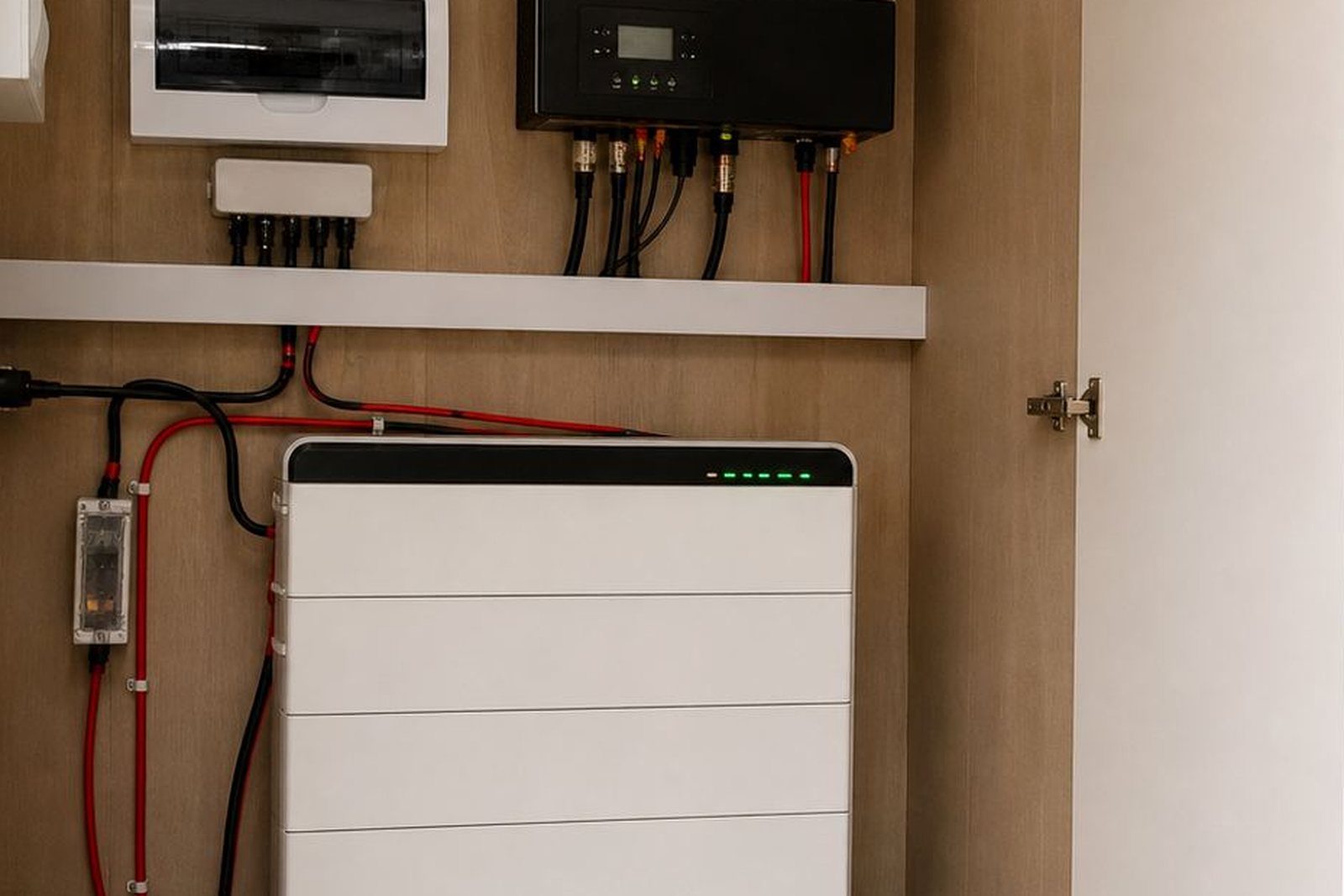
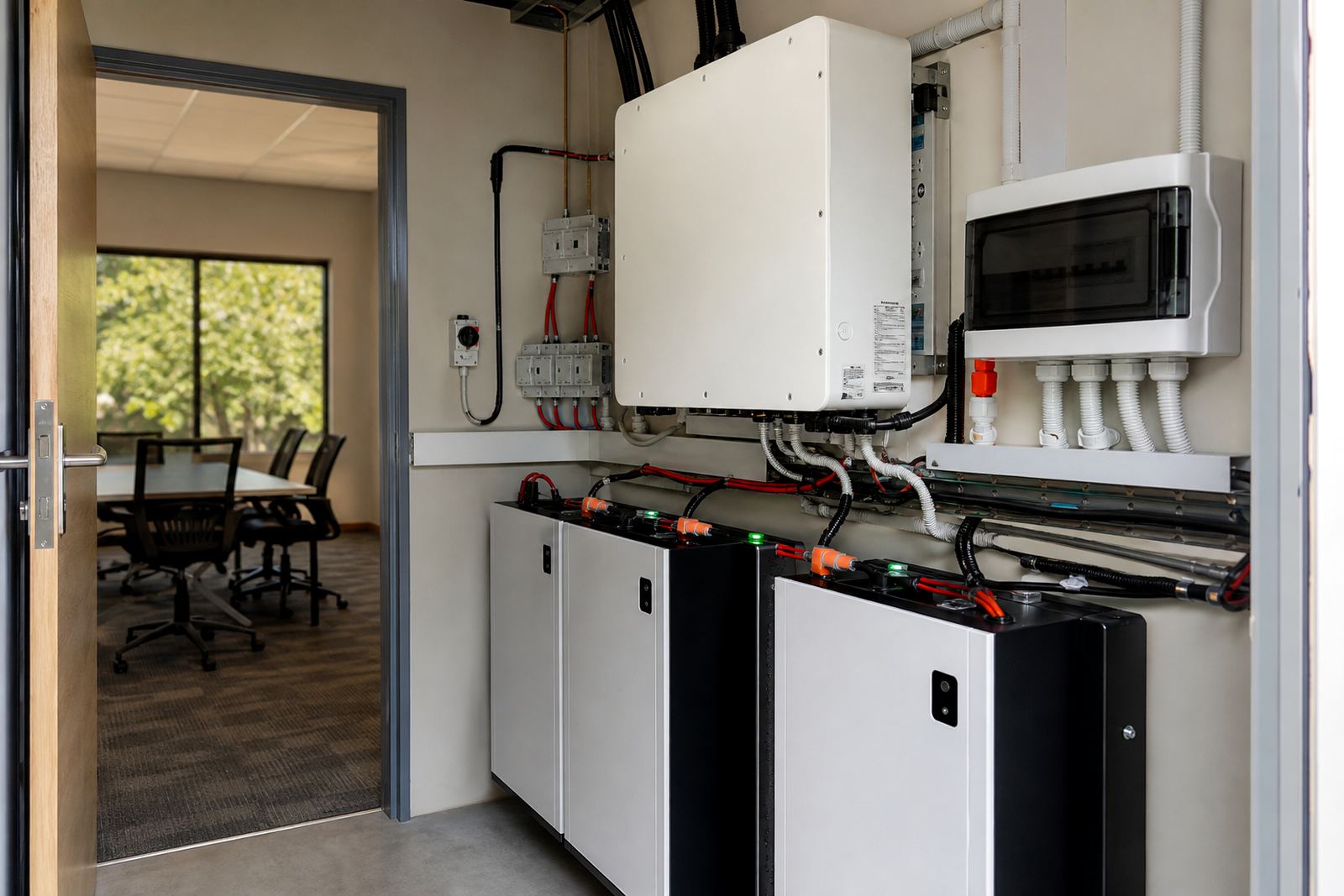
We supplied a compact inverter with lithium battery backup sized for essential retail circuits, together with the necessary protections, isolators and changeover components. The battery bank was selected for high cycle use and faster recharge, which suits a store that may experience frequent load-shedding through the week.
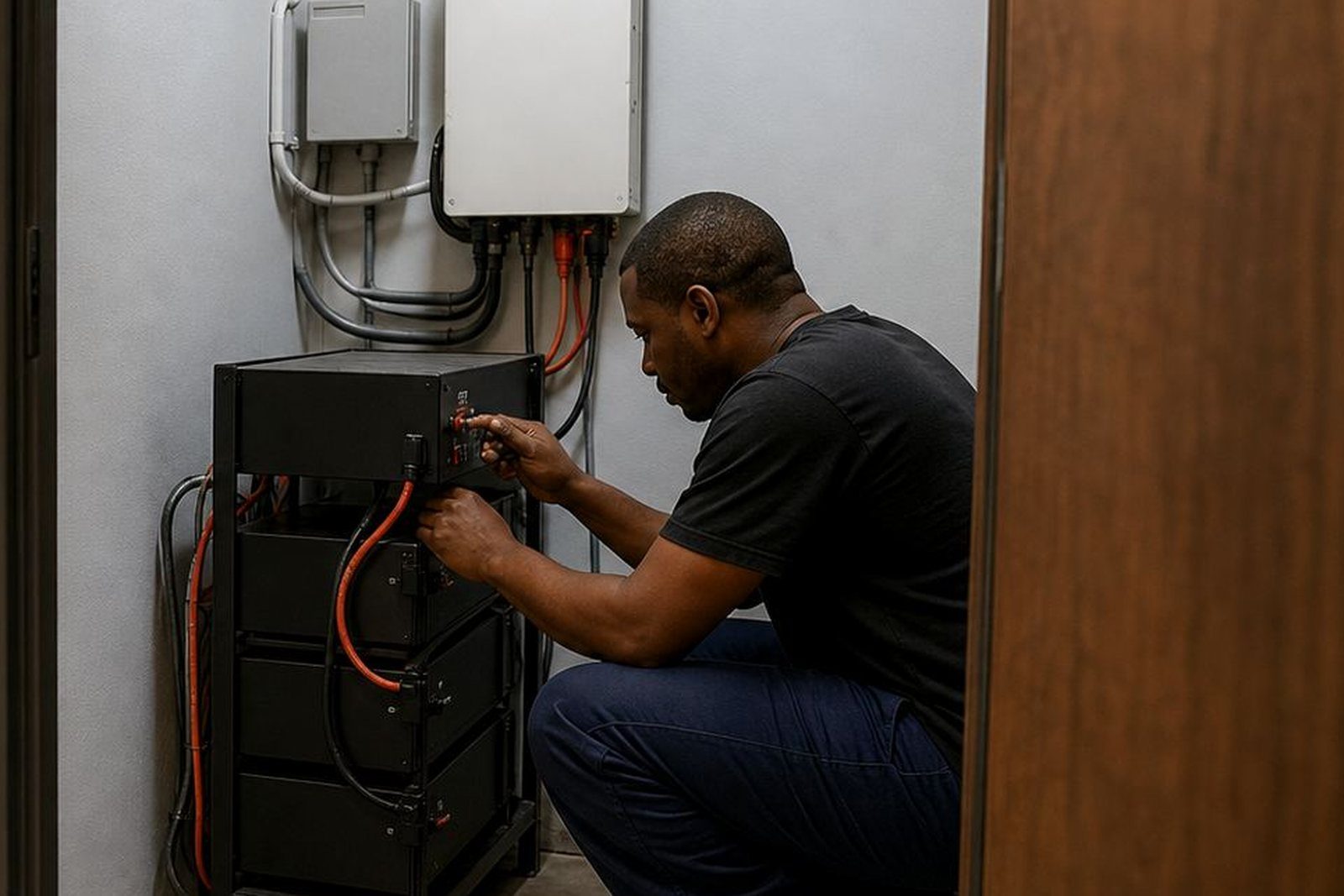
The installation included essential circuit wiring for the tills and payment point, selected lighting, router power and the other small loads required for daily trading. The inverter and batteries were mounted for tidy access and airflow, with labels added so the team could see what was backed up and what was not. The setup was commissioned after testing on both normal supply and outage conditions.
- Inverter for essential single phase backup
- Lithium battery bank for repeat cycling
- Changeover arrangement for quick switchover
- Dedicated protection and isolation points
- Labelling for staff clarity
Compliance, registration and handover
All fixed electrical work must be handled by a registered electrician and the installation must be covered by a certificate of compliance. For grid-tied systems, municipal registration is also required, and we flagged that from the start so the owner understood the process before sign-off.
We worked with the electrical side of the job in a way that kept the paperwork and practical steps aligned. The final handover included a walkthrough of the backup operation, what to switch during an outage, and how to spot warning lights or fault indications. No one wants a retail team guessing during a power cut, especially when customers are waiting at the till.
- Registered electrician required for installation
- Certificate of compliance needed after completion
- Municipal registration needed for grid-tied systems
- Handover included operating steps for staff
Timeline from assessment to commissioning
There was some practical coordination around stock movement, access to the back area and making sure the installation did not block daily operations. The shop team needed the work done neatly and on time, and that was exactly how it went. By the end the backup system was ready without interrupting the front-of-house routine for long.
Results for tills, lights and payment connectivity
Once commissioned, the store had backup power for the circuits that mattered most in a short outage. That meant tills could stay live, card payments could continue and the counter area remained usable. The lighting circuit supported a safe shopping environment and the router circuit helped keep payment connectivity up during outages.
The owner wanted peace of mind more than anything else, and the final setup delivered that in a practical way. It was not oversized, not overcomplicated, and it matched the shop’s real daily use. In a retail setting, that sort of planning can make the difference between staying open and losing a trading window.
What we would repeat on another Roodepoort retail job
If we did this exact type of job again, we would keep the same approach: assess the essential loads first, size to actual trading needs, and keep the installation simple for staff. Retail backup works best when it is easy to understand and easy to maintain, not when it becomes a complicated add-on that nobody wants to touch.
For shops in Roodepoort, Sandton or Fourways, we would again focus on the circuit list, the site layout and the likely outage pattern. We would also leave room for future battery expansion if the business later needs longer run time. That way the system can grow with the store instead of being replaced too early.
- Keep the essential loads tightly defined
- Use clear labels and simple controls
- Plan for future battery expansion where possible
- Schedule work to reduce trading disruption
System at a glance
| Project type | Retail shop backup installation |
|---|---|
| Town | Roodepoort, Johannesburg |
| Backup focus | Tills, lights, card payments and router power |
| System type | Inverter with lithium battery backup |
| Timeline | 3 weeks from site assessment to commissioning |
| Compliance | Registered electrician, certificate of compliance and municipal registration for grid-tied systems |