What the warehouse needed in Kempton Park
The client was a warehouse operation in Kempton Park with a small admin section, connectivity equipment, gate and access control, and security cameras that all had to stay on when the utility supply dropped. The brief was simple enough on paper but quite specific in practice: keep the critical circuits running, avoid unnecessary spend on full-building backup, and make sure the system could handle regular load-shedding without constant manual intervention.
Like many industrial and mixed-use sites around Ekurhuleni, the building had a practical layout rather than a neat new install plan. The incoming supply, distribution board and cable routes were already in place, so the solution had to work around existing wiring and keep disruption low. We also had to consider that warehouse floors collect dust, and the office area needed a tidy installation that staff could live with day to day.
Sizing the backup for office and security loads
We started with a site assessment and backup sizing exercise. The first step was to separate essential circuits from non-essential loads so the inverter was not carrying fridges, heaters or other high draw items that did not need backup. That allowed us to focus on office plugs, lights, routers, switches, CCTV, alarm equipment and the gate system.
For this kind of project, sizing is about usage pattern not just the label on the equipment. We look at the actual running load, the starting surge where relevant, and how long the client wants backup for each outage window. In a warehouse support setting, the network and security side often matter more than the lights, because if those fail the business loses communication and oversight even when the site itself is still open.
- Essential circuits separated from non-essential warehouse loads
- Office power, networking and security equipment prioritised
- Backup duration planned around repeated load-shedding slots
- Future battery expansion allowed for later if the site grows
Share what must stay on during an outage and the size of the property, and a backup planner will phone or message you.
Contact formEquipment we supplied and how it was arranged
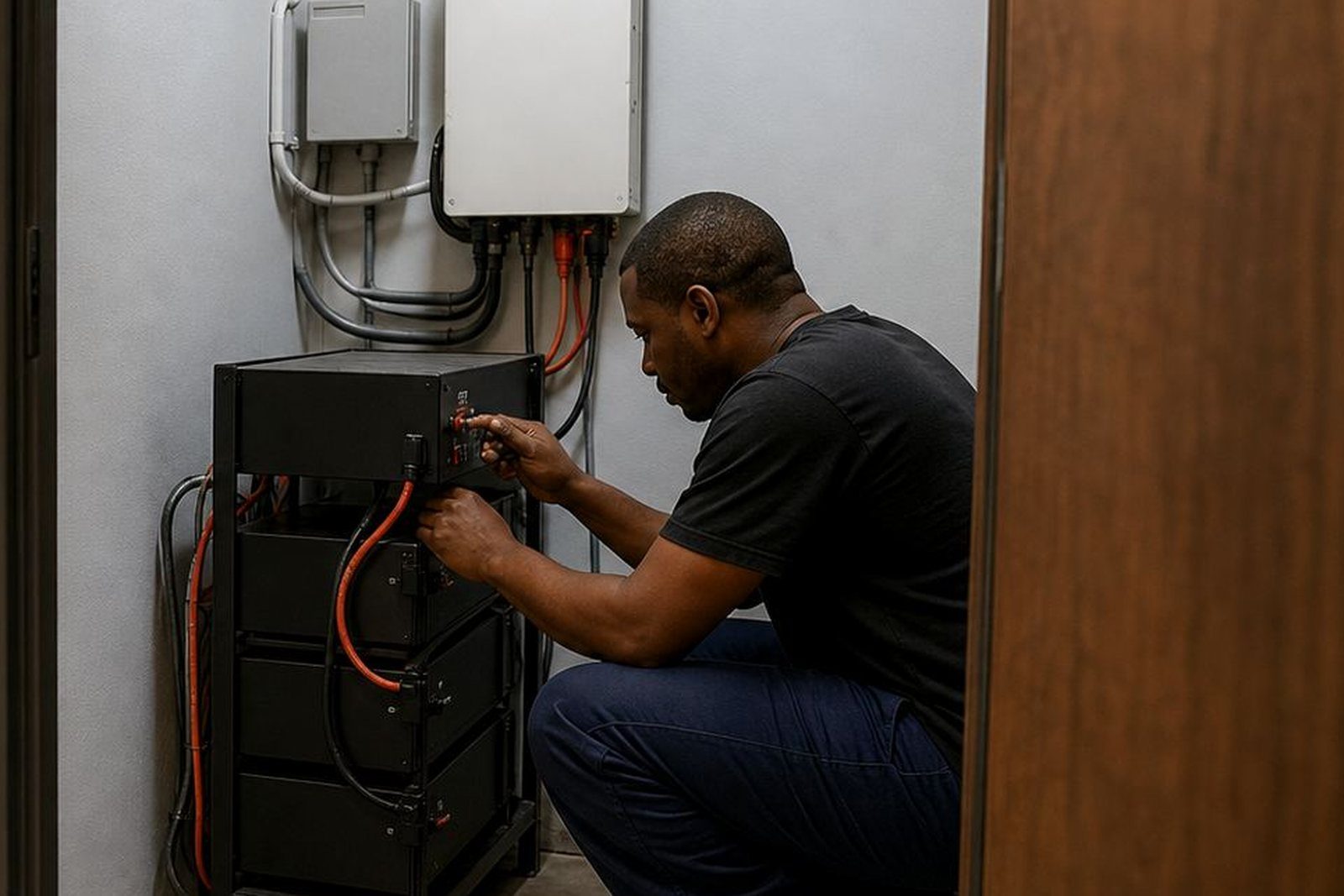
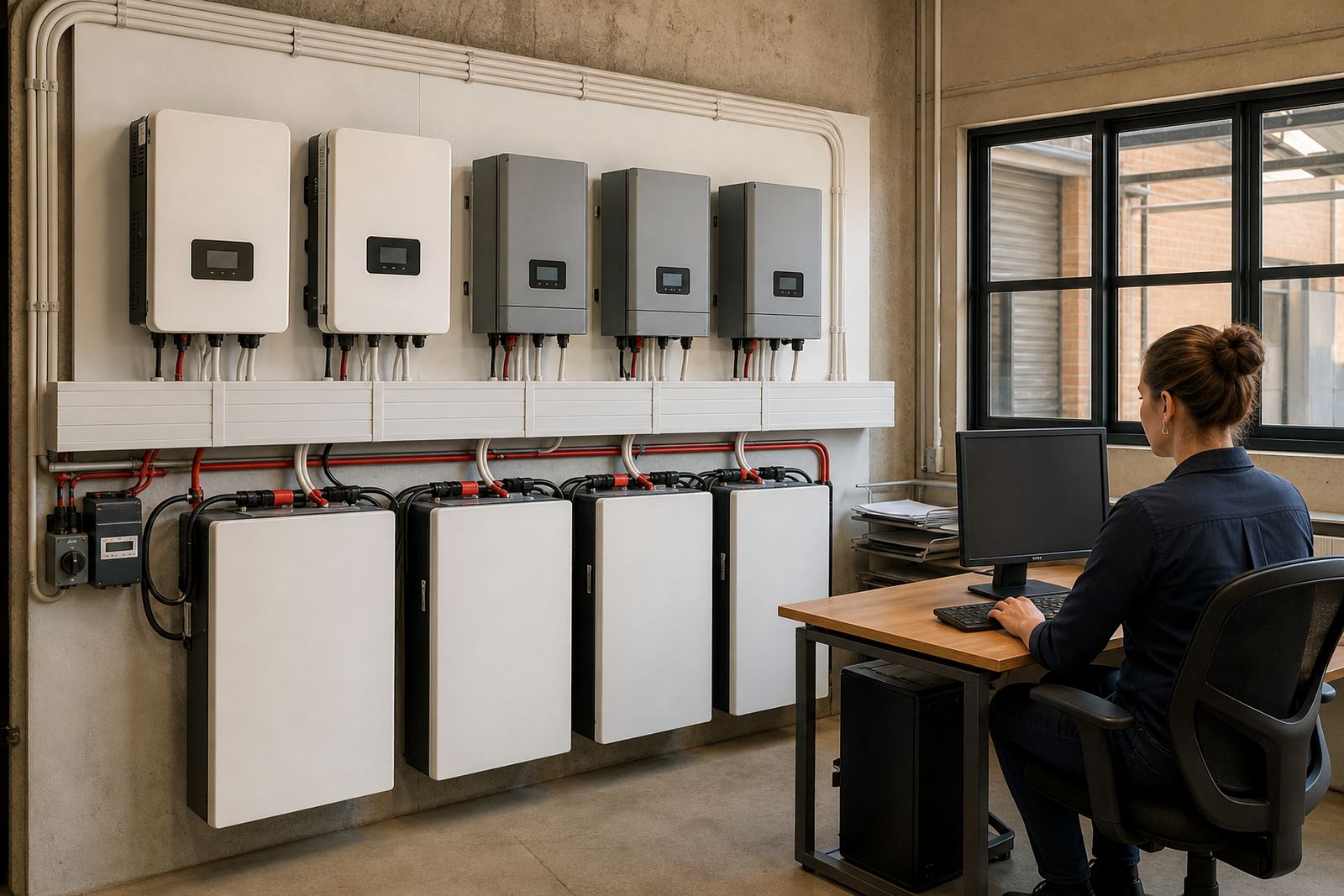
We supplied a hybrid inverter with lithium battery storage, set up to support the defined essential circuits through a dedicated changeover arrangement. Lithium batteries were the better fit for this site because they handle daily cycling well and suit businesses that may face more than one outage in a day. They also take less floor space than older battery types, which matters when the installation area is already tight.
The installation included essential circuit wiring, battery mounting, inverter placement, protection devices and system commissioning. The battery bank was sized to cover the agreed office and security load, with enough headroom to avoid running the system flat during every outage. We also configured the monitoring setup so the client could see battery status and system behaviour more clearly during normal use.
- Hybrid inverter for essential load backup
- Lithium battery bank sized for office and security circuits
- Dedicated changeover and protection components
- Monitoring setup for battery and inverter status
Installation constraints and compliance support
One of the main constraints was keeping the warehouse operational while the work was done. We planned the installation in stages so the office side could be isolated, wired and tested without affecting the full site for longer than needed. The other important point was compliance. Installations of this nature must be done by a registered electrician, and the finished work needs a certificate of compliance. Where the system is grid-tied, municipal registration is also required.
For a site in Kempton Park, that means thinking about both the electrical layout and the paperwork from the start. We supported the process with the correct installation detail and practical handover notes so the owner and maintenance team could understand what had been changed. It is better to sort those matters properly at the beginning than have a messy handover later, especially when a business depends on cameras, access control and connectivity.
Timeline from assessment to handover
The commissioning stage was important. We tested the transfer response, battery operation, charging behaviour and the essential loads under outage conditions. We also checked that the security and connectivity items came back on correctly after transfer. It is never enough to say the system is installed if the handover testing has not been done properly and the client has not seen how it behaves in real conditions.
- Week 1: site assessment and load review
- Week 2: equipment prep and installation planning
- Week 3: installation, testing and handover
- Final checks completed under simulated outage conditions
What changed for the warehouse team
Once the system was in place, the warehouse team had a cleaner way to ride through load-shedding without losing office continuity. The admin area remained usable, the network stayed online for communication and records, and the security systems were supported through the outages that matter most after hours. The changeover became straightforward for staff and the site no longer depended on ad hoc workarounds when power failed.
That kind of result is what we aim for on commercial backup jobs across Gauteng. Not every business needs a large system, but every site needs one that is properly sized, well wired and easy to live with. In this case, the client got a practical backup arrangement that matched the real operating needs of a Kempton Park warehouse instead of an oversized package that would sit underused.
For another warehouse backup installation in Kempton Park, we would keep this same approach: assess the essential circuits first, choose lithium battery capacity based on actual use, allow space for future expansion, and make compliance part of the plan from day one. That keeps the installation neat, serviceable and ready for regular use.
System at a glance
| Project type | Warehouse backup power installation |
|---|---|
| Town | Kempton Park |
| Application | Office circuits, connectivity and security equipment |
| Core equipment | Hybrid inverter and lithium battery storage |
| Scope | Essential circuit wiring, changeover, commissioning and monitoring setup |
| Timeline | 3 weeks |