Office brief and site conditions in Midrand
The client was an office tenant in Midrand with a practical brief: keep core workstations online, maintain WiFi, and protect one meeting room so calls and internal meetings could continue during outages. The space had a mix of benchtop stations, a network cabinet, printer points and a small kitchenette load, so the backup had to be set around what mattered most rather than trying to power the whole tenancy.
Access was limited to normal business hours and the landlord had rules for neat cable routing and no unnecessary wall chasing. Midrand offices also tend to feel the heat in summer, so ventilation around the inverter and batteries needed attention. We treated the installation as a business continuity job, not just a battery swap, and that shaped every decision on sizing, placement and changeover.
Backup sizing for workstations, WiFi and calls
We started with a load assessment that focused on the essentials only. The office needed a few hours of usable backup for selected plug points, router and switch gear, plus a meeting room screen and a charging point or two. Rather than oversizing, we matched the inverter and lithium battery bank to the actual running load and the likely battery draw during repeated load-shedding events.
For an office of this type, the key is to separate must-run circuits from general socket loads. That keeps the system efficient and reduces nuisance trips. The final design used essential circuit wiring, a changeover arrangement and battery capacity that could handle regular cycling without pushing the system too hard.
- Core load focus: workstations, WiFi, network cabinet and one meeting room circuit
- Backup method: inverter with lithium battery storage and essential circuit separation
- Installation goal: keep day to day office activity moving during scheduled outages
Share what must stay on during an outage and the size of the property, and a backup planner will phone or message you.
Contact formWhat we supplied and installed for backup power
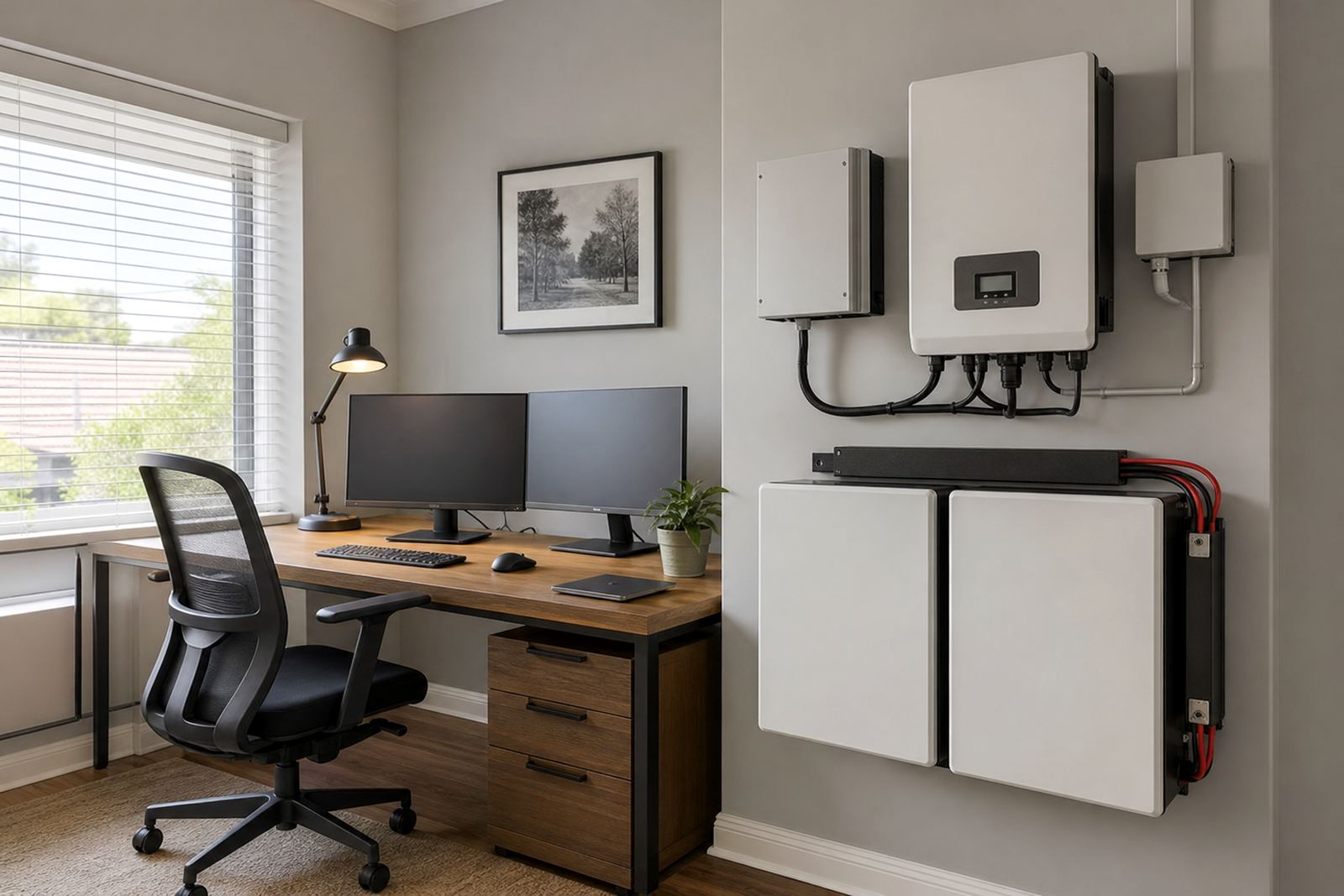
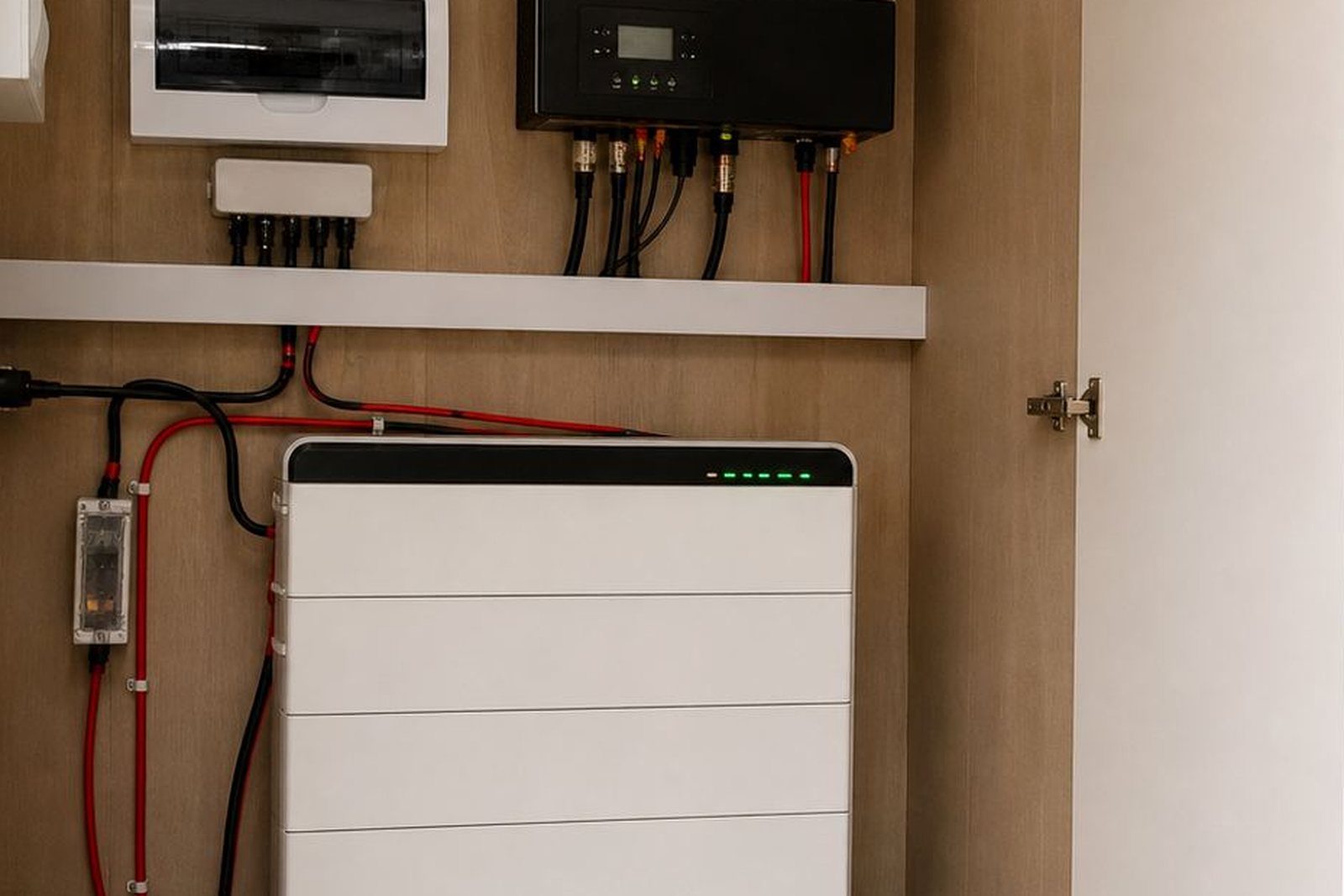
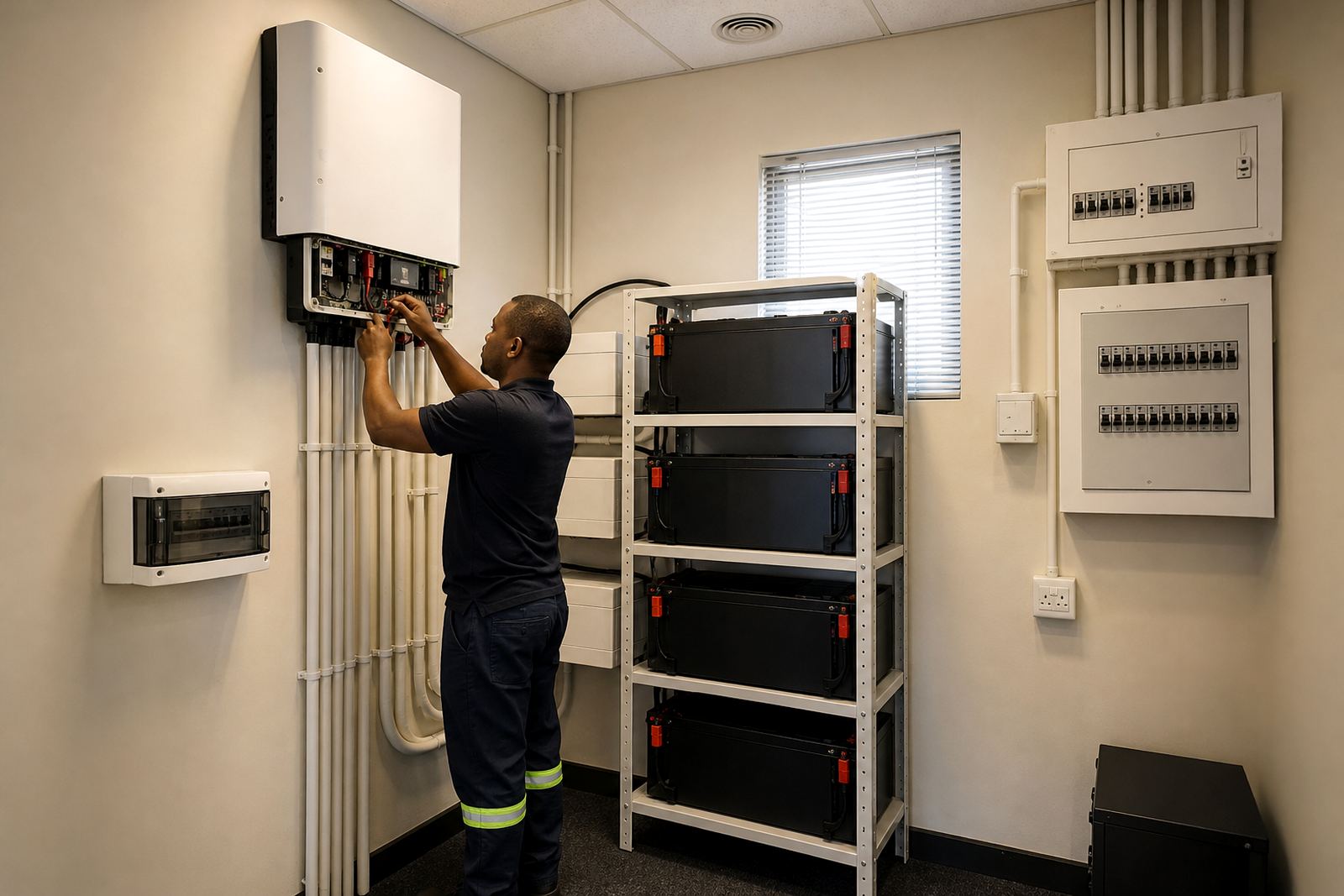
We supplied a compact inverter setup with lithium battery storage, essential circuit wiring and the changeover components needed for safe transfer between grid supply and backup supply. The inverter was mounted in a position that allowed airflow and easy access for future checks. Battery placement was planned to suit the office layout and to keep the install away from direct counter traffic, although there was no shortage of foot traffic near the server cupboard.
The work included inverter installation, battery installation, monitoring setup and system commissioning. We also set out the changeover so that the office team would not have to guess which circuits were on backup. The result was a clean, practical installation that fit into the suite without making the space feel crowded.
- Inverter installation for essential office loads
- Lithium battery installation for repeated discharge cycles
- Monitoring setup for basic performance checks
- System commissioning and handover guidance for staff
Installation timeline and coordination
Because the premises were occupied, coordination mattered as much as the hardware. We planned around meetings, arranged access to the electrical board and worked in a way that kept disruption low. The project was finished on schedule, with the team able to resume normal work almost immediately after commissioning.
Results for the office team
The office gained stable backup for the functions that mattered most. Staff could keep working at selected counters, stay connected to message and cloud tools, and use the meeting room without losing momentum every time loadshedding came around. That made a noticeable difference to daily planning, especially for client calls and internal handovers.
There was also a compliance benefit. The site was left with a documented installation path that could be maintained properly, rather than a temporary patchwork solution. For businesses in Midrand, that matters because a backup system should be easy to service and simple to explain if the landlord, insurer or electrical contractor asks questions later.
What we would keep for the next backup system
For another office suite like this, we would again start with essential loads only and avoid trying to power everything on one system. That keeps cost, battery strain and callouts under control. We would also keep the inverter and batteries close to the protected circuits, which helps with neat cable runs and easier fault checks.
Any inverter and lithium battery installation must be done by a registered electrician, with a certificate of compliance issued after the work is complete. If the system is grid-tied, municipal registration is also required. On office projects in Gauteng, especially where tenants change often, that paperwork is just as important as the hardware and it should be handled from the start.
- Best practice: size for essential office loads, not every appliance in the suite
- Keep future servicing in mind, including battery expansion and routine checks
- Use proper compliance steps from the outset to avoid problems later
System at a glance
| Project type | Office suite backup for workstations, WiFi and meeting room continuity |
|---|---|
| Town | Midrand, Johannesburg |
| System focus | Essential circuits, changeover, inverter and lithium battery storage |
| Timeline | 2 weeks from assessment to commissioning |
| Team involved | Sifiso Ngobeni, Ayesha Ntuli, Marnus Rabie, Nompumelelo Sigcau, Sibusiso Govender, Rentia Fouche |
| Compliance | Registered electrician required, CoC issued after installation, municipal registration needed for grid-tied systems |