Clinic backup needs in Halfway House
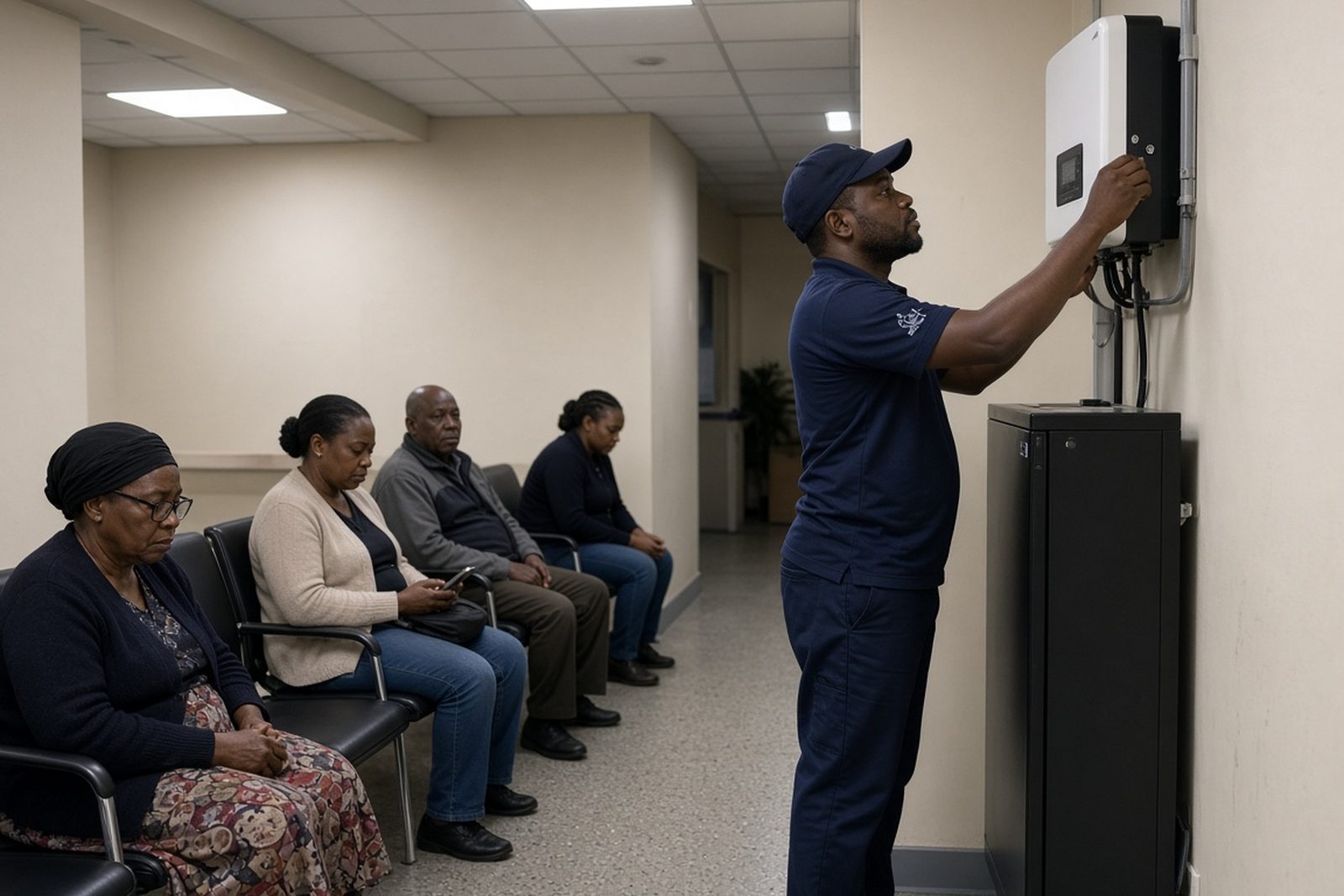
This project was for a healthcare site in Halfway House, Midrand, where even a short outage can interrupt patient intake, lighting, admin work and the safe operation of selected storage equipment. The brief was straightforward: keep the important circuits on when the municipal supply drops, without overloading the backup system or creating confusion for staff during load-shedding.
The clinic did not need every circuit carried on backup. That would have pushed the size and cost of the system up unnecessarily. Instead, we focused on a practical essentials list: reception points, a few workstations, corridor and consulting room lights, and selected medical storage loads that had to remain powered. The aim was continuity, not trying to run the whole building off batteries.
Halfway House has the usual Midrand mix of office parks, medical suites and light commercial sites, so access, cabling routes and switchboard space all had to be checked before any equipment could be selected. The installation had to fit the site conditions and work cleanly with the existing electrical layout.
What the clinic asked us to solve
The main concern was keeping essential services available during outages of two to four hours, with enough reserve for repeated load-shedding stages over a week. The clinic also wanted simple operation for staff. If the power failed, the system needed to transfer across with minimal disruption and no complicated steps at the reception area.
Another issue was load management. Clinics often have a mix of light duty loads and equipment that should not be tied into a general backup circuit. We therefore separated the essential circuits and left non-essential loads off the backup side. That kept the battery bank within a sensible discharge range and avoided nuisance tripping.
- Backup for reception equipment and network points
- Lighting on selected internal circuits
- Selected medical storage loads only
- Simple changeover operation for staff
- Space planned for future battery expansion
Because the site is in a commercial area, we also had to think about after-hours access and neat routing so the work would not interfere with business operations. The clinic needed the job done with as little disruption as possible, and with clear handover at the end.
Share what must stay on during an outage and the size of the property, and a backup planner will phone or message you.
Contact formSystem size and equipment selection
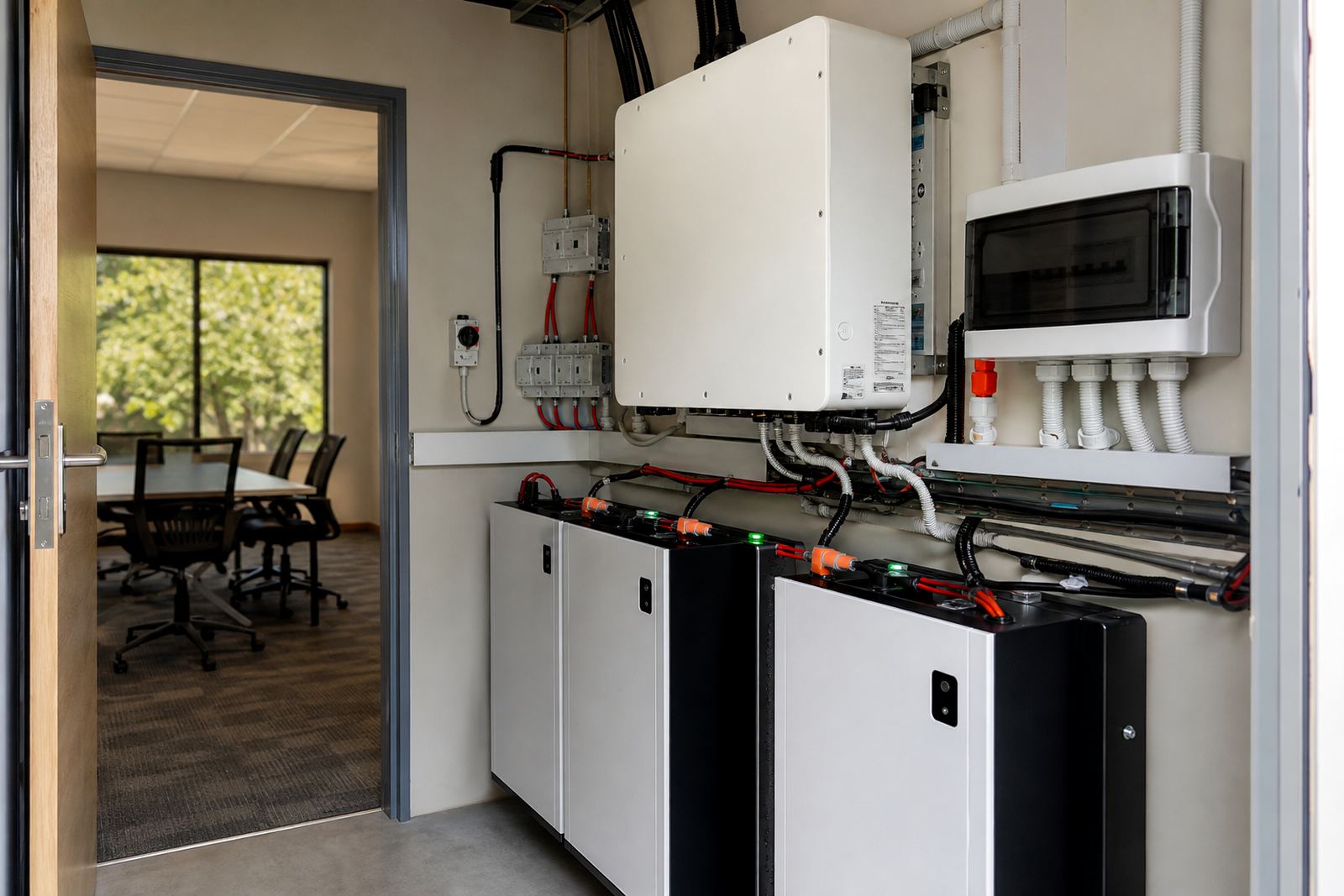
We sized the system from the actual essential load list rather than guessing. For a clinic, the difference between a useful backup setup and an under-sized one usually comes down to careful selection of what must stay on. We specified an inverter with enough headroom for startup demand and everyday use, paired with a lithium battery bank chosen for stable performance and good cycle life in frequent outage conditions.
The installation included a changeover arrangement to shift the essential circuits onto backup power when the grid failed. Battery storage was set up to support the selected loads for the required outage window, while still allowing sensible reserve. Where possible, we kept cabling runs short and protected, which helps with voltage drop and general reliability.
- Inverter sized for essential clinic circuits and moderate surge demand
- Lithium battery bank for frequent daily cycling
- Essential circuit sub-division to keep the load controlled
- Changeover equipment for manual or automatic transfer depending on the circuit arrangement
- Protection devices and neat cable management at the distribution side
For a healthcare environment, reliability matters more than flashy features. We selected components that suit repeated load-shedding and day to day use, with enough capacity to support the clinic without pushing the battery bank too hard.
Installation work and compliance support
The physical work covered mounting the inverter and battery equipment, connecting the essential circuits, checking the switchboard arrangement and commissioning the system under load. A registered electrician must carry out this type of installation, and the final work needs a certificate of compliance. We handled the job with that requirement in mind from the start, so the electrical layout and documentation matched the installation on site.
Where a system is grid-tied, municipal registration is also required. In this case, we assessed the site arrangement and advised on the registration steps needed for the chosen configuration. That part should never be treated as an afterthought. It affects both safety and how the installation is recorded with the local authority.
How the system performed after commissioning
Once commissioned, the clinic had a backup setup that could carry the essential areas without staff having to improvise during outages. Lights stayed on in the key spaces, reception equipment remained available and the selected storage loads were kept within the planned backup circuit. That gave the team a clear, repeatable process for load-shedding periods.
The biggest benefit was control. Instead of depending on ad hoc plugs or extension leads, the clinic now had a defined essential supply path. This reduced the risk of overloaded sockets and made fault finding easier if an issue ever comes up later. It also gave management a clearer picture of what can and cannot be supported on the battery bank.
- Stable support for the essential clinic circuits
- Cleaner changeover during outages
- Less risk of overloading non-essential loads
- Better day to day awareness of backup capacity
For a site handling patient visits and stored goods, that kind of certainty matters. It means the team can continue with core work while the rest of the building waits for supply to return.
What from this Halfway House clinic project we would carry into another medical site
If we were doing the same type of project again in Gauteng, we would follow the same approach: start with the actual essential load list, separate the circuits properly, size the inverter and lithium battery bank for the expected outage pattern, and keep the installation neat and serviceable. On a clinic site, that method saves time later because the system is easier to understand and maintain.
We would also keep the compliance and municipal steps in view from day one. In a commercial setting, it is best to plan around the certificate of compliance and any registration needed for a grid-tied arrangement before the equipment goes in. That avoids delays at handover.
For owners in Midrand, Sandton, Fourways or anywhere else in Johannesburg and Pretoria, the lesson is the same: backup power should match the loads that actually matter. A smaller, well planned system often performs better than a larger one that has been chosen without proper sizing.
System at a glance
| Project type | Clinic backup power installation |
|---|---|
| Town | Halfway House, Midrand |
| Backup equipment | Inverter with lithium battery storage |
| Essential loads | Reception equipment, lights and selected medical storage loads |
| Timeline | 2 weeks from assessment to commissioning |
| Compliance | Registered electrician, certificate of compliance, municipal registration for grid-tied systems where applicable |