
What the Restaurant Backup Pack covers
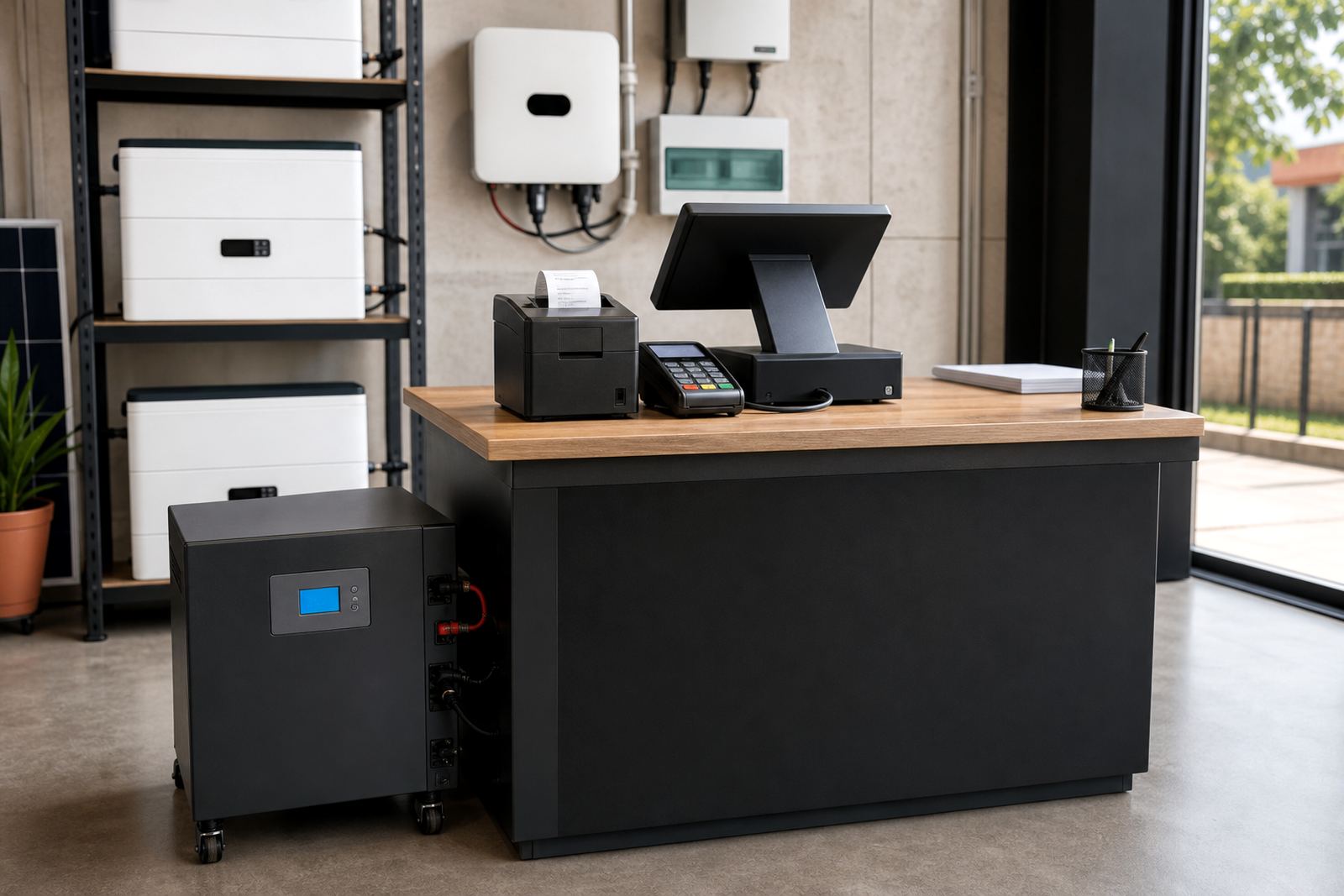
This pack is built for restaurants, cafés, takeaways and food courts that need a steady backup plan when the grid goes off. It is usually aimed at the loads that keep trading moving: POS tills, card machines, routers, CCTV, a few lights, and selected kitchen support items such as extraction controls, prep lighting or a single fridge circuit where appropriate.
The point is to avoid trying to back up everything at once. Heavy heating equipment, ovens, hobs and large extract systems can push a battery system too hard, so the pack is normally sized around essential circuits only. That keeps the setup practical and easier to manage through the stages of load-shedding.
Typical sizes and how they are chosen
Restaurant backup systems are usually selected by looking at the loads in watts, the number of hours needed, and whether the business wants only short outage cover or longer running time. A smaller setup may suit a coffee shop or deli with just tills, lighting and internet. A larger setup may be needed for a busy restaurant with more fridges, point-of-sale stations and longer trading hours.
- Small pack: for tills, Wi-Fi, basic lighting and one or two support circuits.
- Medium pack: for front-of-house plus selected kitchen support loads and more than one till point.
- Large pack: for higher demand sites with longer backup needs and more equipment on essential circuits.
Battery capacity is usually matched in kilowatt-hours, while inverter size is matched in kilowatts or kilovolt-amperes. A proper site assessment helps avoid over-sizing or under-sizing, which matters if your business trades through evening load-shedding or has fridges that must keep running.
Share what must stay on during an outage and the size of the property, and a backup planner will phone or message you.
Contact formWhere this setup suits best
This product suits restaurants in Randburg, Sandton, Fourways, Johannesburg CBD, Pretoria, Centurion, Midrand and Roodepoort where load-shedding can interrupt service at short notice. It is also useful in malls, mixed-use buildings and suburban stand-alone premises where tenants need their own backup for selected circuits.
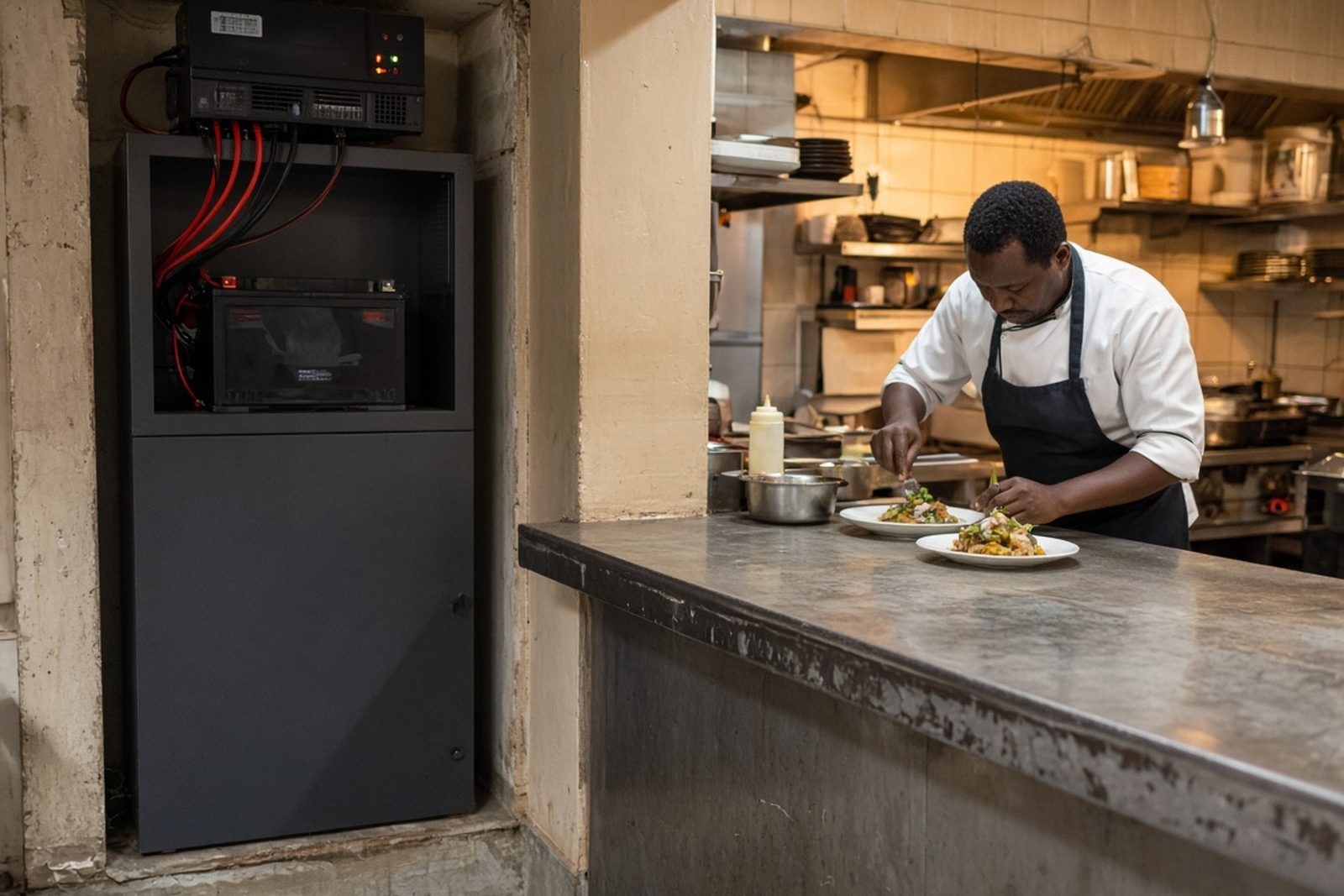
Coastal humidity is not the main concern in Gauteng, but kitchens still create heat, grease and moisture, so equipment placement matters. In a back-of-house area or plant room, the inverter and batteries should have clear airflow and be kept away from steam, direct sun and splash zones. Where the premises are in a body corporate or shared building, the site rules can also affect where the equipment may be fitted.
Installation, changeover and compliance
Installation must be done by a registered electrician, and the system must be issued with a certificate of compliance. If the backup system is grid-tied, municipal registration is also required. That applies whether the system is used for partial backup or more advanced switching arrangements.
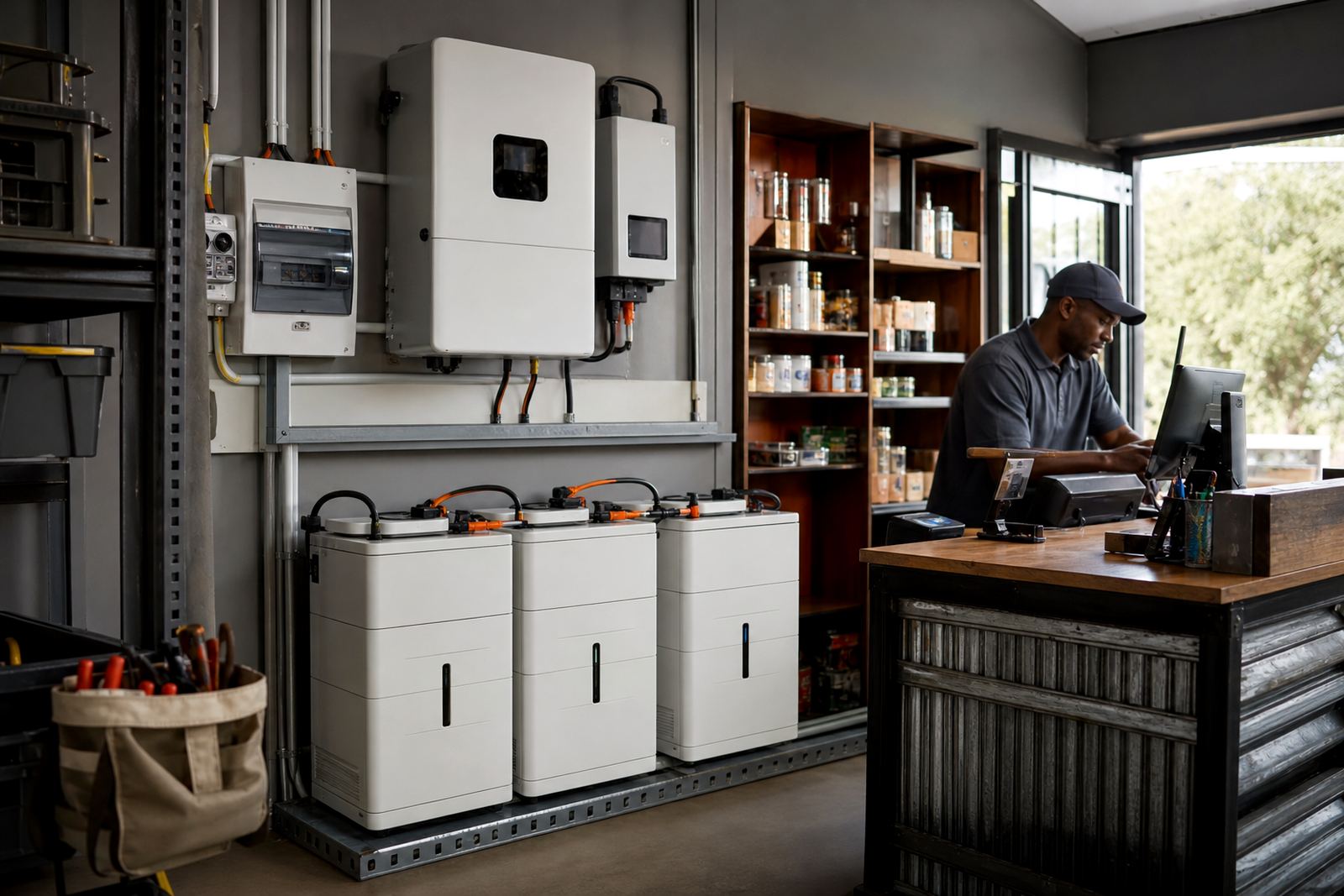
The usual installation includes inverter mounting, lithium battery installation, essential circuit wiring, a changeover arrangement, and system commissioning. If the restaurant wants to keep the kitchen logic simple, the essential circuits can be split so that front-of-house remains live while larger cooking loads stay off the backup side. We also check cable routes, breaker sizing and earthing so the setup is suited to the building, not just the equipment list.
- Registered electrician installation only
- Certificate of compliance required
- Municipal registration needed for grid-tied systems
- Essential circuits should be clearly marked at the distribution board
Power supply support considerations
Restaurants often combine electrical backup with gas for cooking or water heating, and that can be a sensible mix where allowed. The backup pack is then focused on the loads that are hard to replace with gas, such as lights, tills, internet, refrigeration and control systems. If gas is already part of the site, the electrical backup can be sized more efficiently because it does not need to carry every kitchen appliance.
It is important to note what must stay on and what can be switched off during an outage. Some refrigeration is essential, but not every plug point or appliance should be backed up. A proper load schedule makes this clearer and helps the system handle repeated outages without tripping. A lot of faults come from trying to run too much at once, or from poor changeover wiring that was done in a hurry.
Care, servicing and battery health
Lithium batteries need routine checks, especially in busy food environments where the power can cycle many times in a week. The system should be kept clean, free of dust and grease, and checked for firm terminations, healthy cable runs and normal operating temperatures. Inverter fans and air vents should not be blocked.
Routine servicing is useful for restaurants because a backup system often sits idle until load-shedding starts, then has to work straight away. Testing the changeover, checking state of charge, reviewing battery settings and confirming alarm conditions can prevent surprises. If the site expands later, battery expansion should be done in a planned way so the new modules are compatible with the existing setup.
Before you buy a backup system
Before ordering, it helps to know exactly which loads you want to support and for how long. A short list from the kitchen manager or owner is usually enough to start, but the final sizing should come from an on-site check. We look at the number of tills, router and network equipment, lights, fridge loads, and any support circuits that must remain on during service.
- Which circuits must stay on during load-shedding
- How long the site needs backup for each outage
- Whether the premises use gas for any cooking or heating
- Space available for inverter and battery placement
- Any building rules, landlord rules or municipal requirements
- Whether the system will be used for backup only or grid-tied operation as well
If the restaurant is in a shared building or shopping centre, it is also worth checking access times for installation, noise limits and any required approvals. That avoids delays and keeps the project practical from the start.
System at a glance
| Product type | Restaurant backup pack for essential loads |
|---|---|
| Typical loads covered | Lights, tills, internet, CCTV, selected kitchen support circuits |
| Core components | Inverter, lithium battery bank, changeover arrangement, protection devices |
| Sizing basis | Load in watts, required backup time, number of circuits and outage frequency |
| Installation requirement | Registered electrician only, with certificate of compliance |
| Service area | Randburg, Johannesburg, Pretoria, Centurion, Midrand, Roodepoort, Sandton and Fourways |