
What a POS backup pack does in a South African business
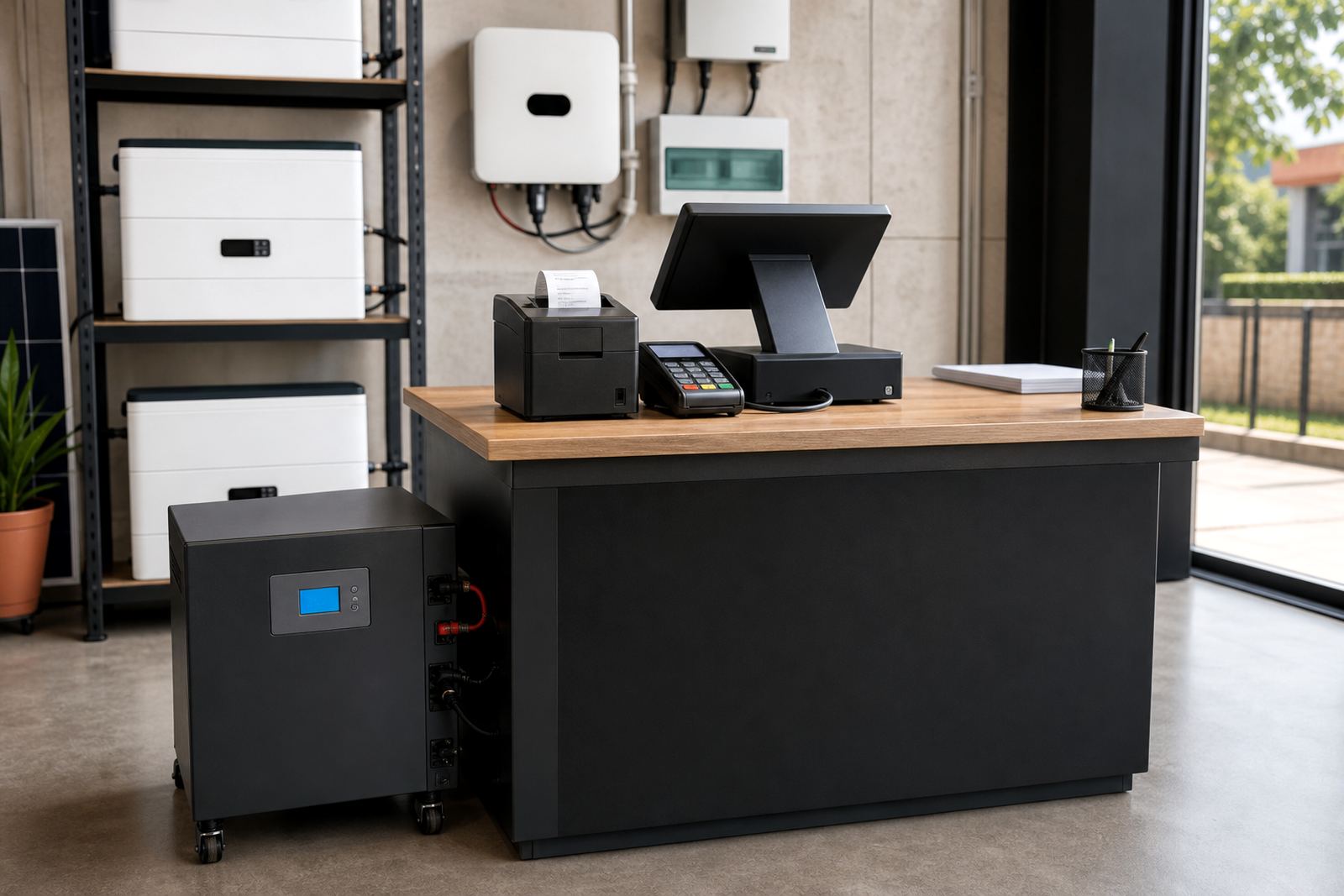
A POS backup pack is a compact power system built around an inverter, a lithium battery, and the changeover gear needed to carry a point of sale setup through outages. It is commonly used for tills, receipt printers, barcode scanners, payment terminals, routers, fibre boxes and a small office PC. For many shops, salons, forecourts and takeaway counters, the aim is simple: keep payments and essential connectivity live without running the whole premises.
In practice, the pack takes over the load when municipal power drops. The battery feeds the inverter, and the inverter supplies clean AC power to the selected circuits or plug points. That means card machines can stay connected, tills keep recording sales, and staff do not have to pause every time the area goes dark. In places like Randburg, Sandton and Midrand, where short interruptions are common, this kind of setup can make day to day trading a lot easier.
For business users, the main value is control. You choose what stays on and what switches off. A properly sized pack is not meant to run aircons or kettles, it is there for critical loads only. That helps the battery last longer and keeps the installation practical for shops with limited space and a tight equipment list.
Sizing options for tills, routers and card machines
The right size depends on the number of devices, their wattage and how long you want to stay up during load-shedding. A basic counter setup may only need a small inverter and a single lithium battery, while a larger retail floor with several tills, CCTV, Wi-Fi, and a back office may need a bigger inverter and more battery capacity.
Typical sizing starts with a load check. Count the devices, note the power draw, and decide what must run at the same time. A simple POS setup often includes:
- 1 to 2 tills or POS terminals
- A router and fibre box
- A payment device or card machine
- A receipt printer
- Optional small monitor or CCTV recorder
For short outages, a smaller lithium battery can be enough. For longer load-shedding stages, or where municipal supply is unstable, a larger battery bank gives better cover. Lithium batteries are normally preferred for this type of duty because they charge faster, handle regular cycling well and take up less space than older battery types. The final size should always be matched to actual usage, not just to the number of plug points in the room.
Share what must stay on during an outage and the size of the property, and a backup planner will phone or message you.
Contact formWhere this pack suits best
This product suits businesses that depend on payments, connectivity and quick reopening after an outage. That includes convenience stores, bottle stores, salons, doctors rooms, small offices, fuel station kiosks, restaurants, pharmacies and service counters. It is also useful in home offices where internet and payment devices must stay online for a side business.
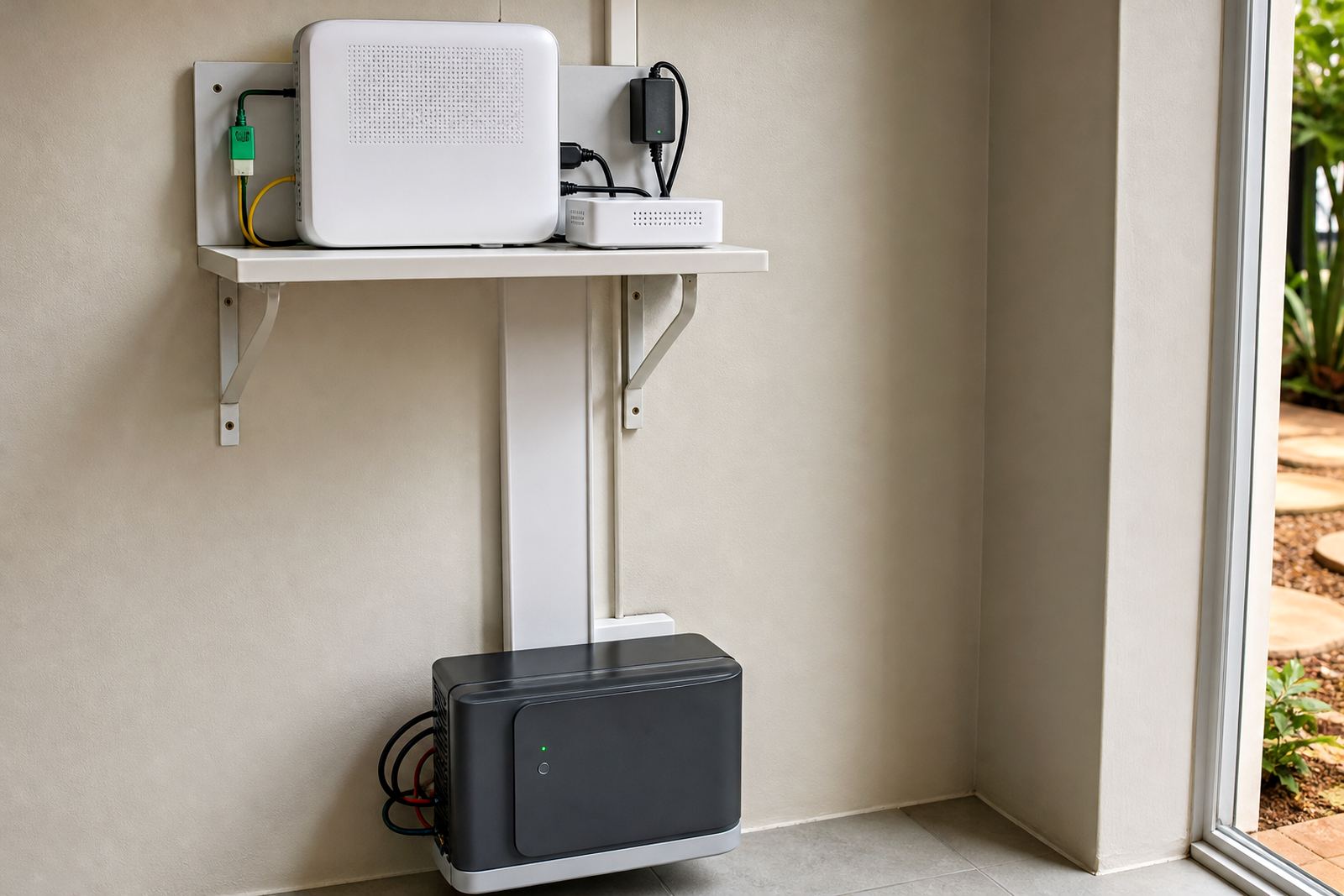
The pack is especially practical where trading cannot simply stop and restart later. A shop may only need a few devices, but if those devices go down the whole front counter stalls. In busy areas like Pretoria, Centurion, Fourways and Roodepoort, where network equipment may share space with retail gear, a neat backup pack keeps the essential load separated from the rest of the building.
It also suits premises that want a cleaner answer than running loose extension leads from an upsized system. A fixed installation is safer, easier to maintain and simpler to test. If you need backup for point of sale only, it is often better to build a focused system than to oversize the whole premises for no reason.
Installation, compliance and municipal approvals
A POS backup pack must be installed by a registered electrician. After installation, a Certificate of Compliance is required for the electrical work. If the system is grid-tied or connected in a way that can interact with the municipal supply, it must also be registered with the local municipality as required. That step matters in Johannesburg and nearby metros, where rules for small power systems and backfeed protection are taken seriously.
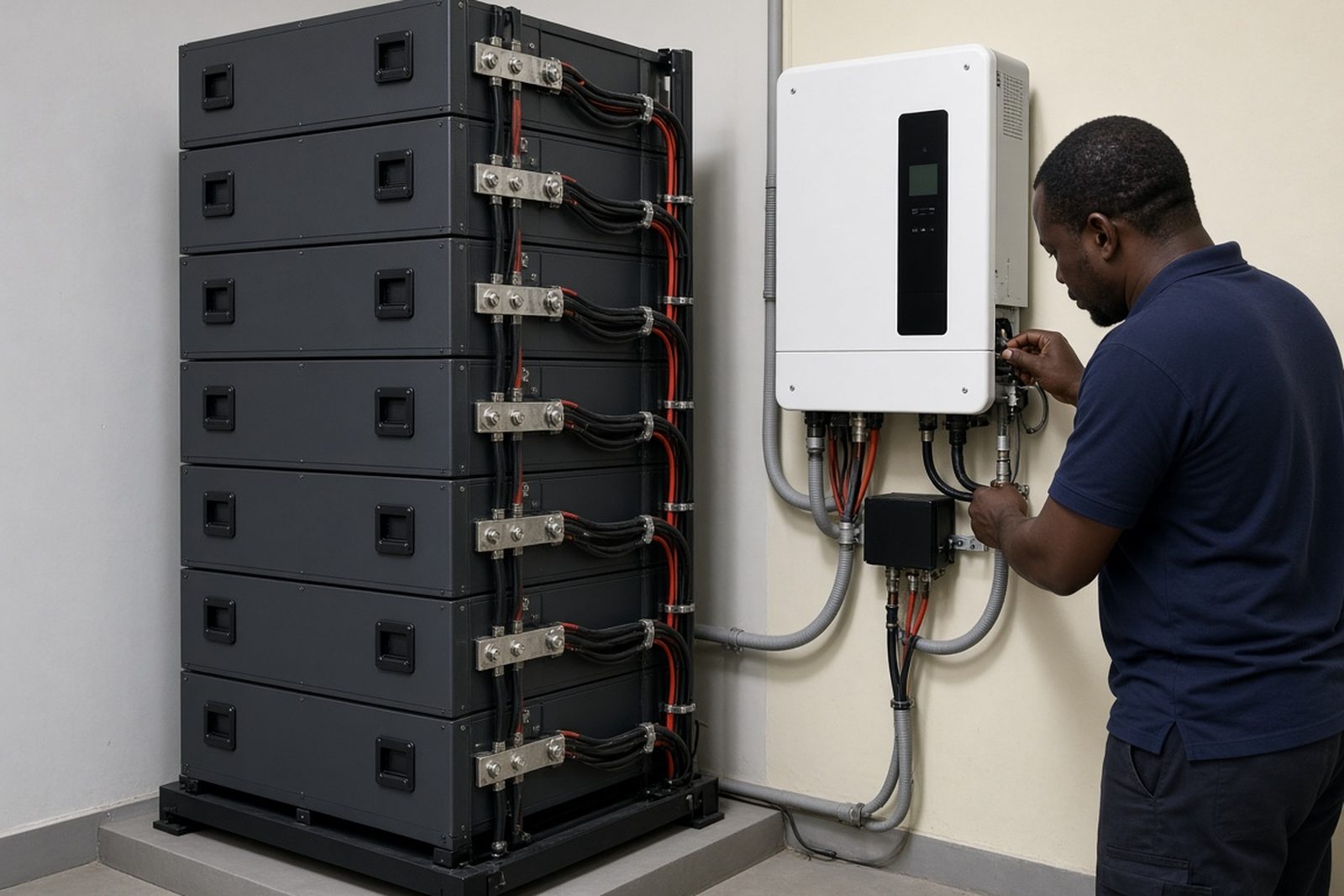
Good installation includes correct cable sizing, circuit protection, isolators, changeover control and proper earthing. The inverter must be matched to the battery and the intended load. If essential circuits are being moved off the main board, they need to be clearly identified and tested. The result should be tidy, labelled and safe for daily use. No one wants a till area cluttered with loose plugs and extension cords, especially in a busy trade environment.
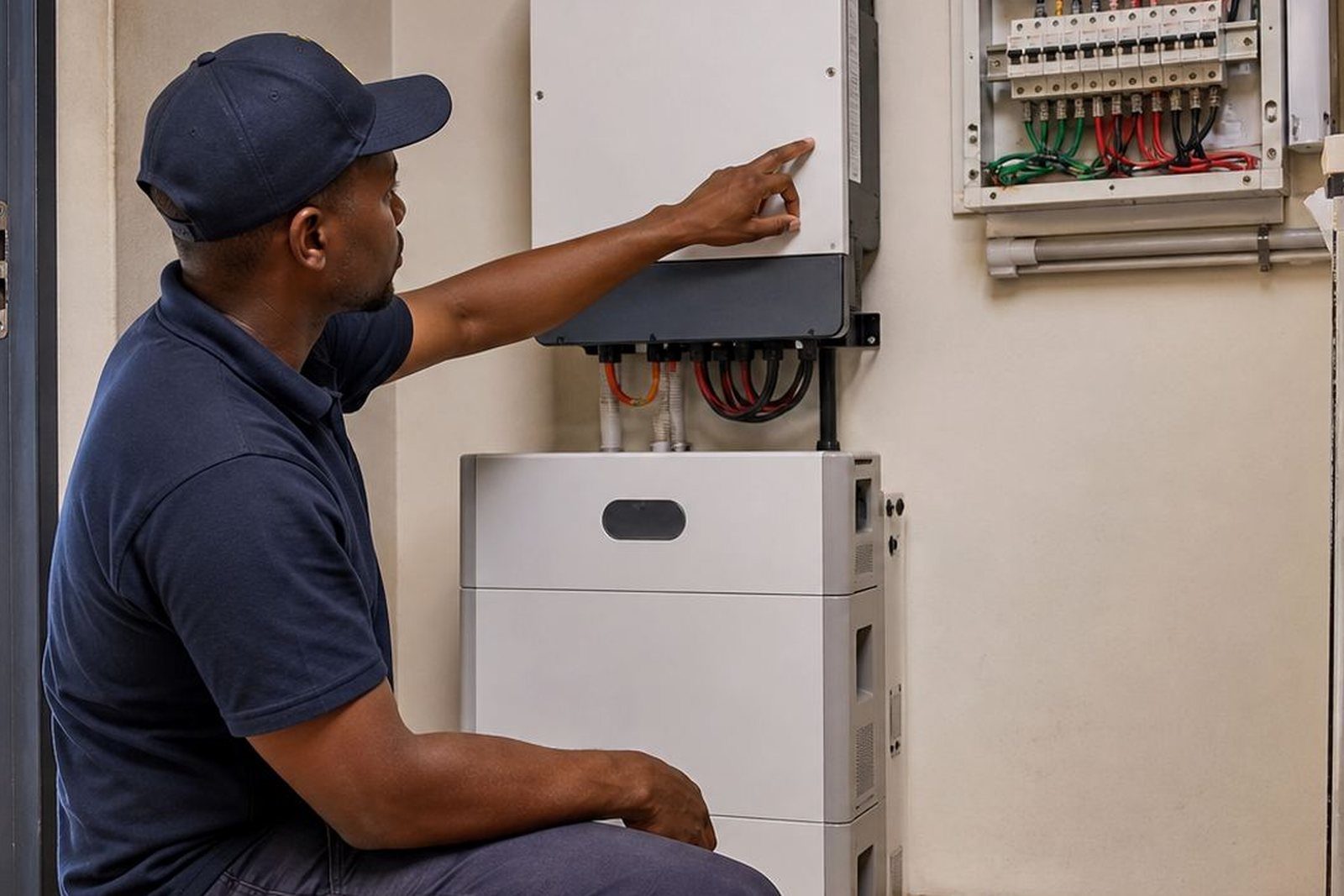
For commercial sites, commissioning is part of the job. That means checking the transfer behaviour, confirming that the POS equipment stays on during a power failure, and making sure the battery charges correctly when supply returns. It is also worth confirming that internet equipment restarts as expected after a deep outage.
Power needs, runtime and backup behaviour
The pack does not need fuel, but it does need the right electrical conditions. A lithium battery works best when it is charged correctly and not pushed beyond its intended discharge range. The inverter must be capable of supplying the continuous load with some headroom for start-up surges from printers, routers and small network gear.
When we look at runtime, there are three things to check:
- The total wattage of the POS equipment
- How long the business wants to stay live
- Whether the system must support only one counter or several points
For most trading spaces, the objective is several hours of practical cover, not whole-building backup. If the business also needs lighting, signage or refrigeration on the same system, that changes the sizing completely. Gas is not part of a normal POS backup pack, so if the site uses gas for cooking or hot water, it does not affect the electrical backup directly. What matters is the electrical load that must stay up during an outage.
What to confirm before you book a backup system
A backup pack needs routine checks so it is ready when load-shedding hits. Keep vents clear, watch for dust build-up, and check that the battery room or cabinet is dry and well ventilated. Coastal humidity is not the issue in Randburg, but dust and heat still affect equipment over time. In busy retail sites, plugs can loosen and cables can be knocked, so a quick inspection now and then is worthwhile.
Useful checks before ordering include:
- Which devices must stay on
- The voltage and plug type of each device
- How long backup is needed for each outage
- Whether the system will be wall mounted or floor mounted
- Where the inverter and battery can be placed safely
- Whether the site needs circuit changes or municipal registration
Routine servicing should include testing the changeover, checking battery condition, tightening terminations and confirming that the monitoring display, if fitted, is reading correctly. If the business expands, the system can often be adjusted with a battery expansion or a different load plan. That is better than waiting until the first major outage and finding out the pack was sized too small.
System at a glance
| Product type | Backup power pack for point of sale and connectivity loads |
|---|---|
| Typical load | Tills, card machines, routers, fibre boxes, small printers |
| Core components | Inverter, lithium battery, protection gear, changeover control |
| Installation | Registered electrician required with Certificate of Compliance |
| Compliance | Municipal registration required for grid-tied systems |
| Service area | Randburg, Johannesburg, Pretoria, Centurion, Midrand, Roodepoort and Gauteng |