
What the Clinic Backup Pack covers in a busy practice
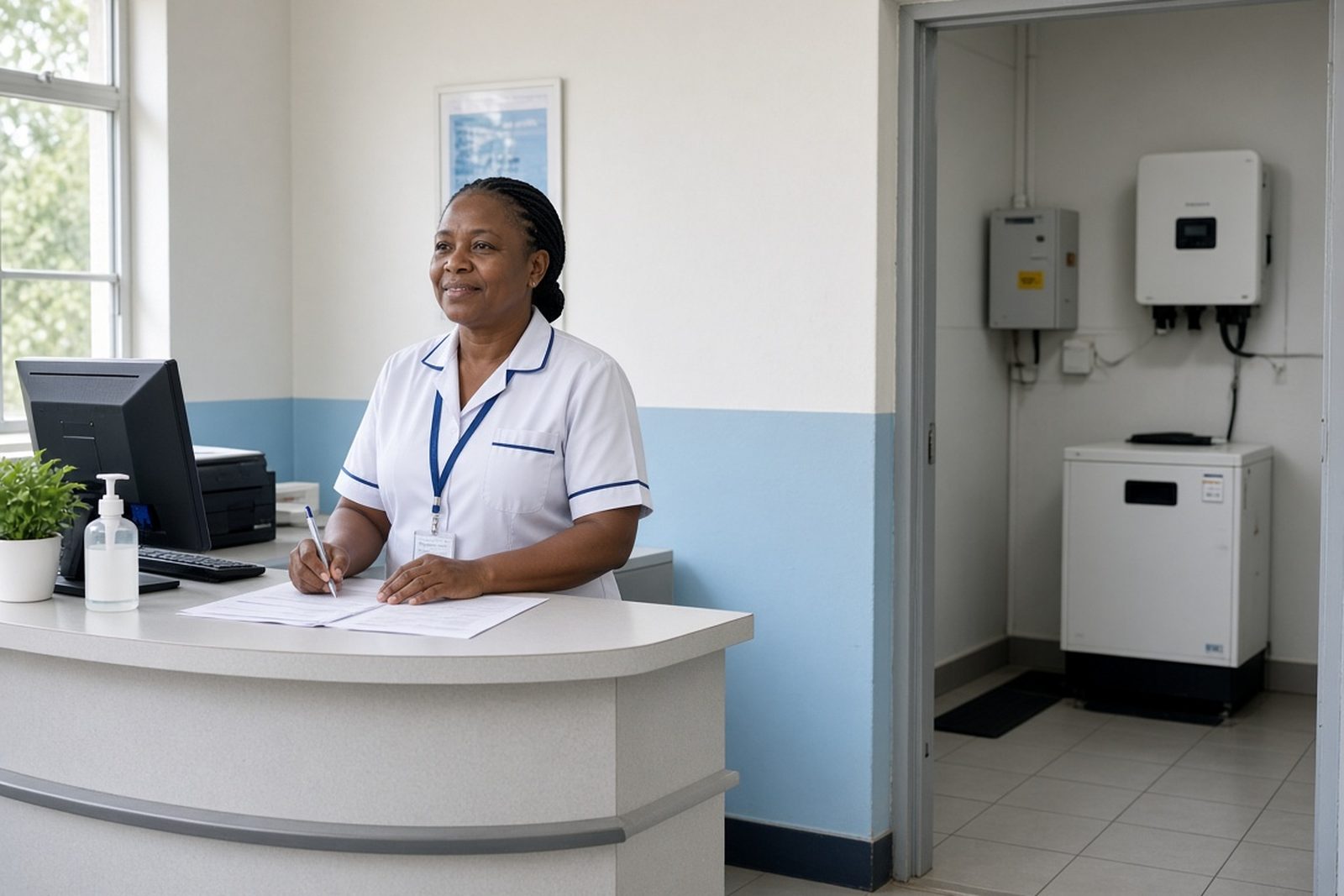
This pack is set up to keep the most important points in the clinic running when the municipal supply drops. That usually means the reception counter, computer points, router, card machine, small fridge or vaccine fridge, selected lights and a few plug points for essential equipment. It is not meant to carry every geyser, heater or heavy load in the building, so the backup stays focused and efficient.
For practices in Johannesburg, Pretoria, Midrand or Roodepoort, that focus matters. A clinic often needs power available as soon as an outage starts and steady supply through patient flow, stock handling and basic admin work. By keeping the backup on selected circuits only, the system avoids unnecessary strain and gives you more usable runtime from the battery bank.
The pack can be arranged as a compact backup for a small consulting room, or scaled for a larger practice with separate reception and treatment areas. If the site has refrigeration that must stay cold, that load is usually treated as a priority circuit with its own allowance in the sizing, because compressors draw more at start-up than they do once running.
Size options for different clinic loads
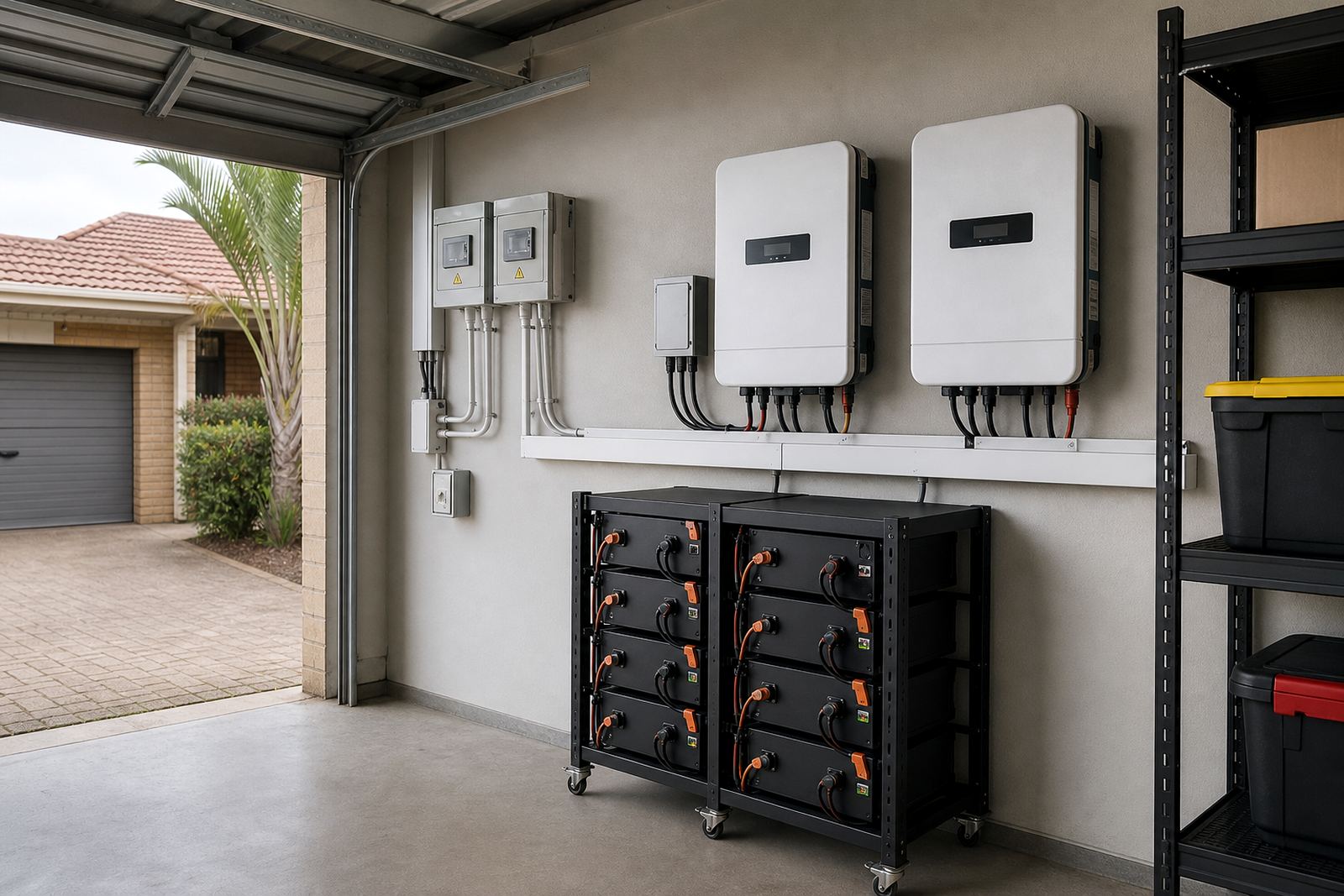
Work out the wattage of the loads you need to keep live before choosing system size. A small practice with a router, two or three computers, LED lighting and a compact fridge can often work with a 3 kVA to 5 kVA inverter and a lithium battery bank from 5 kWh to 10 kWh. A larger clinic with more lights, more plug points and longer operating hours may need 5 kVA to 8 kVA, with 10 kWh to 15 kWh or more depending on what must stay live.
Lithium batteries are commonly chosen for this type of work because they charge faster, handle deeper cycling better than older battery types and take up less floor space. In Gauteng, where clinics may face several outages in a day, that cycle life is useful. The final size depends on how long you need the selected circuits to run and whether the fridge load is constant or intermittent.
- Small clinic: reception, router, lighting and a compact fridge.
- Medium clinic: reception, admin points, selected treatment room circuits and refrigeration.
- Busy practice: higher inverter output, more battery capacity and separate critical-load wiring.
- Extended runtime: larger battery bank for longer outages or frequent load-shedding stages.
Share what must stay on during an outage and the size of the property, and a backup planner will phone or message you.
Contact formWhere this pack suits best in Gauteng clinics
This product suits general practices, dental rooms, veterinary clinics, optometry rooms and other health services that rely on uninterrupted admin and refrigeration. It also works well in shared medical suites where only part of the building needs backup. If your premises are in Sandton, Fourways, Centurion or Pretoria, the pack can be planned around the actual circuit layout, not just the size of the premises.
In coastal or humid conditions a battery room or cupboard should be dry and well ventilated, but even in inland Gauteng heat and dust can shorten equipment life if the installation is cramped. The equipment should not be left in a direct sun patch or next to cleaning chemical storage. A sensible location makes maintenance easier and helps keep cable runs neat.
For clinics in buildings with landlords or shared supply arrangements, the arrangement of backup points must be checked before work starts. Some sites need approval for changes at the distribution board, and some landlords will only allow essential circuits to be altered. That should be confirmed early so the installation does not stall later on.
Installation, changeover and compliance requirements
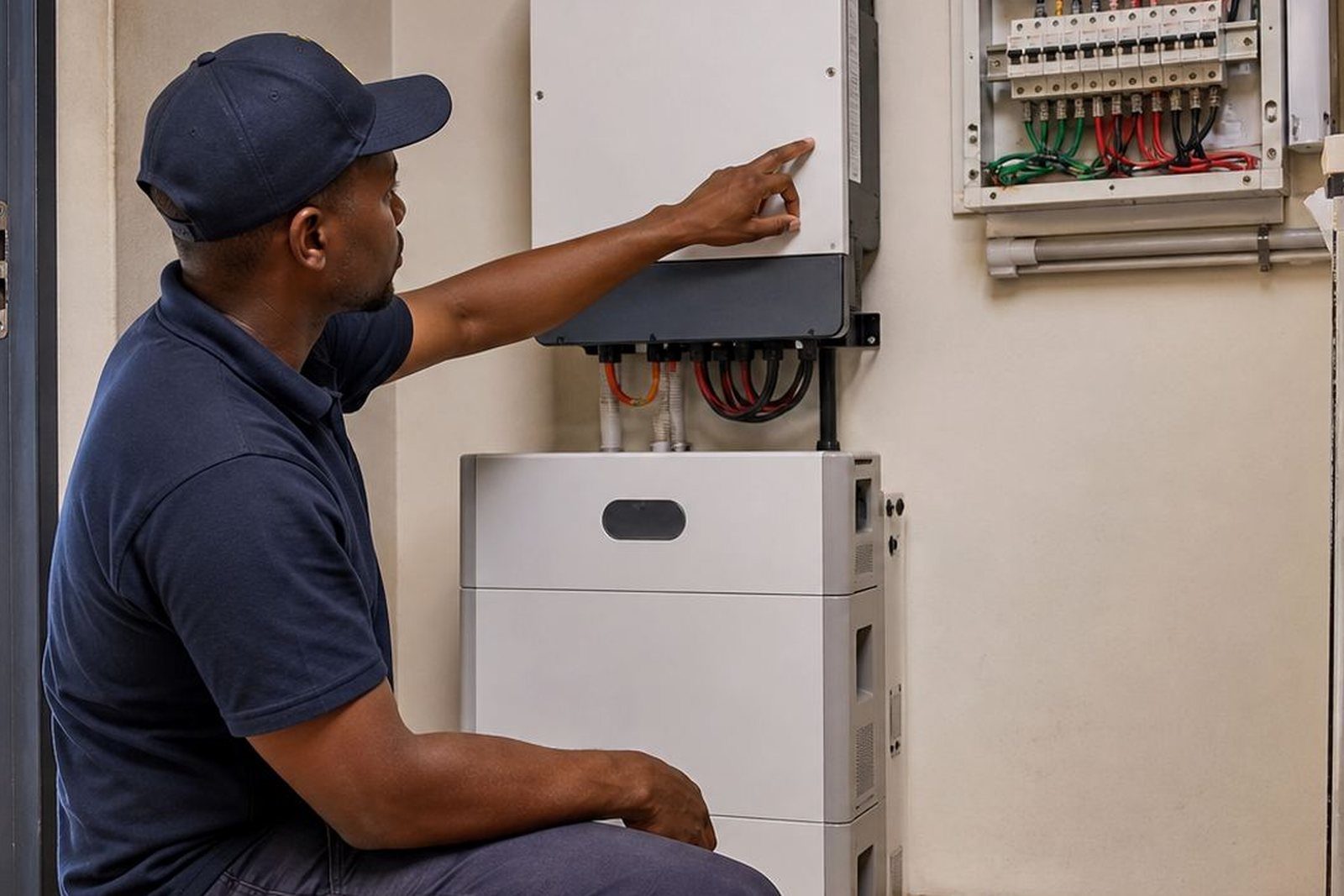
The installation must be done by a registered electrician, and a certificate of compliance is required for the work. If the system is grid-tied or connected in a way that interacts with the municipal supply, municipal registration is needed as well. That is not optional. It protects the clinic, the building and the people working in it.
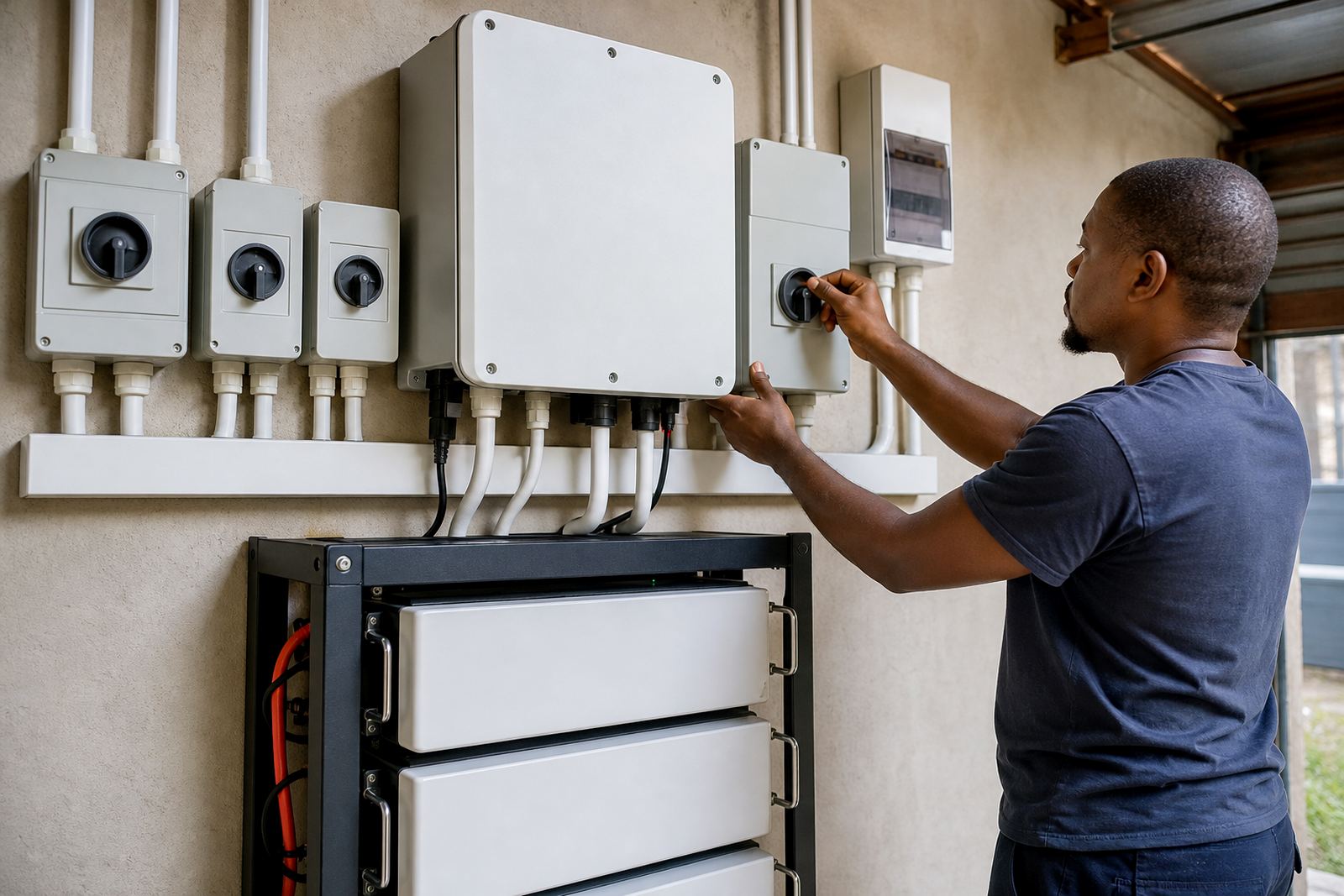
The usual process includes a site assessment, backup sizing, essential circuit wiring, inverter installation, battery installation, changeover setup and system commissioning. Where needed, monitoring setup can be added so the practice can check battery state, load and charging behaviour. This is helpful for facilities that want early warning if the backup is being pushed too hard.
- Confirm which circuits must stay live during load-shedding.
- Check the distribution board and available space for equipment.
- Confirm whether any municipal registration is required for your setup.
- Plan for a registered electrician to complete the work and issue compliance paperwork.
Power use, outlets and practical clinic planning
It helps to think in terms of essential power rather than whole-building backup. A clinic usually needs a dedicated plan for the fridge, router, points of sale, benchtop equipment, charging points and selected lights. If the practice uses specialised medical equipment, each item must be checked for start-up surge and continuous draw before it is included. Some equipment is better left off the backup side and handled separately.
Many clinics also need a neat solution for cable routing and safe access to plugs during operating hours. The changeover arrangement should be simple enough for staff to use without confusion, especially when load-shedding starts unexpectedly. Good labelling matters more than people think and can prevent mistakes when the reception area is busy.
If the backup is intended to support a refrigerator, the fridge should be in good working order before the system is commissioned. A failing compressor or poor door seal can put unnecessary load on the inverter and battery bank. The same applies to old extension leads and worn plug tops, which should be replaced rather than tied into a backup system.
Upkeep, servicing and what to confirm before you buy
Battery systems need regular checking, even when they are not being used every day. Dust on vents, loose terminals, software warnings and ageing batteries can all reduce performance. Routine servicing should include a look at cable terminations, ventilation, load behaviour and battery health. A clinic that depends on the fridge and reception computers should not wait for an outage before finding a fault.
Before ordering, confirm the following details so the pack is matched correctly to your site. Measure the space where the inverter and batteries will sit, note the loads you need backed up, and check whether the building has any special access rules for electricians after hours. It also helps to know whether the clinic wants a short backup for outages or a longer runtime for repeated stages during the day.
- List every circuit that must remain on.
- Check fridge wattage and start-up demand.
- Confirm available wall space and ventilation.
- Identify whether the site is single phase or has a more complex supply arrangement.
- Make sure the building owner or body corporate is aware of the proposed work.
For clinics across Randburg, Johannesburg, Midrand and Roodepoort, we can help with site assessments, fault checks, battery expansions and routine servicing once the system is in place. If your practice grows or the load pattern changes, the backup can be expanded rather than replaced outright, which is often the more practical route.
System at a glance
| Product type | Selected-circuit clinic backup pack |
|---|---|
| Inverter size options | 3 kVA to 8 kVA, depending on load |
| Battery options | Lithium battery bank from 5 kWh to 15 kWh plus |
| Typical backed-up loads | Reception, lights, router, card machine, selected plug points, refrigeration |
| Installation requirement | Registered electrician and certificate of compliance required |
| Compliance note | Grid-tied systems need municipal registration where applicable |