
What cable and trunking do in a backup system
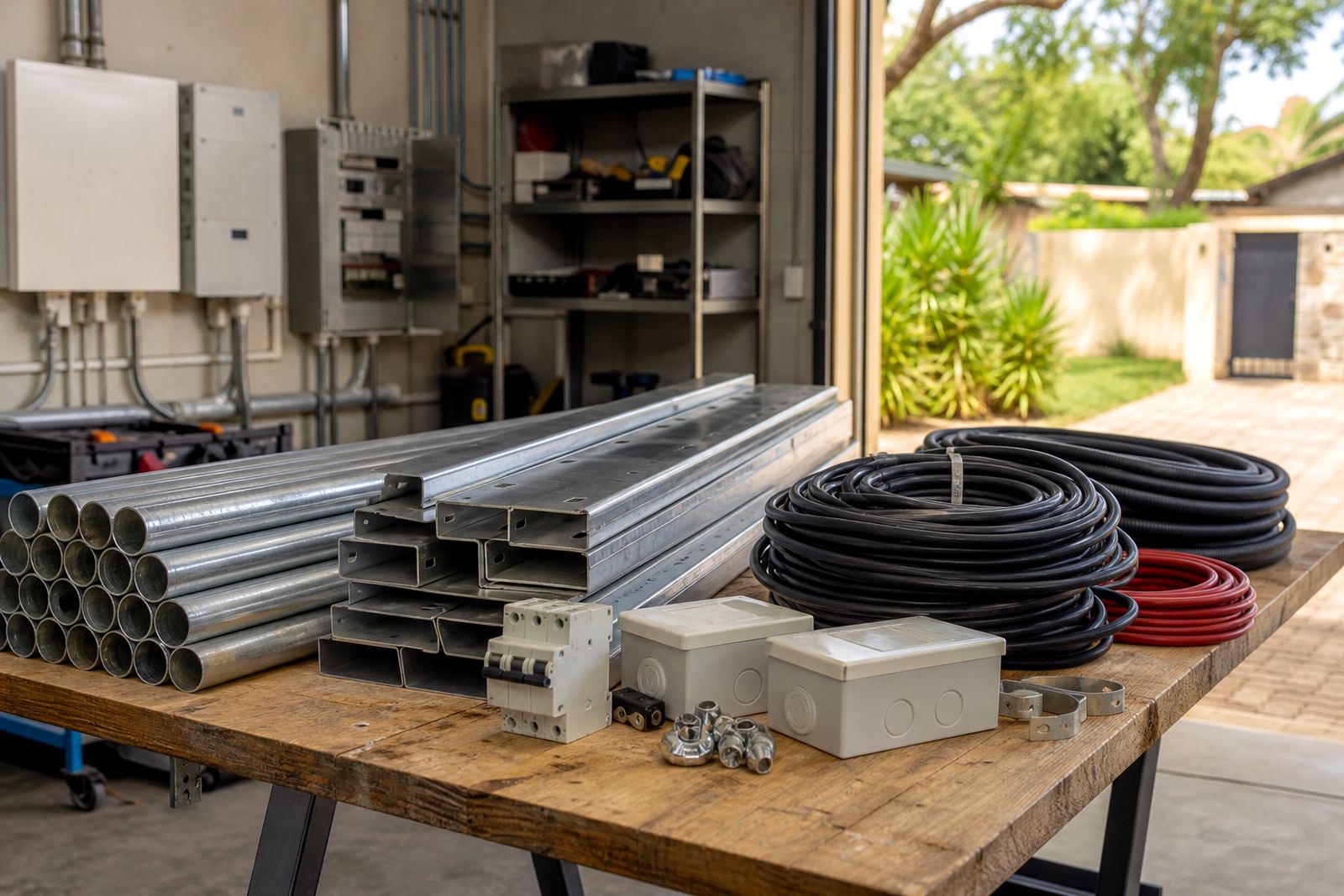
In a load-shedding setup, the cabling is part of the job not an afterthought. DC cable links the battery bank to the inverter, while AC cable carries power from the inverter to the essential circuits or changeover point. Trunking then keeps those runs organised, covered and easier to inspect. Done properly, it reduces accidental damage, improves airflow around equipment and gives a neater finish in passages, garages and plant rooms.
For homes in Sandton, Fourways and Randburg, cabling often needs to be routed cleanly along walls or roof spaces where people still need access. In offices, shops and small workshops, trunking helps keep backup routes separate from data lines and general power so maintenance is simpler later on.
- DC cabling for battery to inverter runs
- AC cabling for essential load circuits and changeover points
- Surface trunking for visible wall runs
- Heavy duty conduit for exposed or service areas
- Cable ties, saddles and glands for secure fixing
Sizes and options commonly used
Cable size depends on current, run length and the inverter and battery current draw. Shorter runs may suit smaller conductors, while longer runs or higher output systems need thicker cable to limit voltage drop and heat build-up. For battery links, installers often use flexible copper cable with proper lugs and insulation matched to the system voltage. Trunking is selected by cable count, bend points and how often the system may need to be added to later.
Typical trunking options include 25 mm x 16 mm for light domestic routes, 40 mm x 25 mm for mixed cabling, and larger multi-compartment sizes where power and control wiring must be kept apart. In humid coastal or damp utility spaces, installers often choose fittings that stand up better to corrosion and keep the cable path dry. A bit of planning here saves trouble later, especially when extra batteries are added.
- Flexible copper cable for battery interconnects
- Single core or twin and earth for AC runs where suitable
- Multi-strand cable for easier routing in tight spaces
- PVC trunking for indoor wall runs
- Conduit for protected runs through service areas
Share what must stay on during an outage and the size of the property, and a backup planner will phone or message you.
Contact formWhere this works best in homes and businesses
Cable and trunking suits most backup jobs where the owner wants the installation neat and serviceable. In homes, that includes inverter points in garages, passage cupboards, sculleries and outside rooms. In businesses, it suits small offices, retail stores, sectional title common areas, medical rooms, gate systems and light commercial sites that need essential circuits to stay on during outages.
It also helps in properties with mixed use, such as home offices and rental units, where one section may be backed up and another left on the grid. Good cable routing makes it easier to isolate a fault, add monitoring, or expand battery capacity later without ripping out the original work. In Randburg and Johannesburg where ceilings can be crowded, careful routing can save a lot of labour down the line.
- Residential backup installations
- Small commercial and office systems
- Essential load circuits only
- Battery room and garage installations
- Future battery expansion plans
Installation, compliance and power requirements
Backup cabling must be installed by a registered electrician, and the work needs a valid certificate of compliance. That applies whether the system is a small home backup or a larger commercial setup. If the inverter is grid tied or can export to the municipal supply, the installation must also be registered with the local municipality and must meet the local connection rules before it is put into service.
The installer should check cable routing, protection, earthing, isolation, breaker sizes and the type of trunking or conduit used. In many cases the backup gear is placed close to the distribution board to reduce cable length, but not every site allows that. Older buildings in Johannesburg and Pretoria may need extra space for safe routing, while newer sites in Midrand or Centurion may already have trunking paths that can be used with minor changes. Clean work matters here because a bad route can cause heat, noise or nuisance trips.
Power needs are not only about watts. A proper layout must account for inverter input, battery discharge, charging current and the load on the essential circuits. If the cable is too small, the system can run hot or trip under load. If the trunking is too tight, future service becomes awkward and cable damage becomes more likely.
Care, servicing and what to watch for
Cable and trunking do not need much day to day attention, but they should be checked when the system is serviced. Look for cracked trunking lids, loose clips, heat marks, sharp bends and signs of rubbing where cable passes through walls or metal edges. On sites near the coast or in damp rooms, corrosion around fixings and terminals can show up sooner, so routine inspections matter.
If the backup system has been expanded, the cable path should be reviewed again. A neat first install can become crowded once extra batteries or an additional inverter is added. Service checks should also confirm that labels are still readable and that access panels are not blocked. A small fault in the cable route can take a whole system offline, so it is worth fixing early.
- Check for heat or discolouration at terminations
- Confirm trunking lids are secure and unbroken
- Inspect cable glands and entry points
- Review cable sizing after any expansion
- Keep access clear for future fault checks
Before you buy a backup system
Before ordering cable and trunking, confirm the inverter size, battery voltage, expected load and the distance between equipment points. The number of circuits to be backed up also matters because a single essential load line needs a different setup from a full sub board. If you are adding monitoring, changeover gear or a second battery bank, those cables and channels should be allowed for from the start.
It helps to know whether the route will be indoors, in a garage, under a counter or outside under cover. You should also note wall type, ceiling access and whether the run will cross concrete, brick or steel framing. A site assessment can pick up these details before installation starts, which keeps the job tidy and avoids last-minute changes. Good cable planning is boring work, but it keeps the whole backup system easier to live with.
- Inverter and battery model details
- Total cable length and route type
- Number of backed-up circuits
- Indoor or outdoor exposure
- Need for future expansion
System at a glance
| Cable types | Flexible copper, single core, multi-strand and AC wiring as required |
|---|---|
| Common trunking sizes | 25 mm x 16 mm, 40 mm x 25 mm and larger multi-compartment options |
| Use case | Inverter to battery links, essential circuit feeds and changeover routes |
| Installation standard | Registered electrician required with certificate of compliance |
| Compliance note | Grid tied systems must be registered with the local municipality |
| Service area | Randburg, Johannesburg, Pretoria, Centurion, Midrand, Roodepoort and surrounding Gauteng areas |