What a battery cabinet does in a backup system
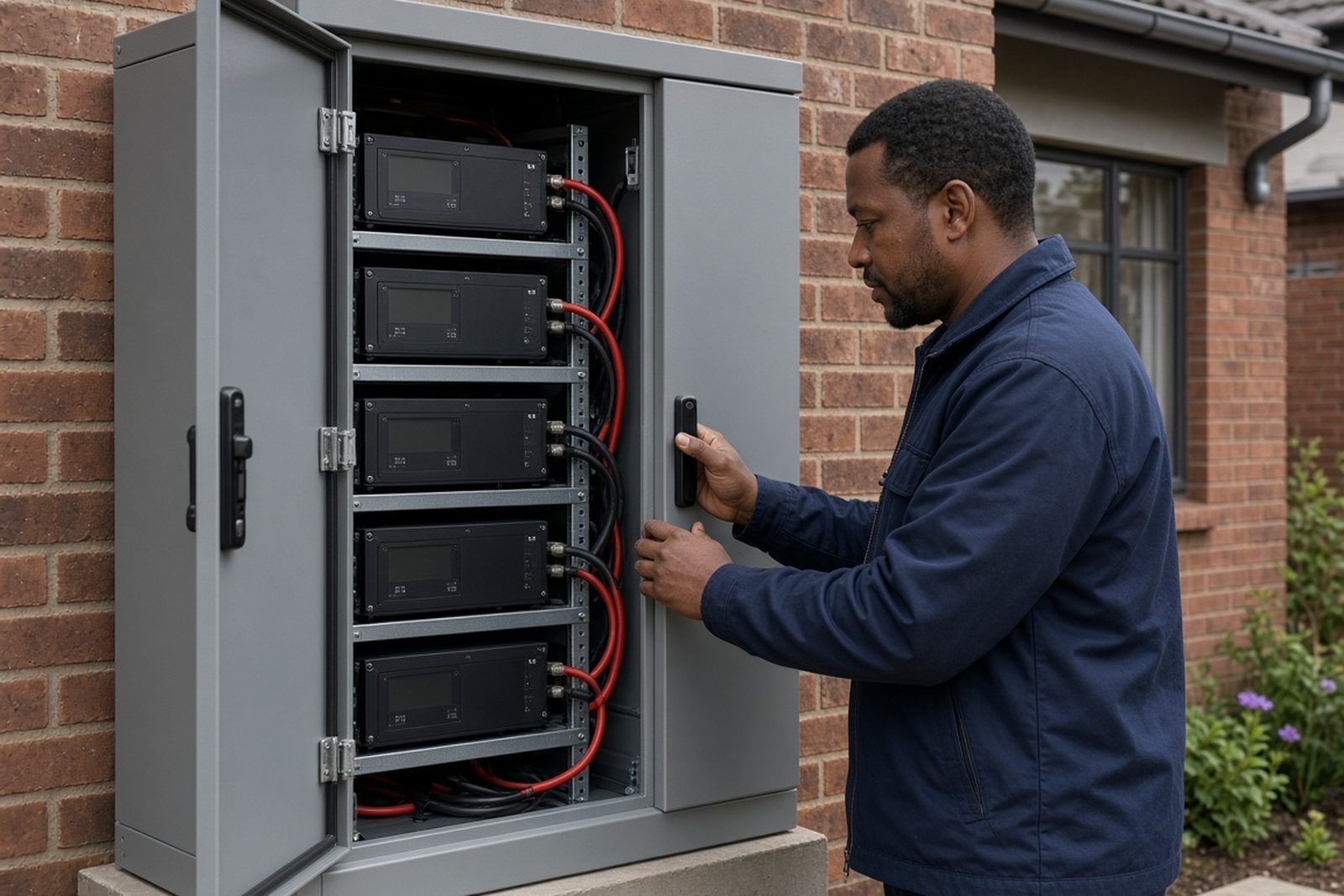
A battery cabinet is a dedicated enclosure for storing compatible backup batteries in a fixed indoor position. It helps keep the batteries off the floor, protects them from accidental knocks, and gives the installation a cleaner finish in homes, offices, shops and small workshops.
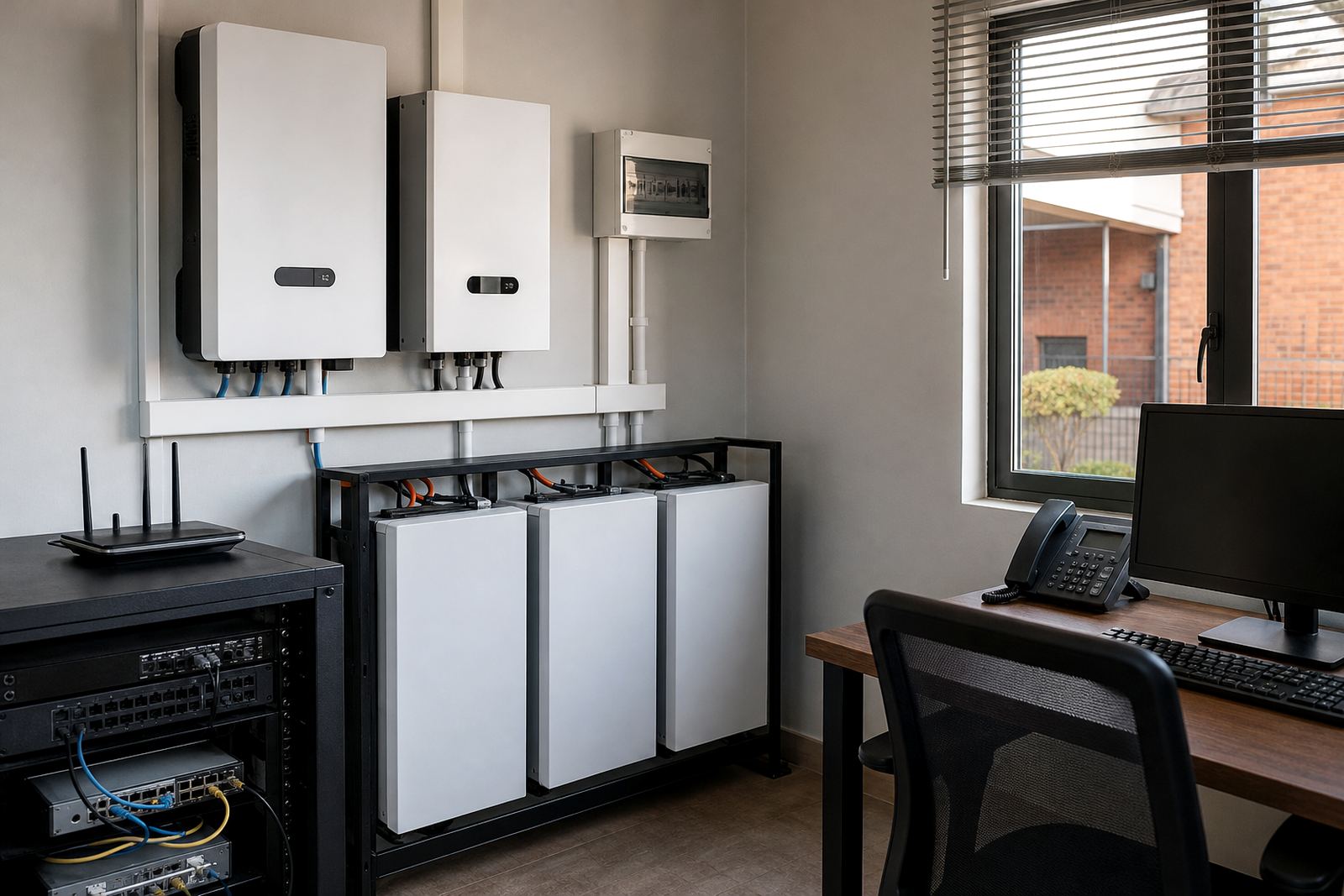
In load-shedding setups, the cabinet is used with an inverter, lithium batteries, protection devices and the correct cabling. It is not a power source on its own. Its job is to house the batteries neatly, reduce handling issues, and give the electrician a proper place to route cables and isolate the equipment when needed.
For Randburg and the wider Gauteng area, this matters in garages, storerooms, utility rooms and back offices where equipment can otherwise be exposed to dust, foot traffic, moisture or unplanned movement. A proper cabinet also makes battery expansions easier later on.
Cabinet sizes and placement options
Battery cabinets are usually selected according to the battery count, battery dimensions and the amount of cable space needed around the units. Some are compact for one or two batteries, while larger units allow multiple batteries to sit side by side or in a vertical stack, depending on the battery type and cabinet layout.
Common options include floor standing cabinets with lockable front access, ventilated steel cabinets for indoor utility rooms, and deeper enclosures for larger battery banks. The right choice depends on the inverter size, expected backup duration, available wall and floor space, and whether the system may grow later.
- Compact cabinets for single battery setups
- Mid size cabinets for two to four batteries
- Larger cabinets for expansion ready battery banks
- Lockable doors for shared or public areas
- Ventilated panels for better heat movement
Share what must stay on during an outage and the size of the property, and a backup planner will phone or message you.
Contact formWhere a battery cabinet suits best
This product suits homes and businesses that want backup batteries placed indoors rather than left exposed in open areas. It works well in Johannesburg apartments with limited utility space, Sandton offices with tidy plant rooms, and houses in Fourways, Midrand and Roodepoort where the owner wants a neater installation that is easier to maintain.
It is also practical in coastal and humid conditions when the battery room is dry and protected from direct weather. The cabinet should still be installed in a cool, dry area with enough clearance for airflow and maintenance. Avoid placing it in a cramped cupboard, against a hot wall, or where washing machines, geysers or other heat sources may raise the temperature around the batteries.
For commercial sites, the cabinet can help with access control. Batteries are kept in one place, cabling is less exposed, and service checks are quicker. That is useful in offices, medical rooms, retail stores and security rooms where backup power cannot be left untidy or easy to interfere with.
Installation, wiring and compliance requirements
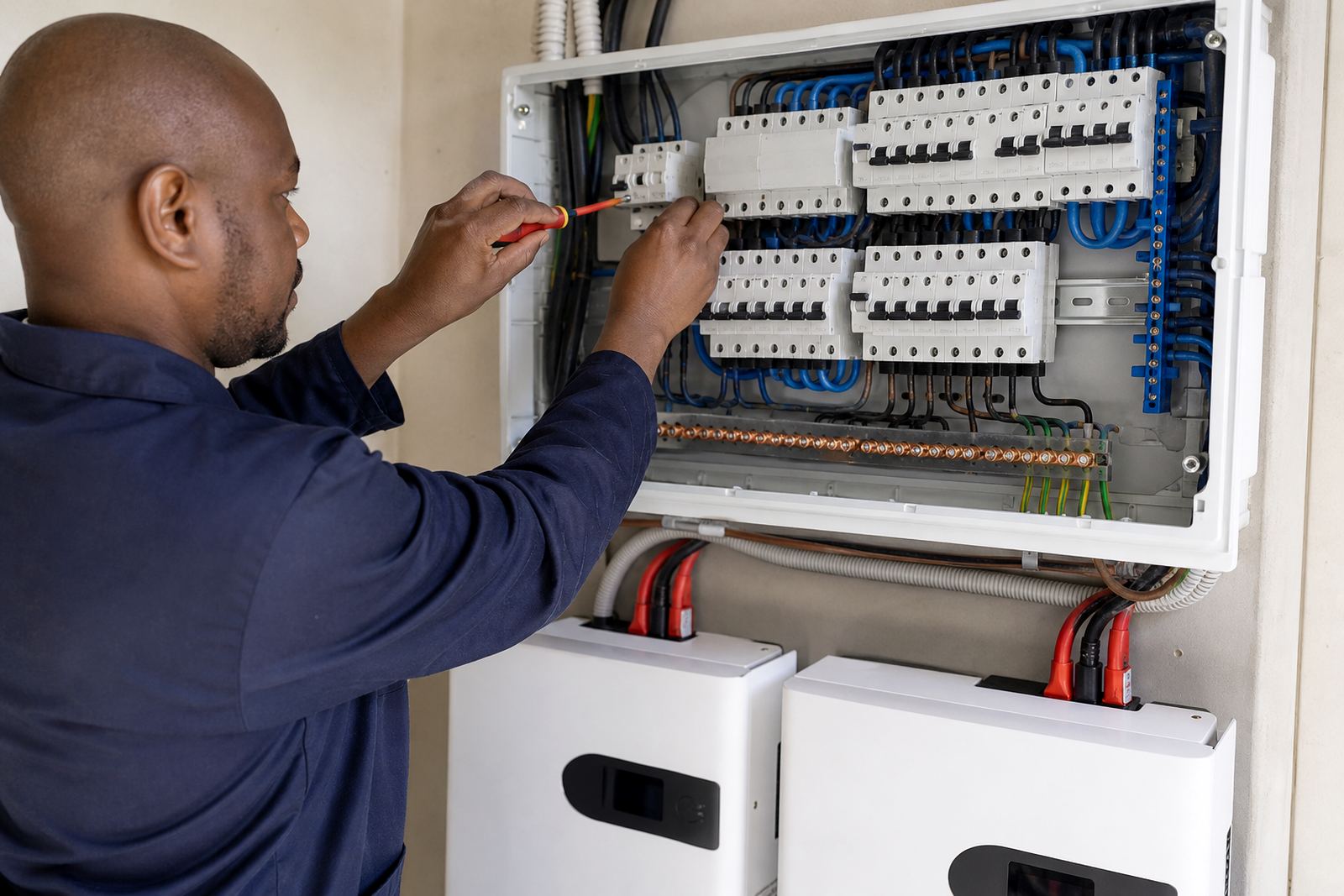
The cabinet itself is only one part of the job. The full battery and inverter installation must be done by a registered electrician, with proper earthing, DC protection, isolation and cable sizing matched to the system design. After installation, a certificate of compliance is required.
If the system is grid-tied, it must also be registered with the local municipality where required. This is important for any system that interacts with the supply grid, even where the main purpose is load-shedding backup. The electrician must confirm the correct changeover arrangement, inverter settings and protection devices before the system is put into service.
Good installation practice also includes checking wall strength or floor loading, keeping clear access to the cabinet doors, and leaving space for cable bends and service work. In some sites, extra trunking or conduit may be needed to keep the run tidy and protected from damage.
- Registered electrician required for installation
- Certificate of compliance needed after work is completed
- Municipal registration may be required for grid-tied systems
- Correct ventilation and access clearance must be maintained
- Earthing and protection equipment must match the system
Sizing the cabinet to the battery bank
Cabinet sizing starts with the battery model, number of batteries and the inverter demand. Lithium batteries vary in size, weight and terminal layout, so the cabinet must allow enough room for safe positioning, cable routing and inspection. A unit that is too tight can make maintenance difficult and restrict airflow.
When sizing a battery bank, the electrician will usually consider the essential circuits to be backed up, the expected outage duration and how much future expansion you may want. A home that only needs lights, Wi Fi and a few plugs will normally need a smaller setup than a business backing up office equipment, security systems and networking gear. The cabinet must match that plan, not just the battery count on day one.
Because batteries are heavy, the site should also be checked for floor strength, door width and movement space. In some installations, the cabinet needs to be positioned close to the inverter to limit cable length and reduce voltage drop. That can save time during servicing too.
What to confirm before you book a backup system
A battery cabinet needs very little day to day care, but the installation around it should be checked regularly. Keep the area clean and dry, make sure vents are not blocked, and check that the door closes properly. Dust build up, loose fasteners and poor airflow can affect the overall system over time.
During routine servicing, an electrician or technician should inspect cable terminations, protection devices, signs of heat, any unusual noises from nearby equipment, and the battery management readings if the system includes monitoring. If the cabinet is in a garage or storeroom, also check for dampness, insect intrusion and accidental contact from stored items.
Before ordering, confirm the battery make and model, how many units will be installed now and later, the indoor location, the door swing direction, and whether lockable access is required. It also helps to know if the installation will be used for a simple backup setup or a grid-tied system that needs municipal processes and additional paperwork.
- Battery model and dimensions
- Number of batteries now and later
- Indoor location and available floor space
- Ventilation and door clearance
- Need for locking, monitoring or cable entry points
System at a glance
| Product type | Indoor battery cabinet for compatible backup batteries |
|---|---|
| Typical use | Residential and commercial load-shedding backup |
| Placement | Floor standing indoor utility area, garage or plant room |
| Construction | Metal cabinet with access door and cable entry provision |
| Capacity range | Sized to suit single battery units up to larger battery banks |
| Compliance note | Installation by registered electrician, CoC required, municipal registration for grid-tied systems where applicable |