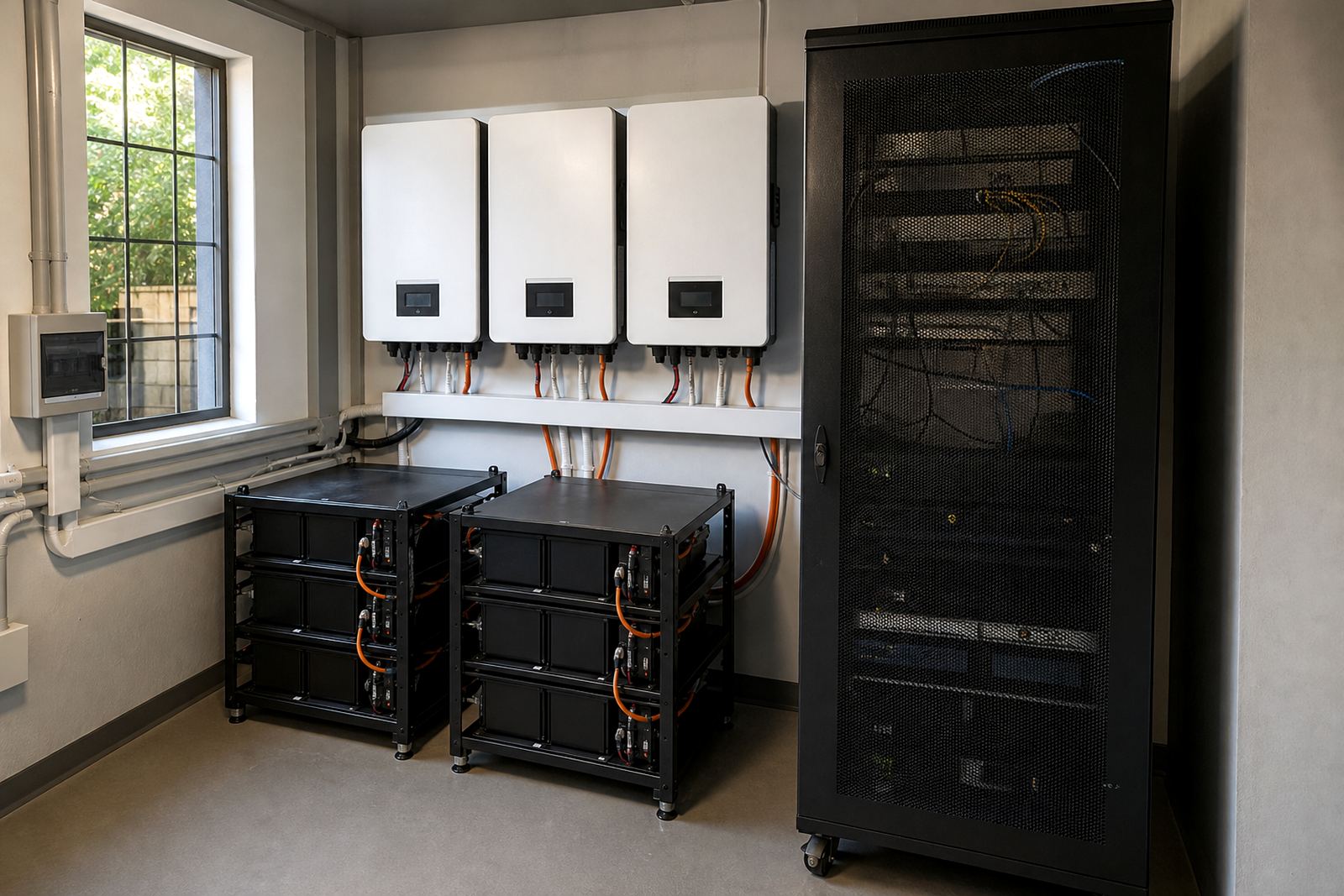

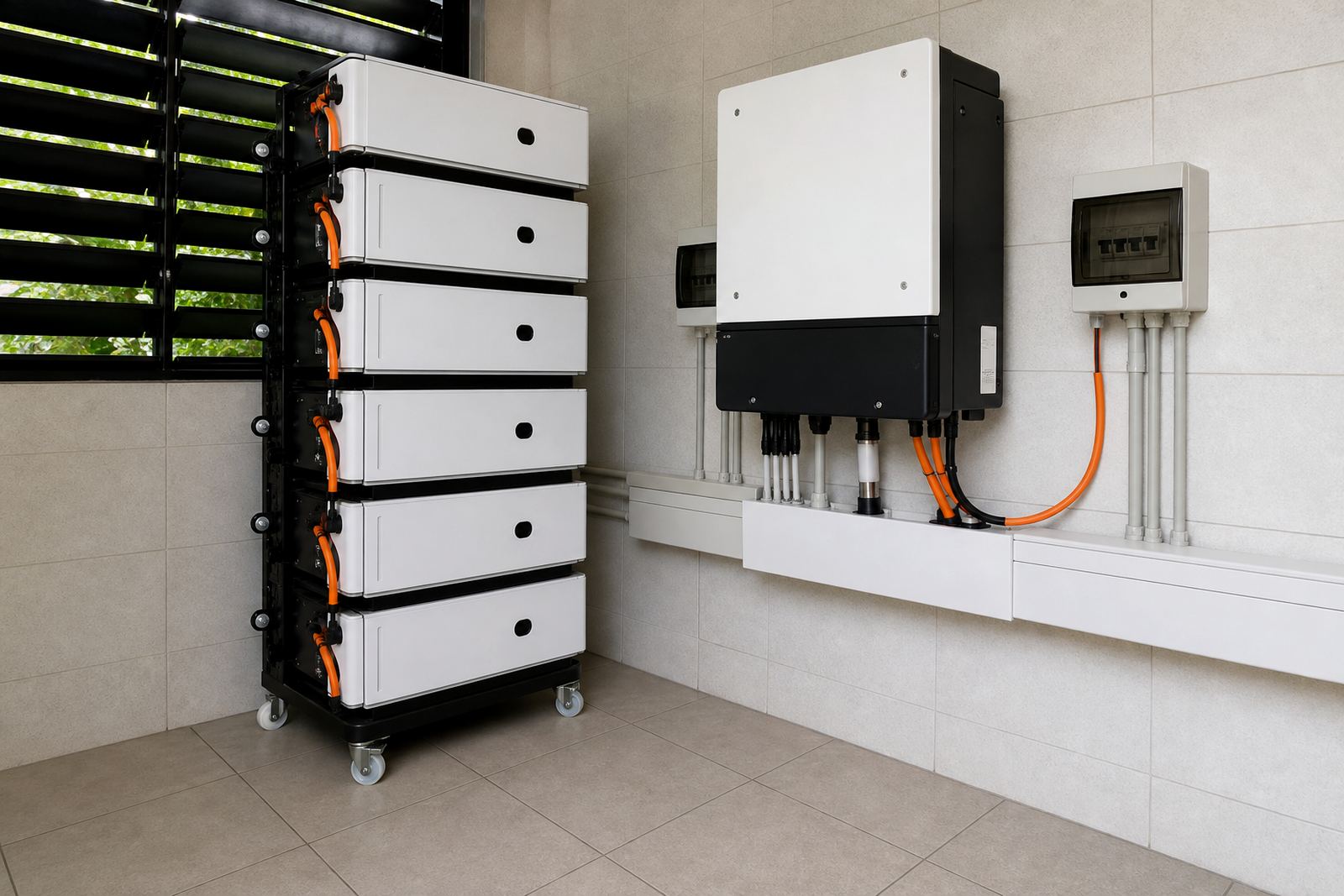
What a 10kWh lithium bank does in practice
A 10kWh lithium bank stores electrical energy for use when the grid goes off, during load-shedding, or when voltage dips make running equipment unreliable. In simple terms, it gives you a larger fuel tank for backup power. That helps when you want to keep lights, Wi-Fi, a gate motor, cameras, a fridge, point of sale equipment, or selected office loads running for longer without switching to a generator or going dark.
This size is often chosen by households that want a more comfortable overnight backup, or by small businesses that cannot afford repeated shutdowns. It is also a practical fit for properties in Gauteng where outages, tripping and local supply issues can happen more than once in a day. In coastal humidity is not the main issue here, but heat, dust and tight plant rooms still matter when choosing where the battery sits.
Battery banks are usually made up of one or more lithium modules connected to meet the required storage capacity. The inverter manages the charging and discharge, so the battery bank works as part of a complete system rather than on its own.
Typical sizing, voltage and configuration options
For most modern backup setups, a 10kWh lithium bank is used with a compatible inverter that can handle the battery voltage, charging current and communication protocol. The exact arrangement depends on whether the system is 48V based, how much essential load must run, and how long the backup period needs to last.
Common options include a single high-capacity module or two smaller modules banked together to reach the same storage level. In many homes, 10kWh is enough for a meaningful essential load package, but the real result depends on what is switched on, not just the storage number. A fridge, fibre, lights and TV draw far less than air conditioning, kettles or multiple circulation pumps. If your loads are not managed, the bank can empty quicker than expected, so sizing must start with the actual appliances to be carried.
- Storage capacity: 10kWh nominal, subject to usable depth of discharge
- System use: backup for essential loads, not whole premises unless properly designed
- Inverter pairing: must match battery voltage and approved charge settings
- Expansion: suitable where future battery expansion is planned
Share what must stay on during an outage and the size of the property, and a backup planner will phone or message you.
Contact formWhere this size suits homes and businesses
This battery bank suits larger homes, townhouse complexes, home offices, small retail sites and service businesses that need better overnight continuity. In Randburg, Sandton, Fourways and Midrand, it is often used where remote work, alarms and internet uptime are important. In Pretoria, Centurion and Roodepoort it can support a wider essential load list if the inverter and wiring are sized correctly.
For businesses, it can keep a core operating set going through short and medium outages. That may include workstations, routers, access control, a till system, a few lights and selected security circuits. It is less suitable if the site expects to run high demand equipment like large air conditioners, heavy tools or ovens without proper system design.
If your building is on a strict body corporate or municipal arrangement, it is worth checking where the battery can be installed, how cabling can be routed, and whether the backup point must be restricted to essential circuits only. A neat layout also makes later servicing much easier, which saves time when there is a fault or you want to add capacity later on.
Installation, electrical protection and compliance
Battery installation must be done by a registered electrician. A Certificate of Compliance is required for the electrical work, and any grid-tied system must be registered with the local municipality where applicable. That is not a box-ticking exercise only. It protects the owner, helps keep the installation legal, and gives a proper record for future maintenance or property sale.
Good installation includes correctly rated cabling, DC isolation where needed, overcurrent protection, correct earth connections and tidy enclosure work. The battery should be placed where heat build-up is controlled, with enough clearance for service access and with protection from water ingress, dust and direct sun. In Gauteng garages and storerooms can become very warm, so ventilation and mounting position matter quite a bit.
- Registered electrician required for installation
- Certificate of Compliance required for the electrical work
- Municipal registration needed for grid-tied systems where applicable
- Correct inverter settings, protections and cable sizing are essential
Care, servicing and battery life
Lithium batteries need less day-to-day attention than older battery types, but they are not maintenance free. The system should be checked for error codes, loose terminations, heat, unusual discharge patterns and communication issues between the inverter and battery. If the battery is cycled hard every night during load-shedding, periodic checks are even more important.
Routine servicing helps spot issues before they become a shutdown. That can include fault checks, monitoring setup review, battery expansion checks and a general look at the installation cabling and protection devices. A clean installation with the right settings usually lasts better than one that is constantly pushed beyond its intended use. It sounds simple, but many backup problems start with poor sizing rather than the battery itself.
If the site has frequent outages, the user habits matter too. Heavy appliances should be managed carefully and essential loads kept on dedicated circuits where possible. A bank this size gives breathing room, but it still needs sensible use.
Before you buy a backup system
Before ordering a 10kWh lithium bank, make sure you know how much backup you actually need and what the inverter can support. The battery must be compatible with the inverter brand and model, especially for communication and charge control. It also helps to know whether the site may expand later, because a good first install can be planned with extra capacity in mind.
- Current inverter size and battery compatibility
- Essential loads list, including fridges, Wi-Fi, lights and security
- Whether the site needs essential circuit wiring or a changeover solution
- Space for installation, ventilation and safe cable routing
- Need for future expansion or monitoring setup
- Whether the system is grid-tied and needs municipal registration
It is also useful to confirm if the property is in a townhouse, office park or standalone building, since access rules and electrical routes can change the job. If you are unsure, a site assessment is the best starting point. The aim is to match the battery bank to the real load, not guess and hope for the best.
System at a glance
| Product type | Lithium battery bank for backup power |
|---|---|
| Nominal capacity | 10kWh |
| Typical system use | Essential load backup for homes and businesses |
| Common pairing | Compatible inverter system |
| Installation requirement | Registered electrician and Certificate of Compliance |
| Compliance note | Grid-tied systems must be registered with the local municipality where applicable |