Start With the Loads That Must Stay On
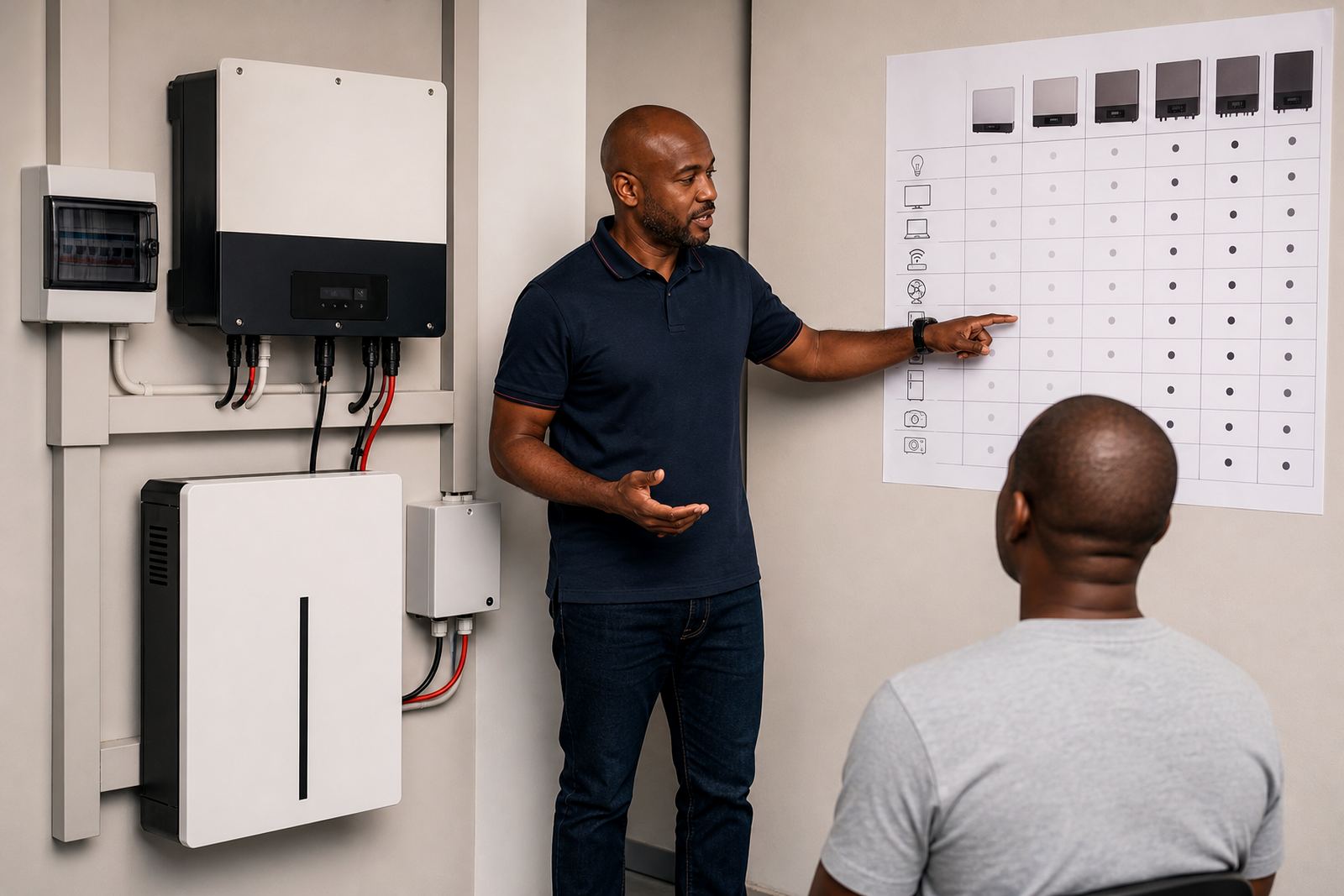
When you size for four hours, the first step is to separate essential circuits from everything else. A home in Randburg will often keep lights, Wi-Fi, a TV and a few plugs running, while a small office in Midrand may need computers, networking gear and point-of-sale equipment. The more carefully you choose the essentials, the easier it is to match the inverter and lithium battery bank to the job.
Think in watts, not guesses. Add up the running load for each item and note any appliance with a start-up surge such as a fridge or pump. If you are trying to keep a geyser, air conditioner or kettle on backup, the battery size rises quickly and the inverter must also cope with the surge.
- List each essential circuit and appliance
- Check running watts and start-up surge
- Separate must-run items from nice-to-have loads
- Leave out high-draw appliances where possible
What Changes at the Four Hour Mark
A two-hour plan and a four-hour plan are not the same thing. Once the outage period doubles, battery capacity has to increase or the load has to come down. That is where many systems fall short, especially in older homes in Pretoria or commercial premises in Roodepoort where the backup was sized for light use only.
For four hours, you also need to think about depth of discharge and recharge time. Lithium batteries handle regular cycling better than older battery types, but repeated long outages still need careful sizing. If the system is too small, the batteries may run flat before load-shedding ends and the recharge window may not be enough before the next cut.
In practical terms, the longer the backup period the more important it becomes to trim unnecessary loads and plan for the whole cycle, not just the first hour.
Share what must stay on during an outage and the size of the property, and a backup planner will phone or message you.
Contact formHow to Build a Sensible Backup Size
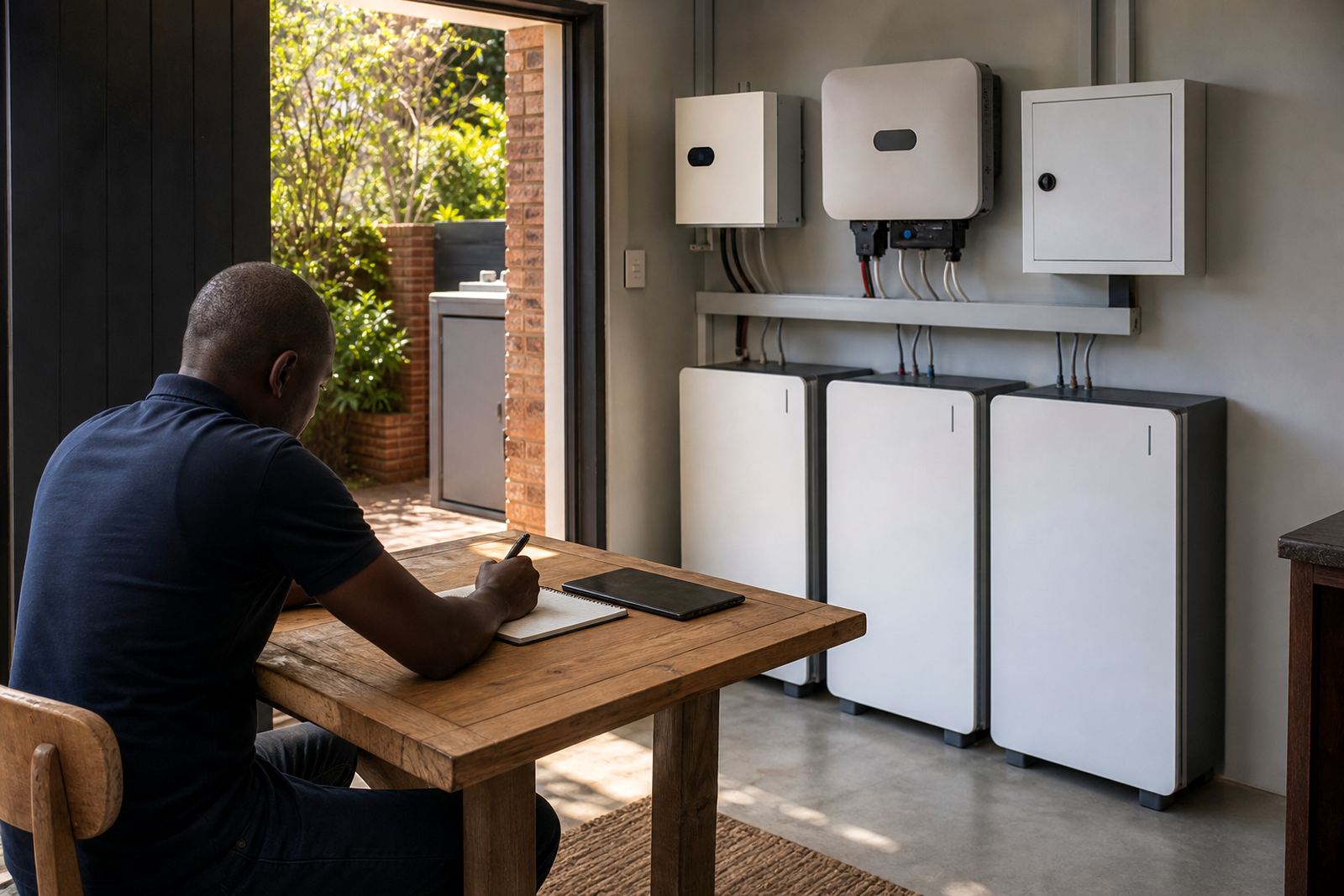
A sound backup plan starts with your total essential load and the number of hours you need support. From there, the inverter must be rated above the expected running load, with headroom for surges and future changes. The battery bank then needs enough usable capacity to carry that load for the full outage period.
For many Gauteng homes, a compact setup can cover lights, internet and entertainment. A larger household with multiple fridges, office equipment or borehole pumping may need a bigger battery bank and a higher capacity inverter. Businesses often need a different approach because cash registers, routers and security systems may need separate treatment.
- Measure the essential load in watts
- Check inverter output and surge capacity
- Confirm usable battery capacity for four hours
- Allow room for future battery expansion
- Check whether the system must stay on during switch over
Battery Cycling and Why It Matters
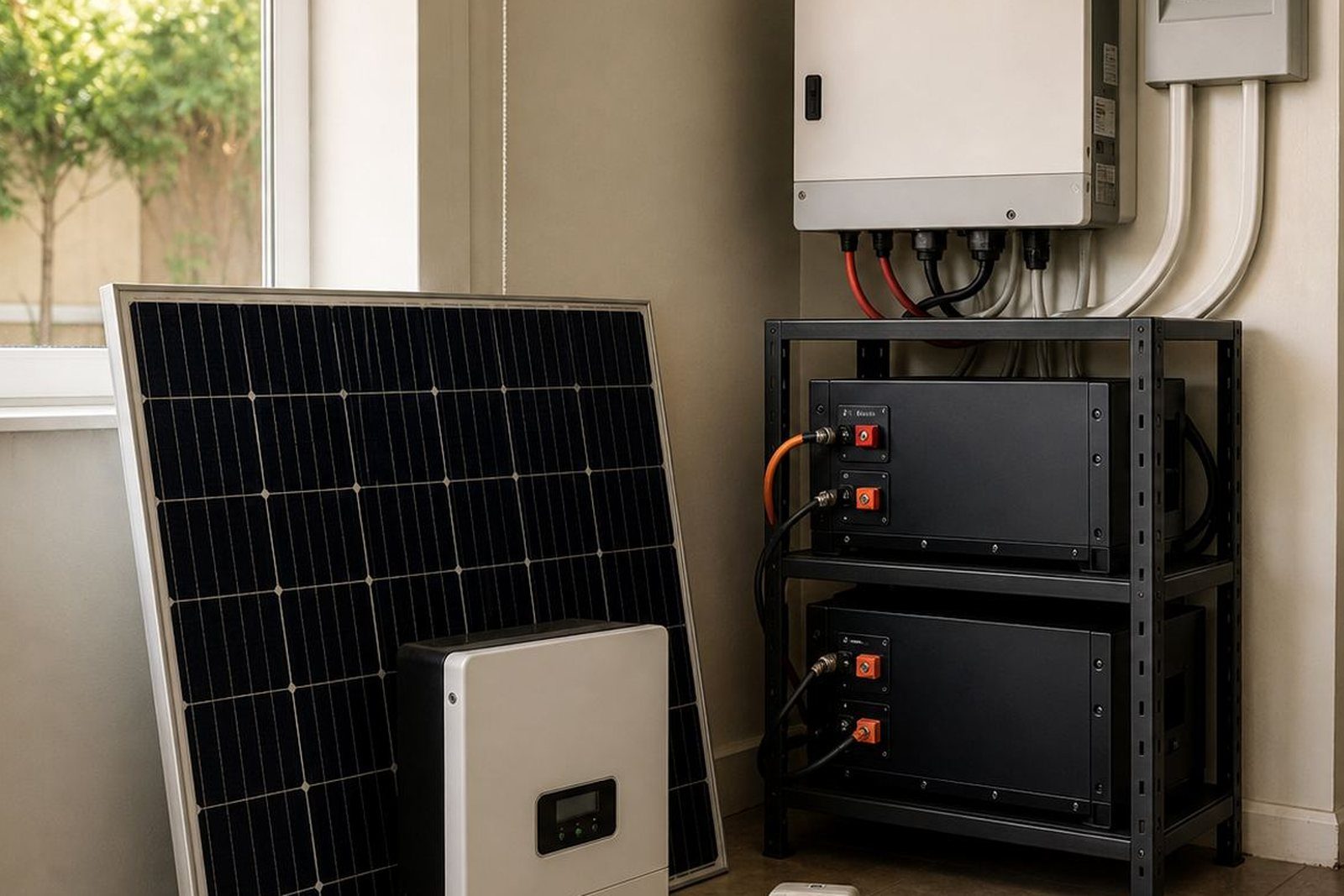
Four-hour backup usually means the batteries will work harder and cycle more often. That affects how the system is used day to day. Frequent cycling is normal for lithium batteries, but the installation still needs to suit the pattern of use, charging time and ambient conditions. In hotter areas or coastal humidity zones, ventilation and clean mounting matter just as much as capacity.
If the batteries are placed in a cramped garage or a dusty storeroom, heat build-up can shorten service life. Keep the area dry, stable and accessible for checks. Good cable sizing, proper protection and tidy routing also help keep voltage drop under control.
- Provide clear airflow around the battery area
- Keep units off damp floors and away from direct sun
- Check cable size and breaker ratings
- Plan for regular monitoring if load changes often
Installation, Compliance and Municipal Rules
Any inverter and battery installation must be done by a registered electrician. After the work is completed, a certificate of compliance is required. If the system is grid-tied, municipal registration is also needed. That applies across Johannesburg, Sandton, Fourways, Centurion and the wider Gauteng area.
This is not just paperwork. Correct compliance protects the property, the wiring and the people using the system. It also helps with fault finding later, especially where essential circuit wiring or changeover arrangements have been added to an existing board. If you are adding battery expansion at a later stage, the records need to stay in order.
Good compliance support means the system is easier to maintain, easier to inspect and less likely to cause issues during future upgrades.
A Simple Checklist Before You Commit
Before you choose the final setup, go through the basics carefully. A four-hour design is about matching real use, not chasing a bigger number on paper. If the house or business changes often, ask what can be added later and what must be included from the start.
- Which loads must stay on for four hours?
- Is the inverter sized for both running load and surge?
- Will the batteries still recharge before the next outage?
- Is the installation done by a registered electrician?
- Has the compliance certificate been arranged?
- If grid-tied, has municipal registration been handled?
- Can the system be monitored and checked over time?
A careful site assessment helps answer these questions before any hardware goes in. It also helps avoid undersizing, which is one of the most common mistakes when people want longer backup without adjusting the load.