Start With the Loads You Actually Need On
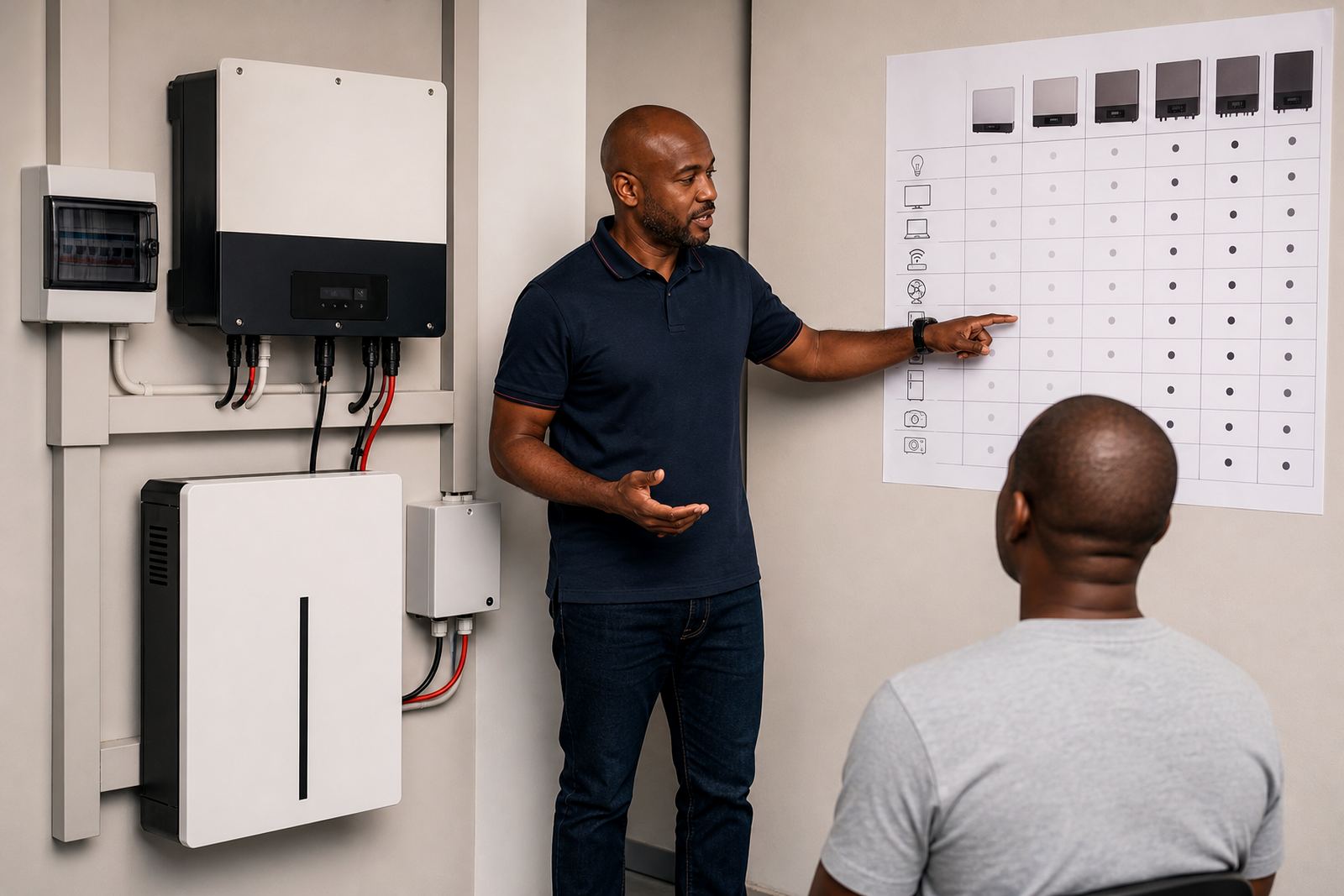
The best way to choose an inverter is to list the items you want running when the power goes off, then add up their watts. Start with the basics: lights, Wi-Fi, TV, laptop charging, a fridge and a few plugs for day to day use. In a small office it may also include a computer, router, printer and one or two workstations. You do not need to back up every circuit in the building, only the essentials.
Look at running power first, then think about what starts at the same time. A fridge motor, gate motor or pump can draw more when it starts up, so the inverter must handle that extra surge. If you are not sure, write down the appliance label ratings and keep a little headroom. That helps avoid nuisance trips and gives the system space to cope when loads change through the day.
- List every item you want on backup
- Check the watts or amps on each appliance label
- Add a margin for startup surges and future needs
- Separate essential loads from non essential loads
Understand Inverter Size, Battery Capacity and Runtime
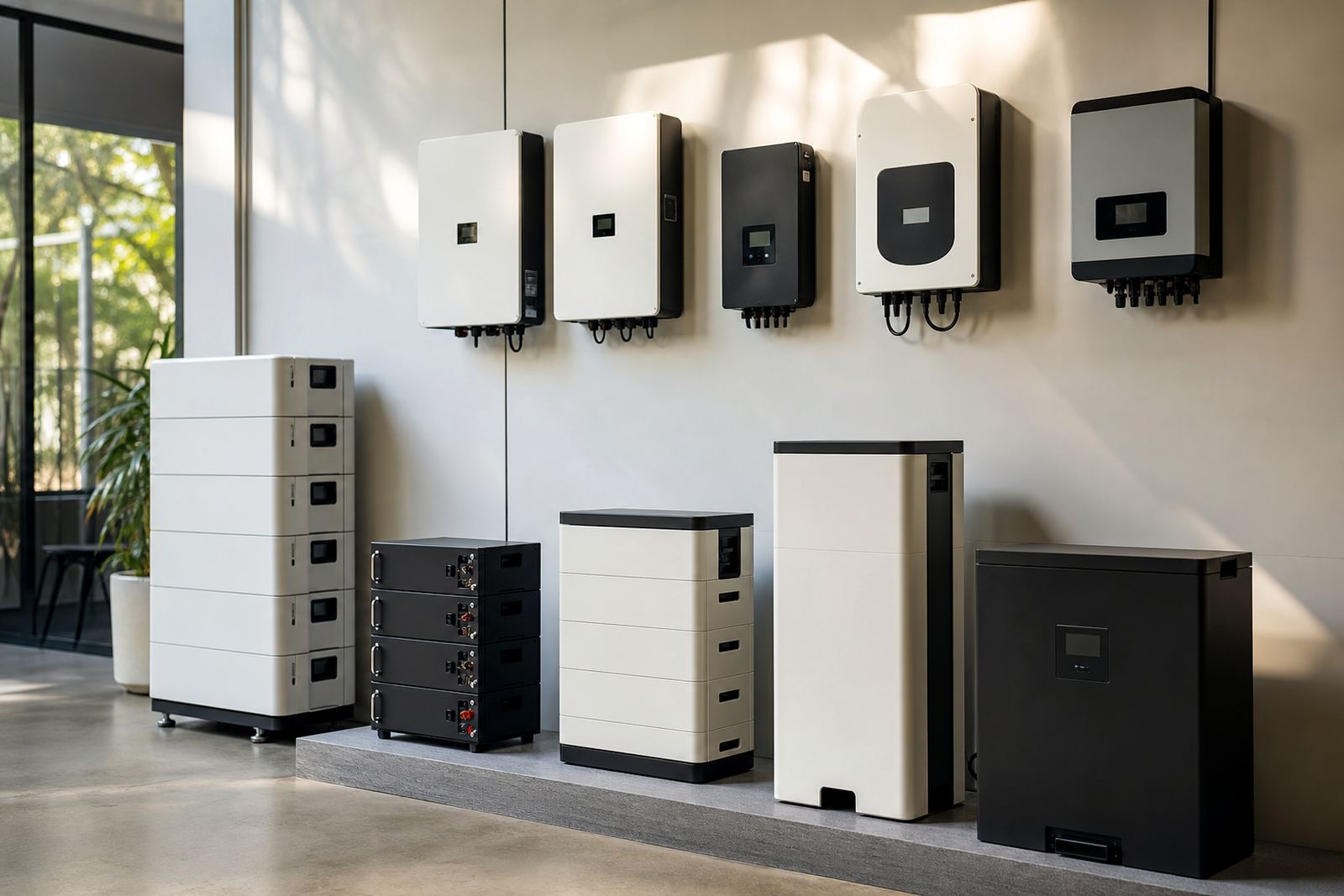
Inverter size is usually given in kilovolt amps or watts. A 1kVA to 3kVA inverter can suit lighter residential backup such as lights, internet and a few small appliances. A 5kVA unit is often used for bigger homes, small offices or mixed essential loads. Larger systems are used where more circuits must stay live, or where the site has heavier daytime use. The inverter needs to match the battery bank too, because the batteries decide how long the backup lasts.
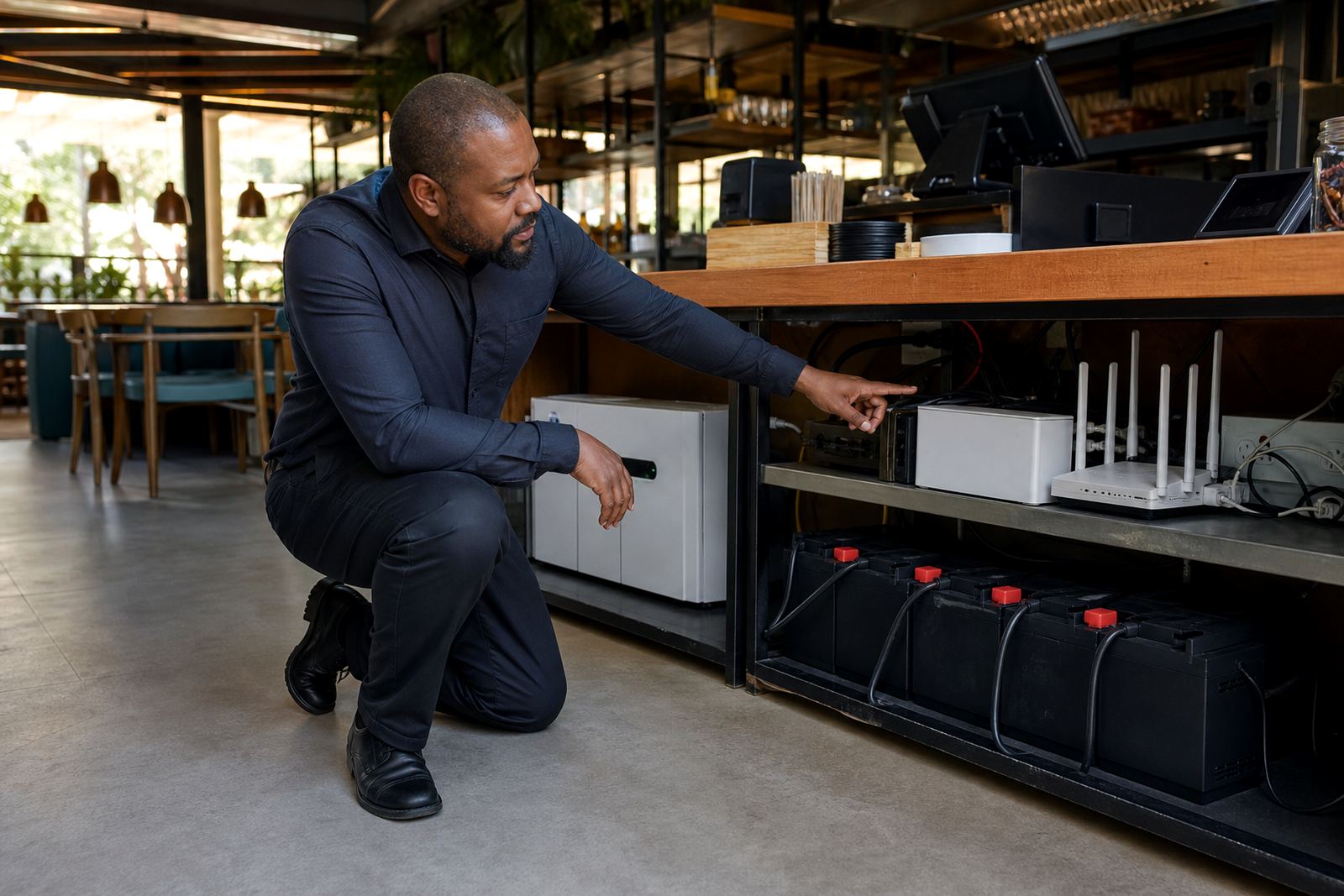
Lithium batteries are commonly chosen for load-shedding backup because they charge efficiently and handle regular cycling well. Battery capacity is measured in kilowatt hours, and the usable portion depends on the battery management settings and the total system design. More capacity gives longer runtime, but only if the inverter, cabling and protection devices are all sized correctly. If the goal is to bridge two short outages a smaller bank may be enough, but if your area sees longer cuts or repeated stages, extra capacity is worth considering.
- Small homes: lights, router, TV and phone charging
- Medium homes: plus fridge and a few socket points
- Offices: network equipment, workstations and key admin loads
- Business sites: include essential circuits and any critical process loads
Share what must stay on during an outage and the size of the property, and a backup planner will phone or message you.
Contact formMatch the System to the Property and the Area
A townhouse in Randburg may need a very different setup from a family home in Centurion or a shop in Midrand. Roof space, metre position, cable routes and the condition of the existing distribution board all affect the final design. Coastal humidity is not the main issue in Gauteng, but dust, heat in ceiling spaces and long cable runs still matter. Good sizing starts with a site assessment so the final system fits the property instead of forcing the property to fit the system.
Think too about how the backup will be used. Some households only need evening coverage for load-shedding, while others want a more flexible setup that can support daytime work, home schooling or a small business operation. If you need backup for a gate motor, alarm or fibre equipment, make sure those loads are included in the plan. A practical design avoids overloading the inverter and keeps the most important circuits active when the grid is off.
Checklist Before You Choose an Inverter
Before you commit to a size, work through a simple checklist. This keeps the decision grounded in real usage instead of guesswork. It also helps when comparing one system against another because you can see exactly what each option is meant to support. If you are upgrading later, the same checklist helps you decide whether to add battery capacity, increase inverter size or rework the essential circuits.
- What must stay on during load-shedding
- How long you need backup for each outage
- Whether the system is for home or business use
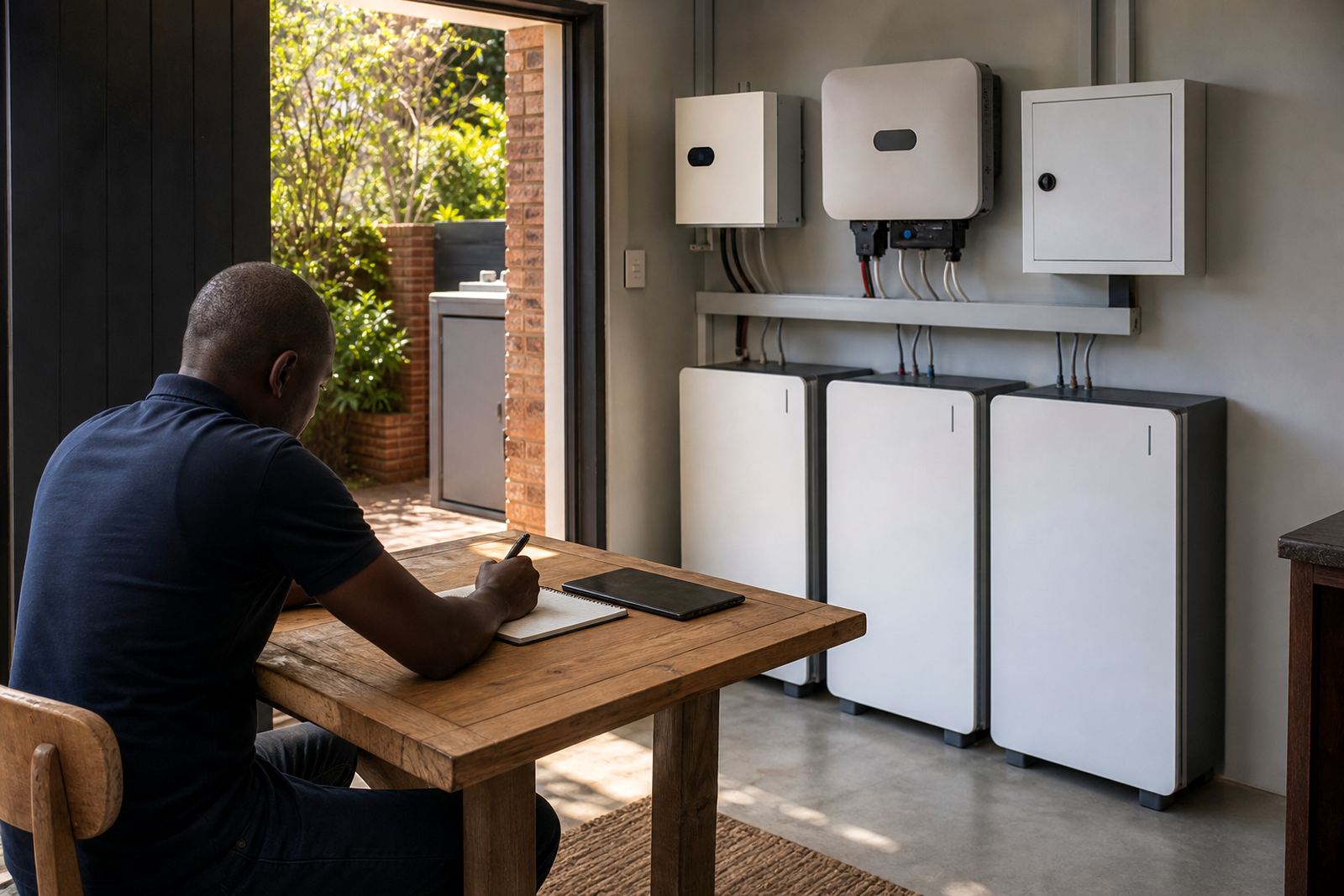
- If there is space for wall mounting or floor mounting
- Whether the current wiring board needs changes
- Whether the site may need a battery expansion later
It also helps to note if you have equipment with sensitive electronics. Computers, routers, TVs and control systems usually prefer stable power, and a properly planned inverter setup can support that better than ad hoc extensions and loose plugs. The wiring layout should keep critical circuits neat and easy to identify, especially where multiple family members or staff use the same space.
Installation, Compliance and Municipal Registration
Inverter and battery installations must be done by a registered electrician. Once the work is complete, a certificate of compliance is required for the electrical installation. If the system is grid-tied or can export to the municipal supply, the installation must also be registered with the local municipality according to the relevant rules. This is not just paperwork, it is part of making the system safe and acceptable for the property.
Correct installation includes suitable protection, correct cable sizing, isolators and proper changeover arrangements where needed. Essential circuit wiring should be clearly identified so the system can be tested and serviced later without confusion. Poorly planned installations can cause nuisance faults, battery strain or damaged appliances, so the quality of the wiring matters as much as the equipment itself.
When to Add Batteries, Monitoring or a Larger Inverter
Many customers start with a modest setup and expand later. That can work well if the initial design allows for it. If your outages are becoming more frequent, your daytime usage has increased or your business can no longer afford interruptions, it may be time to add battery capacity or move to a larger inverter. Monitoring setup can also help you see how the system behaves during normal use and during outages, which makes it easier to plan the next step.
Routine servicing and fault checks are useful too, especially in busy households and commercial sites where the system is used often. Battery settings, cable terminations and changeover points should be checked from time to time, because small issues are easier to fix before they become bigger problems. In Randburg, Johannesburg and the surrounding areas, many clients prefer a system that starts simple and grows as their needs change.
- Add batteries when runtime is too short for your outage pattern
- Consider a bigger inverter if the load trips or starts to feel limited
- Use monitoring if you want better visibility on usage
- Book servicing if the system is under regular strain