

1. Start with the system type before you talk to council
Not every backup system needs the same paperwork. A simple backup setup that only powers selected circuits during outages is treated differently from a grid-tied system that can interact with the municipal supply. In Randburg, Johannesburg and across Gauteng, the first step is to confirm whether your design will ever export power or remain isolated from the grid during normal operation.
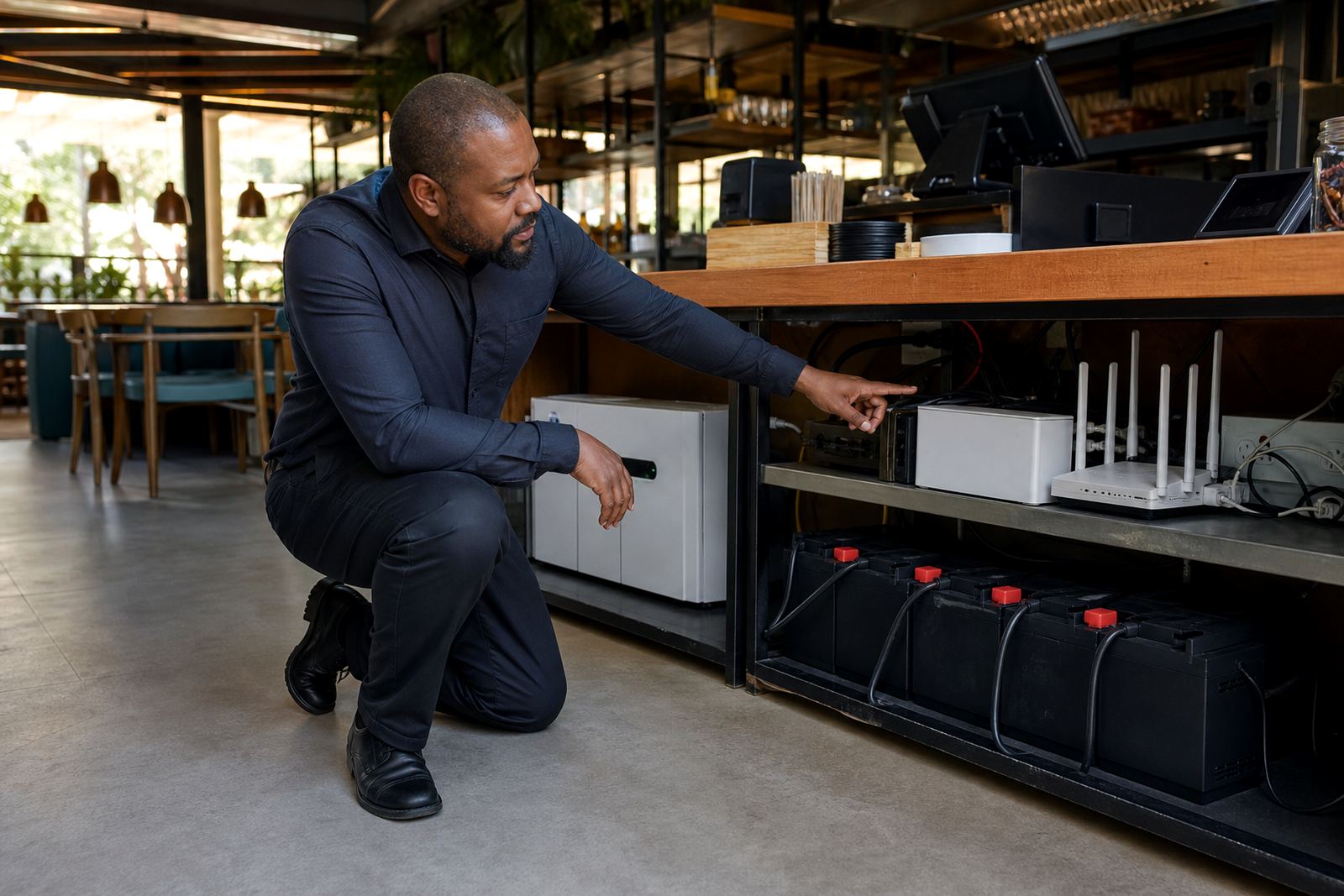
If the system will work alongside the municipal supply, the installer must check the wiring arrangement, the inverter type and the battery setup before any registration is prepared. For homes in Sandton or Fourways, this usually starts with the main distribution board and the essential circuits you want backed up. For business premises in Midrand, Centurion or Roodepoort, the load profile may include lighting, routers, point-of-sale equipment or selected office circuits.
2. Get a proper site assessment and backup sizing
A site assessment helps determine what your system can actually support during load-shedding. Good sizing looks at the size of the inverter, battery capacity, essential loads, starting surges and how long you want the system to run. It also checks whether the installation space is suitable, with enough ventilation, safe cable routes and protection from heat or damp conditions.
In coastal conditions this matters even more, but even in inland Gauteng a garage or storeroom can get hot and dusty. A battery bank should be installed where there is stable footing and enough clearance for maintenance. If the load is too high, the system may trip when several appliances start at once. If it is oversized, you may pay for more than you need. A sensible assessment avoids both problems.
- List the circuits you want on backup
- Note heavy loads like kettles, microwaves and pumps
- Check the available wall space and cable runs
- Confirm battery location and ventilation
- Ask whether the system is backup only or grid-tied
Share what must stay on during an outage and the size of the property, and a backup planner will phone or message you.
Contact form3. Know when municipal registration is required
Municipal registration is usually required when a system is connected to the grid in a way that could affect the public supply. That includes many grid-tied inverter installations, especially where the system may feed energy back or where the changeover arrangement interacts with the municipality’s network. Each municipality can have its own process and forms, so what is accepted in Johannesburg may need slightly different documentation from Pretoria or another local authority.
The practical rule is simple: if your system is connected to the grid in a formal way, do not assume it can be installed first and sorted out later. Registration is part of the plan from the start. That protects the property owner and helps avoid problems during inspection or future property transfers. It also helps if there is a fault or a complaint from the supply side.
4. Use a registered electrician for the installation
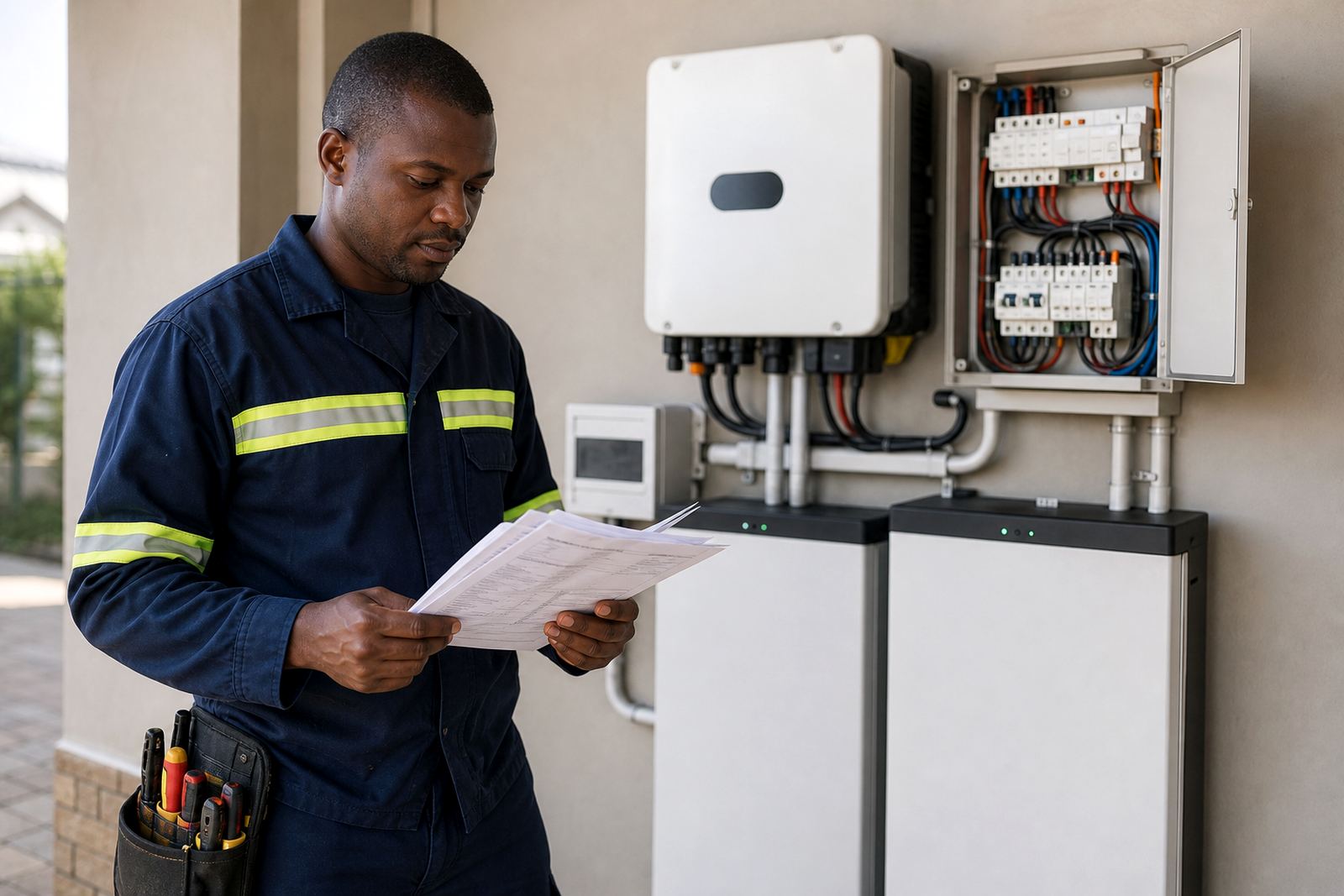
Backup and grid-tied systems must be installed by a registered electrician. This is not a detail to leave for later because the wiring, isolation, earthing and changeover arrangement all need to be done correctly. A registered electrician can also confirm whether the inverter and battery layout meets local safety requirements and whether the installation needs additional protection devices.
After installation, a Certificate of Compliance should be issued where required. Keep it with your property records. If the system is later expanded with more batteries or a revised inverter setup, the compliance position may need to be checked again. A neat file helps when you sell the property, rent it out or need proof of the work for a municipal query.
- Registered electrician signs off the wiring
- Certificate of Compliance is issued where applicable
- Earthing and isolation are checked
- Changeover and essential circuits are labelled
- Any later battery expansion is reviewed again
5. Prepare the documents before you submit anything
Most municipal registration processes go smoother when your paperwork is in order. The exact list can vary, but the basics are usually the same: system details, installer details, property details and proof that the installation has been completed safely. If the system is at a business premises, the person responsible for the site should also keep internal records of the circuits covered and any shutdown procedure.
Before submission, check that all names and addresses match the property records. A small mismatch can slow the process down. It is also wise to keep photos of the main components, the distribution board changes and the inverter and battery location. These are useful if the municipality asks for clarification or if a future electrician needs to understand the setup quickly.
- Property details and account information
- Installer and electrician details
- System description and wiring arrangement
- Certificate of Compliance if issued
- Photos and labels for the completed installation
6. Keep the system compliant after registration
Registration is not the end of the job. Systems should be maintained so they stay safe and suitable for the property. Batteries age over time, cables can loosen and dust can build up around equipment. Regular checks are especially useful for offices, small workshops and medical or admin sites where power interruptions affect daily work. In homes, routine servicing helps catch minor issues before they become a headache.
If you add more batteries, change the inverter setup or alter the way the system interacts with the grid, the original registration may need to be reviewed. Do not make electrical changes without checking the compliance position first. Keep labels clear, keep the equipment accessible and make sure anyone working on the property knows where the backup circuits are located.
7. A practical checklist for homeowners and businesses
Before installation day, use this quick checklist to stay on track. It is useful for properties in Randburg, Pretoria, Centurion, Midrand, Roodepoort and nearby areas where homes and businesses often need a mix of backup convenience and formal compliance. Good preparation makes the final setup cleaner and reduces delays.
- Confirm whether the system is backup only or grid-tied
- List the appliances or circuits that must stay live
- Book a site assessment before buying equipment
- Use a registered electrician for the installation
- Ask about municipal registration where required
- Keep the Certificate of Compliance and all system records
- Arrange monitoring setup if you want fault alerts or usage checks
If you are unsure which path applies to your property, start with the basics and work from there. A properly planned inverter and lithium battery system should match the building, the load and the local rules, not the other way around.