What system commissioning covers
System commissioning is the practical handover phase of a backup power installation. It confirms that the inverter, battery bank, protection devices, changeover arrangement and essential circuits are all working together as they should. For homes and businesses in Randburg, Johannesburg and across Gauteng, this step matters because load-shedding often exposes small wiring issues, incorrect settings or weak battery connections that only show up once the system is under real use.
Our commissioning service is focused on final checks after the physical installation is complete. We confirm that the equipment starts cleanly, that charging and discharging behave correctly, and that the backup arrangement supports the loads it was sized for. If your system includes grid-tied functions or export control, registration with the local municipality may be needed before operation. Installation and sign-off must be handled by a registered electrician, and a certificate of compliance is required where applicable.
Checks carried out during startup
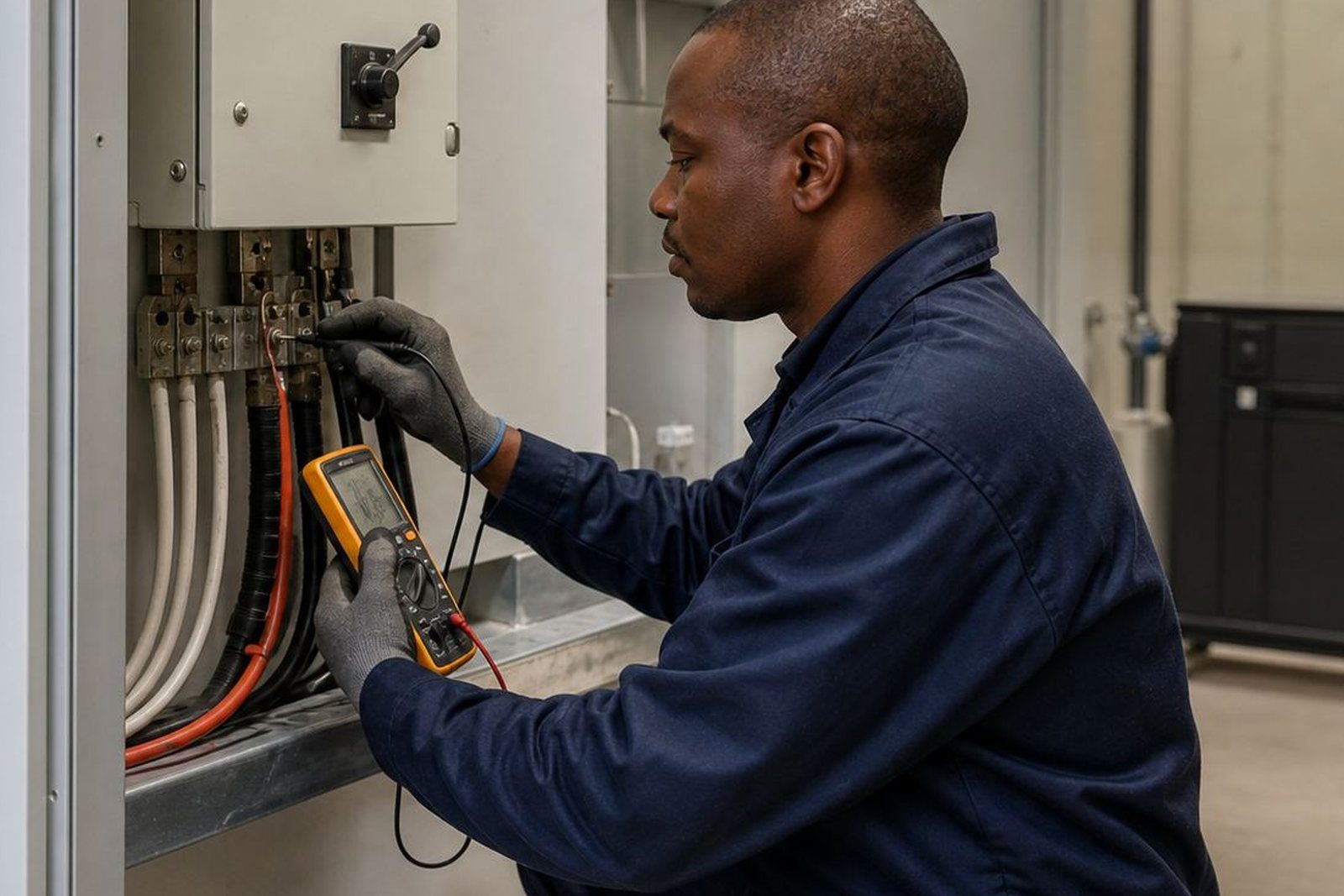
We work through the system in a fixed order so faults are found before they cause trouble. That usually includes battery polarity checks, cable tightening, breaker and isolator verification, inverter setup review, essential load confirmation and a test of the changeover or bypass arrangement. Where monitoring equipment is fitted, we also check that the display or app links correctly and that readings make sense.
- Battery bank voltage and connection checks
- Inverter settings review for charging, cut-off and load priorities
- Essential circuits tested one by one
- Changeover or transfer function confirmed
- Monitoring setup checked where fitted
- Basic fault review for alarms, loose terminations or heat build-up
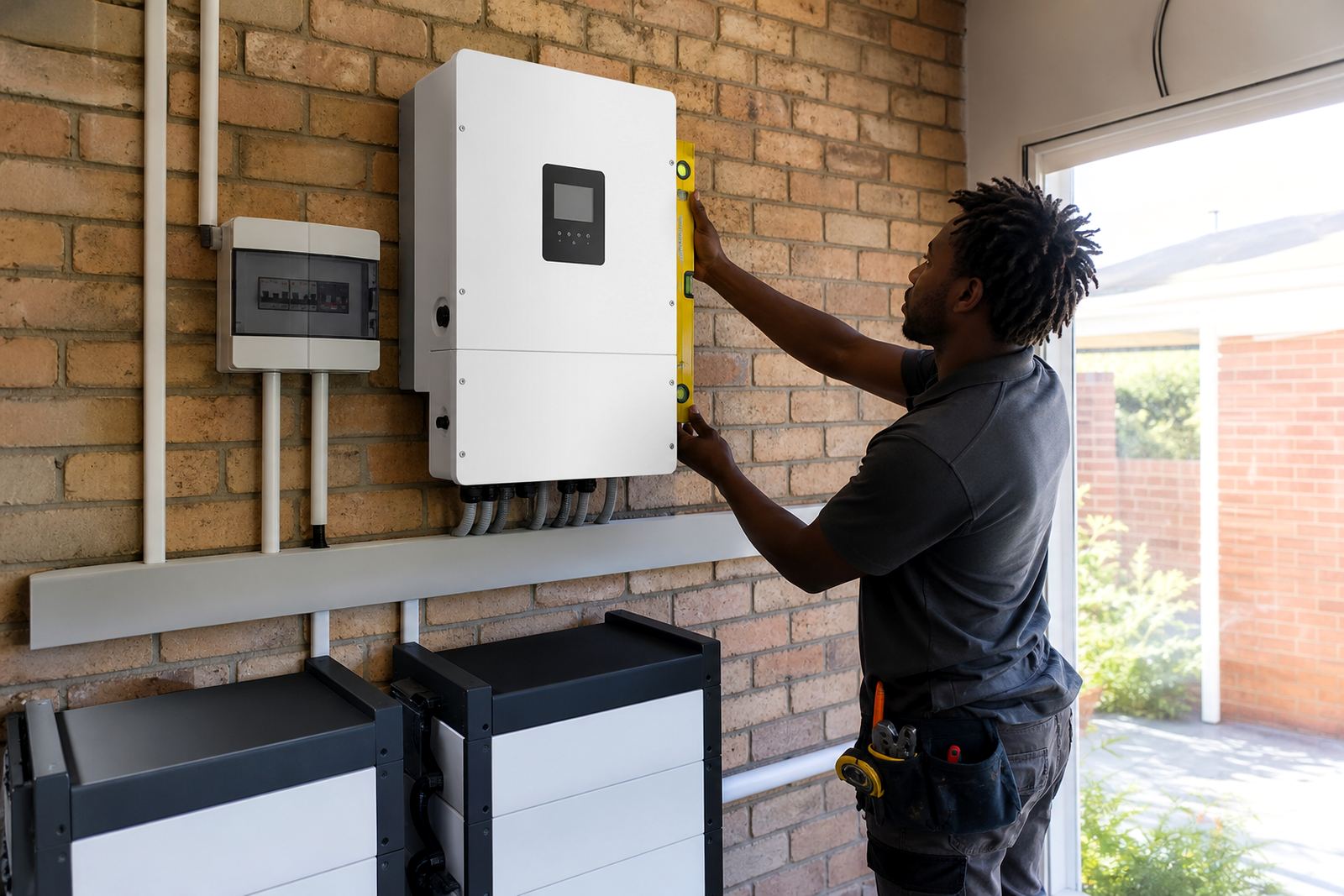
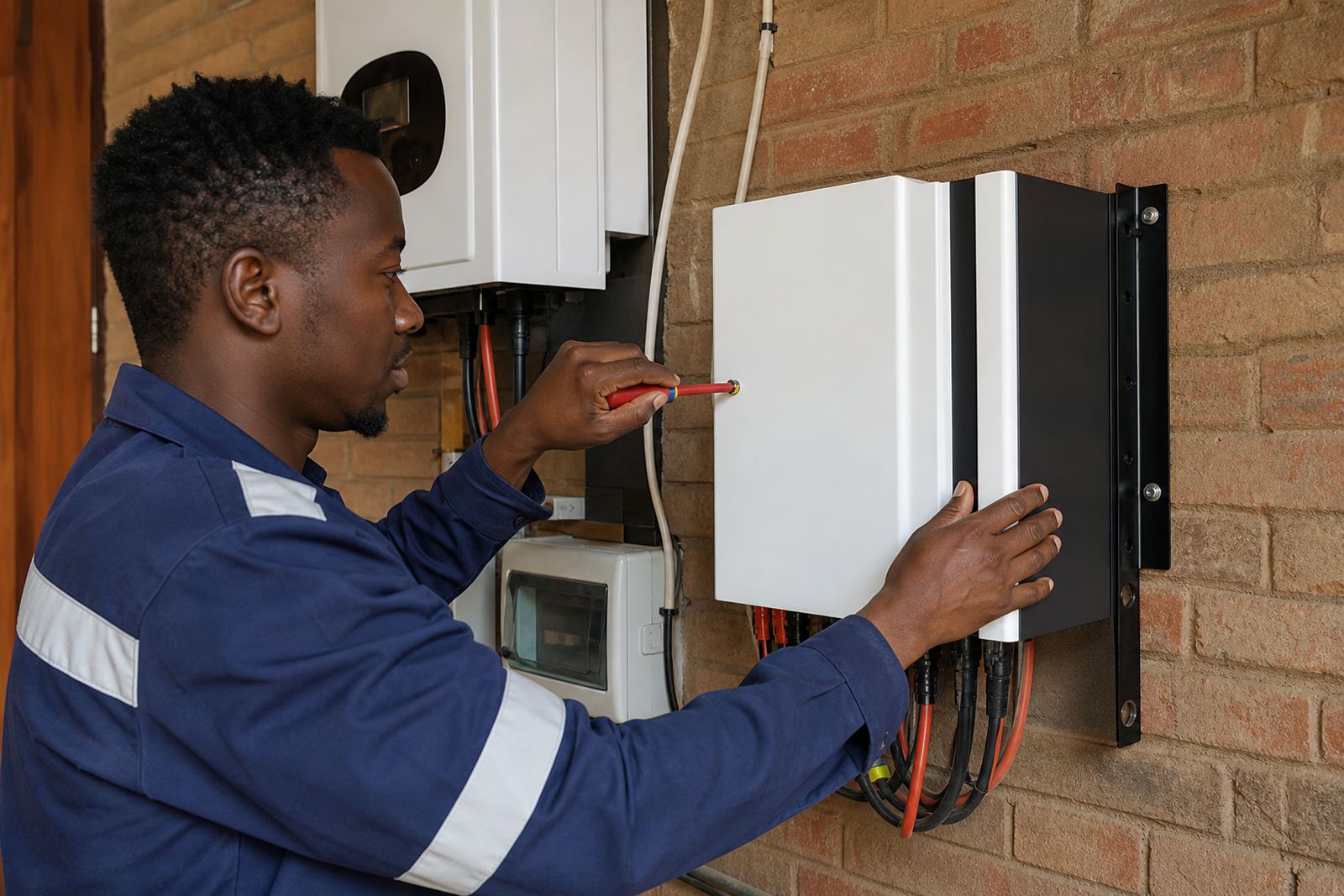
In many cases we also look at the practical side of the installation, such as ventilation around the inverter, cable routing, wall mounting and access for future servicing. In coastal or humid conditions, we pay extra attention to corrosion risk and enclosure placement. If the site is in a townhouse, office park or sectional title complex, we take note of access rules and any site restrictions that may affect the handover.
Share what must stay on during an outage and the size of the property, and a backup planner will phone or message you.
Contact formHow the commissioning process runs
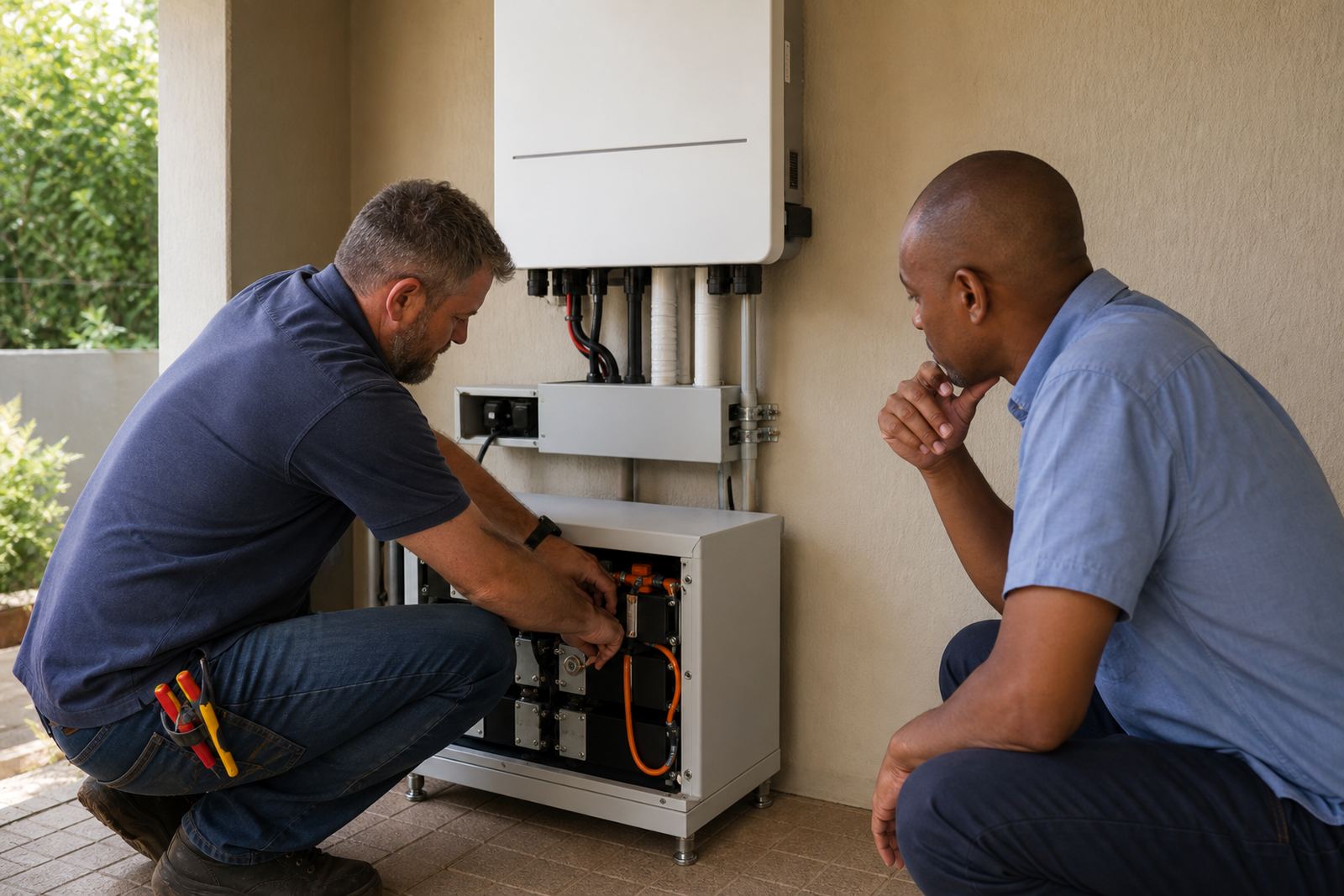
Commissioning normally starts with a visual inspection and ends with a live test under load. First, the installation is compared against the agreed backup sizing so we know the system is suited to the selected appliances or circuits. Next, we power the unit in stages and check that the inverter moves between grid and battery supply as expected. Then we observe charging, standby performance and the response to a controlled outage test.
If something is not right, we isolate it and correct it before handing over the system. That may mean adjusting settings, rechecking terminations, balancing battery connections or confirming that the essential load panel has been wired correctly. We do not treat commissioning as a rushed final visit. It is the point where the installation either proves itself or shows what needs to be fixed.
- Review the installed equipment and circuit schedule
- Confirm correct battery orientation, protection and cable sizing
- Set or verify inverter operating parameters
- Run a controlled power interruption test
- Check charging, load transfer and recovery
- Record any follow-up actions needed
Turnaround for homes, offices and light commercial sites
Most commissioning visits are completed in a single appointment once the installation is ready and access is clear. Simple residential systems can often be checked in a short visit, while larger commercial setups, multi-storey buildings or sites with several essential circuits may need more time. If the system still needs wiring corrections or municipal-related paperwork, the handover can only happen once those items are sorted.
For clients in Sandton, Fourways, Midrand, Centurion, Pretoria, Roodepoort and Johannesburg, we plan visits with travel and site access in mind. Business premises sometimes need early morning or after-hours attendance, especially where the backup system supports tills, routers, gate motors or critical office equipment. We keep the process practical and avoid unnecessary downtime.
Pricing approach and what affects the cost for backup power
Commissioning is priced according to the size and complexity of the installed system, not on guesswork. A small home backup unit with one inverter and one lithium battery takes less time to verify than a larger site with multiple batteries, essential circuit boards, monitoring equipment or grid-tied controls. The state of the installation also matters. If the site needs fault finding or rework before it can be commissioned safely, that changes the scope.
We do not use blanket pricing because every backup setup has its own layout, cable lengths, load requirements and compliance needs. The clearest way to quote is after the site has been assessed and the installation details are known. That keeps the process fair and avoids surprises later.
Keeping the system in good working order
Once the system has been commissioned, it still needs periodic checks. For most homes, an annual service is a sensible starting point, with a sooner visit if the system has been heavily used during repeated outages or if alarms appear on the inverter display. Businesses often benefit from more regular checks, especially where the backup supply runs key office equipment, security systems or point of sale circuits every week.
Maintenance intervals depend on the battery type, the environment and how often the system cycles. In hot rooms, dusty plant areas or coastal locations, we recommend closer attention to ventilation, cable condition and any signs of corrosion. If you add more batteries later, the system should be reviewed again so charging limits, capacity and protection are still correct. A well commissioned system is easier to maintain and far less likely to give trouble when the power drops.
- Annual checks for most residential systems
- 6 to 12 month checks for busy commercial sites
- Earlier inspection after repeated load-shedding events
- Re-commissioning after battery expansion or major changes
System at a glance
| Service area | Randburg, Johannesburg and Gauteng including Pretoria, Centurion, Midrand, Roodepoort, Sandton and Fourways |
|---|---|
| Typical system types | Inverter and lithium battery backup systems, with essential circuit or whole-home support where sized correctly |
| Commissioning scope | Startup checks, operating verification, load transfer testing, monitoring setup and basic fault review |
| Compliance | Registered electrician required, certificate of compliance where applicable, municipal registration for grid-tied systems |
| Best time to book | After installation, wiring and protection devices are complete and the site is ready for live testing |
| Maintenance interval | Annual for most homes, 6 to 12 months for busy business sites or high-use systems |