What battery installation covers on site
Battery installation is more than just setting a unit against a wall and connecting cables. The battery bank must be positioned where it can breathe, stay dry and remain accessible for inspection. That matters in homes, offices, shops and small industrial spaces, especially where load-shedding is frequent and backup systems are being asked to start and stop often.
We work with lithium batteries used with inverter backup systems, usually in 48V or 51.2V setups, with common capacities from about 2.5kWh to 15kWh per unit depending on the property and load. Placement is planned around cable length, wall strength, heat build-up, ventilation and service access. In coastal or damp conditions, and even in dusty garages around Gauteng, neat mounting and correct separation from heat sources helps keep the system serviceable over time.
Our team also checks how the battery fits into the rest of the backup setup. That includes the inverter location, protection devices, essential circuit wiring and whether the battery bank will be expanded later. A tidy layout is easier for the electrician to test, easier for the owner to understand and easier to maintain when the battery room or garage gets crowded.
How we plan battery size and connection method
Before any battery is connected, the load needs to be understood. A fridge, lights, Wi-Fi, gate motor and TV all behave differently from a business point of view, where routers, computers, alarm systems and point-of-sale equipment may need more stable backup. Battery size is chosen against the essential load, the expected outage duration and the inverter rating. If the battery is too small, it will run flat too quickly. If it is oversized without reason, the client may spend more than needed for the same result.
We look at usable capacity, maximum charge and discharge current, and whether the battery can be scaled later. For example, some homes need a single compact battery to carry only the basics during stage 4 or stage 6 outages. A larger home or office in Sandton, Fourways or Pretoria may need a bank that can support more circuits and longer runtimes. We also consider if the inverter is a low-voltage or high-voltage type, because that affects cable sizes, protection and the way the battery is linked into the system.
- Load profile review for essential circuits
- Battery chemistry and voltage matching
- Space for future battery expansion
- Correct cable length and protection sizing
Share what must stay on during an outage and the size of the property, and a backup planner will phone or message you.
Contact formInstallation steps from delivery to commissioning
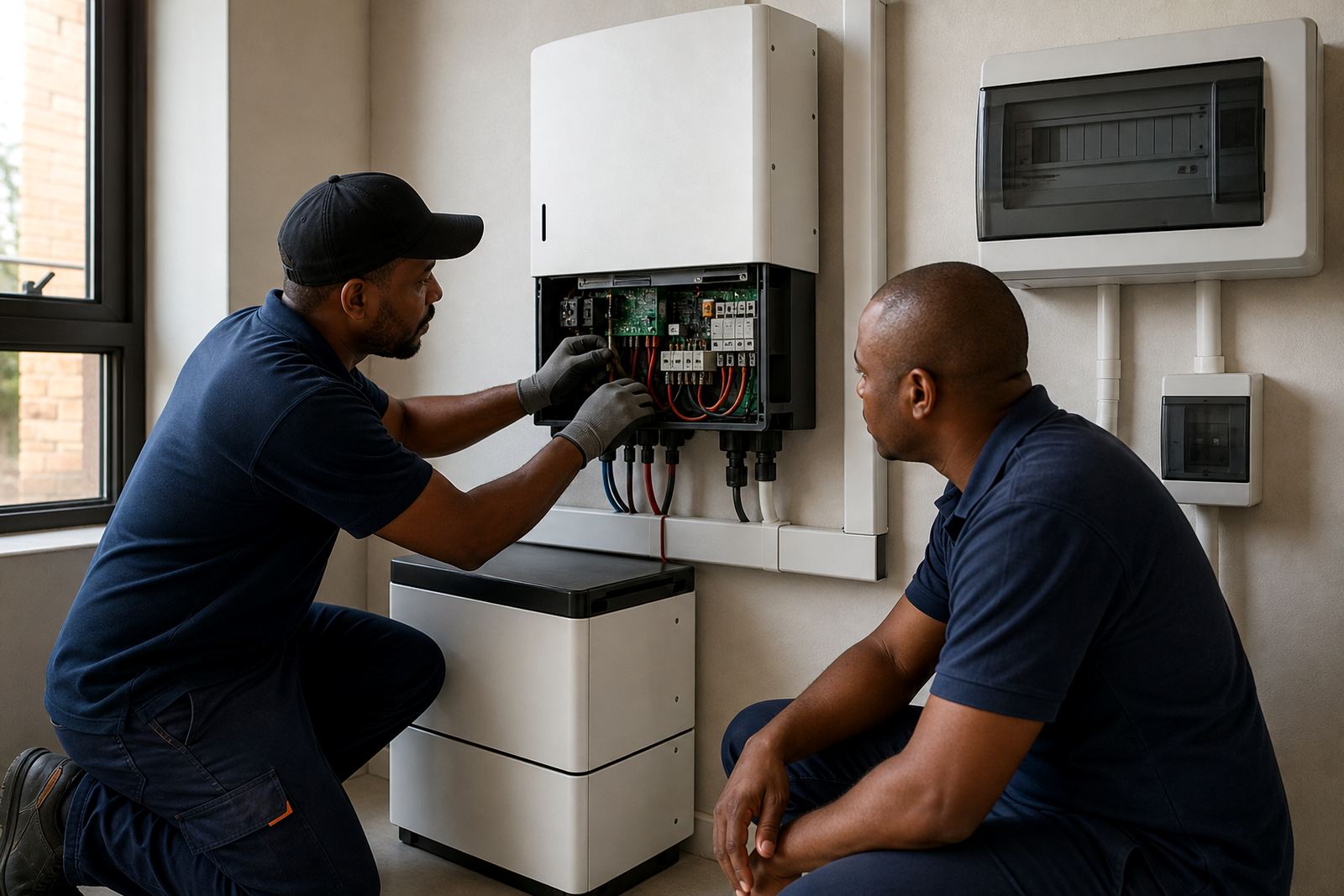
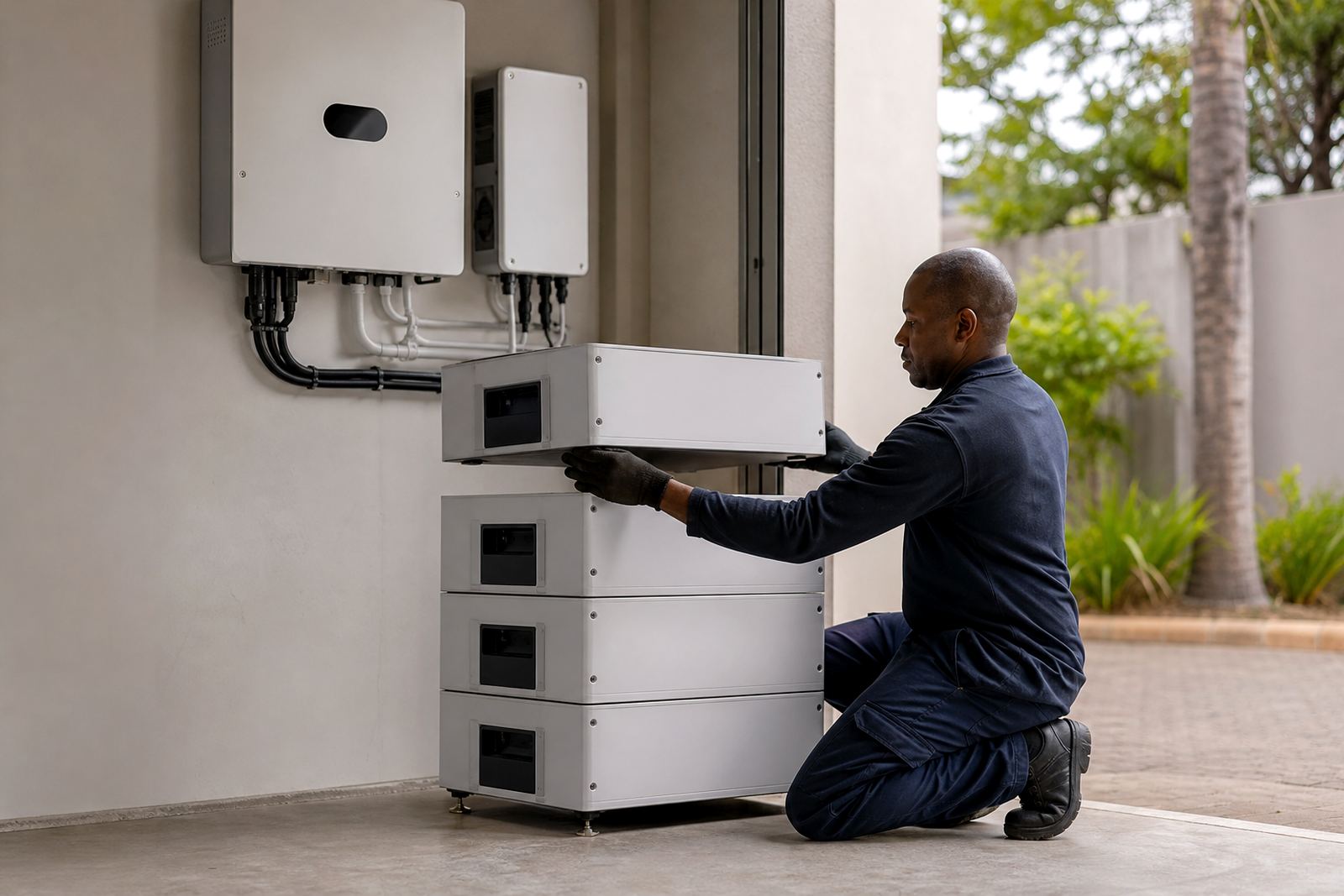
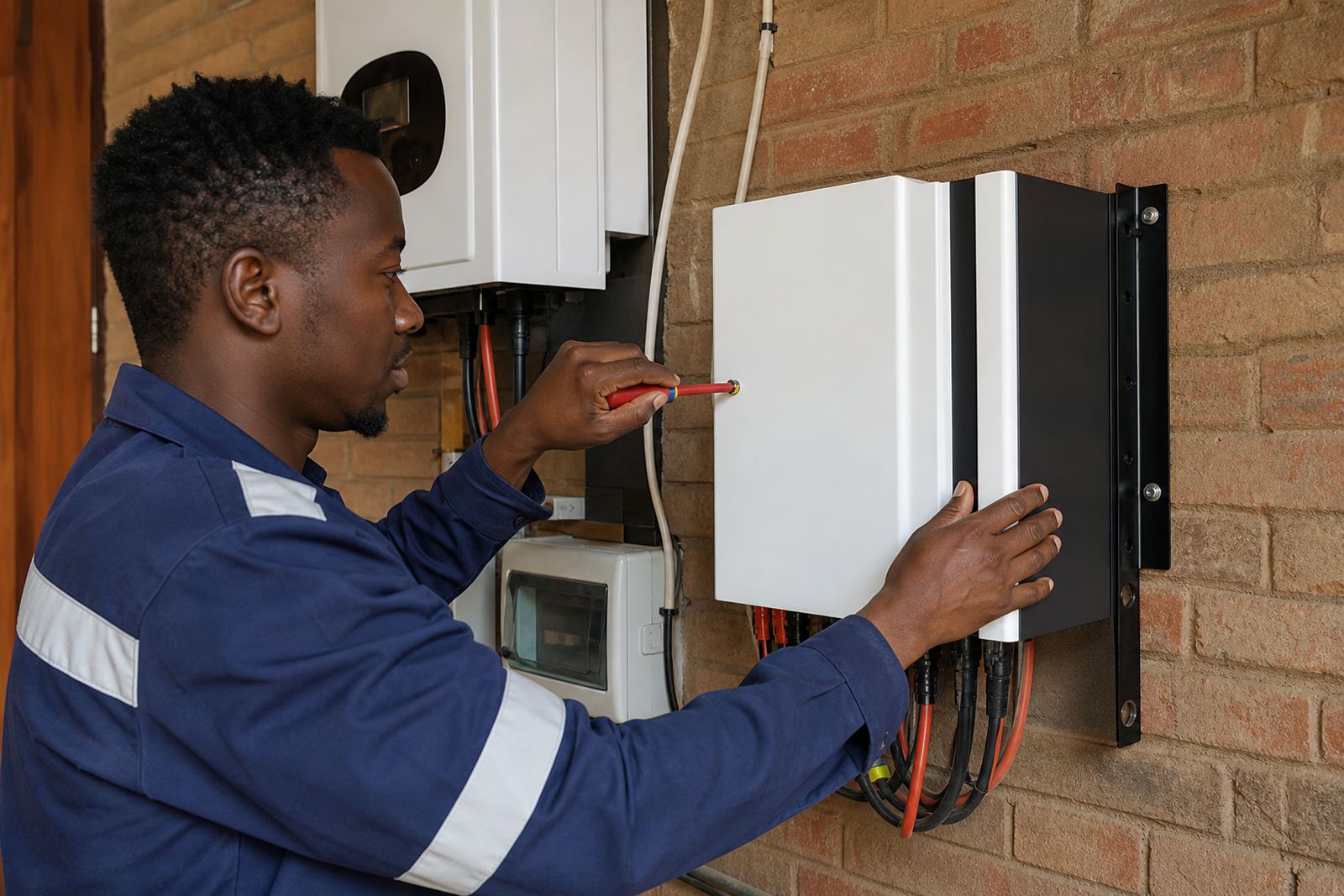
Once the battery plan is confirmed, installation is carried out in stages. First we confirm the mounting position and clear working space. Then the battery is placed, levelled and connected with the correct cable sizing, lugs and isolation arrangements. Where needed, we allow for neat trunking or conduit so the wiring stays protected and serviceable.
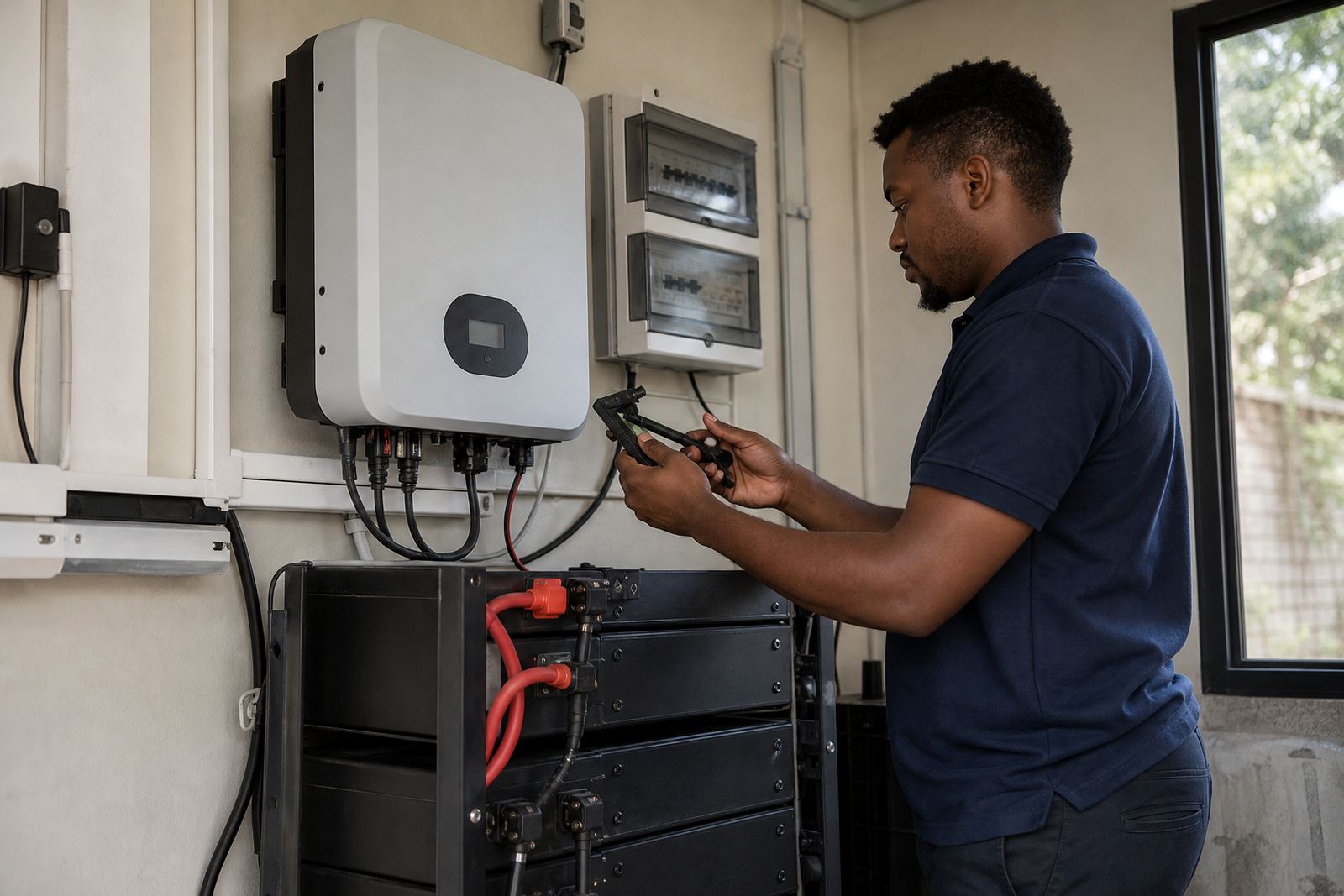
After connection, the system is checked for polarity, communication where applicable and correct inverter settings. The battery is then commissioned under load so the client can see how backup behaves during a real interruption. If there are essential circuits, we make sure the selected loads are actually on the backup side and not drawing from the wrong point in the board. That is where many poor installations go wrong, especially when there has been a rushed changeover during a power cut.
We handle homes, offices, retail spaces and small workshops across Johannesburg, Randburg, Roodepoort, Midrand, Centurion and nearby areas. If the property has a generator, solar inverter or existing backup arrangement, we check compatibility before the battery is tied in. The aim is a clean installation that works properly on the day and remains easy to fault-find later.
Safety, compliance and electrician sign-off
Battery installation must be done by a registered electrician. That is not optional. The installation also needs a certificate of compliance where the electrical work requires it, and grid-tied systems must be registered with the local municipality in line with the relevant rules. We support that process by keeping the installation neat, properly labelled and ready for inspection.
Battery rooms, garages and plant spaces need practical safety thinking. Batteries should not be squeezed into cupboards without airflow, stacked in unstable ways or placed where heat, damp or physical damage is likely. We also look at the protection side of the job, including isolation, overcurrent protection and the general condition of the board feeding the inverter. On commercial sites, clear labelling helps maintenance teams and makes future changes less disruptive.
- Registered electrician required for final installation
- Certificate of compliance where applicable
- Municipal registration for grid-tied systems
- Labelling and access planning for future servicing
Turnaround times and what affects scheduling
Turnaround depends on the size of the system, whether the battery is being added to an existing inverter setup and how much wiring work is needed. A straightforward battery swap or single-unit installation may be completed quickly once the site is ready. Larger projects with multiple batteries, essential circuit changes or additional safety gear need more time for careful fitting and testing.
We schedule site visits and installations around the property type and the client’s operating hours. Businesses often prefer work outside trading peaks, while homeowners may want the job completed before the next round of load-shedding. If the site has limited access, a cramped garage or an older board that needs attention, we will allow for that in the plan so the job is not rushed. Good installation work takes proper preparation, and it is better to do it once than to keep revisiting faults later.
For clients in Gauteng, we also factor in traffic, site access and any municipal or landlord requirements that may slow the process. That way the schedule is realistic and the handover is cleaner.
How a system is priced
Pricing is based on the battery size, the number of units, cable length, mounting requirements, protection components and any extra work needed to connect the system properly. We do not quote from guesswork. Each installation is priced from the site conditions and the scope of work, whether it is a small home backup setup or a larger business system with multiple circuits. If the existing inverter or wiring needs correction, that is included in the scope before work starts.
Battery systems benefit from routine checks, even when they are not used every day. We usually recommend inspection at least once a year, and sooner if the site has frequent outages, high temperature, visible warning lights or changes in performance. On commercial sites, a 6 to 12 month maintenance cycle is often sensible depending on the load and usage. Checks may include cable tightening, battery health review, ventilation, mounting condition and communication status with the inverter.
- Pricing depends on scope, not a standard flat rate
- Maintenance intervals vary by usage and site conditions
- Warning lights, heat or reduced runtime need attention
- Routine checks help keep the system serviceable
Working across Randburg and greater Gauteng
PowerCut serves homes and businesses in Randburg, Johannesburg, Sandton, Fourways, Pretoria, Centurion, Midrand and Roodepoort. We understand the mix of property types in these areas, from compact townhouse units to larger family homes, retail spaces and office parks. That matters when planning where a battery can be mounted and how the wiring should run.
Our approach is practical. We want the battery setup to be neat, safe and easy to live with when the power goes out again. If the system needs to be expanded later, we plan for that too, so the client is not forced into a full rework. For enquiries, clients can use the form on our contact page and we will respond with the next steps based on the site, the load and the backup goal.
System at a glance
| Battery types | Lithium battery systems for inverter backup |
|---|---|
| Common system voltage | 48V or 51.2V depending on inverter match |
| Typical capacity range | About 2.5kWh to 15kWh per unit |
| Site types | Homes, offices, retail spaces and small workshops |
| Coverage | Randburg, Johannesburg, Pretoria, Centurion, Midrand, Roodepoort, Sandton and Fourways |
| Compliance | Registered electrician, certificate of compliance where applicable, municipal registration for grid-tied systems |