What inverter installation covers
Our inverter installation service is focused on backup for the parts of your property that matter most during load-shedding and outages. That may include lights, Wi-Fi, TV points, alarm equipment, gate motors, office workstations, point of sale equipment or other essential loads. We size the system around how you actually use power, not just the number of appliances on a list.
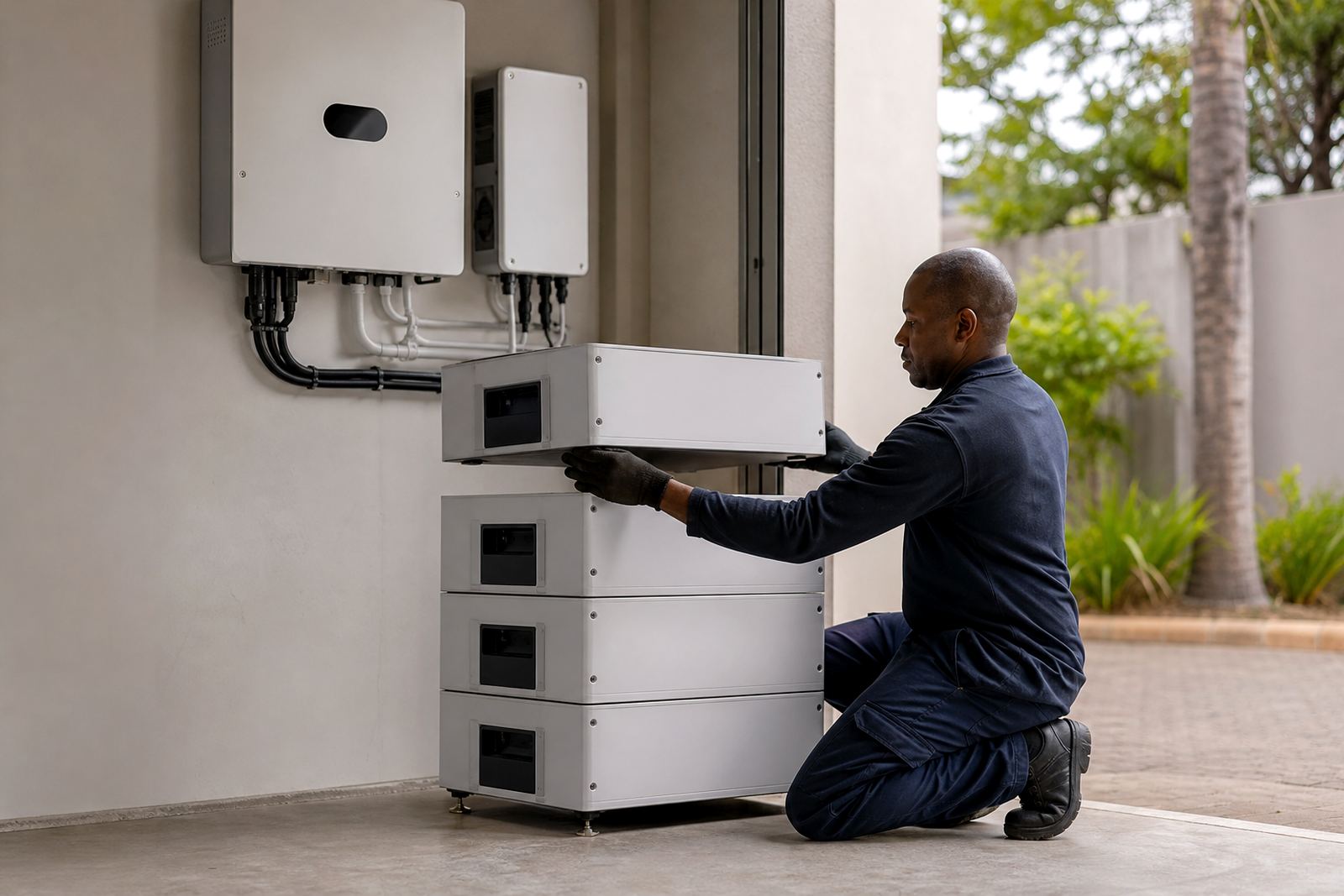
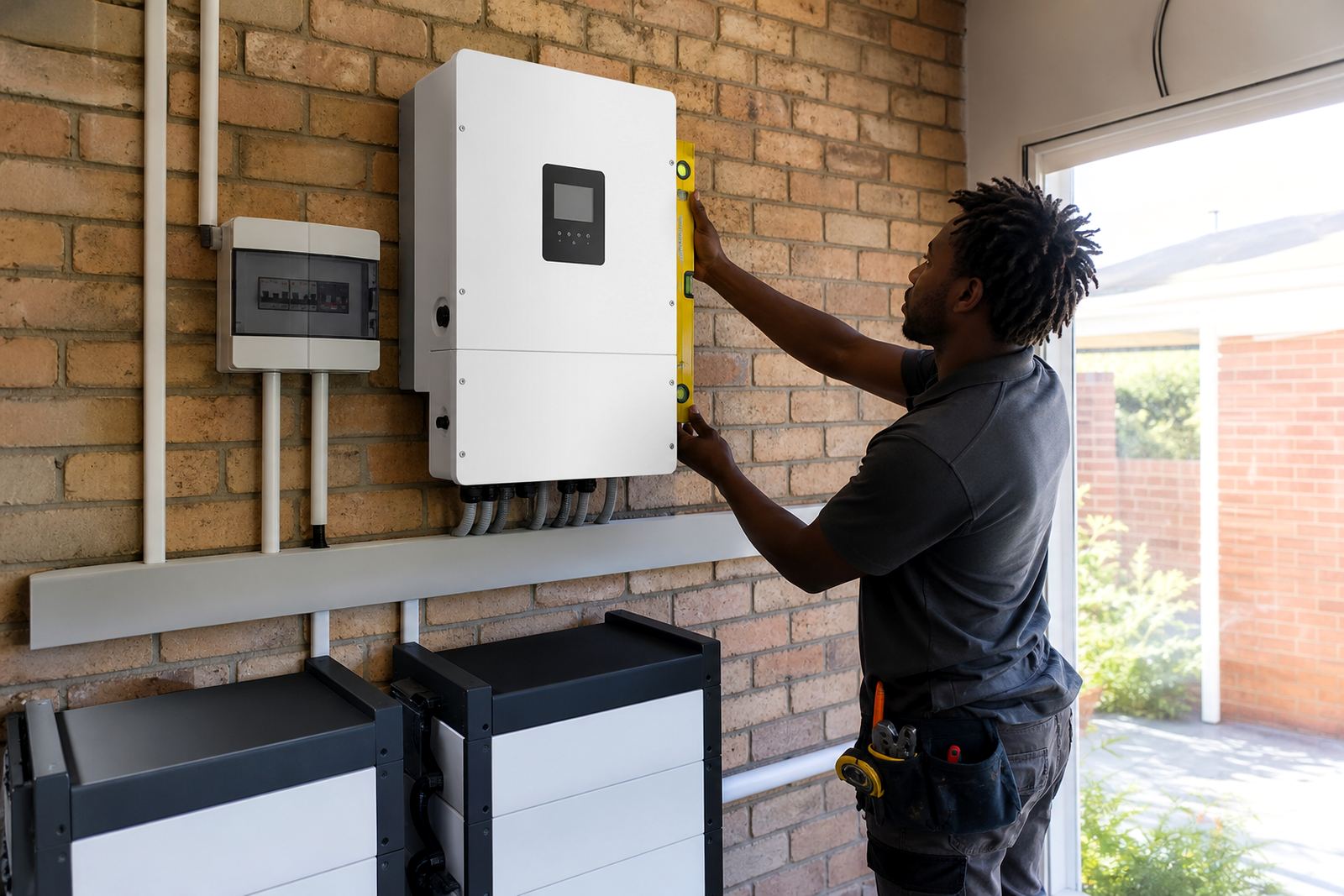
The installed system typically includes the inverter unit, lithium battery bank, protection gear, changeover or essential load arrangement, cabling and a neat connection to selected circuits. Where needed, we also assist with battery expansion planning so the system can be added to later without redoing the whole setup.
- Inverter sizing based on load and runtime needs
- Lithium battery matching for voltage and capacity
- Essential circuit selection and wiring
- Changeover or backup transfer arrangement
- Commissioning and basic user handover
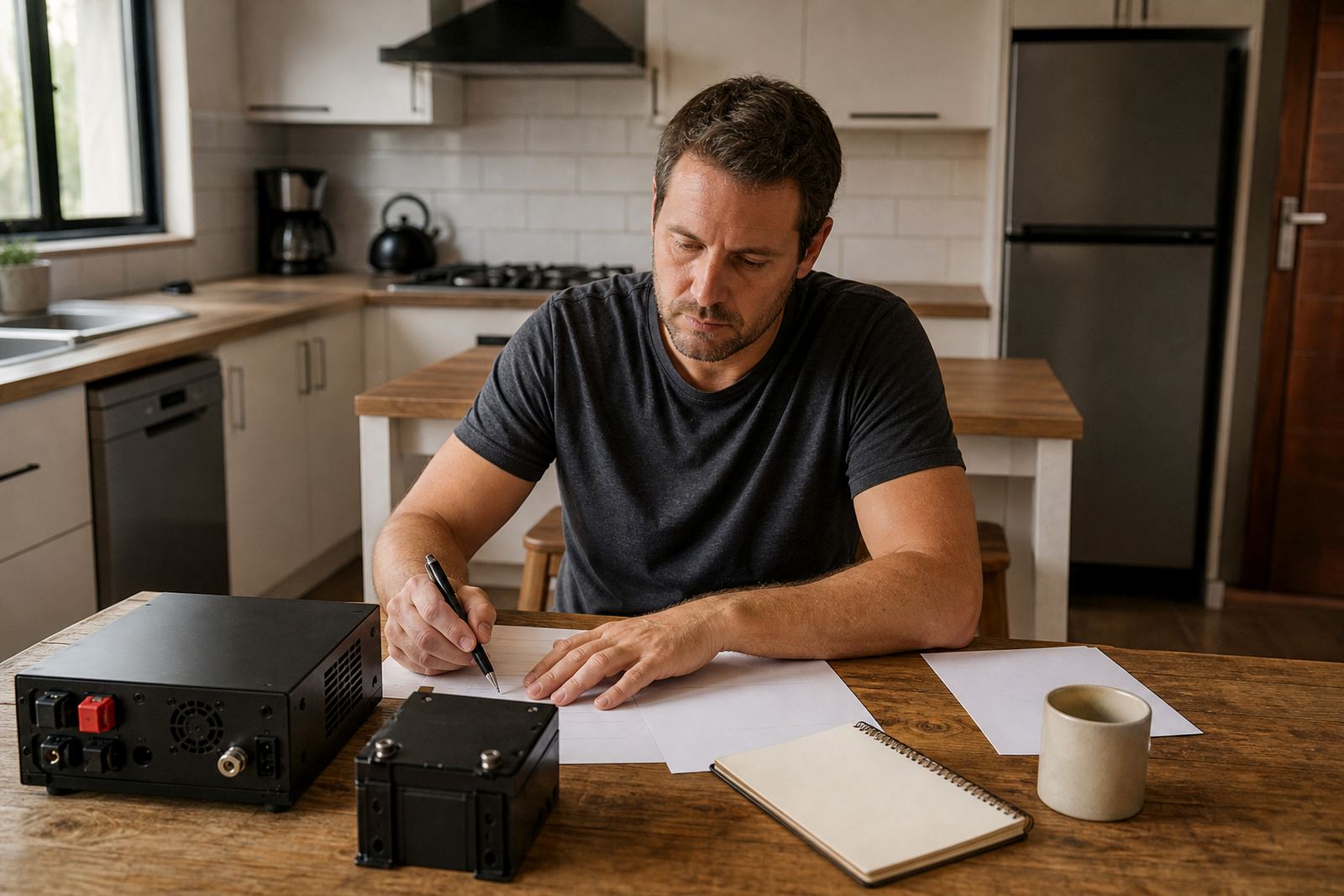
Site assessment and sizing before installation
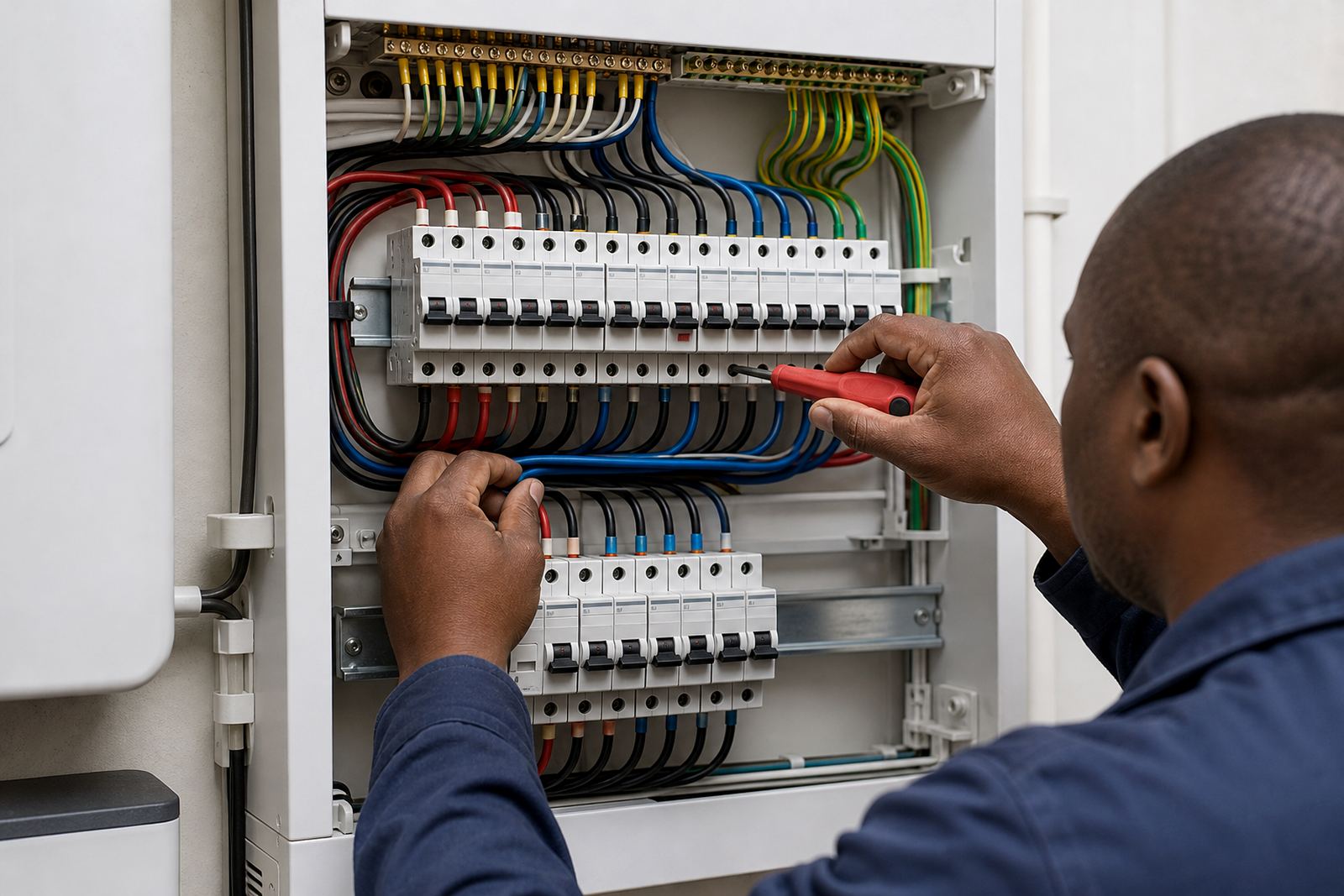
A proper installation starts with a site assessment. We look at the board layout, the condition of the distribution board, available space, earthing, cable routes and the loads that should stay on during an outage. In Randburg, Sandton and Fourways we often see compact homes where space for equipment is tight, while in Midrand, Centurion and Pretoria the bigger challenge is usually mixed household and office loads. Each site is different.
For sizing, we consider both inverter capacity and battery capacity. An inverter must handle the immediate electrical load in watts, while the battery bank must carry the system for the time you need. For example, a small home backup setup may cover a few lights and internet equipment, while a larger business site may need more headroom for multiple circuits and longer runtime. Coastal humidity is not the main issue here in Gauteng, but dust, heat and ventilation still matter.
- Load review for essential circuits
- Advice on single-phase or three-phase backup needs
- Battery capacity planning in kWh
- Space and ventilation check for the equipment area
- Protection and cable sizing for the proposed load
Share what must stay on during an outage and the size of the property, and a backup planner will phone or message you.
Contact formCompliant installation by a registered electrician
Installation must be done by a registered electrician, and the completed work must be certified with a certificate of compliance where required. That is not just paperwork. It confirms the wiring, protection and isolating arrangements have been completed correctly and that the system is suitable for use. If the system is grid-tied, municipal registration is also required and we help guide that process.
The electrical work can include isolating selected circuits, installing the inverter and lithium batteries, fitting changeover equipment, and separating essential loads from non-essential loads. We work carefully so the backup supply is practical in daily use and easy to switch over when load-shedding hits or the power trips unexpectedly.
- Registered electrician involvement for the installation
- Certificate of compliance support where applicable
- Municipal registration guidance for grid-tied systems
- Safe isolation of non-essential circuits
- Clear labelling of backed-up circuits
Turnaround and project flow
Most inverter installations follow a simple sequence: enquiry, site assessment, sizing, installation, commissioning and handover. Smaller residential jobs can often be completed quickly once equipment is confirmed and the board layout is suitable. Larger commercial or mixed-use sites may need more coordination, especially where distribution boards, essential load groups or municipal steps are involved.
Our team in Randburg coordinates the booking, technical review and installation plan so the job moves in order. Ayesha Ntuli manages operations, Marnus Rabie handles technical sales support, Nompumelelo Sigcau coordinates projects, Sibusiso Govender plans service work, and Rentia Fouche handles customer support. Sifiso Ngobeni oversees the business and final technical direction.
- Initial enquiry and system requirements review
- Clear site visit and scope confirmation
- Installation scheduled around equipment availability
- Commissioning after the electrical work is complete
- Basic operating guidance before handover
Pricing approach for inverter work
We do not quote a flat figure for inverter installation because every property has different wiring, backup goals and equipment needs. Pricing depends on the inverter size, battery capacity, cable runs, protection devices, distribution board work, changeover requirements and whether the site needs extra work to meet compliance requirements. Commercial properties may also need more planning for phased loads or multiple circuits.
We keep the pricing approach transparent by defining the scope first, then quoting against the actual installation requirements. That helps avoid surprises when the work begins. If you are looking at phased upgrades, we can also plan the job so the system can be expanded later with additional lithium batteries or higher-capacity equipment, provided the electrical design allows it.
Maintenance and support after commissioning
After installation, a backup system should be checked from time to time, especially in South Africa where load-shedding patterns, dust and heavy use can expose weak points. Battery health, cable connections, settings and changeover function should all be reviewed at sensible intervals. For many sites, an annual inspection is a practical baseline, with shorter intervals for busy businesses or systems that are used often.
We can assist with routine servicing, fault checks, battery expansion planning and monitoring setup. If the system starts behaving oddly, such as unexpected shutdowns, warning lights or reduced backup time, it is worth arranging a check before the problem gets worse. Early attention can prevent unnecessary damage and keeps the backup system ready when power is unstable.
- Routine servicing at agreed intervals
- Fault checks on inverter, batteries and wiring
- Monitoring setup support where fitted
- Battery expansion planning as needs change
- Ongoing support for homes and businesses across Gauteng
System at a glance
| Backup type | Essential circuits only or selected whole-home backup, depending on the site design |
|---|---|
| Equipment | Inverter, lithium batteries, protection devices, isolator and changeover arrangement |
| Typical supply | Single-phase systems for many homes and small offices, with larger configurations available |
| Installation requirement | Must be completed by a registered electrician with compliance documentation where required |
| Grid-tied note | Municipal registration is required for grid-tied installations |
| Service area | Randburg, Johannesburg, Pretoria, Centurion, Midrand, Roodepoort, Sandton and Fourways |