A small backup unit for everyday load-shedding
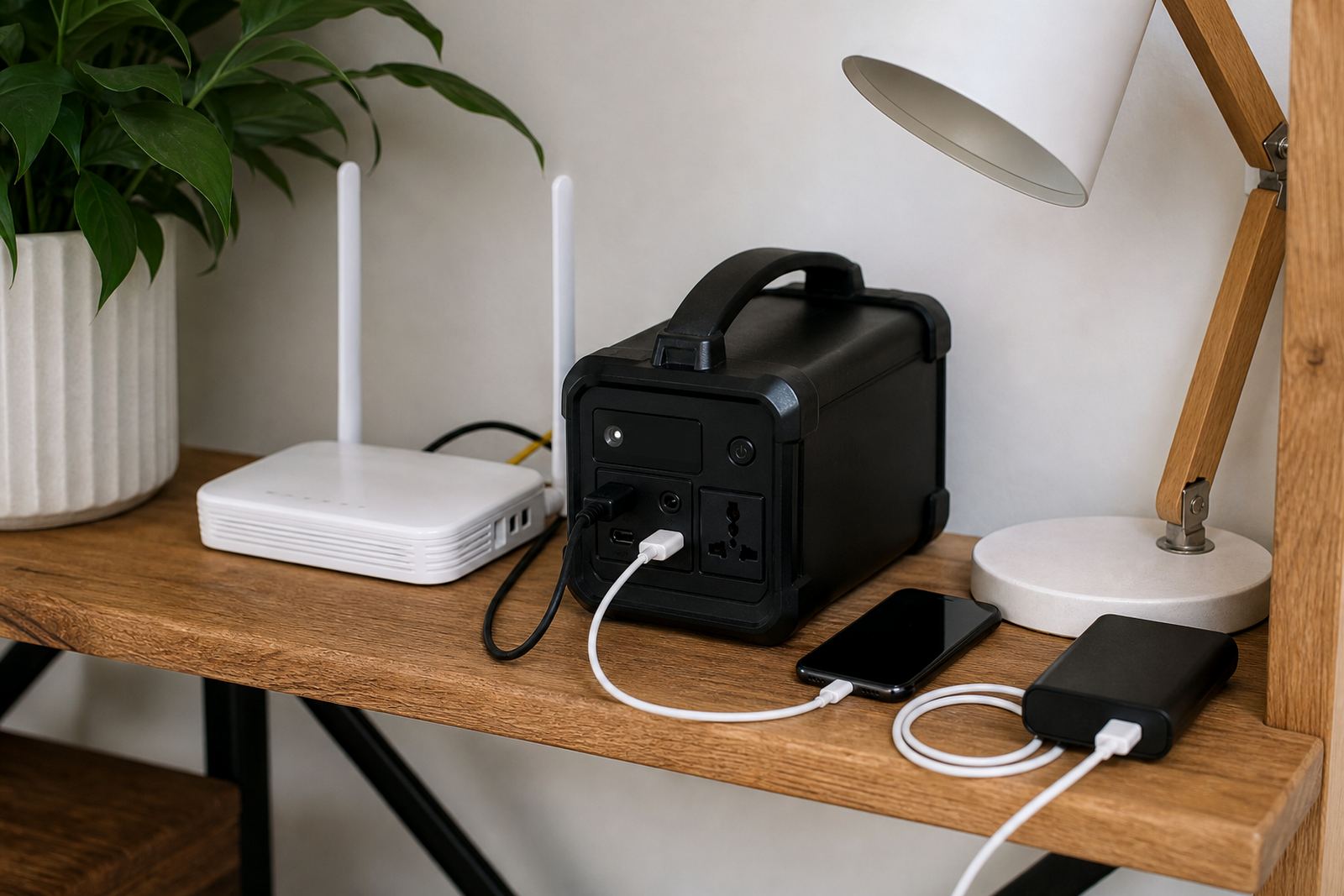
The 300W Backup Unit is designed for light-duty essentials, not whole-house use. It is commonly chosen for fibre routers, a small lamp or two, and phone charging during load-shedding. For many households in Randburg, Sandton and Fourways, that is enough to stay connected, keep work moving, and avoid the hassle of sitting in the dark for every outage.
This kind of unit normally combines a compact inverter with a lithium battery, so it can switch over quickly when utility power fails. The output is limited, which is exactly why it is practical for a starter setup. You get a neat, low-footprint unit that can sit in a study, passage cupboard or small utility space without taking over the room.
What the 300W rating means in real use
300W refers to the amount of power the unit can supply at one time. In practical terms, that means you should plan for low-draw equipment only. A typical router uses very little power, LED lighting is efficient, and phone or laptop charging can usually be managed if the total load stays within the unit’s capacity.
It is not meant for kettles, microwaves, heaters, irons or large pumps. If those are part of your needs, the system must be sized differently. The safest approach is to list each appliance you want to keep running and add their wattages together, then allow a sensible margin. That way the backup is matched to the actual use, not guesswork.
- Best for router, fibre box and one or two LED lights
- Useful for charging phones and small electronics
- Not suitable for high-startup appliances or full home backup
- Ideal as an entry point before adding a larger system later
Share what must stay on during an outage and the size of the property, and a backup planner will phone or message you.
Contact formSizes, options and layout choices
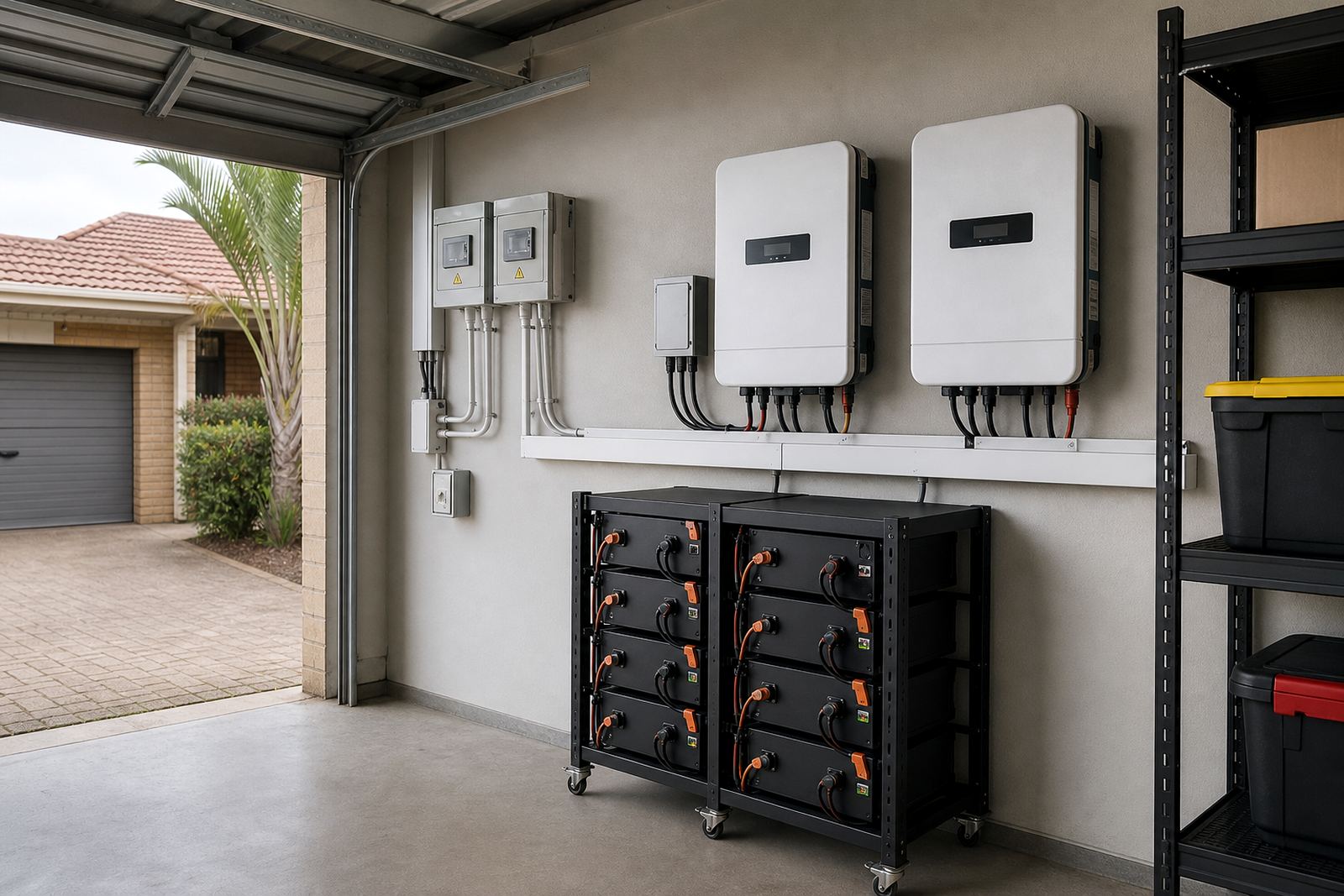
Entry-level backup units come in a few practical layouts, depending on how much space you have and how tidy you want the installation to look. Some homeowners prefer a single compact wall-mounted or shelf-mounted unit, while others want the battery and inverter kept separately for easier access. The right choice depends on the available space, cable routes and the circuits you want to support.
Battery capacity is just as important as inverter rating. A lithium battery with enough usable capacity will give you better runtime and less fuss during frequent outages. In a humid coastal area you would want a clean, dry installation point with good airflow and protection from dust and heat. Around Johannesburg, Pretoria and Centurion, many installations are done in garages, sculleries or dedicated service areas where the unit can be reached easily for checks.
- Compact unit for basic essentials and short outages
- Separate inverter and battery arrangement for easier expansion
- Optional changeover arrangement for selected circuits
- Monitoring setup can help track battery state and load use
Where it suits homes and small businesses
This product suits homes that want a simple backup for communications and a few lights, especially where outages are short and repeated. It also works well in a small office, reception area or consulting room where internet connectivity and a light source matter more than heavy equipment. In a business setting, it helps keep a router, modem and one workstation going long enough to finish a call or save work properly.
In Gauteng, where load-shedding can affect appointments and admin schedules, even a modest backup unit can make a difference to daily routine. It is especially useful for people who work from home, small practices, or households that do not want the cost and complexity of a larger system just yet. For a shop or office with more critical needs, an assessment is the best starting point because one unit may cover only part of the load.
Installation, compliance and municipal requirements
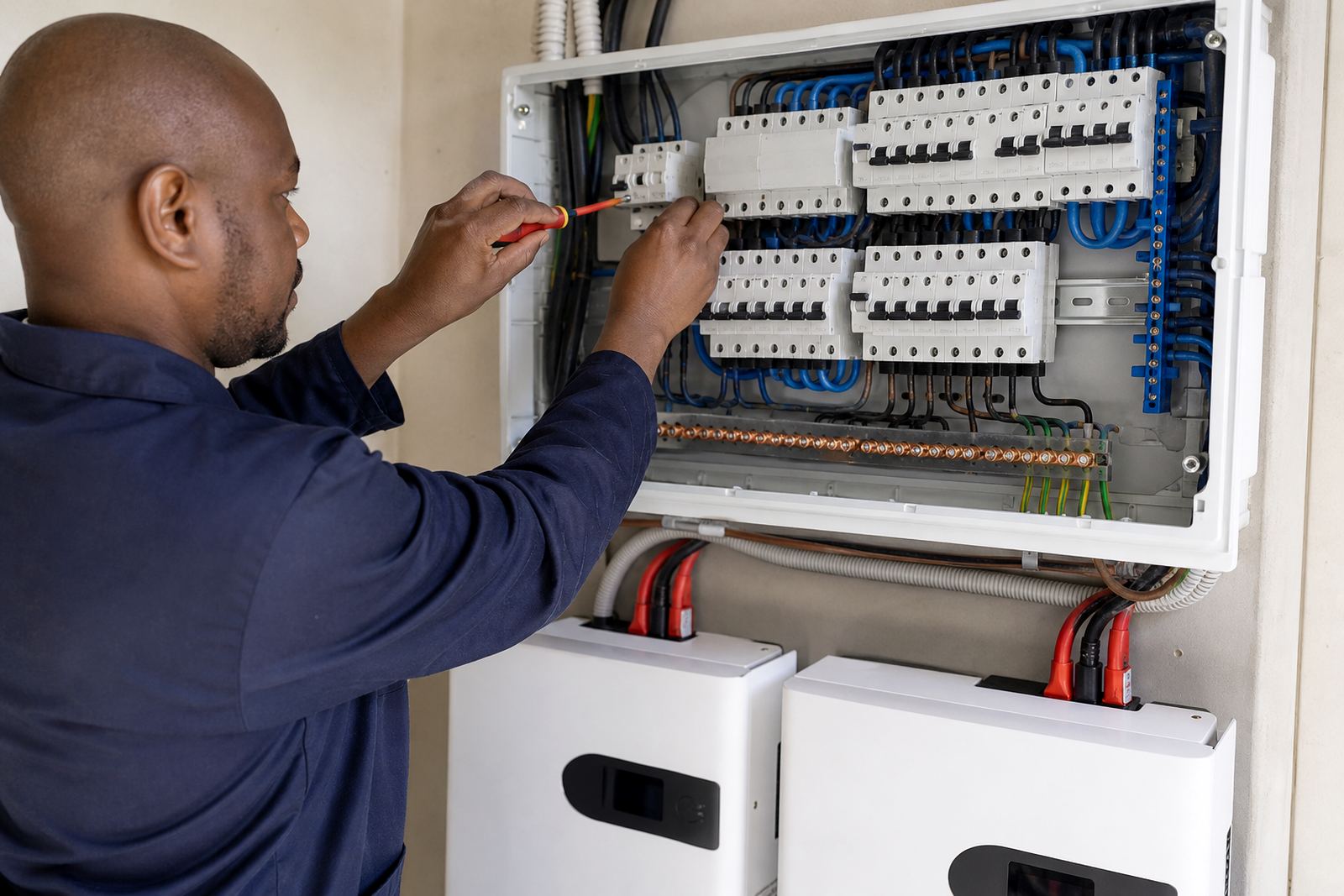
Any inverter and battery installation must be carried out by a registered electrician, and a Certificate of Compliance is required for the electrical work. If the system is grid-tied or connected in a way that can feed into the municipal supply, it must be registered with the local municipality as well. That applies whether the installation is in Johannesburg, Pretoria, Midrand or Roodepoort, and it is worth sorting out from the start so there are no problems later.
Proper installation also means checking cable sizes, protection devices, earthing, isolation and the circuit that will be backed up. A small unit like this should still be treated as proper electrical equipment, not a plug-and-forget gadget. Good installation protects the battery, the connected appliances and the property. It also makes later servicing far easier, which is important if you plan to expand the system in future.
- Registered electrician required for installation
- Certificate of Compliance needed for the electrical work
- Municipal registration may be required for grid-tied systems
- Essential circuit wiring can separate backed-up loads from the rest of the home
Care, servicing and signs it needs attention
Lithium batteries generally need less day-to-day attention than older battery types, but they still need proper care. Keep the unit in a dry area, away from direct sun, excess dust and standing moisture. If the battery room is hot, cramped or badly ventilated, the system may not perform as expected over time. A tidy cable run and regular checks make a real differnce to reliability.
Routine servicing should include checking the battery state, connections, charging behaviour and any fault lights or alarms. If the backup starts cutting out too early, takes longer than usual to recharge, or shows unusual noise or heat, it needs a proper fault check. That is also the right time to review whether your household load has grown, because adding more devices can push a 300W unit beyond what it was meant to do.
- Keep the unit dry, clean and well ventilated
- Check for dust build-up and loose terminations
- Watch for reduced runtime or unusual alarms
- Service the unit before adding more loads or expanding the system
Before you buy a backup system
Before placing an order, it helps to know exactly what you want backed up and for how long. Make a short list of the appliances you want to keep on, then note their wattage if you can. If you are not sure, a site assessment and backup sizing exercise will help determine whether the 300W unit is enough or whether a larger inverter and battery set is more suitable.
You should also check where the unit will be installed, whether a dedicated circuit is needed, and if you want monitoring added from the start. For households and businesses across Gauteng, from Sandton and Fourways to Centurion and Midrand, this avoids wasted time and keeps the installation neat. If you have plans to expand later, mention that as well so the layout can be set up with future growth in mind.
- List the appliances you want to run during outages
- Check the available installation space and cable path
- Confirm whether you need essential circuit wiring or changeover support
- Ask about future battery expansion if your needs may grow
System at a glance
| Product type | Compact 300W backup unit for essential loads |
|---|---|
| Typical use | Router, LED lights and phone charging during load-shedding |
| Power output | 300W continuous, suited to low-demand appliances only |
| Battery type | Lithium battery setup for fast switching and practical runtime |
| Installation | Must be installed by a registered electrician with CoC |
| Service area | Randburg, Johannesburg and across Gauteng including Pretoria, Centurion, Midrand and Roodepoort |